


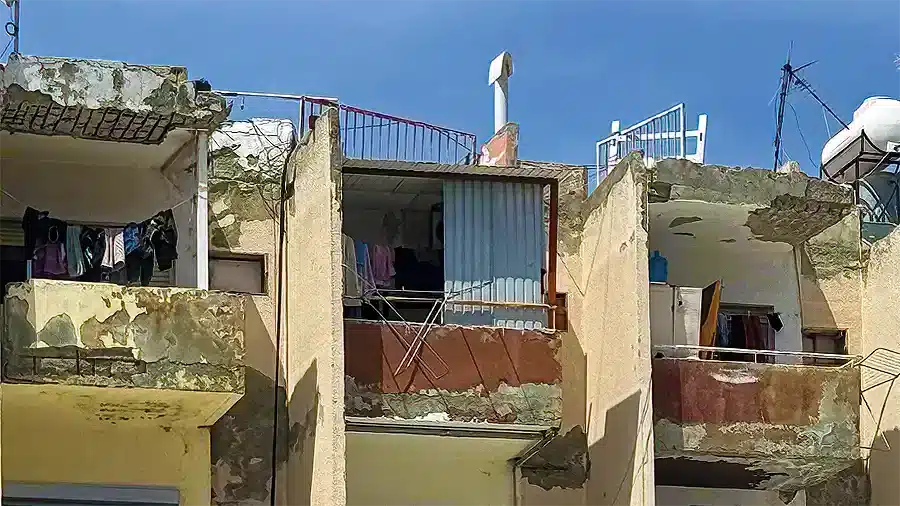
Cyprus is set to overhaul its legal framework for dangerous buildings, introducing tougher enforcement powers, higher fines and new preventive measures aimed at protecting public safety, particularly in urban areas and historic town centres.
The proposed legislation, tabled by Parliament’s Standing Committee on Internal Affairs, would amend the Streets and Buildings Regulation Law to give authorities greater powers to identify, secure and, where necessary, demolish unsafe properties before they pose an immediate threat.
The reforms follow growing concern over repeated incidents involving collapsing buildings and falling masonry, highlighting weaknesses in the current legal framework.
Preventive action before buildings become dangerous
A key feature of the proposal is the introduction of a new legal category for “potentially dangerous buildings”.
For the first time, authorities would be able to intervene where a building shows signs of deterioration that could soon develop into a serious safety risk, rather than waiting until the structure is officially classified as dangerous.
The definition of a dangerous building would also be broadened considerably. Instead of focusing primarily on structural stability, it would also cover deficiencies relating to fire safety, poor maintenance, corrosion, subsidence, construction defects, structural failures and other conditions that could endanger occupants, neighbouring properties or members of the public.
New powers for authorities
Under the proposed law, following a visual inspection, the authorities could require the owner to appoint a qualified engineer or consultant to prepare a technical report or structural assessment.
Owners could also be instructed to carry out precautionary measures, including:
- repairing defects;
- removing hazardous elements;
- installing protective measures; or
- fencing off unsafe areas.
Property owners and occupiers would have 30 days to submit written representations after receiving formal notice.
For buildings already classified as dangerous, authorities would gain significantly stronger enforcement powers. They could require the immediate preparation of a technical remediation plan detailing all necessary repair works, protective measures or demolition where required.
Evacuation, sealing and demolition of dangerous buildings
The legislation would also allow authorities to order the evacuation of dangerous buildings.
If occupants refused to leave, the authority could apply to the court for an order permitting their removal and authorising the building to be sealed by installing physical barriers to prevent access and use of the building.
Where owners fail to comply with official notices, authorities would be empowered to:
- disconnect water supplies;
- request electricity disconnection from the Distribution System Operator;
- carry out repairs or demolition themselves; and
- recover all associated costs through civil proceedings.
Any expenditure incurred could also be registered as a legal charge against the property, ensuring recovery of public funds.
Owners would have the option of repaying the debt over up to 36 monthly instalments, subject to an additional fee of no more than 2% of the total cost.
Fines to double
The proposed legislation substantially increases financial penalties for non-compliance.
Maximum fines would rise from €10,000 to €20,000 for a first conviction and from €20,000 to €40,000 for subsequent convictions. Prison sentences would remain unchanged.
Administrative penalties imposed directly by the authorities would also double, increasing from €20,000 to €40,000.
The bill also introduces fixed penalty notices for the first time. Owners who fail to fence a dangerous building could face an on-the-spot fine of €2,000, while failure to seal an unsafe building could attract a €1,000 fine.
If these penalties are paid within 45 days, criminal proceedings for the specific offence would not be pursued. Failure to pay would result in prosecution before the courts.
Faster reporting and enforcement
The proposed reforms would require municipalities and community councils to notify the authorities immediately when they identify dangerous or potentially dangerous buildings within their jurisdiction.
The Director of Development Licensing would also be permitted to delegate specific responsibilities to officers within the District Local Government Organisations, helping accelerate enforcement and reduce delays.
The reforms represent one of the most significant changes to Cyprus’ dangerous buildings legislation in recent years and are intended to strengthen public safety following a series of building collapses and the continuing deterioration of ageing properties across the island.
Further reading
Proposal to tighten Cyprus dangerous buildings law with tougher penalties (Greek)