Call for efficient title deeds system

THE FOLLOWING statement has been issued by the staff of the European Commission and the European Central Bank following the fourth post-programme surveillance (PPS) mission to Cyprus:

European Commission staff, in liaison with staff from the European Central Bank (ECB), visited Cyprus from 19 to 23 March to conduct the fourth post-programme surveillance (PPS) mission. The mission was coordinated with an International Monetary Fund (IMF) post program monitor (PPM) mission. Staff from the European Stability Mechanism (ESM) also participated in the mission on aspects related to the ESM’s Early Warning System.

The ongoing strong recovery and the renewed reform mandate following the presidential elections provide a window of opportunity to reduce the key vulnerabilities of the Cypriot economy. Growth in 2017 outpaced projections and should remain robust, albeit somewhat decelerating over the medium term. Growth was broad-based, with buoyant tourism and construction benefitting other sectors of the economy. Consumption and investment were the main drivers of growth. The labour market situation continued to improve, with employment increasing across most sectors and unemployment rapidly falling. Despite the very favourable economic conditions, the share of non-performing loans (NPLs), private and public debt as well as youth unemployment remain high, albeit on a declining trend, while inflationary pressures continue to be weak. In addition, the persisting current account deficit warrants close monitoring, given the high level of external debt and negative households’ savings.

The positive macroeconomic environment combined with prudent fiscal policy have resulted in a remarkably strong fiscal position, yet a continued prudent fiscal stance remains warranted given the still-high level of public debt and risks to the fiscal outlook. Fiscal performance once more outperformed projections in 2017, mainly driven by buoyant tax revenues and, to a lesser extent, lower-than-expected expenditure. However, uncertainties and risks remain, such as contingent risks from the banking sector and the fiscal impact of the healthcare reform. A continuous prudent budgetary policy remains essential to ensure that temporary revenue windfalls do not give rise to permanent increases in expenditure and to safeguard fiscal sustainability in line with the requirements of the preventive arm of the Stability and Growth Pact.

Addressing challenges in the banking sector should remain a policy priority due to the still high level of NPLs and negative profitability. The stock of NPLs has declined gradually but remains one of the highest in the EU and the progress made among the banks has been uneven. Loan restructuring continues, albeit becoming more challenging as the pool of NPLs for which negotiation is an option is dwindling. Bank profitability remains weak amid the need for provisioning for NPLs. On the other hand, new lending is recovering, supported by the strong macroeconomic environment. The mission highlighted the pressing need to accelerate NPL reduction across banks and in particular in the ones lagging behind. In this context, it is of utmost importance to improve the payment culture and that new schemes initiated by the authorities contribute in this respect and are in line with international best practices. It is also urgent to introduce the necessary legal amendments to make full use of all available tools, including to the insolvency and foreclosure frameworks, and to create conditions for a well-functioning secondary market of loans and loan securitisation. Tangible progress in all these areas is crucial for the banking sector to leave legacy issues behind and adequately support the real economy. In this respect, it is important that the recently initiated search for investors in Cyprus Cooperative Bank proceeds in a transparent and orderly manner.

Renewed structural reform commitment by all national stakeholders is necessary to maintain growth over the medium term and safeguard fiscal sustainability. Given its overarching impact on the functioning of the economy and its strong link to the reduction of NPLs, a swift completion of the justice system reform is needed, including the establishment of a commercial court, the update of the civil procedure rules and the adoption of legislation on improving claim enforcement. Moreover, the completion of the reform of the public administration would enhance the efficiency of the public sector and support fiscal sustainability. The mission also encouraged the authorities and other stakeholders to step up progress in other essential areas, including the implementation of the national healthcare system in a fiscally-sustainable way, the on-going reform of the electricity market, and the establishment of an efficient title deeds issuance and transfer system. Moreover, the mission underlined the importance of continuing efforts to enhance the economy’s growth potential, notably through improving the business environment and attracting further growth-enhancing investment, as well as prioritising key measures included in the action plan for growth.

The mission would like to thank the Cypriot authorities for their constructive and open discussions and IMF and ESM staff for their cooperation. The next PPS mission will take place in autumn 2018.

(Issued by the European Commission and the European Central Bank following the fourth post-programme surveillance (PPS) mission to Cyprus.)

Limassol in top 100 world cities

Limassol is one of the world's top 100 citiesACCORDING to a survey conducted by Mercer, Limassol is one of the top 100 cities in the world for its Quality of Living Index, which considers the quality of life that a city has to offer.

The survey is one of the world’s most comprehensive and is conducted annually to enable multinational companies and other organisations to compensate employees fairly when placing them on international assignments, says Mercer on its website.

Mercer’s index has Vienna as the highest ranking city in Europe and globally, while the Iraqi city of Baghdad is the lowest ranked; Limassol is in 87th place.

Mercer evaluates local living conditions in more than 450 cities surveyed worldwide. Living conditions are analysed according to 39 factors, grouped in 10 categories:

  • Political and social environment (political stability, crime, law enforcement, etc.).
  • Economic environment (currency exchange regulations, banking services).
  • Socio-cultural environment (media availability and censorship, limitations on personal freedom).
  • Medical and health considerations (medical supplies and services, infectious diseases, sewage, waste disposal, air pollution, etc.).
  • Schools and education (standards and availability of international schools).
  • Public services and transportation (electricity, water, public transportation, traffic congestion, etc.).
  • Recreation (restaurants, theatres, cinemas, sports and leisure, etc.).
  • Consumer goods (availability of food/daily consumption items, cars, etc.).
  • Housing (rental housing, household appliances, furniture, maintenance services).
  • Natural environment (climate, record of natural disasters).

The scores attributed to each factor, which are weighted to reflect their importance to expatriates, permit objective city-to-city comparisons. The result is a Quality of Living index that compares relative differences between any two locations evaluated. For the indices to be used effectively, Mercer has created a grid that enables users to link the resulting index to a quality of living allowance amount by recommending a percentage value in relation to the index.

Mercer points out that the information and data obtained through the Quality of Living reports are not designed or intended for use as the basis for foreign investment or tourism.

Troika back in Cyprus

Troika in Cyprus reviewing progressA DELEGATION from the Troika of Cyprus’ international lenders – the International Monetary Fund (IMF), the European Commission (EC), and the European Central Bank (ECB) – arrived in Cyprus on Monday for a fourth post-programme surveillance following the island’s successful exit from the economic adjustment programme.

The monitoring mission is set to be completed by next Friday, CNA sources say.

Troika heads are also in Cyprus and are expected to have meetings with ministers and parliamentary party leaders among others, the same sources say.

After Cyprus completed its adjustment programme in March 2016, monitoring by its international lenders takes place every six months until 75% of its loan granted by the European Stability Mechanism of €7.24 billion is paid off.

According to the same sources the mission`s monitoring will focus on macroeconomic and fiscal developments while it will also look into matters relating to payroll, labour, health and energy, as well as the insolvency framework and the foreclosures legislation.

Cyprus` international lenders will also look into the national reform programme, tourism matters, real estate and investment matters.

Justice in Cyprus and delays in the issuance of title deeds and taxation will also be examined.

Non-performing loans and the restructuring of loans will be the focus of meetings at the Central Bank, among other issues.

Immediately after the mission concludes its visit, a concise text with the general outcome of the monitoring will be issued. A complete report is set to follow after about two months.

The Troika’s next post-programme monitoring mission will be in Cyprus in September.

Paphos marina decision soon

A NEW ADMINISTRATIVE marina management committee has been appointed by the Council of Ministers and is currently examining documents and paperwork submitted as part of the tender process for the highly anticipated Paphos marina.

Head of the Paphos Chamber of Commerce (EVE) Andreas Demetriades told the Cyprus Mail he expects a decision in two to three weeks between the two remaining bids and work to finally get underway on the facility at Potima Bay in Kissonerga.

“Because of successful recourse brought by the Poseidon consortium to the Supreme Court of Cyprus after their bid was rejected, which found that the committee responsible for overseeing the Paphos marina tender process was unlawful, the previous decision was void,” he explained.

A decision made by the marina management committee in 2017 saw Poseidon – a joint venture in which Aristo Developers is a major stakeholder – lose out to Pafilia developers after the body found that evidence supplied to secure financing for the multi-million euro project was ‘not satisfactory’.

The recourse brought by Poseidon consortium argued that the committee’s move to dismiss their tender and move on to request Pafilia – the developer next on the list – to commence negotiations was wrongful.

“This decision affects only the two existing tenders and not the first unsuccessful one,” he said.

In 2008 the tender was initially awarded to the Cybarco-Pandora consortium, which includes the Leptos Group.

However, the other two bidding consortiums, Pafilia and Poseidon challenged the award at various stages. The project was then frozen after litigation began in 2008.

In December 2015, the Supreme Court voted in favour of Poseidon but they still had to submit proof of funds. Poseidon’s €215 million marina bid was rejected in April 2017 as the committee decided that they were unable to meet the financial criteria, this meant that tender runner up Pafilia, utilising a different design at a cost of around €175 million, could submit their paperwork.

But in December last year, recourse brought by the consortium argued that the committee’s move to dismiss their tender and move on to request Pafilia to commence negotiations was wrongful.

“The new committee is currently appraising the submission of the Poseidon joint venture to see if it meets the criteria, if not, then they will examine the tender of Pafilia,” Demetriades said.

If no-one meets the tender requirements, he added, then the tender will be updated and a new international tender issued.

Community leader of Kissonerga George Stylianou said all data should be thoroughly checked to avoid any further delays or ‘mishaps’ to the process, which has been ongoing for almost 12 years. The new marina will provide a substantial income for the community, he said.

Tempers run high at sea caves meeting

Peyia sea caves demonstrationTHE GLOVES are off in Pegeia following an ‘all Peyia meeting’ held in the municipality on Sunday organised by officials angered by the public’s opposition to development of the sea caves coastline.

A proposed ‘white zone’ suggested by Green party MP George Perdikis incensed local authorities and Paphos MPs of four of the main political parties, who subsequently issued a joint statement declaring Perdikis ‘persona non grata’ and ‘undesirable’ in Peyia.

Andreas Evlavis of the Paphos Greens told the Cyprus Mail on Monday that such behaviour was incendiary.

“If you start off like this, saying that Mr Perdikis and the Greens aren’t welcome in Pegeia, you are trying to start a war. But whether we are welcome or not will not stop us from carrying out our duty and right to fight for the environment, this is our priority,” he said.

He added that the benefit of a protected environment is not for the Greens but for the public.

The meeting came after weeks of demonstrations and press reports about six villas being built close to the sea caves area and that an environmental impact authorisation has just been granted for a five-star hotel and 44 villas at nearby Kafizis beach.

The wider public has been angered over environmental damage at the sea caves, but supporters of ongoing development claim that reports in the press concerning the work at the coast are misleading.

Mayor of Peyia, Marinos Lambrou, called the meeting and was the main speaker at the event. He reportedly said that local authorities have recently been facing an unfavourable policy against Peyia and that for some time the municipality has proposed specific measures for the protection of the sea caves area.

“We will not allow growth to stop, development will continue as licensed under laws and regulations.”

Also present at the meeting were three of the four districts MPs , Costas Constantinou of Disy, Charalambos Pitokopitis of Diko, Andreas Fakontis of AKEL and a spokesperson for Edek MP Elias Myriannthis, who is currently abroad. The mayor of Polis Chrysochous Giotis Papachristofi also attended.

MPs and the mayor spoke of ‘dark economic circles’ intervening in all cases of attempted development in the district of Paphos, citing examples such as the Akamas and Polis Chrysochous, claiming that the new effort is to keep tourist development away from the coastline of Peyia.

Last Friday, Agriculture Minister Costas Kadis said he would announce 20 measures to help resolve the ongoing debate, his proposal includes banning water sports and fishing within 300 metres of the caves used as a breeding ground for the endangered monk seals and the creation of a buffer zone that will not allow development within a certain distance of the beach’s protection zone.

Lambrou said that the municipality is in favour of development, according to the laws of Cyprus, and described proper development as a ‘blessing’. He also said that without growth, the municipality and residents would not be able to move forwards.

The mayor added that there had been no opposition to similar developments in other areas such as Limassol, Larnaca and Ayia Napa.

Lambrou later told Astra Radio that a war had been declared war against the municipality of Peyia and lies and misinformation being spread in the media.

Evlavis said that the Greens are waiting for the results of the investigations concerning the changes of zoning regulations.

“We don’t want a war with the mayor of Peyia and we have never said that we area against progress for Peyia, but the sea caves are something special.”

Pegeia councillor, Edek’s Achilleas Achilleos, who chose not to attend Sunday’s meeting, said that great care must be taken over the environment, especially in the sea caves area, as once it’s destroyed, it will be impossible to get back.

“Any development must be undertaken sensitively and with care. We need to take a step back and it’s not all about money and profit and then we have problems afterwards,” he said.

Achilleos said that the blame for the current situation lies firmly on the government’s shoulders and stressed that outdated maps of the coastline need to be updated and that the government, along with the land registry and planning departments are all responsible for dishing out permits without checking the area.

He said that much of the coastline has been eaten away due to erosion and an updated and protected zone of around 100m or 200m from the shoreline which ‘could not be touched’ is very important.

“Leptos has built six villas, why not three. The coat will continue to be eroded and then the municipality will have to pay for the construction of expensive breakwaters. In the end it’s the public that will pay for the damage to the environment,” he said.

He added that development of the area is a thin line which must be walked carefully.

Local resident, Peyia coalition councillor and Green party member, Linda Leblanc said that she was disappointed that the mayor didn’t take a more neutral stance and said the Greens and other environmentalists would proceed in a calm manner whilst gathering support to ensure that the area is protected.

“I chose not to attend the ‘meeting’ as I didn’t want to be perceived as supporting developers and a group of officials that are shouting very loudly.”

She added that around half of the residents of Peyia are foreigners, mostly British, are totally ‘invisible’ in this discussion as requests to also disseminate information in English fell on deaf ears.

“They are trying to divert us from the issue which is uncovering any illegalities concerning zoning and studies that were not done properly” she said.

Leblanc reiterated the need to have a masterplan for the area.

Measures to protect sea caves

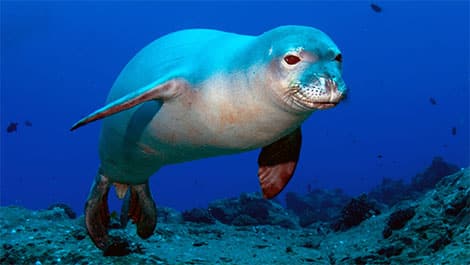
Sea caves birthing habitat for endangered Mediterannean Monk SealTHE MINISTER of Agriculture, Rural Development and Environment Costas Kadis is set to announce twenty measures to resolve an on-going debate over developments near the environmentally sensitive sea caves area in Pegeia.

The minister is expected to announce the plans in the coming week after returning from an official trip abroad.

The controversial development concerns the construction of a five-star and forty-four residences overlooking Kafizis (fisherman’s) Beach, which has sparked demonstrations by environmentalists and local residents who are also concerned for the endangered Mediterranean Monk Seal (Monachus monachus) whose birthing habitat is the sea caves area.

Mediterranean Monk Seal  is listed as the most “critically endangered” marine mammal species in the Mediterranean by the International Union for the Conservation of Nature (IUCN)

Some of the proposed measures include forbidding water sports and fishing within 300 metres of the closest caves used by the Monk seals and the creation of a buffer zone that not allow development within a certain distance of the beach’s protection zone.

The caves will also be fenced off to prevent visitors approaching them.