Property tax reform discussions continue

Cyprus property tax reformFINANCE Minister Harris Georgiades on Monday appealed to MPs to pass government legislation overhauling and streamlining the Cyprus immovable property tax (IPT) system before the parliament’s summer recess.

“If you do not pass it now, before parliament breaks for summer, the legislation will not apply in 2016,” Georgiades said.

He was speaking before a joint session of the House finance and interior committees, where the minister provided clarifications on a number of points raised by MPs.

Georgiades said owners of immovable property worth up to €50,000 would not be required to pay any tax.

Exempted from paying are the small owners with an IPT of up to €25. This exempts some 65,000, or 17.5 per cent of property owners.

But the minister warned that attempts to exempt even more people meant that those not exempt would end up paying a bigger share.

Discussion of the government bills continues next Monday.

The government has proposed introducing a flat immovable property tax rate to 0.05 per cent and scrapping the IPT paid to local authorities altogether.

The flat rate will be levied on property values updated in 2013. To date, IPT is calculated on 1980s values, excluding many properties because they did not exist at the time. Rates differ depending on the value.

The revenues from IPT will be used to fund local authorities which stand to lose considerable income by the decision to scrap their IPT.

Greens MP George Perdikis said his party opposes a flat rate, and suggested instead tweaking the current staggered rate, which he described as “fairer.”

A flat rate would benefit large landowners, he added.

At the same time however, the government plans to levy 19 per cent VAT on land sales as part of commercial property transactions. The finance minister has said it is a matter of compliance with EU directives.

This will fetch the state some €24m as opposed to around €58m in lost revenues from the reduction in the tax rate – down to €45m from €103m.

Little interest in Cyprus property auctions

Little interest in property auctionsTHE BANK OF CYPRUS has begun auctions of foreclosed immovable property, signalling the first auctions under the new foreclosure legal framework implemented as part of a €10 billion bailout by the EU and the IMF.

The property placed into auction was foreclosed by the bank against non-performing loans that have been terminated after a legal process which began a decade ago. No primary residences will be included in the first wave of auctions.

Auctions began on Thursday in Paphos, placing seven plots for sale. Three plots attracted interest yielding €1.05 million.

Auctions were also carried out in Nicosia on Friday, with four plots placed for sale but no interest was shown.

The Bank of Cyprus will continue auctions in Limassol and Famagusta District whereas other banks, such as the Cooperative Central Bank and Hellenic Bank will follow suit in July.

Under the new legal framework a bank can auction the property at a reserve price of 80% of the current market price. If no interest is attracted, the bank can place the property to a new auction with the same price while in a year’s time from now it can auction the property with a new reserve price amounting to 50% of the current market value.

Source: Cyprus News Agency

Keep calm and carry on, expats urged

Expats urged to keep calm and carry onBREXIT has left many British expats reeling. From Paphos to Paralimni, they wonder whether their pensions will stretch as far every month, whether their properties will drop in value or whether they’ll still be able to own a business in Cyprus now.

The experts can’t offer much assurance. All agree that there won’t be much immediate change. Much will stay the same until the British government begins negotiating the terms of its withdrawal from the EU, a complex process that will last for two years.

Until then, there will be many unknowns. That means the uncertainty in the lead-up to Thursday’s historic vote will continue for many months.

But the momentous outcome of that vote has already brought an immediate and unwelcome change for many British expats here – sterling hit a 31-year low, already hitting the buying power of those who rely on a UK pension to survive.

Fiona Parsley, the branch manager of Currency Solutions and head dealer in Paphos, was bombarded by calls from worried customers since 7.30am on Friday. All wanted to know what will happen to the exchange rate and how long will take to recover.

“Unfortunately we don’t know what will happen with the rate,” she told the Sunday Mail. “However, forecasters are saying that we should be back to where the pound should be standing within six months. We will get more of a definite feel of how things are on Monday morning.”

Some experts, such as Jennifer Petridou Sharpe, a property valuator at Filoktimatiki, say this may change the quality of life that some British expats have so far enjoyed: “This might not be the lifestyle they are used to. This change of quality of life might make some re-evaluate if they will stay.”

No-one, of course, is talking about a mass exodus of expats. But Sharpe said that with the current exchange rate, it may be more beneficial for British residents to sell their property and change the euros from the sale into pounds, which would be worth more when sterling rebounds.

Everything is irrevocably linked together, and property advisor Nigel Howarth believes at some point the currency will become stable again – although when is yet another unknown.

“These things are cyclical. The pound will come back,” he told the Sunday Mail.

How long it will take however and how long people can wait it out is another matter altogether.

In addition, Howarth says the cost of living in the UK must also be considered. “Cyprus isn’t as expensive as the UK. Property tax is small, compared to the local council tax paid in the UK.”

Essentially however, it comes down to this: Britain’s unprecedented exit from the EU means Britain has entered unchartered waters. “There’s too many unknowns. No one has been down this path before,” Howarth told the Sunday Mail.

Brexit, of course, also brings uncertainty for Cypriots who rely on the spending power of British expats. The British property market currently accounts for 35 per cent of non-Cypriot owned property on the island.

Still reeling from the shock of the news, the chairman of the real estate agents’ association, Marinos Kineyirou, said: “The way I see it, today’s developments are serious. This is something new and we can’t know if it’s good or bad.”

While an impact will be inevitable, changes have taken place in the property market over the years, Kineyirou said.

Primarily it will be interest from Britons in the Cypriot property market that will be affected, but recent years have seen Russian and the Middle Eastern buyers forming the majority of property buyers and this will limit exposure.

Sharpe said the terms of the Brexit negotiations will also play an important role. If for example, Britons will have to apply for a residency then they may purchase property to meet the conditions.

“The agreements between the UK and EU” will play a crucial role, as will any agreements made between Cyprus and the UK, Sharpe added.

Many expats are hoping that the long historical ties between the UK and Cyprus will ensure that the benefits their EU status brings in terms of property and business ownership, residency and access to healthcare can be renegotiated to remain essentially intact.  Commenting on the Brexit result on Friday, President Nicos Anastasiades focused on the “special relationship” between the two countries.

Howarth says although the British market has shrunk in the past few years “a lot of properties on the market at a competitive price wait a long time for buyers. For instance, a village home has been on the market for three years.”

According to property valuator Antonis Loizou, for the past couple of years “Brits have had a small share of the market, a maximum of 20 per cent of foreign demand in terms of value.”

Sharpe also raises the issue of competition. “Spain and Portugal may be cheaper options as they have over supply,” she says.  “In Cyprus, there is limited stock of land and with the basic rules of demand and supply, is possibly more expensive.”

She highlights the “positive note, that although there is significant interest in Cyprus (from the UK) it is not what it was 10-years-ago when the Brits held 60 to 70 per cent of the market.”

Now gone down to about half, Loizou added he was certain the consequences will be negative.

“To what extent however, will depend on the terms of the Brexit. Interest will cease for the next six months.”

“With what conditions will Britons stay in Cyprus? Will they be able to buy two homes or will they abide with non EU rules that say one property per person?”

Back in 2008 when the global financial crisis hit, the exchange rate had also suffered yet the circumstances surrounding it were entirely different.

“A bulk of them has already left. Whoever was going to sell, already did it,” Sharpe said.

“It’s not the same as 2008 / 2009.”

Effectively, the advice from the experts – for the time being, at least – can best be summed up by that hoary old slogan long designed to appeal to British pride in keeping a steady head in difficult times – Keep calm and carry on.

[youtube=https://www.youtube.com/watch?v=ehbhtUNTdoU&w=470&rel=0]First reactions to BREXIT in Nicosia

[youtube=https://www.youtube.com/watch?v=gtgT8BB7ye0&w=470&rel=0]First reactions to BREXIT in Paphos

Property tax reform discussions underway

Cyprus property tax reformsTHE TAX CUTS on immovable property that are being proposed by the government were examined by the Finance Committee and Internal Affairs committee on Thursday, amidst intense reactions from various municipalities and political parties, according to in-Cyprus.

Under the new tax framework, there would be a flat-rate Immovable Property Tax of 0.5 per thousand (0.05%) on all properties, which will be levied on the basis of 2013 values.

However, around 19% of owners will be exempt, thanks to a clause that says tax bills of up to €25 per property owner are exempt.

The government proposal would also abolish certain taxes levied by the municipalities and communities.

According to the law under discussion, taxpayers will benefit from a 20% discount whenever they pay their taxes on time through the internet or credit institutions. They will also receive a 17.5% discount for a timely payment at the Tax Department.

A 50% cut in Property Transfer Fees on the sale of immovable property is also planned.

The legislation also includes the introduction of a 19% VAT rate on sales of plots of land for commercial activity.

Most political parties expressed opposition to this move. They have also requested that the flat rate proposed by the government be changed to a graduated tax.

The municipalities disagree with the abolition of municipal property taxes, and say that the government’s proposal impinges on the economic and administrative autonomy of local authorities. They say that the municipal Immovable Property Tax is the basic source of revenue that has largely provided for the development of the local infrastructure.

The government wants the set of laws on Immovable Property Tax to be presented to the House of Representatives for voting before July 15, when the House closes for the summer. This is because the Tax Department must send its taxes out by August at the latest.

Discussions on the property tax reforms proposed by the government are scheduled to continue on Monday.

Last year the government took in €103 million in revenue from the Immovable Property Tax and the taxes from the local authorities. Under the new tax law, it would take in €45 million.

Marina for Kiti

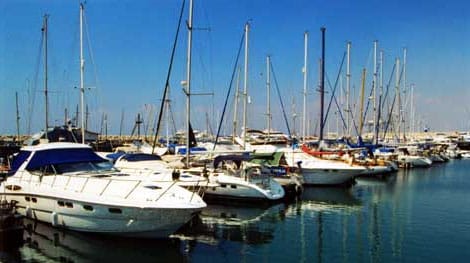
marina for KitiTHE LARGE village community of Kiti is set to have its own marina in the Softades beach area, with the major project potentially offering an economic boost to both the village and Larnaca as a whole.

The proposed marina will be located on the Softades coast, which is situated between the villages of Kiti and Mazotos, and already has a designated kite surfing beach that draws in large crowds of devotees of the sport.

Under the plans, Makis Afxentiou Estate Enterprises said the marina is under study and will ‘create new high standard leisure facilities and provide greater economic benefits to the surrounding area’, with investment said to include local, Chinese and Arab stakeholders.

According to sources, the project – which will be open to the public and share many similarities with Limassol marina – will include a port, sports facilities, commercial premises, apartments, building facilities and parking spaces, with talks of a luxury hotel and possibly a casino. It constitutes an unprecedented investment in the region, spanning 500,000 square metres of land.

If the relevant permits are secured in a timely fashion, the first phases of construction are expected to start by the end of 2016, with the project’s completion forecast to take three years.

Kiti’s location makes the proposed project accessible not only for people in Larnaca, but also Nicosia and Limassol, with the potential to bring large numbers of visitors from other parts of the island, as well as tourists.

Putting Kiti on the tourism map

Located 11 km southwest of Larnaca town, Kiti is a member of the Larnaka Tourism Board and has been steadily putting itself on the tourism map through the efforts of its Community Council.

Softades beach – the area of the proposed marina – is the island’s first and only designated beach for wind and kite surfing, and offers some of the best sea and wind conditions in the whole of the Mediterranean region. The kite surfing schools/clubs located there are active in promoting the sport and regularly bring big-names from the international kite surfing community to the area for competitions, events and tuition. It is believed that the development will not affect the sport.

Other draws of the village are the main square – which was recently revamped during a three-year project – and Angeloktisi Church with its extensive public gardens.

The revamped square was given new paving, car parks, benches, covered/lighted areas, and greenery – flanked by cafes, restaurants and a Museum of Culture, whilst the church houses a very rare 6th century mosaic of the Virgin and Child between two archangels, and as such, is featured on the tentative UNSECO World Heritage Site List.

Copyright © Phileleftheros Public Company Ltd

Confusion over Cyprus property values

Confusion over Cyprus property valuesTHE EUROPEAN Central Bank has found that properties in Cyprus remain undervalued by between 4% and 16% but the European Commission remains convinced they remain overvalued by 5% due to a pre-crisis artificial inflation of prices.

The position of the Central Bank of Cyprus is in line with its European counterpart; prices have fallen to late 2006, early 2007 levels which the bank consider reflect realistic values.

According to the European Central Bank, Cyprus property prices from the first quarter of 2007 until and including the second quarter of 2014 were too high, but became undervalued by the fourth quarter of 2015 by between 4-16%.

However, the European Commission says that taking into account property prices between the first quarter of 2002 to the first quarter of 2015, prices remain overvalued by some 5% in comparison to their long-term average value.

Copyright © Phileleftheros Public Company Ltd