Airbnb-style rental law faces major issue

Cyprus Airbnb-style rental law faces major issueLAWMAKERS on Tuesday said they were almost ready to bring a bill regulating the operation of short-term Airbnb-style property rentals to a vote, although one major issue still needs to be ironed out.

The pending question relates to the ease with which individuals would be able to rent out apartments in residential buildings.

There are two schools of thought on this. Under the first anyone should be able to rent out their apartment. If subsequently the other owners in the building complain, a provision in the law would allow them to file their complaint to the junior ministry for tourism.

The other school of thought is that permission to rent out an apartment should be subject to the agreement of a building’s management committee or the majority of the apartment owners.

The legislative proposal provides for a three-year transition period to be afforded to current Airbnb renters to acquire a VAT number and comply with safety and health regulations – pre-conditions for registering their properties.

The aim is to create a dedicated registry for short-term self-catering accommodation and then taxing that income, bringing cash into state coffers.

Each property thus registered is to be assigned a number, which will be used in online advertising platforms so that punters may know whether the property in question is registered or not.

The bill covers villas, residences and apartments used for tourism purposes.

Earlier, the House commerce committee had heard there are an estimated 40,000 accommodations across the island being used for short-term rentals that are unlicensed and thus not subject to the legislation governing tourist lodgings.

Speaking in parliament on Tuesday, Akel MP Costas Costa reiterated concerns that enforcing strict licensing criteria might disqualify many who now rent their properties on a short-term basis.

It could impact hundreds of families living in the countryside who rely on this practice to earn income, he said.

The legislative proposal will amend an upcoming law which is to be voted on February 15. The government bill governs hotel and tourist accommodation, and purports to simplify licensing and classification procedures.

The legislative proposal will be put to the House floor after the government bill has passed.

Bank of Cyprus sells NPLs to APS

Bank of Cyprus sells NPLs non-performing loansTHE BANK of Cyprus has sold a portfolio of non-performing loans (NPLs), nominally worth €245 million to APS; the distressed debt management company that took over Hellenic Bank’s toxic loans in July 2017.

The portfolio, dubbed ‘Velocity’, has a nominal value of €245 million comprised of mainly small loans to 9,700 borrowers; 8,800 individuals and 900 SMEs.

Velocity has a net asset value of €33.7 million following the bank’s decision to write down some 86% of the loans considered to be non-recoverable and not serviced for five years.

Last August the bank offloaded bad debts and NPLs amounting to €2.8 billion to Apollo Global Management in a project dubbed Helix’.

Bad loans account for some 37 per cent of the bank’s total loan portfolio, and it aims to reduce its level of NPLs to 26 per cent by next year

The Bank of Cyprus has said that €900 million worth of its loans are eligible for the government’s ‘Estia’ scheme, which plans to subsidise the recovery of NPLs in cases where a primary residence has been used as loan collateral.

Restructured NPLs amounting to €600 million will be reclassified by BoC as performing loans by the end of this year after they complete their one-year probationary period as required by the European Banking Authority.

Larnaca high-rise developments planned

PHILELEFTHEROS has reported that Larnaca may soon be getting an 83 metre, 30 storey high-rise building assuming its construction is given the go-ahead by the Larnaca Municipality.

The Larnaca Municipal Engineer, Toulla Angelidou, provided an analysis of applications received for high-rise buildings in the Municipality.

Between 2016 until today, licences have been granted for the construction of two buildings each of eleven storeys and a 45 metre thirteen storey building.

The following applications have been approved by the Town Planning department and are now pending approval by the Larnaca Municipality:

An 83 metres 30-storey building

A 25-storey building

A 20-storey building

A 15-storey building

Two 13-storey buildings

A 10-storey building

 An 8-storey building

In addition to the above the following applications have been received, which are yet to be reviewed by the Town Planning department:

Two 20-storey buildings

A 30-storey building

Three 10 storey buildings

These applications are planned for buildings between the K Cineplex cinema at Pelloponisou and Potamou Indou and the Larnaca port and in the area to the west of the harbour.

The mayor of Larnaca recently said that applications may be submitted for high-rise buildings along Limassol Avenue (???????? ???????), where the construction of 4-5 residential buildings have already been planned.

It seems that the Larnaca seafront may be spared from the plague of high-rise buildings – at least for the time being. According to the Geological Survey Department, building high-rises on Larnaca’s seafront is problematic as the soil cannot take the weight of towering buildings.

Clouds gathering over the Cyprus economy

Clouds gathering over the Cyprus economyALL PANELLISTS in the Cyprus Economic Society conference titled “The Cyprus Economy Panel 2019: Medium term outlook and risks,” stressed the need for Cypriot authorities to maintain fiscal discipline, address challenges and promote structural reforms that would fuel the current momentum to the economy that help the island recover from the 2013 financial crisis.

Furthermore, the IMF local representative and the University of Cyprus’ Economic Research Centre said they are considering their projections for the Cypriot economy, as the Central Bank of Cyprus has already revised its outlook last December.

George Kyriakou, the CBC’s director of economic analysis and research said the Cypriot economic growth fuelled by investments and strong domestic consumption will continue expanding albeit with some deceleration.

“There are a lot of risks, such as uncertainties in the external environment, the slowdown in the Euro Area, trade wars and Brexit,” he said, adding that domestic risks are associated with high public and private debt, high non-performing loans, which have declined but still are a long way from the EU average.

Kyriakou pointed out that there is a trend for rising public expenditure, highlighting that the rating agencies, some of which have upgraded Cyprus to investment-grade assume that strict fiscal policy will continue and that public debt will decline.

Concluding, Kyriakou described the Cypriot economy as a patient out of the hospital. “He is up and running, taking excessive risks, old habits are coming back. Are lessons from crisis wasted due to complacency?” he said.

On his part, Andreas Charalambous Director of Financial Stability in the Ministry of Finance said that positive growth is projected going forward but “there are currently more questions marks on the medium term,” citing less favourable external conditions.

“We are still confronted with favourable conditions in the near short term but the consensus is that in 2019 we will be observing moderation,” he said.

Charalambous noted that public finances portray a good image due to “extraordinary” high public revenue but warned that this image may change if revenue normalise.

He also said that revenue normalisation may affect the downward dynamic of Cyprus high public debt and underlined that it is high time for growth-enhancing structural reforms.

George Syrihas, former CBC executive director said that the international environment is less favourable for Cyprus due to Brexit, the economic slowdown in China and the euro area, as well as uncertainty associated with the US trade policy, risks which affect the risks on the growth projections.

“The balance is on the downside, so we are expecting a deterioration on the outlook. Impact of Brexit on Cyprus could be important according to the developments,” he said.

On her part Maria Eracleous, the local IMF representative acknowledged that Cyprus exhibited impressive recovery since the 2013 financial crisis, driven by strong tourism revenue, robust professional services, strong domestic demand and a favourable external environment.

“But the conditions are not so favourable now,” she said, adding that growth is estimated to slow down in the medium term, adding that the Fund is looking into revising its previous projection for a 4.2% growth rate in 2018.

She underlined that in the medium term the IMF expects growth to slow to its potential of 2.5%, as transitory effects of investment will gradually dissipate and Euro Area growth is decelerating.

But she stressed that the 2.5% projection assumes that Cyprus will show progress in implementing structural reforms.

“If we don’t have these reforms (growth) it will be less,” she added.

– Cyprus News Agency

Citizenship schemes need greater scrutiny

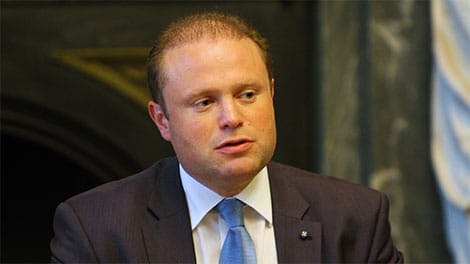
THE PRIME MINISTER of Malta Joseph Muscat said on Tuesday that the level of scrutiny regarding European citizenship schemes need to be upped, speaking in Nicosia after his meeting with President of the Movement for Social Democracy (EDEK) Marinos Sizopoulos.

Muscat, who is visiting Cyprus for the 5th MED-7 Summit in Nicosia, was answering to journalists’ questions regarding a European Commission’s report, criticising investor citizenship and residence schemes of Malta, Cyprus and Bulgaria.

Muscat said that Malta welcomes the conclusions of the Commission’s report, saying that its conclusions are positive for Malta’s system.

As he said Malta totally agreed that the way in which candidates were scrutinized needed to be upped and that the country was one of the proponents of a common European scrutiny system.

Acknowledging that there was also criticism in the report, he said that the country was addressing that criticism and that its attitude was cooperative with the Commission.

Answering to another question Muscat avoided commenting on statements by President Anastasiades that Cyprus was being targeted on the citizenship-by-investment programme, saying that “I think he knows how to put the arguments in the best interest of Cyprus”.

At the same time, he said that generally speaking Malta’s system was in order, however the country would will still make the improvements that have been pointed out.

“But a main point of which we are proponents is that the level of scrutiny need to be upped, hopefully even to have a common system of scrutiny”, he said adding that if one programme rejects an applicant other programmes should be informed about the rejection. “We not only have no problem with that, we would firmly advocate that”, he noted.

He also reminded that Malta publishes the name of whoever is granted its citizenship.

On his meeting with President of EDEK, Muscat said that he took the opportunity to learn the party’s positions on the future of Cyprus, economy and the future of Europe.

© Stockwatch Ltd

617 new homes in October

Cyprus: 617 new homes in OctoberTHE TOTAL number of building permits authorised in Cyprus during October 2018 stood at 630 compared with the 536 authorised during October 2017; a rise of 17.5% and provided for the construction of 617 new homes according to official figures published by the Cyprus Statistical Service.

Compared to October 2017, the total value of all building permits fell by 3.6% to €160.5 million and their total area fell by 2.9% to 188.0 thousand square metres.

During October 2018, building permits were issued for:

  • Residential buildings – 426 permits
  • Non-residential buildings – 110 permits
  • Civil engineering projects – 28 permits
  • Division of plots of land – 50 permits
  • Road construction – 16 permits

The 426 residential building permits approved in October provided for the construction of 617 new homes (dwellings) comprising 275 single houses and 342 multiple housing units such as apartments, semis, townhouses and other residential complexes.

Building Permits Issued for the Construction of New Homes
(Number of Dwellings)

Month 2017 (Dwellings) 2018 (Dwellings) Increase/Decrease %age Change
January 381 476 95 24.9%
February 383 431 48 12.5%
March 412 467 55 13.3%
April 289 418 129 49.6%
May
424 541 117 26.6%
June
381 506 125 32.8%
July 537 632 95 17.7%
August 244 453 209 85.7%
September 362 576 211 59.1%
October 543 617 74 13.6%
Totals 3,956 5,117 1,161 29.3%

Of those 617 new homes, 222 were approved for Nicosia, 154 for Larnaca, 144 for Limassol, 56 for Famagusta and 41 for Paphos.

During the period January – October 2018, 5,332 building permits were issued compared to 4,817 in the corresponding period in 2017; an increase of 10.7%, while their total value and area increased by 38.1% and 27.0% respectively.

According to the Cyprus Statistical Service, building permits constitute a leading indicator of future activity in the construction sector.