Taxing Airbnb property rental income

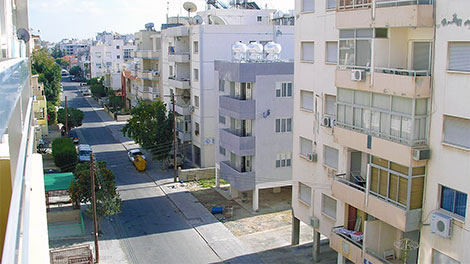
Taxing Airbnb property rental incomeAPPROXIMATELY 20,000 properties in Cyprus are rented via Airbnb and other websites and although some owners are paying tax on the rental income they receive, others manage to avoid paying tax.

The House Finance Committee discussed the renting/leasing of properties via Airbnb and other on-line services yesterday with a view to plugging loopholes in the law.

Yiannis Tsangaris, the tax commissioner, explained that the laws need to be changed in order to tax on-line generated rental income – and the first step would be to permit the relevant authority to set up a register of short-term leases.

Meanwhile two draft bills were discussed by the Committee:

The author of one of the bills, DISY MP Averof Neophytou, said that law must require the owners of properties who rent them out via Airbnb and other on-line services to register those properties with the authorities; owners who failed to register would be held responsible; a fine of €5,000 was suggested.

Mr Neophytou pointed out that single day leasing is illegal.

A second bill, proposed by EDEK MP Elias Myrianthous, would enable properties that are not currently registered with the Cyprus Tourism Organisation (CTO) to be registered and regulated.

Greece introduced legislation a few months ago to tax annual rental income: 15% on income up to €12,000; 35% for income between €12,000 and €35,000; and 45% on income above €35,000.

Similar legislation has also been introduced in the Netherlands, Britain, Germany, Spain and other European countries.

Residential property prices continue to rise

Cyprus residential property pricesTHE PRICES of residential property in Cyprus rose by 0.4% during the fourth quarter of 2017 compared with the third quarter, with prices of apartments and houses rising by 0.9% and 0.2% respectively, according to the Cyprus Central Bank’s Residential Property Price Index.

Although apartment prices in Famagusta and Larnaca fell by 1.9% and 0.2% respectively over the quarter they rose by 0.3% in Nicosia, 2.0% in Nicosia and 2.2% in Paphos.

House prices rose by Famagusta, Larnaca and Limassol rose by 1.0%, 0.7% and 0.3% respectively over the quarter but fell by 0.6% in Paphos and by 0.1% in Nicosia.

Annual property price changes

The Cyprus Central Bank’s Property Price Index reports that apartment and house prices rose by 1.5% during the fourth quarter of 2017 compared with the fourth quarter of 2016, with the price of apartments rising by 3.3% and house prices up by 0.9%.

Although apartment prices fell by 0.4% in Famagusta, they rose by 6.3% in Limassol, 3.0% in Nicosia, 0.6% in Paphos and 0.4% in Larnaca.

With the exception of Nicosia, where house prices fell by 0.2% on an annual basis, they rose in the other four districts, with rises of 2.2% in Famagusta, 1.6% in Limassol, 1.1% in Paphos and 0.3% in Larnaca.

Clear signs of recovery

The Central Bank considers that the real estate sector in Cyprus is showing clear signs of recovery from the historically low levels of activity reached during the crisis.

However, the most important remaining challenge is the level of non-performing loans, particularly those of first home buyers.

Further reading

Residential Property Price Index for 2017 Q4 (Greek)

Crocodile park gets go-ahead

Cyprus crocodile parkTHE COMMUNITY council of Achna in the Famagusta district has given the green light for the creation of a crocodile park within its boundaries, community leader Nicos Vasilas said on Thursday.

The decision was taken by the community council with six of the nine members ruling in favour of the project. But the local authority said they would reconsider in the case if there were reactions from residents.

Vasilas told the Cyprus News Agency that the community council cannot authorise per se the creation of the crocodile park, but the investors – Israeli company TSA Crocopark – needs to receive the reassurance from the local authority that they will not raise any objections after filing for the creation of the park in their area.

In the case the community was against this, Vasilas said, the company would not file for the creation of the park.  He said that the company will next week present the project in detail to the residents.

“In the event there are reactions at the community gathering, then the council will reconsider the issue. If there are no reactions to the creation of the park, then the procedure for securing a town planning permit and building permit will proceed normally,” Vasilas said.

He stressed that the project concerns the creation of a theme park and that the community council had already told the company they would not agree to a breeding farm for the sale of crocodiles and for their slaughter for their skin or meat.

The company approached Achna after their proposal was rejected by the Psematismenos and Athienou communities.

The proposal concerns a 40-square kilometre theme park hosting around 100 crocodiles, with a souvenir shop, a canteen, and walking paths for the observation of crocodiles. The company proposed its creation between Achna and Vrysoules near the old Larnaca to Famagusta road.

Vasilas visited last year French crocodile park ‘La Ferme aux Crocodiles’ in Montelimar, France, to find out more. He had said that the French park attracts a lot of tourists, reportedly 300,000 visitors annually.

Those opposing the idea of such a park in Cyprus expressed fears for public safety from a possible escape of crocodiles, which also threaten the ecosystem. Others fear that once the park is established, there are no guarantees that it will not be used for breeding purposes, as numbers might spiral within a short period of time. In addition, the crocodiles require vast amounts of water.

VAT break for young couples buying land for first home

VAT break for young couples buying land in Cyprus for their first homeTHE GOVERNMENT has submitted a draft bill to parliament indirectly exempting from payment of 19 per cent VAT young couples who buy land for the purpose of building a primary residence.

The issue is related to the passage of a law last November imposing 19 per cent VAT on building land.

In its wake, persons buying a finished housing unit or apartment as their primary dwelling must pay 5 per cent VAT, whereas purchasing a plot of land for owner-occupied housing incurs a 19 per cent VAT charge.

Now, the new bill provides that, whereas newlyweds buying land for owner-occupied housing will pay the full tax rate, 14 per cent of the VAT imposed on the value of the land would be returned to them in the form of a grant so that ultimately, they only pay 5 per cent VAT.

Lawmakers meanwhile have tabled a legislative proposal aiming to eliminate a distortion where certain buyers of real estate must pay property transfer fees while others do not.

The bill was tabled by Disy MP Averof Neophytou.

When a person buys a new property in Cyprus and pays VAT on it, he or she is not subject to transfer fees, whereas transfer fees do apply when the transaction involves a land lease.

To end the distortion in the market, the proposal provides for the non-payment of transfer fees for rentals or leases of immovable property when the persons involved already pay VAT on taxable business activity.

But not all MPs are on board with the proposal, which was discussed during a closed-doors session of the House finance committee.

The Greens’ George Perdikis said his party would never consent to an arrangement letting developers “off the hook.”

Whereas the lease option might benefit entrepreneurship – by eliminating transfer fees – this should not be done at the expense of state revenues, he said.

“There is a large discussion going on about leases in which the church is involved, and we shall under no circumstances agree to the state taking a hit in order to serve the interests of a businessman, whoever he or she may be.”

After the VAT on building land was passed late last year, parliament brought regulations specifying which type of development would be subject to the tax.

Protected zones and farming land were exempted.

Non-performing loans (NPLs) initiative

Cyprus non-performing loans (NPLs) initiativeTHE GOVERNMENT is in the process of preparing proposals to improve the insolvency and foreclosure laws in a bid to tackle non-performing loans, Finance Minister Harris Georgiades said on Tuesday, especially those in the state-owned co-op bank, which is the process of being sold and possibly split in two parts.

Speaking at the 8th Nicosia Economic Congress, the minister said that depending on investor interest in the co-op bank the government planned to set up a loan management body to handle its non-performing loans.

The terms will be set by the European supervisors.

He said other banks too will be able to transfer their loans to the NPL administrator and those debtors who meet certain income and property criteria will be given support.

“In any event however, it must be understood that no loan will be written off,” he said. “Precisely because the administrator’s proceeds from the borrowers and not from taxpayers, will repay the debt the state has now assumed.”

The state, which nationalized the co-ops in 2013 through a €1.7bn injection, is looking to dispose of the bank, or part of its assets in a process that started last month.

It also deposited €2.5bn recently in a bid to boost confidence amid rumours that sparked a run on the lender.

As collateral, it received the co-op’s NPLs, worth around €6.2bn, which will most likely be moved to a separate entity, off the lender’s books.

But to have a chance to recoup the money it has poured into the co-op, parliament must agree to amend the foreclosures and insolvency laws to make it easier for banks to move against borrowers who do not service their debts.

The current legislation, passed in 2015, makes it difficult for banks to recover their money, something repeatedly pointed out by the EU and the IMF.

“The government is already working towards this direction, that is, preparing proposals to improve the insolvency framework and foreclosures,” the minister said.

The co-op bank has the biggest exposure to loans with primary residences as collateral.

In 2017, co-ops extended the collateral recovery period to seven years, a move that cost €150m in provisions.

Limassol rent rises spiral upwards

Limassol rent risesRENTS in Limassol have gone up by around 25 per cent in under two years, way higher than other cities in Cyprus and leaving ordinary Limassolians increasingly priced out of the market.

According to real estate consultant Antonis Loizou, an average two bedroom flat two years ago cost €400 a month. By 2017, it was averaging €460. It is now €500.

“If we’re talking about flats near the coast – add another 30 per cent to these prices,” he told the Sunday Mail.

A post on a Facebook group from someone looking for a decent flat for €300 near the beach drew a series of exasperated ‘good luck’ comments and pictures of someone looking far into the distance with binoculars.

Online searches show rents at staggering figures – anywhere between €1,000 and €2,500 for a two-bedroom apartment.

Contrary to other cities which attract foreigners, Limassol is an upmarket destination, Loizou added.

“It isn’t like Protaras which has people visiting only for the summer,” Limassol is attracting people for more than just entertainment but work.

“New hotels are being built, the casino is going to be there, cruises are arriving at the port – all these investments bring money,” Loizou said.

Also home to shipping companies, forex companies and international banks Limassol has attracted foreign nationals with a lot more cash in their pocket whose demand for a place to stay is bringing up prices, clashing with those on average Cypriot wages.

“A German for example working in the shipping industry in Cyprus, doesn’t get a salary of €1,500. He gets anywhere between €2,000 – €3,000 reflecting the income he would have in Germany. He therefore can afford to pay more rent.”

This pushes prices up, pricing out those on an average Cypriot salary.

The university in Limassol, Tepak, coupled with other commercial activities have all contributed to the increasing demand.

According to Loizou, a two bedroom flat in Engomi, near the University of Nicosia costs around €600. Near Tepak, however, the average rent for a similar flat is about €750.

Limassol has also become a major magnet for those taking advantage of the citizenship-for-investment scheme. This has had a knock-on effect on the rental market even though the main focus is property sales.

“The passport scheme has 100 per cent contributed to the increased demand,” said Loizou.

The investment needed for citizenship in Cyprus is for €2 million if the investment is made solely in residential real estate, at least a quarter of which must be spent on a residence for life. If not, the threshold is €2.5 million, at least €500,000 of which must be spent on a permanent residence.

A lot of this money stays in Limassol, Loizou said.

“The developer will make profit, the construction company, the land owner, the builder,” they then have more purchasing power.

Chairman of the Royal Institution of Chartered Surveyors (RICS) Thomas Dimopoulos put forward another reason for the increase in rents in general: the difficulty of obtaining loans to purchase a house.

“Although the situation has greatly improved lately (particularly after the 2013 crisis), criteria for loans are quite strict and restrict many (potential) property buyers,” he told the Sunday Mail.

“Those without capital, cannot buy property. Demand for rentals increases and rent prices go up.” This is also seen in figures that show between 2007 and 2017, 80 per cent of residential purchases were apartments and 20 per cent were houses.

“The majority of developments in Limassol have historically been apartments blocks, while the new developments are also high-rise apartment buildings who take advantage of the building coefficient incentives.”

Chairman of the Cyprus Scientific and Technical Chamber (Etek), Stelios Ahniotis, said the effects this is having on society are becoming increasingly visible.

“Before, we used to see our youth wanting their independence, moving out and living together when they were in a relationship,” he said.

“Now, they’re starting to move back in with their parents,” living with one or the other’s in-laws.

Christos Antoniou, 26, began renting his own flat a year ago. He was lucky to find one at a great location – near the ‘five road’ area – at €300 for one bedroom. It is very old and he had to pay to buy some furniture, but he was happy with the independence it offered him.

However his contract is coming to an end and his landlord recently approached him to tell him he wants an extra €50.

“I don’t know what I’m going to do. I really can’t afford this. I make €800 with my job so I’d have to pay €350 for rent plus all the other expenses – electricity, water, food, insurance and petrol. How do I have a life after this?”

Although €50 might not sound like much, on his income, it matters.

Though not much of a spender, he enjoyed having the ability to maintain a normal social life and pay his monthly gym membership. It seems impossible to him however to maintain all of that and have his independence.

The idea of moving back in with his parents, however, as he approaches his 30s and is in a long-term relationship, isn’t appealing.

“Cypriots are becoming accustomed to things that were a norm abroad but were looked down on here years ago,” Ahniotis said.

For instance, it was unheard of a decade ago to have a family with two children live in an apartment.

One cleaner, who lives in Asomatos near Trachoni village – an expensive location because of its proximity to the mall – says she pays €680 per month for a one-bedroom apartment. She makes €800 per month.

“I make just enough to get by. No more, no less.”

Those who are struggling to afford to rent in Limassol proper are being forced to move further towards the west in areas such as Ypsonas, Polemidia and Kolossi or to the eastern part of the city, according to Dimopoulos.

“This is increasing the suburbanisation effect,” he said, referring to how populations shift from central urban areas to suburbs.

Moving further out of the centre, however, likely means extra spending on travelling expenses.

Exasperated and frustrated, some are finding solace in humour. A post on Facebook of a decrepit barn-type house, comes with the caption: “house for rent in Limassol. Only €1,780.”