Bill to exempt old mortgages from foreclosure

Exempt old Cyprus mortgages from foreclosureCYPRUS banks may be required to raise additional capital should a law be enacted exempting approximately half of mortgaged properties from foreclosures, officials cautioned on Monday.

The warnings came during a discussion of a bill which provides that mortgages granted prior to the passage of the foreclosures law on September 9, 2014 would be exempted from foreclosure proceedings.

The legislative proposal was tabled by independent MP Anna Theologou. It is co-sponsored by Edek’s Marinos Sizopoulos and the Greens’ Giorgos Perdikis.

Officials from the government and the Cyprus Central Bank warned that such a law would wreak havoc on banks’ balance sheets, as it would strip them of the power to exert pressure on debtors not keeping up with their mortgage payments.

Andreas Charalambous of the finance ministry said European institutions would have to conclude that the foreclosures and repossessions system in Cyprus is ineffectual, and as a result request that Cypriot banks raise their capital provisions.

“Unless we succeed in developing a framework that protects and continues to protect vulnerable groups, and unless we can deal effectively with strategic defaulters, the consequences will be incalculable,” he stressed.

To date, he added, banks have preferred to restructure loans before resorting to foreclosures as a last-ditch measure.

Stelios Giorgakis of the Central Bank warned that “unless we want other banks to follow in the footsteps of the cooperatives, we need to take measures facilitating the proper management of non-performing loans.”

Citing recent data, Giorgakis said that terminated non-performing loans (NPLs) account for about 50 per cent of all remaining NPLs, which stand at about €20bn.

According to the Central Bank of Cyprus Economic Bulletin, December 2017, “the level of non-performing loans continues to be the main problem of the banking sector in Cyprus, despite the progress achieved in recent years. In particular, from the end of 2016 to July 2017 NPLs were reduced by € 1.5 billion.

“However, the downward trend seems to be weakening. One important reason for this is the amount of terminated NPLs that account for about 50 per cent of all remaining NPLs.”

Terminated NPLs or terminated credit facilities include loans denounced or terminated or letters of termination that have or will be sent by credit institutions requiring total repayment.

“There is no explanation for this state of affairs, namely that while the economy is growing and unemployment is on the decline, household debt remains very high and loans are not being serviced,” added Giorgakis.

For his part, head of the Insolvency Service George Karotsakis said that the proposed bill “will create a huge problem for the stability of the financial system, of the economy as a whole.”

The weak insolvency and foreclosures system in Cyprus is a chief reason why credit rating agencies continue to assess Cypriot sovereign debt at below investment grade, he recalled.

Financial Ombudsman Pavlos Ioannou said policy-making should be based on up-to-date and reliable statistics on loan restucturings.

This data was not currently available, he noted.

“How long is it going to take – maybe 10 years – to have a look at concrete statistics on NPLs?”

Discussion of the bill will continue at the House finance committee at a later date.

Permits for new homes up 12.5 per cent

Permits for new homes in Cyprus up 12.5 per centTHE TOTAL number of building permits authorised in Cyprus during February 2018 stood at 481 compared with the 444 authorised during February 2017; an increase of 8.3% according to official figures released by the Cyprus Statistical Service.

Compared to February 2017 the total value of these permits rose by 35.3% to reach €213.2 million, their total area rose by 27.7% to reach 207.8 thousand square metres and provided for the construction of 431 new homes.

During February 2018, building permits were issued for:

  • Residential buildings – 334 permits
  • Community buildings – 2 permits
  • Non-residential buildings – 88 permits
  • Civil engineering projects – 11 permits
  • Division of plots of land – 35 permits
  • Road construction – 11 permits

Building permits for new homes

The 334 residential building permits approved in February provided for the construction of 431 new homes (dwellings). These comprised 256 single houses (compared with 255 in February 2017) and 78 multiple housing units such as apartments, semis, townhouses and other residential complexes (compared with 63 in February 2017); a rise of 12.5%.

Of those 431 new homes, 183 are destined for Nicosia, 138 for Limassol, 62 for Larnaca, 33 for Paphos, and 15 for Famagusta.

Building Permits Issued for the Construction of New Homes
(Number of Dwellings)

Month 2017
(Dwellings)
2018
(Dwellings)
Increase/
Decrease
%age
Change
January 381 476 95 24.9%
February 383 431 48 12.5%
Totals 764 907 143 18.7%

According to the Cyprus Statistical Service, building permits constitute a leading indicator of future activity in the construction sector.

Crocodile park back in the news

A CROCODILE park at Achna would need about 80 tonnes of water a day and could pose a health risk to humans, MPs in the House Environment Committee heard on Wednesday.

Maria Koliou, Head of the Infectious Disease Surveillance Unit of the Ministry of Health, warned MPs that the crocodiles could be infected with the West Nile virus that could be spread to humans through mosquitoes.

Ms Koliou said that people over 50 with existing health problems had an increased risk of being infected and developing encephalitis adding that Cyprus had only one incident of the West Nile virus to date and was considered a safe destination for tourists.

(People infected with the West Nile virus can also develop meningitis.)

A professor of microbiology explained that tests may not identify infected crocodiles when they arrived but they could go on to develop the disease. He said that if an infected animal entered Cyprus it would be like opening Pandora’s Box.

Farming organisations opposed the crocodile park due to the large amount of water it would need when their members were facing water rationing.

The committee also heard that Achna dam was a special protection area as it was one of a few breeding sites for two priority bird species.

Last week the 500 local residents attended a community meeting in Achna had mixed views on the crocodile park.

Israeli crocodile connection

Three years ago Arutz Sheva, an Israeli newspaper reported that the Jordan Valley was in Danger of a Crocodile Invasion.

David Elhayani, the chair of the Jordon Valley Regional Council, explained that initially the crocodile farm, which was established in the 1990’s next to the town of Petzael, served as a tourist highlight with thousands of people arriving to see the attraction and to take pictures with the little crocodiles.

Over the years the farm was closed to tourism and the owners of the farm raised crocodiles for their skin. But since Israel passed a law classifying crocodiles as a protected species, it is forbidden to harm them.

Elhayani said  that an urgent solution needs to be found for the Petzael crocodile farm, before the region finds itself under a crocodile invasion.

“We demand that the state evacuate the group of crocodiles from here, before it’s too late,” warned Elhayani. “Just imagine what will happen if a crocodile escapes into the Jordan (River). It’s possible to evacuate them to Cyprus and find a solution for them there.

April property sales up 29%

Cyprus property sales April 2018

THE NUMBER of property sales contracts deposited at Land Registry offices across the Republic of Cyprus during April 2018 rose 23 per cent compared to April 2017 according to official figures published by the Department of Lands and Surveys.

This follows increases of 23% in March, 46% in February, and 64% in January.

During April a total of 655 contracts or the sale of residential and commercial properties and land (building plots and fields) were deposited at Land Registry offices across Cyprus, compared with the 506 deposited in April 2017.

The figures show a continuing improvement in the economic conditions, coupled with government measures (such as the citizenship by investment scheme) – and although banks remained burdened with very high levels of non-performing loans (NPLs) they are now in a better position to grant loans to those buying property.

(It should be noted that the figures include an unspecified number of properties acquired by banks as part of loan restructurings.)

Of the 655 contracts deposited, 326 (49.8%) were for properties purchased by non-Cypriots.

Sales rose in all districts. In percentage terms Famagusta led the way with sales rising by 79% followed by Nicosia, where sales rose by 46%. Meanwhile sales in Larnaca and Paphos rose by 20% and 15% respectively.

Limassol recorded the highest number of sales during April reaching 246.

Total Property Sale Contracts – 2017/2018 Comparison

District Year Jan Feb Mar Apr May Jun Jul Aug Sep Oct Nov Dec
Nicosia 2017 72
73
79
80 118 162 124 76 87 117 170 306
2018 146 96
126
117
Famagusta 2017 21
19 40
29
38 46
59 47 57 51 52 169
2018 48 52
40
52
Larnaca 2017 102
100 113
69
119 96
103 88 107 111 151 181
2018 112 99
116
83
Limassol 2017 132
177 232
192
298 304
289 201 203 306 321 532
2018 225 256
314
246
Paphos 2017 96
87 162
136
183 235
184 160 148 183 212 349
2018 164 163
172
157
Totals 2017 423
456 626
506
756 843
739 572 602 768 906 1537
2018 695 666 768 655

Year to date

During the first four months of 2018 the number of contracts for the sale of property deposited at Land Registry offices has risen 38% to 2,784 compared to the 2,011 deposited during the first four months of 2017.

The highest rise of 76%, was recorded in Famagusta, followed by Nicosia (the capital) with a 60% increase. Rises of 42%, 36% and 7% were recorded in Limassol, Paphos and Larnaca respectively.

Overseas property sales

The Land Registry figures reveal that a total of 326 property sale contracts were deposited by non-Cypriots during April 2018. Of those 64 were deposited by EU nationals and the remaining 232 by non-EU nationals, but we cannot quantify the number of non-EU citizens who bought property with a view to applying for citizenship.

Paphos remained the most popular district with the overseas market with the number of property sales contracts deposited reaching 136. Limassol recorded 84, Larnaca 42, Famagusta 40 and Nicosia 24.

Overseas Property Sale Contracts – 2018

District Source Jan Feb Mar Apr May Jun Jul Aug Sep Oct Nov Dec
Nicosia EU 10 8 9 10
Non-EU 10 4 13
14
Total 20 12 22 24
Famagusta EU 15 24 8
12
Non-EU 36 10 14
28
Total 51 34 22 40
Larnaca EU 9 9 9
6
Non-EU 43 46 40
36
Total 52 55 49 42
Limassol EU 15 17 32
17
Non-EU 103 87 83
67
Total 118 104 115 84
Paphos EU 41 58 55
49
Non-EU 105 97 74
87
Total 146 155 129 136
Totals EU 90 116 113
94
Non-EU 297 244 224
232
TOTAL 387 360 337 326

During the first four months of 2018, a total of 1,410 property sales contracts have been deposited by overseas buyers, with 413 deposited by EU nationals and 997 by non-EU nationals.

Paphos maintains its position as the most popular spot for overseas buyers with sale contracts reaching 430, followed by Limassol with 421, Larnaca with 198, Famagusta with 147 and Nicosia with 78.

Cyprus Property Sale Contracts 2000 – 2018

Year Overseas Sales Domestic Sales Percentage
Overseas Sales
Total
Sales
2000 450 12,214 3.6% 12,664
2001 1,207 12,849 8.6% 14,056
2002 2,548 14,111 15.3% 16,659
2003 3,981 15,294 20.7% 19,275
2004 5,384 11,947 31.1% 17,331
2005 6,485 10,106 39.1% 16,591
2006 8,355 8,598 49.3% 16,953
2007 11,281 9,964 53.1% 21,245
2008 6,636 8,031 45.2% 14,667
2009 1,761 6,409 21.6% 8,170
2010 2,030 6,568 23.6% 8,598
2011 1,652 5,366 23.5% 7,018
2012 1,476 4,793 23.5% 6,269
2013 1,017 2,750 27.0% 3,767
2014 1,193 3,334 26.4% 4,527
2015 1,349 3,603 27.2% 4,952
2016
1,813 5,250 25.7% 7,063
2017
2,406 6,328 27.5% 8,734
2018 (Apr)
1,410 1,374 50.6% 2,784
Totals
62,434 148,889 29.5% 211,323

Mixed views on crocodile park

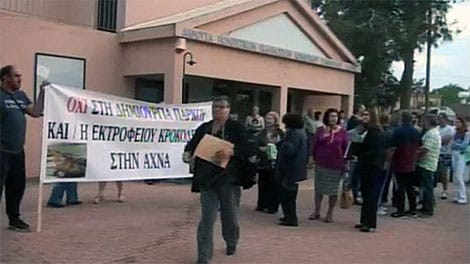
Mixed views on crocodile parkTHE RESIDENTS of the Achna forest settlement in the Dhekelia British base are divided over a project to build a crocodile park near their community.

Some 500 people took part in a community meeting last evening to discuss the issue, with about one half supporting the park and the other raising objections.

Officials of the Israeli firm TSA Crocopark, which has proposed establishing a park hosting 150 crocodiles near the Achna reservoir, and the community council presented their plans saying that the park will attract people to the area and generate income for the community.

Those who objected raised security concerns and dangers to the public and the environment. They also protested that the residents were not consulted before the decision was made by the community council to build the crocodile park at an estimated cost of over €1 million.

Tax shock for British residents in Cyprus

EARLIER this month Cyprus and the United Kingdom signed a revised double taxation convention, based on the OECD Model Convention for the avoidance of double taxation on income and capital.

(The Organisation for Economic Co-operation and Development (OECD) is an intergovernmental economic organisation with 35 member countries, founded in 1961 to stimulate economic progress and world trade.)

The new convention will enter into force once both countries have completed their respective domestic ratification procedures and will replace the current agreement, which was signed in June 1974.

Tax on pensions

Under the provisions of the 1974 agreement the income received by UK nationals resident in Cyprus from their UK pensions and annuities is taxed by the Cypriot authorities and therefore exempted from UK tax.

The changes made to the 2018 convention to conform to the OECD model  result in changes to the tax arrangements of some UK nationals resident in Cyprus.

Under the new convention those in receipt of UK state pensions, private pensions and annuities will continue to pay tax on the income they receive to the Cypriot authorities as before.

Government pensions

However, those in receipt of pensions paid by Her Majesty’s Government (HMG), local authorities and ‘political sub-divisions’ will be taxed on the income they receive from those pensions by Her Majesty’s Revenue and Customs (HMRC) in the UK.

This will impact pensions received by retired UK civil servants, armed forces personnel, NHS staff, teachers, local government employees, police etc. whose pensions will be taxed by HMRC once the 2018 convention has been implemented.

From the correspondence I’ve received this change will come as good news to some and bad news to others.

In some cases the change will result in them paying no tax in Cyprus or UK as their income falls below the tax thresholds in both countries.

Some will pay about the same, while others with large pensions and those with HMG pensions and other income that is taxed in the UK (E.g. from UK property rental) will pay more tax.

I’ve also received many angry emails, predominately from retired armed forces personnel resident in Cyprus, demanding to know why the UK is discriminating against those who served their country in the public service.

I have reviewed several UK Tax Treaties including Albania, Bahrain, Canada, Japan and Spain; all of them require HMG pension income to be taxed by HMRC.

Options

I suggest those who may be negatively affected by the change to consult a UK Tax consultancy to see what options are available (if any) to legally reduce their tax liability.

Interestingly the 2018 convention concerning Government Service and pensions (pages 17-18) states “However, such pensions and other similar remuneration shall be taxable only in the other Contracting State if the individual is a resident of, and a national of, that State.”