IN HIS closing remarks to a European Commission’s administrative letter concerning legislation relating to purchase of property on the island, a Cyprus EU official replied that “…it is clear that the Cypriot authorities have taken substantial and effective measures to address any problems which may arise in connection with the acquisition and transfer of immovable property”.
But in light of the current difficulties in the amending bills passage through parliament reported on Thursday, Cyprus could be in danger of misleading the EU into believing that any “substantial and effective measures” have been taken.
Letters from Michel Barnier (European Commissioner for Internal Market and Services) and Andreas D. Maurogiannis (Ambassador/Permanent Representative of Cyprus to the European Union) are reproduced below – click here to view the original letters.
You may also consider the Ambassador’s response to be somewhat misleading in that it fails to refer to a solution for the most serious problem – debts owed by developers to banks that prevents buyers obtaining Title Deeds who face the very real threat of losing their homes if the bank forecloses on the developers’ loans.
Notice also the statement in paragraph 2 of the Ambassador’s letter: “We consider that the above provisions are sufficiently effective, because separate titles can be issued within a reasonable time.” Does the Ambassador truly believe that twenty years – and more in some cases – is a “reasonable time” for titles to be issued?
MICHEL BARNIER
Membre de la Commission europeénne
Brussels, 25 -02- 2010
PD/cq D(2010)10 -A(201O)34
Dear Mr Watson,
Thank you for your letter of 22 December 2009, addressed to Commissioner McCreevy, in which you inquire, on behalf of Mr Denis O’Hare from the Cyprus Property Action Group, if you could receive any of the correspondence the Commission has received from the Cypriot Authorities with regard to the delays in the issuing and transfer of title deeds in Cyprus.
I would like to apologise for the unfortunate delay in replying to this letter, which is due to the recent change of the Commission.
In the light of your request for access to documents and with respect to Regulation (EC) No 1049/2001 of the European Parliament and the Council of 30 May 2001 regarding public access to European Parliament, Council and Commission documents, the Commission contacted the Cypriot Government and received a positive reply as to the disclosure of the correspondence in question.
Therefore, I am pleased to send you the Government’s replies of 8 April 2009 and 8 June 2009 to Commission’s administrative letters of 9 February 2009 and 5 May 2009. In those documents, the authorities acknowledge the problem of delays in the issuing and transfer of title deeds, but have committed themselves to accelerating the applicable procedures and to this end, to amend the relevant laws.
With regard to the above-mentioned issue, I note that you are aware of the replies given by the Commission to parliamentary questions E-6513/08, E-6793/08, E-1002/09 as well as of my letter of 10 November 2009 to MEP Giles Chichester. In addition, I would like to draw your attention to the correspondence my predecessor had on several occasions with Mr John Bowis, Member of the previous European Parliament, and to the information transmitted by the Commission to the Parliament in connection with Petition 0525/2009.
In these documents the Commission has presented to the Parliament its analysis of the title deeds’ issue in Cyprus.
Yours sincerely,
Michel BARNIER
Mr Graham Watson
Member of the European Parliament
Rue Wiertz ,60
1040 Bruxelles
Commission européenne – Berl10/034 – B-1049 Bruxelles – Belgique – Tel. : 00.32.2.298.17.51 – Fax: 00.32.2.29.81.597
Here is the contents of one of the letters to which EU Commissioner Barnier refers:
Ref. Ares (2009)124597 – 09/06/2009
External letter dated 8 June 2009
from:
AMBASSADOR, PERMANENT REPRESENTATIVE OF CYPRUS TO THE EUROPEAN UNION
Ref. No 04.04.01
To:
Mr. Jörgen Holmquist
Director General
DG Internal Market and Services
European Commission
In response to your letter dated 5 May 2009, reference number MARKT FI/MK/D (2009) 86738, which was received by the Permanent Representation of the Republic of Cyprus on 8 May 2008, on legislation and administrative practice relating to the acquisition and transfer of immovable property in Cyprus, I wish to inform you as follows:
- The specific provisions of the draft laws which have been proposed by the competent authorities of the Republic to amend the laws governing the procedures for issuing real estate titles with a view to accelerating the procedures concern:
(a) Act amending the Roads and Buildings Act (Chapter 96)
The bill seeks to amend the Basic Act in order to:
(i) provide for the simultaneous issuance of building permits and division permits (?????? ???????????) by the competent authorities in order to accelerate the entire procedure,
(ii) empower the competent authority to request and be provided at any time with a certificate indicating the construction stage and certifying that the work is being performed under the terms of the permit in question by the supervising engineer,
(iii) empower the competent authority to issue a building permit certificate, either automatically or at the request of the purchaser (note that issuance of the certificate is normally required for the issuance of titles)
(iv) allow the issuance of titles for units in respect of which, because of irregularities, no certificate of approval exists, provided that the irregularities are indicated in the title.
Note that an additional objective of the proposed amendments is to replace the provisions of the Roads and Buildings (Temporary Provisions) Act 229 (I) / 2004, which has expired, and which contained interim provisions for the issuance of titles for buildings which present irregularities (land use amnesty), by more effective and permanent provisions to solve the problems that have arisen.
(b) Act amending the Sale of Land (Specific Performance) Act (Chapter 232)
The bill seeks to amend the Basic Act so that all contracts of sale of real estate in respect of which a court has issued an order of specific performance (i) will specify in detail the property sold, also in the case of jointly owned buildings, public spaces and jointly owned construction sites and (ii) will not be accepted for registration unless the property is unencumbered or unless the beneficiary of the lien consents that the contract of sale shall have priority over the lien.
(c) Act amending the Contract Act, Chapter 149
The bill seeks to amend the Basic Act so that no contract of sale of real estate will be considered valid unless it is in writing and unless a copy thereof is lodged with the competent District Cadastral Office.
- As to the timing of the vote on these bills, please note that the Ministry of the Interior, in its capacity as competent authority, will endeavour to expedite the approval procedure at Cabinet level but cannot commit itself to a timetable for the adoption of the above laws, since it is impossible to predict the duration of the debate on the bills at the House of Representatives. In any event, the Ministry of the Interior is expected to testify before the House of Representatives on the tabling of the above three bills, at the latest by the beginning of the new parliamentary session, namely October 2009.
- As regards means of protecting purchasers of real estate, we emphasise once more that the main instrument available to them in case of the refusal or incapacity of the seller to proceed with the transfer is the possibility of obtaining an injunction from the District Court concerning the specific performance of the contract. The conditions for the exercise of this right are set out in the Sale of Land (Specific Performance) Act (Chapter 232). and are as follows:
(a) the contract must be in writing;
(b) the purchaser must lodge the contract of sale within two months of signature with the District Cadastral Office of the district in which the property is located. This is possible only if the property has been registered in the Cadastral Office in the name of the seller;
(c) before bringing an action to enjoin specific performance, the purchaser must have invited the seller to appear before the Cadastral Office and to state that he has agreed to sell the property referred to in the contract;
(d) as a rule the purchaser must file suit within six months of the date on which the contract was concluded in order to enjoin its specific performance.
- If the seller fails or refuses to take the measures required for the issuance of the separate titles, the Court may order him to do so within a specified period, or instruct another person to do so. The purchaser who seeks a court order for specific performance should then, within three months at the latest from the date of the order, contact the District Cadastral Office and take all the necessary steps to transfer the ownership to his name. If he fails to comply with the time limit he forfeits his right to seek specific performance of the contract.
- We consider that the above provisions are sufficiently effective, because separate titles can be issued within a reasonable time. The entire procedure is not considered very lengthy, since the Court imposes time limits on the seller. As to the necessary legal expenses, these are determined both by both the Court’s procedural rules and on the basis off the agreement between the lawyer and client. If the outcome of the suit is positive, the costs must in any event be paid by the seller/defendant.
- Note also that if the dispute between the seller and purchaser constitutes a cross-border dispute within the meaning of Directive 2003/8/IEC to improve access to justice in cross-border disputes by establishing minimum common rules relating to legal aid for such disputes, the purchaser is entitled to legal aid under the provisions of the Legal Aid Acts 2002 to 2006.
- Further, under Article 51(A) of the Immovable Property (Possession, Registration and Valuation) Act, Chapter 224, any person (including any prospective purchaser) may contact the competent District Cadastral Office and obtain in writing any information relating to immovable property. Thus, the prospective purchaser may verify, for example, the existence of existing mortgages and other encumbrances on the property and is free not to sign the contract of sale if he considers that his interests have been adversely affected. The cost of the review is insignificant (of the order of several euro) and the information is provided within a few days.
- As regards the reference to possible pitfalls in protecting the purchaser, please note that if a prospective purchaser acts prudently and conducts the necessary investigations to obtain the relevant information, with the assistance of the proper professionals (lawyers, valuers, estate agents), etc., there are no particular traps or risks.
- Note that in Cyprus both the practice of law and the exercise of the professions of land valuer and estate agent are strictly regulated (the Lawyers Act (Act 14/1960), the Scientific Technical Chamber of Cyprus Act (Act 224/1990), and the Realtors Act (Act 273 (I) / 2004) respectively) and are subject to the strict codes of conduct governing these professions. Note also that in the case of real estate agents the law governing the exercise of the profession provides for compulsory insurance of their occupational liability to compensate purchasers for infringements of their statutory obligations arising from the Act.
- Finally, in addition to the above, the Ministry of the Interior recently decided to hire additional staff in the departments concerned, namely the Department of Town Planning and Housing and the Department of Lands and Surveys, to expedite issuance of the necessary permits and transfers of titles.
- In the light of the above, it is clear that the Cypriot authorities have taken substantial and effective measures to address any problems which may arise in connection with the acquisition and transfer of immovable property.
The competent authorities of the Republic of Cyprus remain at your disposal for any further information the Commission may require.
Sincerely,
Andreas D. Maurogiannis
Ambassador / Permanent Representative
Perhaps it is time that the European Union sent an independent delegation to Cyprus to investigate the problems associated with buying property here and report its findings back to the Commission in Brussels.


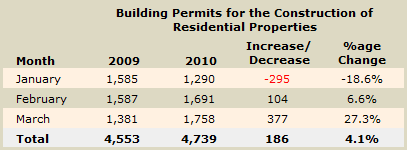
 AT LEAST 10,000 workers have lost their jobs in light of the blow to the construction industry from the financial crisis. Of these 10,000 around 3,600 were builders, Sotos Lois, president of the Federation of Building Contractors Associations of Cyprus, said yesterday.
 APPROXIMATELY 1,800 property owners will be called to pay more for the properties they own via the promotion of a bill that seeks to collect up to €20 million per annum. The taxes of the rest will be adjusted at a later stage, when the Land Registry’s revaluation of all properties has been completed.