

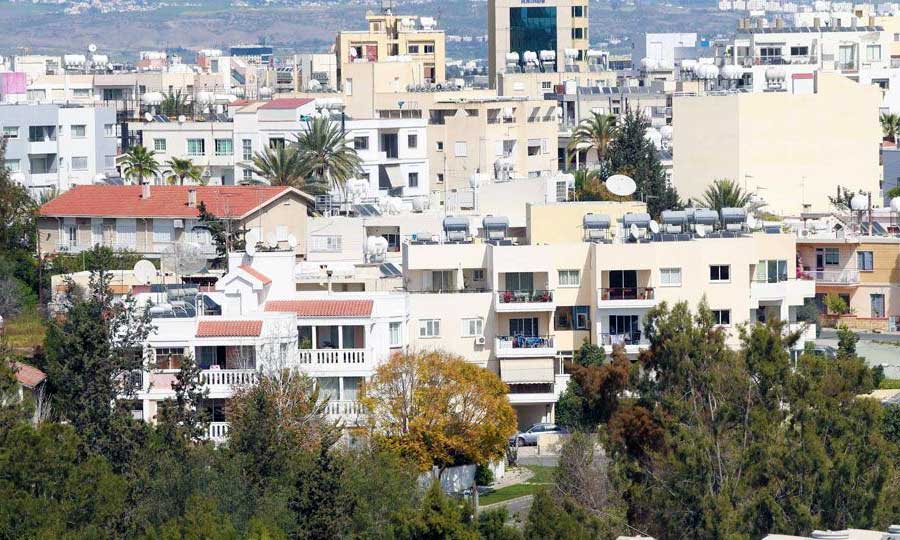
Housing has become one of Cyprus’ biggest economic and social challenges. It is now high on both the domestic and European Union political agenda, as well as a daily concern for households, particularly younger people.
Rising rents and house prices, combined with a shortage of homes in the main urban centres, have made affordable housing harder to secure. The pressure is being felt by thousands of households, young couples, students and workers.
The issue is no longer simply a matter of social policy. Housing is closely linked to the labour market, worker mobility, business competitiveness and the wider economic outlook.
Against this backdrop, the Ministry of Interior has developed a housing policy over the past two years based on two main pillars. The first is to increase the supply of homes, with a particular focus on affordable housing. The second is to improve people’s purchasing power through grants, subsidies and targeted housing schemes.
Officials at the Ministry told Economy Today that the housing problem cannot be solved through financial support alone. Nor can it be addressed simply by building more homes. Instead, action is needed on both the supply and demand sides of the market.
The Ministry also accepts that major measures aimed at increasing supply will take time to deliver. In particular, the impact of planning incentives and Build to Rent is expected to become clearer over the next two to three years, as projects now being approved or built enter the housing market.
The supply battle: 3,300 homes in the pipeline
The Ministry of Interior regards the Planning Incentives and Build – Rent schemes as its most important measures for increasing housing supply.
The schemes make use of an asset controlled by the state: development rights. These are seen as a valuable negotiating tool when working with property developers.
Under the schemes, developers can receive up to 45% additional building density. In return, some or all of the extra homes can be made available for affordable sale or rent.
Developers can also buy the additional building density. The money raised goes to the Affordable Housing Special Fund of the Cyprus Land Development Corporation (CLDC), which finances other affordable housing programmes.
The Ministry considers the schemes its biggest intervention so far to increase the housing stock. The aim is to use the value of state development rights to support the creation of new homes.
Early figures suggest strong market interest. So far, 53 applications have been submitted to use the incentives. Together, they represent more than 3,300 residential units expected to be built over the next two years.
Around 400 of those homes are expected to be offered as affordable housing. Applications involving the purchase of additional building density have already generated around €17.5 million in contributions to the CLDC’s fund.
The Ministry expects these projects to add significantly to housing supply in the coming years. In turn, this could help bring supply and demand into better balance and ease pressure on prices.
Officials say the measure is particularly important because it can create new homes without a direct cost to the state budget. Instead, it uses planning incentives to encourage private development.
CLDC returns to the heart of housing policy
The Cyprus Land Development Corporation is also taking a more prominent role in the government’s housing strategy.
The organisation had experienced a long period of limited activity because of funding constraints following the end of Cyprus’ former citizenship-by-investment programme. It is now back at the centre of affordable housing policy.
The CLDC has been given wider responsibilities and a more active role in delivering government housing policy. New sources of funding have also been secured through state support and contributions linked to other housing schemes.
The state has already allocated €16 million for the first phase of an affordable rental project in Agios Nikolaos, Limassol. Construction work has begun.
A further €12 million has been approved for the development of 54 residential units in Strovolos.
The foundation stone has also been laid for the ADONIS III project in Polemidia. It is the second major project under way in Limassol district aimed at easing housing pressure.
According to figures presented to Economy Today, the CLDC has moved from a period of inactivity between 2022 and 2024 to a much more active programme in 2026.
Projects now moving towards delivery include:
- 244 homes for sale at affordable prices;
- 192 homes for affordable rent; and
- the subdivision of 135 plots in Nicosia, Larnaca, Limassol and Paphos.
The Ministry expects these projects to form a key part of Cyprus’ affordable housing policy in the years ahead.
State land to provide around 500 homes
Another major initiative will use state-owned land for housing.
The scheme was announced by the President of the Republic last December. It aims to deliver around 500 homes on state-owned plots in Nicosia, Limassol, Larnaca and Paphos.
Private developers will build the projects under a design-and-build model. The CLDC will then manage and allocate the apartments based on the social and financial criteria used by its housing programmes.
The scheme is currently at the stage of preparing the necessary studies. However, the Ministry believes it could become one of the most important sources of affordable housing in Cyprus over the next few years.
New approach to student housing
The growing student population is creating another source of pressure in the rental market.
The expansion of existing universities and the arrival of new higher education institutions have increased demand for student accommodation. The Ministry believes this has contributed to higher rents in some areas, while also creating a concentration of students in particular neighbourhoods.
The government is therefore promoting a new type of student accommodation rather than relying solely on traditional halls of residence.
The new units can contain up to 10 rooms and must be used exclusively for students. They will have lower requirements for communal areas and greater flexibility over parking.
For example, a five-room student accommodation unit could be created within just 77 square metres of usable floor space.
The model can be used for new developments or for converting existing properties. The property must be within one kilometre of a recognised higher education institution.
Housing for workers in tourism and industry
One of the newest measures is the Collective Accommodation Units scheme. It is designed to provide a lower-cost housing model for workers in key parts of the economy.
Announced at the end of 2025, the scheme is aimed mainly at employees in tourism, retail and industry.
The model uses smaller units, fewer parking spaces and fewer communal areas to reduce construction costs.
The Ministry says there is already interest, particularly from tourism businesses. It expects the scheme to ease some of the pressure on the existing housing stock by providing accommodation for workers who might otherwise compete for private rental homes.
Housing schemes available to households
Alongside measures aimed at increasing supply, the government has a number of schemes that directly support households.
These include financial assistance for renovating empty homes, grants for people moving to rural and remote areas, and support for displaced people.
Renovate – Rent
The Renovate – Rent scheme aims to bring empty or unused homes back to the rental market.
Owners of vacant properties can receive financial support to renovate or upgrade their homes. In return, the properties must be offered to eligible tenants at an affordable rent for at least four years.
The grants are:
- €20,000 for a one-bedroom home;
- €30,000 for a two-bedroom home; and
- €40,000 for a three-bedroom home.
To qualify, a property must have been vacant for at least 12 months. It must also have been connected to the Electricity Authority of Cyprus network before 2012, have the necessary permits and not be rented to relatives.
So far, 81 applications have been submitted by property owners. Of these, 52 were approved and 28 rejected for various reasons.
On the tenant side, 106 applications have been received, with 59 approved.
However, interest has been below expectations. Reasons include reluctance among owners to use the scheme, higher construction material costs and a shortage of contractors able to carry out renovation work.
Rural, mountain and remote area housing
Housing schemes for rural, mountain and remote areas are among the most significant measures currently available to households.
They remain open until the end of 2027 and have a wider goal than simply helping people buy a home. They are also intended to support population growth and economic activity in areas facing demographic decline and abandonment.
The programme covers 276 communities and areas across Cyprus. These include border communities, mountain areas, disadvantaged urban areas and particularly remote communities, where the highest incentives are available.
Support can be used to build a new home, buy an existing property or buy and renovate a home. In some cases, it can also cover a property gifted by a parent or relative, provided the required upgrading work is carried out.
Financial support covers up to 50% of eligible costs. Grants range from €20,000 to €75,000, depending on the location and household composition.
Additional incentives can take the total support to as much as €95,000. This makes the programme one of the most generous housing schemes currently available in Cyprus.
Recent changes include higher grants for displaced people, extra incentives for homes in the Tylliria area and higher income limits for the most remote communities.
There is also additional support for large families and the option to combine the scheme with home energy efficiency programmes. Special provisions apply to people with disabilities and to extra construction work that may be needed because of difficult mountain terrain.
Demand remains strong. Between 2019 and the end of 2025, 2,892 applications were submitted and 2,027 were approved. Total grants were close to €77 million.
The figures suggest that rural and remote areas continue to attract households looking for more affordable housing options.
Support for displaced people
Housing programmes for displaced people also remain in place through the Service for the Care and Rehabilitation of Displaced Persons.
The schemes provide financial assistance of between €20,000 and €40,000 to buy or build a home.
They were significantly simplified in 2025, with higher income thresholds and more categories of eligible applicants.
During 2025 alone, 2,197 applications were approved, with grants worth a total of €56.4 million.
Young couples’ scheme reaches the end of its cycle
A separate scheme offering financial assistance to young people and young couples aged up to 41 has now completed its cycle.
The programme offered support of up to €50,000 and initially targeted 400 beneficiaries. Demand was strong enough for the government to extend the scheme to cover additional applications.
A total of 1,018 applications were submitted. Around 700 are expected to be approved, with total grants approaching €26 million.
Although the scheme is now closed, it represents one of the government’s most significant recent interventions to help younger households enter the housing market.
The housing challenge over the next few years
Cyprus’ current housing strategy is attempting to tackle the problem on two fronts.
The government is providing immediate support to people who need housing today while also seeking to increase the number of homes available over the longer term.
The Ministry believes that bringing thousands of new units to the market will be essential to closing the gap between supply and demand.
That means maintaining the policy over the coming years so that new developments continue to add to the available housing stock.
At the same time, the issue of empty and unused homes remains unresolved.
Officials were asked about estimates that around 30,000 homes across Cyprus may be vacant. They said that making meaningful use of these properties would require legislative changes and political decisions, including possible tax measures.
For now, the focus remains on delivering the schemes already under way. Almost €200 million has been allocated through housing measures over the past two years.
The bigger test will be whether the combination of new construction, affordable housing and targeted financial support can ease the pressure on Cyprus’ housing market.
The most significant supply measures will take time to deliver. But if the projects now in the pipeline reach the market as planned, Cyprus could see a substantial increase in its affordable housing stock over the next two to three years.
(Translated from an article in Economy Today)
