
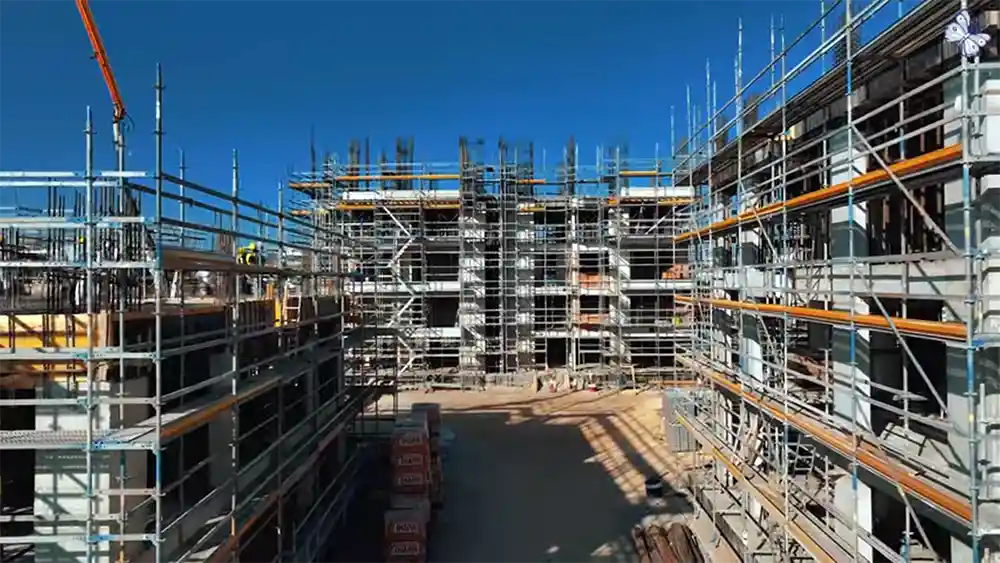
The number of additional homes Cyprus needs to close its housing gap cannot currently be calculated with confidence, the Interior Ministry has acknowledged. The admission comes as rents continue to rise, despite stronger building activity and thousands of homes completed in recent years.
In a written reply to a parliamentary question from Alma Movement MP Litsa Drousiotou, Interior Minister Constantinos Ioannou said it was not possible to establish how many more homes were needed to meet demand. Nor could the ministry accurately predict when, or by how much, a larger supply might affect property prices and rents.
The figures submitted by Drousiotou show that the apartment rent index rose by about 56.5% between the final quarter of 2020 and the same period in 2025. Rents then increased by a further 7.36% year on year in the second quarter of 2026.
The ministry says existing housing policies could support the delivery of more than 4,000 homes over the next two years. About 1,400 of these are intended for the affordable housing market.
It also expects more than €22 million to be paid into the Special Affordable Housing Fund through the purchase of additional building density. Building permit activity rose significantly in 2025 and during the first months of 2026.
Housing shortfall remains unquantified
Ioannou acknowledged that Cyprus’ housing problem has worsened since 2022, during a period of significant external economic pressures.
Higher energy, raw material and construction material costs affected the cost of building homes and the level of construction activity. Demand also increased because of population growth, the arrival of people displaced from Ukraine, and the relocation of new businesses, workers and families to Cyprus.
The minister said these factors created an imbalance between housing supply and demand, putting pressure on both property prices and rents.
However, he said there were objective difficulties in calculating housing needs precisely. Demand shifts with economic conditions, new investment, job creation and population movements. As a result, the ministry cannot yet estimate with confidence how many homes are needed to close the housing gap.
No clear forecast for when rents may fall
The ministry also cannot say precisely how increased building activity will affect prices.
It regards greater supply as a key condition for gradually balancing the market and easing pressure on sale prices and rents. But prices also depend on location, the type of homes being built, construction and finance costs, and changes in demand.
For these reasons, the ministry said it could not predict either the scale of the effect or when it might be felt.
The position comes as the government seeks to speed up permits for about 10,000 homes. According to earlier information from the ministry, this could allow construction to begin one to two years sooner. No specific estimate has been provided for how much this measure could reduce prices or rents.
Apartment rents up 56.5% in five years
The rent figures included in Drousiotou’s parliamentary question show the scale of the increase.
Using the final quarter of 2020 as a baseline of 100, the apartment rent index reached 156.5 in the final quarter of 2025. That represents a cumulative increase of 56.5% over five years. In the second quarter of 2026, the index was up 7.36% compared with the same quarter a year earlier.
Meanwhile, Cyprus’ housing stock also grew, according to figures from the Statistical Service cited by the MP. The number of homes rose from about 466,000 in 2020 to around 517,000 in 2024. A total of 8,692 homes were completed in the final year of that period.
Drousiotou said rents had not eased in line with the growth in housing numbers. She argued that this raises questions about the effectiveness of a housing policy focused mainly on increasing supply.
More than 4,000 homes could be delivered over two years
The Interior Ministry pointed to measures intended to expand the housing stock.
Its latest available figures suggest that the Planning Incentives schemes and Build to Rent could support the delivery of more than 4,000 homes over the next two years. About 1,400 are intended for the affordable housing market.
The schemes provide additional building density to encourage the creation of more homes and increase the supply of properties at affordable prices.
The minister also expects more than €22 million to be paid into the Cyprus Land Development Corporation’s Special Affordable Housing Fund through the purchase of building density. The money is intended to fund additional affordable homes.
The figure of 4,000 represents potential homes that could be delivered. They are not already completed properties.
Planned homes under building permits rise by 42.7%
Building permit activity has also increased.
The Interior Ministry said 8,159 building permits were issued in 2025, compared with 6,827 in 2024, an increase of 19.5%. The number of homes planned under those permits rose by 42.7%.
The upward trend continued in the first five months of 2026. Between January and May, 3,650 permits were issued, compared with 2,764 in the same period of 2025, an increase of 32.1%.
The number of homes planned under the permits rose from 5,484 to 8,978, up 63.7%.
Ioannou cautioned that permits do not mean the housing shortfall has been filled. Construction takes time, and homes must be completed before they can reach the market.
New scheme to allow extra homes on existing plots
Alongside its existing planning incentives, the Interior Ministry is advancing a new scheme allowing an additional home to be built.
Subject to conditions, the plan would permit a home on an extra floor, an extension to an existing property, or a separate home within the same plot. The aim is to make better use of existing residential developments to meet the housing needs of family members.
The ministry also referred to dedicated frameworks for shared accommodation for workers and housing for students. These measures are intended, among other things, to reduce the pressure that workers’ and students’ housing needs place on the existing stock.
Schengen impact and foreign demand remain uncertain
The minister also addressed Cyprus’ potential entry into the Schengen Area and its possible effect on housing demand.
Ioannou said it was too early to estimate whether membership would affect demand or property prices, or by how much. It could increase the movement of workers, businesses and investors, creating additional demand for homes. However, he said there was no comparable member state with characteristics similar enough to Cyprus to support reliable forecasts.
On property purchases by non-EU nationals, the ministry said that existing rules already set conditions and restrictions on acquiring property. It also monitors foreign buyers’ participation in the market through available data.
The reply did not provide a specific analysis of how foreign buyers’ purchasing power affects prices. Nor did it set out a new position on further restrictions on property purchases by non-EU nationals.
In her parliamentary question, Drousiotou asked the government to provide clear figures on the country’s housing shortfall. She asked whether a study had identified housing needs by area, property type and price or rent band, and whether any quantitative or economic analysis showed how many new homes would be needed to make a meaningful difference to prices.
She also raised overseas demand, including purchases by non-EU nationals and investment linked to the Golden Visa programme. Drousiotou asked whether potential Schengen membership could further increase demand from abroad.
Finally, she asked what effect faster permits for about 10,000 homes were expected to have on prices, and requested estimates of the likely scale and timing of any easing.
Translated and adapted from an article published by StockWatch
