
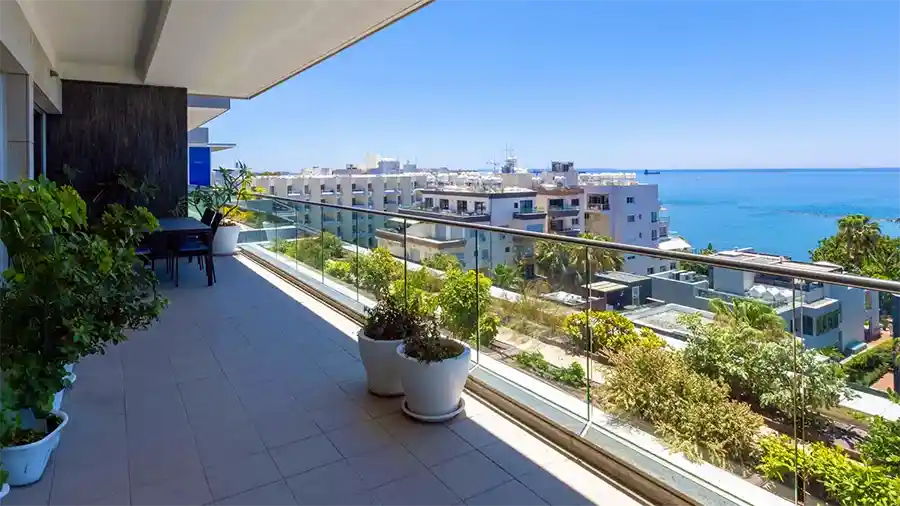
Cyprus has long drawn people looking for sunshine, a relaxed lifestyle and a home by the sea. But for many local households, finding somewhere affordable to live is getting harder. Why?
There isn’t one single cause. More people are looking for homes, while building them has become more expensive and can take time. And the homes that do come on to the market may not be within reach of local budgets.
Demand coming from several directions
Cypriot families need homes, and population and employment growth have added to demand. Overseas buyers have also helped drive the market, particularly in coastal areas such as Limassol and Paphos. Some buy a home to live in, while others see property as an investment or a holiday base.
This competition can push prices higher in popular locations, although overseas buyers are only part of the picture. Pressure varies across the island, and local households are also competing for homes. Towns attracting people for work may feel added pressure too.
Tourism can affect the choices available to residents. In areas where more properties are used for holidays or short-term lets, fewer may be available for long-term rent. That can make it harder to find somewhere suitable, especially in busy coastal towns.
The 2026 European Commission Housing Report annex for Cyprus estimates that the country faces a shortage of both housing and affordable rentals, especially in high-demand coastal cities. It estimates a 39,000-home supply gap; short-term lets and homes held as investments or holiday homes add pressure to the long-term market.
Worker shortages slow building and increase costs
Cyprus’ construction industry is struggling to find enough workers, from skilled tradespeople to general labourers. When contractors cannot fill vacancies, projects can take longer, and competition for workers pushes up labour costs.
That matters because a delayed project means homes take longer to reach the market. Labour is also one part of the overall building bill, alongside materials, land and finance. Higher costs can be reflected in the prices developers charge.
The shortage can affect existing homes as well as new developments. Renovations and repairs may take longer or cost more, making it harder to bring some properties back into use or improve them. The European Commission has identified construction as one of Cyprus’ sectors facing labour and skills shortages. Industry representatives have also warned that a lack of skilled and unskilled workers is holding back projects.
Cyprus and Egypt signed an agreement in June 2024 to regulate the entry, residence and employment of Egyptian workers, with a joint committee intended to match workers’ skills to local needs. However, by late October 2026, no workers had arrived through the scheme. The shortage has also been worsened by some Syrian building workers leaving Cyprus under the government’s repatriation scheme.
Permit delays hold up new homes
Getting a project off the ground can take time, too. Developers may wait months or longer for planning applications and building permits to be approved. While they wait, construction cannot move ahead and the homes remain unavailable to buyers and renters.
The delay can also add to costs. Land, finance and other expenses continue to weigh on a project, while building costs may rise before work begins. Industry representatives have described lengthy approval procedures as an obstacle to delivering more housing and easing affordability pressures.
Land costs add to the price
The price of land is another part of the equation. An analysis of Land Registry transactions found that the median price of urban residential land rose from €203 per buildable square metre in early 2021 to €257 in early 2026; an increase approaching 27%.
When developers pay more for land, that cost can feed into the price of the homes they build, particularly in high-demand urban areas. Higher land values can also make it harder to build homes that local households can afford.
Energy rules will shape new homes
The EU’s revised Energy Performance of Buildings Directive sets a zero-emission standard for all new buildings from 2030, with public buildings covered from 2028. Meeting the standard may add some upfront cost to new homes through measures such as improved insulation and clean energy systems, while reducing energy use and running bills. The rules do not require all existing homes to become zero-emission by 2030, and the effect on property prices will depend on how the requirements are implemented in Cyprus and reflected in the market.
Why the squeeze feels so sharp
More homes are being built, but they may be in the wrong places or priced beyond local budgets. When house prices and rents rise faster than incomes, saving for a deposit takes longer and monthly housing costs leave less money for other essentials.
The Central Bank of Cyprus points to strong demand from local and foreign buyers, as well as worker shortages, increased construction and land costs among the factors behind recent price rises.
Improving housing affordability will mean building homes where people need them, reducing delays and bottlenecks, and making sure more properties are within reach of local incomes. A larger construction workforce could help get projects moving, but the homes delivered also need to suit the needs and budgets of residents.
