
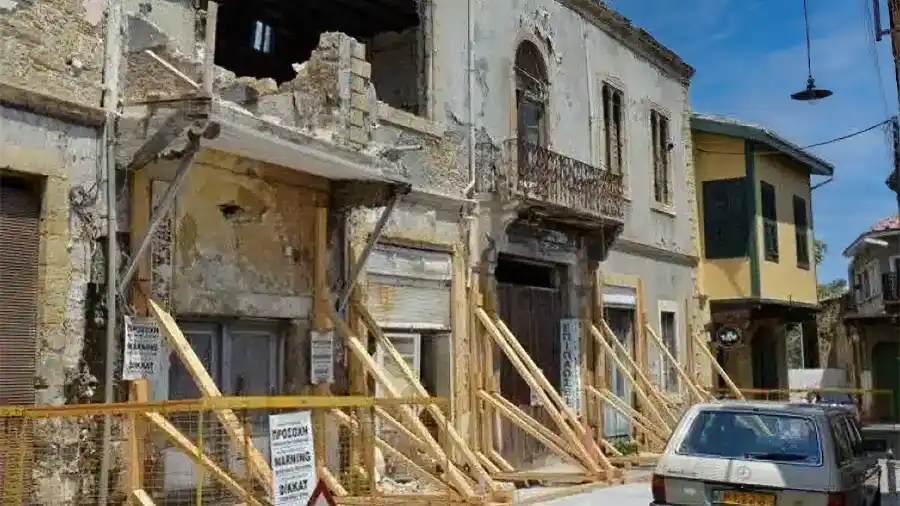
Abandoned, unsafe and dangerous buildings in Cyprus are a growing concern. Above all, they pose a threat to public safety. They also damage the appearance of towns and villages, putting pressure on property values and discouraging investment.
In Greek mythology, Prometheus thinks ahead, while Epimetheus recognises a mistake only after the damage has been done. When public safety is at stake, Cyprus cannot afford to act like Epimetheus. The authorities must identify risks and act before disaster strikes, rather than search for solutions and responsibility afterwards.
The collapse of a building in Limassol, which claimed lives, showed the human cost of waiting too long.
Based on many years in the property market, we see three main categories of dangerous buildings. Each presents different challenges.
1. Abandoned buildings
The first category includes privately owned buildings left unused and neglected. Owners may delay deciding whether to restore, sell or redevelop their property, allowing it to deteriorate.
In many cases, official action appears to stop at putting up a sign that says “Dangerous Building”. A sign cannot prevent a collapse or protect people passing by.
These properties can stand in busy city centres, popular with residents and tourists, or in communities that attract high visitor numbers. Tourists may not notice warning signs, particularly when they are unfamiliar with the area.
2. Dangerous buildings that remain occupied
Privately owned buildings that are still occupied may pose the most serious risk. Some have visible structural or other defects, yet owners fail or refuse to maintain and repair them while continuing to collect rent.
In some cases, flats in unsafe buildings are also offered to tourists as short-term lets. Allowing this practice exposes people to immediate danger in the pursuit of profit.
3. Listed buildings caught in red tape
Listed buildings can become trapped in lengthy approval processes and remain neglected until they collapse. Cyprus has a valuable architectural heritage that risks being lost for good.
Even owners or investors who have the means and commitment to restore these buildings can face complex, time-consuming procedures to secure permits from the Department of Antiquities and the Conservation Branch of the Department of Town Planning and Housing.
As a result, some listed buildings collapse before their applications are decided. The financial incentives available for restoration are also often insufficient to make projects viable.
Dangerous buildings hold back development
Public safety must come first, but there is also an economic cost. Derelict and unsafe buildings keep homes out of the market at a time when housing is a major concern for many people.
They also damage the character of streets and neighbourhoods. A visible sense of decline can reduce the value of nearby, well-maintained properties and deter investors, buyers and tenants. Cities need activity and investment, but dangerous buildings stand in the way.
People and their safety must remain the priority. Owning property brings rights as well as responsibilities. It is unacceptable to leave buildings to decay at the expense of public safety.
The state and local authorities must take responsibility and go beyond simply recording the problem. As property professionals, we will support those who act promptly and decisively. Early action can protect people, improve the urban environment and safeguard property values – before Cyprus is forced to respond to another tragedy.
Marinos Kineyirou is the President of the Cyprus Real Estate Agents Registration Council
Translated and adapted from an article published by Philenews
