Four bidders in the running for the Paphos marina project

Four bidders have secured their involvement in the tender process for the long-anticipated construction of a marina in the Potima area of Kissonerga, Paphos; a flagship project that, despite being discussed for decades, has yet to materialise.

The deadline for submission of proposals expired at midday yesterday, followed by the official opening of the tender for the development of Paphos Marina under a long-term concession agreement based on the DBFOT model (Design, Build, Finance, Operate and Transfer). The names of the four groups that submitted bids were subsequently published via the e-procurement platform.

According to the official listing in the e-procurement platform, the bidders are MAN Enterprise CYPRUS Limited, Cusano Mare Ltd, Orestes Fintiklis and Celicandia Ltd.

Celicandia Ltd is linked to the Korantina Homes Group, one of Cyprus’ largest property developers, with a strong presence in Paphos and particularly active in the wider area where the new marina is proposed.

Orestes Fintiklis, the second interested party, brings both Cypriot and international credentials, while MAN Enterprise is a Lebanese construction group with significant global experience in large-scale port and tourism developments.

The fourth consortium to express interest, Cusano Mare Ltd, is understood to represent a partnership of Italian and Scandinavian investors operating within the construction sector.

The tender for the project, which aims to position Paphos as a leading destination for maritime and nautical tourism in the Mediterranean,  was officially launched in September 2025 by the Deputy Ministry of Tourism.

The Paphos marina development project

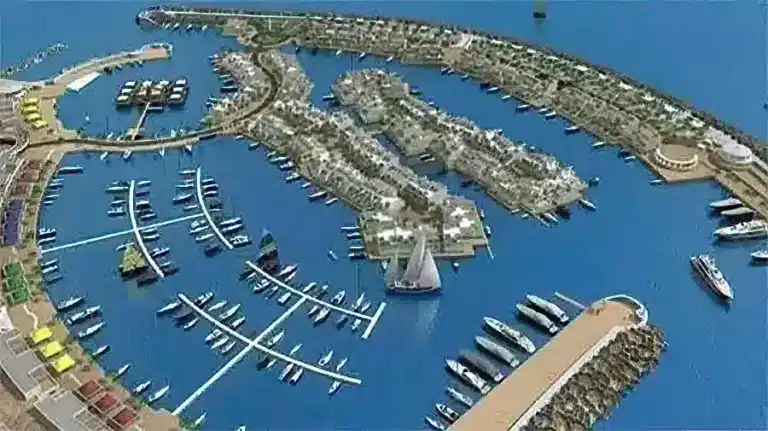
The marina is planned for a state-owned plot in the Potima area of Kissonerga, covering approximately 165,000 square metres. The development envisages a high-specification, modern marina with capacity for up to 1,000 leisure vessels across both sea and onshore facilities.

In addition to the marina infrastructure, the scheme includes residential and commercial components, with optional provision for hotel development as well as potential cruise ship servicing facilities, including a pier.

If delivered, the project is expected to represent one of the most significant coastal and tourism investments in Cyprus, reshaping the western seafront of Paphos and reinforcing the district’s strategic role in Mediterranean yachting and waterfront real estate.

The troubled history of the Paphos Marina project

Since an initial study was carried out more than 30 years ago, the Paphos Marina project has been stalled by legal battles and mired in bureaucracy.

1990s–2006 — concept & early planning
The idea of a marina for Paphos appears in long-term coastal development planning and feasibility studies through the late 1990s and 2000s as Paphos developed as a tourism hub.

2007–2008 — first high-profile tender and award
A major government tender was run. In 2007–2008 the Cybarco-Pandora consortium (including Leptos Group in reporting) was initially announced the winner of the concession/tender for the Paphos marina. Litigation followed almost immediately as the other bidders objected and appealed the award.

2008–2015 — litigation, counter-awards and re-examinations
The 2008 award triggered multiple legal challenges and reviews. Different bidders (notably Poseidon Grand Marina and Pafilia) lodged appeals and objections; the administration re-examined financing evidence and committee procedures. These years saw annulments and re-assessments rather than construction.

December 2015 — Supreme Court milestone
In late 2015 the Supreme Court issued a pivotal decision favouring the Poseidon consortium in aspects of the dispute (reporting indicates the court found procedural problems with the administration/committee handling of earlier stages), which reshuffled the legal status of the tender. (The ruling did not immediately produce a stable concession because subsequent steps required proof of funds and committee re-assessments.)

2016–2018 — committee rulings, new award and withdrawals
Following court rulings, the management/steering committee attempted to move ahead. At different moments Pafilia was invited/approved as the next concessionaire, and a new committee signed an agreement in 2018 — but Pafilia then withdrew from the process (citing the uncertain legal and commercial environment). Meanwhile Poseidon and others continued legal actions asserting procedural irregularities.

2019–2021 — continuing delays and fresh objections
Even after new committee actions, interested parties kept raising formal objections to tender steps (complaints brought to tender review authorities and interim orders). That kept the project on hold and prevented contract signature/works starting. Reporting in 2021 flagged another objection that again froze progress.

2022–2023 — renewed government work and feasibility / tender preparations
The government and the Deputy Ministry of Tourism repeatedly restarted preparatory work: updated feasibility studies, revised tender documents, and public statements that the ministry would re-launch an improved, legally robust procurement process designed to avoid the errors of the past. Coverage in this period described a “new hope” and active preparation for a fresh investor call.

January 2025 — publication of basic characteristics / call for proposals (Phase 1 input)
In January 2025 the Deputy Ministry published the basic characteristics of the project and invited interested parties to submit proposals/expressions of interest under those characteristics (reports cited a submission window that closed in late January 2025). This marked a concrete administrative step toward a two-phase procurement (expression of interest and invitation to tender).

August 2025 — ministry preparing investor call / tender documents
By August 2025 reporting noted the Deputy Ministry was finalising the investor-interest call and legal checks, with stakeholders saying the formal call for investors / opening of tender documents was expected in late August / early September 2025. Officials signalled an intention to run a more rigorous tender process and to address financing, environmental and archaeological constraints up front.

September 2025 – ministry launches tender process
The Deputy Ministry of Tourism has launched the tender process for the development of the Paphos Marina project.

Water crisis raises stakes for property market

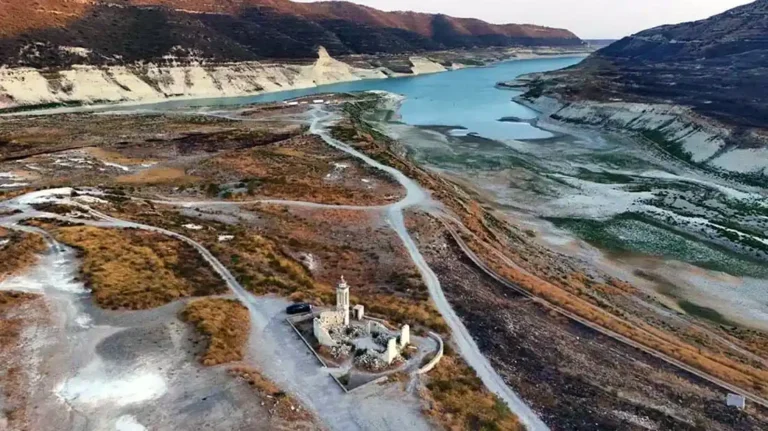
Cyprus is facing its most severe water shortage in decades, a development with growing implications for the island’s real estate sector.

As dam levels decline and summer demand surges, political leaders, regulators and EU officials are pushing for sweeping reforms that could reshape how water is allocated, priced and integrated into future developments.

2026 summer water warning

AKEL General Secretary Stefanos Stefanou has described the outlook for summer 2026 as “nightmarish,” warning that water shortages could affect not only households and agriculture but also electricity production and the wider economy.

For property owners, developers and investors, the message is clear: water security is no longer a background issue. Years of underinvestment, infrastructure neglect and delayed projects have left Cyprus vulnerable as climate change intensifies drought conditions across the Mediterranean.

Key structural concerns include:

  • Significant water losses from outdated networks and leakages.
  • Delays in connecting recycled water systems at Tersefanou and the Solia dam.
  • Slow progress in bringing new desalination units online.
  • Reduced desalination capacity after past contract failures.
  • Reported loss of 1.5 million cubic metres at Mavrokolymbos dam due to poor maintenance.

Stefanou argues that households and farmers should not shoulder the burden of policy shortcomings, describing water as a social good rather than a luxury.

Golf courses cut off from dam water

In a move closely watched by the real estate and leisure property sectors, the Water Development Department (WDD) has confirmed that by May 2026 golf courses will be permanently cut off from state dam water supplies.

The policy forms part of a longer-term strategy dating back to 2005 and reinforced by 2017 legislation designed to protect aquifers and ensure compliance with EU rules.

Several major golf-linked residential developments including Minthis Hills, Elea Estate and Limassol Greens have already transitioned to recycled or desalinated water. Others are finalising their detachment from dam reserves.

At the same time, water pricing reforms are increasing costs:

  • Golf course water rates have risen from €0.36 to €0.42 per cubic metre.
  • The environmental fee has quadrupled from €0.02 to €0.08 per cubic metre.
  • Farmers continue to pay significantly lower rates.

For developers of golf resorts and large-scale projects, the shift signals a structural change: future schemes will need built-in alternative water solutions and greater sustainability credentials to remain viable and attractive to buyers.

EU pressure and funding opportunities

At European level, Water Resilience Commissioner Jessika Roswall has warned that chronic underspending on water security across member states is no longer sustainable. She urged countries to fully utilise EU cohesion funds and highlighted a €15 billion European Investment Bank facility dedicated to water resilience projects.

For Cyprus, this presents both pressure and opportunity. EU-backed funding could accelerate:

  • Infrastructure upgrades and leak reduction.
  • Expansion of desalination capacity.
  • Greater use of recycled water networks.
  • Climate resilience planning.

Agriculture Minister Maria Panayiotou confirmed that Cyprus is already conducting EU-supported studies to monitor water losses and is working toward an integrated climate resilience framework.

What this means for real estate

Water security is fast becoming a core risk factor for Cyprus property.

With nearly four million visitors expected this summer tourism remains central to the Cyprus economy and to demand for holiday homes, resorts and short-term rental investments. But balancing tourism growth with sustainable water use will be critical.

Developers may face:

  • Stricter environmental assessments.
  • Mandatory water-saving technologies in hotels and large projects.
  • Greater scrutiny of water sourcing in planning approvals.
  • Higher operational costs where desalination is required.

Buyers, particularly international investors, are also increasingly focused on environmental, social and governance (ESG) credentials and long-term infrastructure resilience.

A strategic turning point

Cyprus now stands at a crossroads. Immediate pressures include low dam reserves, agricultural strain and high tourist demand are meeting with deeper structural challenges.

The months ahead will test whether recycled water projects are finally integrated, desalination units become operational on schedule, leakages are reduced and EU funds are effectively absorbed.

For the property market, water is no longer just a utility issue. It is a strategic factor shaping planning, pricing, sustainability and long-term asset value.

As EU officials have warned, the cost of inaction may prove far higher than the investment required today.

Property rules set to be tightened for third-country nationals

Cyprus is moving towards a unified legislative framework to regulate the acquisition of immovable property by third-country nationals, following discussions at the House of Representatives’ Committee on Internal Affairs.

The initiative seeks to consolidate three pending legislative proposals into a single text, alongside related proposals from the Ministry of Interior, with the aim of strengthening oversight and addressing long-standing regulatory gaps.

The Minister of Interior, Konstantinos Ioannou, told the Committee that the objective is to introduce amendments that better safeguard the legal framework governing land and property acquisition. He stressed the importance of effective control mechanisms, clear criteria and increased transparency, particularly in light of a notable rise in property purchases by third-country nationals linked to geopolitical developments in the region and the war between Russia and Ukraine.

The Chair of the Committee, Aristos Damianou, confirmed that there is agreement in principle to work towards a consensus-based proposal, with the intention of submitting the legislation to the House plenary before the end of the current parliamentary term. The aim is for the bill to be presented with broad political support.

The proposals under examination include submissions from AKEL General Secretary Stefanos Stefanou and a cross-party group of Members of Parliament. A central element is the introduction of an obligation on the Director of the Department of Lands and Surveys to refuse property transfers or the registration of sale, exchange or assignment contracts where restrictions under the Immovable Property Acquisition (Aliens) Law apply.

Further provisions seek to abolish legal pathways that allow the indirect acquisition of property by third-country nationals without prior Cabinet approval. These measures are intended to prevent the use of Cypriot companies or other legal entities as intermediaries for property purchases, while also reinforcing protections for agricultural land and the rural economy. At the same time, the proposals call for the modernisation of procedures governing third-country property acquisitions to safeguard the public interest.

According to the Minister, while existing legislation places clear restrictions on acquisitions by natural persons, it is less effective in regulating legal entities, resulting in loopholes and ambiguities. The Ministry of Interior has therefore begun drafting a revised framework that will more clearly define what constitutes property acquisition and set limits on the maximum land area that may be acquired.

Additional issues under consideration include the introduction of time limits between successive applications to prevent procedural abuse, as well as possible restrictions on acquisitions in specific planning zones or areas of heightened security and public interest. The Minister emphasised that the proposed changes aim to balance effective regulation with social cohesion and economic stability.

Representatives of the Ministry of Finance expressed support for the overall approach, while the Cyprus Employers and Industrialists Federation proposed allowing third-country nationals to acquire up to two plots or residential units, subject to a maximum land area, with coastal areas excluded from any blanket restrictions.

(Translated and summarised from an article in StockWatch)

Development rights in Cyprus explained

0

I expect many readers will be aware of the concept of development rights that I wrote about in my previous article. However, I expect many are unaware that in Cyprus, unused development rights can be sold or transferred to increase development rights elsewhere, in certain situations.

I believe the practice originated in the US where the sale of “air rights” allows property owners to sell unused building capacity to developers, enabling them to build beyond zoning limits in other areas.

Development rights define how much can be built on a piece of land. They are determined by:

  • Plot ratio (building coefficient) – total buildable floor area
  • Building coverage
  • Height and number of floors
  • Zoning designation (residential, commercial, industrial, etc..)

For example, if a plot has a plot ratio of 120% and measures 500 sq.m., the owner has the right to build 600 sq.m. of covered area. (If the owner only builds 500 sqm. they have 100 sqm. of unused development rights, which in certain circumstances, they can sell or transfer.)

Development rights and listed buildings

The concept becomes especially important with listed (preserved) buildings. Owners of listed buildings are often restricted from fully using their development rights because:

  • Demolition is prohibited
  • Extensions are limited or heavily controlled
  • Preservation obligations increase costs

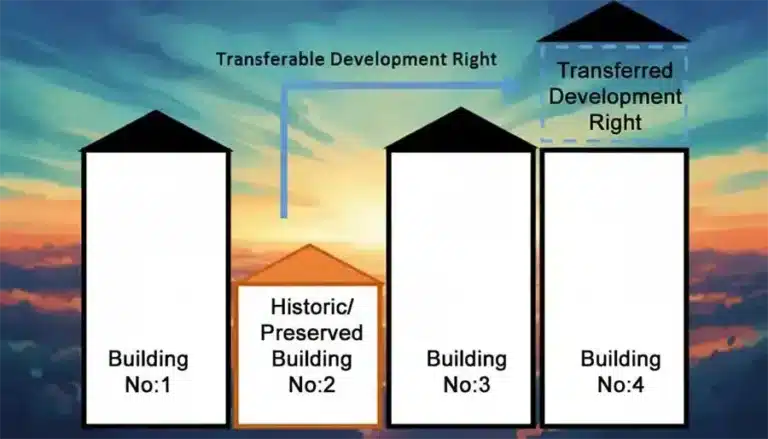
To compensate owners, Cyprus allows the transfer of unused development rights.

Transfer of Development Rights (TDR)

This mechanism allows owners of listed buildings to:

  • Sell or transfer unused building coefficient to another plot
  • Receive financial compensation for development potential they cannot use

The buyer (usually a developer):

  • Gains additional buildable area on a different site
  • Must comply with planning approval and location rules

This system aims to:

  • Protect heritage buildings
  • Avoid unfair financial loss to owners
  • Channel higher-density development to suitable areas

Monetary value of development rights

Development rights in Cyprus have:

  • A market value, influenced by location and demand
  • A regulated transfer process, overseen by planning authorities

However, the system has historically faced challenges, including:

  • Delays
  • Limited liquidity
  • Administrative complexity

That’s why recent discussions, like the proposal for a “development rights bank”, are significant. Such a mechanism would centralise transactions, manage funds, and improve transparency.

Why this matters for the property market

Development rights directly affect:

  • Land value
  • Project feasibility
  • Density and urban planning
  • Investment returns

For developers and investors, understanding development rights is essential when assessing:

  • Acquisition potential
  • Maximum buildable area
  • Regulatory risk

Development rights in Cyprus are a core planning tool, balancing urban growth, heritage protection, and market viability.

Building permit regulations set to change

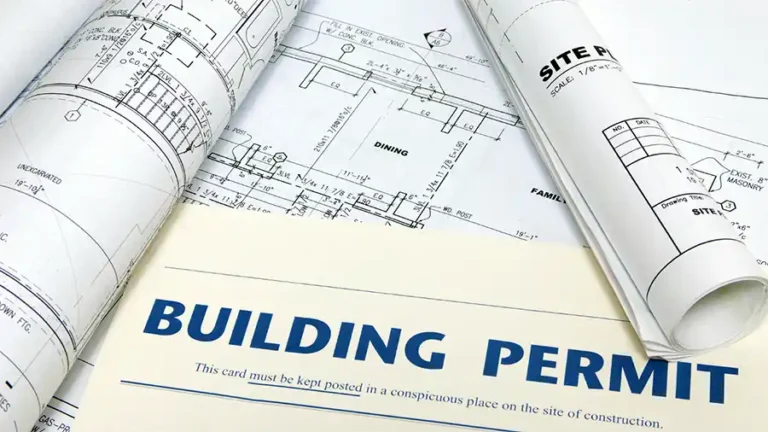
Proposed reforms to building permit regulations and the management of listed buildings are currently under development in Cyprus, following a recent meeting between the Cyprus Scientific and Technical Chamber (ETEK) and the Ministry of Interior.

According to a press release issued by ETEK, the meeting, which was attended by ETEK President Konstantinos Konstantis and Minister of Interior Konstantinos Ioannou, took place in a constructive climate and focused on reforms to development licensing procedures as well as policies concerning listed properties.

ETEK welcomed the initiatives being promoted by the Ministry in line with the state’s housing policy, noting that the Chamber has already submitted relevant recommendations.

Simplifying building permit fees

A key issue discussed was the licensing of developments and, in particular, the need to simplify the formula used to calculate building permit fees. The existing process was described as time-consuming and complex, often resulting in inconsistencies in how fees are applied.

The Minister of Interior confirmed that a draft set of Regulations revising the current fee calculation methodology will soon be submitted for public consultation. Following consultation, the Regulations will undergo legal review before being forwarded to Parliament for approval.

Structural upgrades without a building permit

The meeting also addressed a proposed regulation, which was submitted following an ETEK recommendation, that would exempt certain structural upgrade works from the obligation to obtain a building permit.

Under the proposal, such works would fall under a special exemption notification procedure, which is also expected to be subject to public consultation. The aim is to encourage structural improvements and upgrades across existing buildings.

Unlicensed and listed buildings

Regarding the regularisation of existing unlicensed buildings, the Ministry stated that it agrees in principle with ETEK’s proposal, with further discussions planned to progress a relevant legislative framework.

Special reference was also made to forthcoming changes affecting listed buildings. Proposed measures aim to accelerate the approval process for maintenance works and low-risk additions, while also increasing the recognised restoration cost to better reflect rising construction expenses.

Development rights mechanism

Finally, ETEK highlighted the need for a mechanism to manage funds generated from the transfer of development rights from listed buildings. This would operate as a form of “bank” for allocating both development rights and their monetary value.

The Minister indicated that the proposal is viewed positively, with steps expected to follow.

Overall, the meeting confirms that significant reforms to development licensing and listed building management are underway, with public consultation and legislative processes set to follow.

Strong start for Cyprus property sales in 2026

Property sales in Cyprus made a solid start to 2026, with the number of sales contracts deposited at Land Registry offices across the island rising by 11 per cent in January compared with January 2025.

According to official statistics published by the Department of Lands and Surveys a total of 1,411 property sales contracts were deposited during the months compared with 1,275 in January 2025.

Paphos leads annual growth

Paphos posted the strongest growth, with property sales up 25 per cent reaching 318, compared with 255 in January 2025.

Famagusta area also recorded a double-digit increase, with sales rising by 23 per cent reaching 69 sales, compared with 56 in January 2025.

Steady gains across other districts

Sales in Larnaca rose by 11 per cent reaching 288, compared with 259 in January 2025.

Sales in the island’s capital, Nicosia, rose by 5 per cent to 291, compared with 276 in January 2025.

Limassol recorded for the highest number of sales reaching 445 properties in January, compared with 429 in January last year: a rise of 4 per cent.

Positive outlook for property sales

Property sales in January were the highest number on record since the January of 2008, when total sales reached their highest level since 2007.

The new year has started on a positive note, with growth recorded nationwide and across all districts, reinforcing confidence in the sector’s ongoing resilience.

Total contracts of sale deposited – 2025/2026 Comparison (Jan)