Home Blog Page 4

Cyprus property market: No housing bubble, economists say

0

Rising property sales and a sharp increase in construction activity have reignited debate over whether the Cyprus property market is heading towards overheating. However, leading economists argue that current evidence does not point to the formation of a housing bubble.

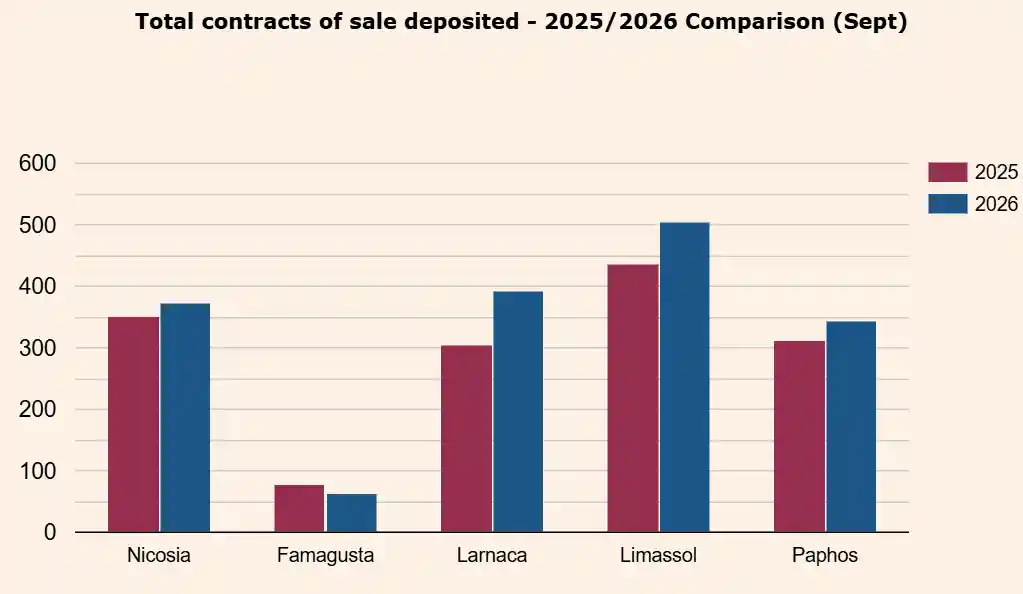
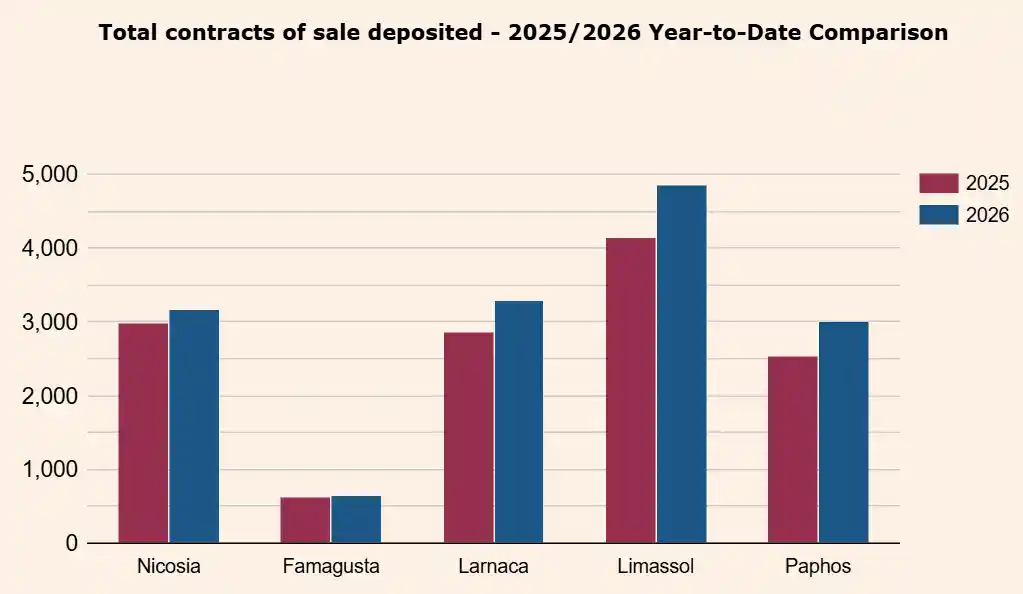
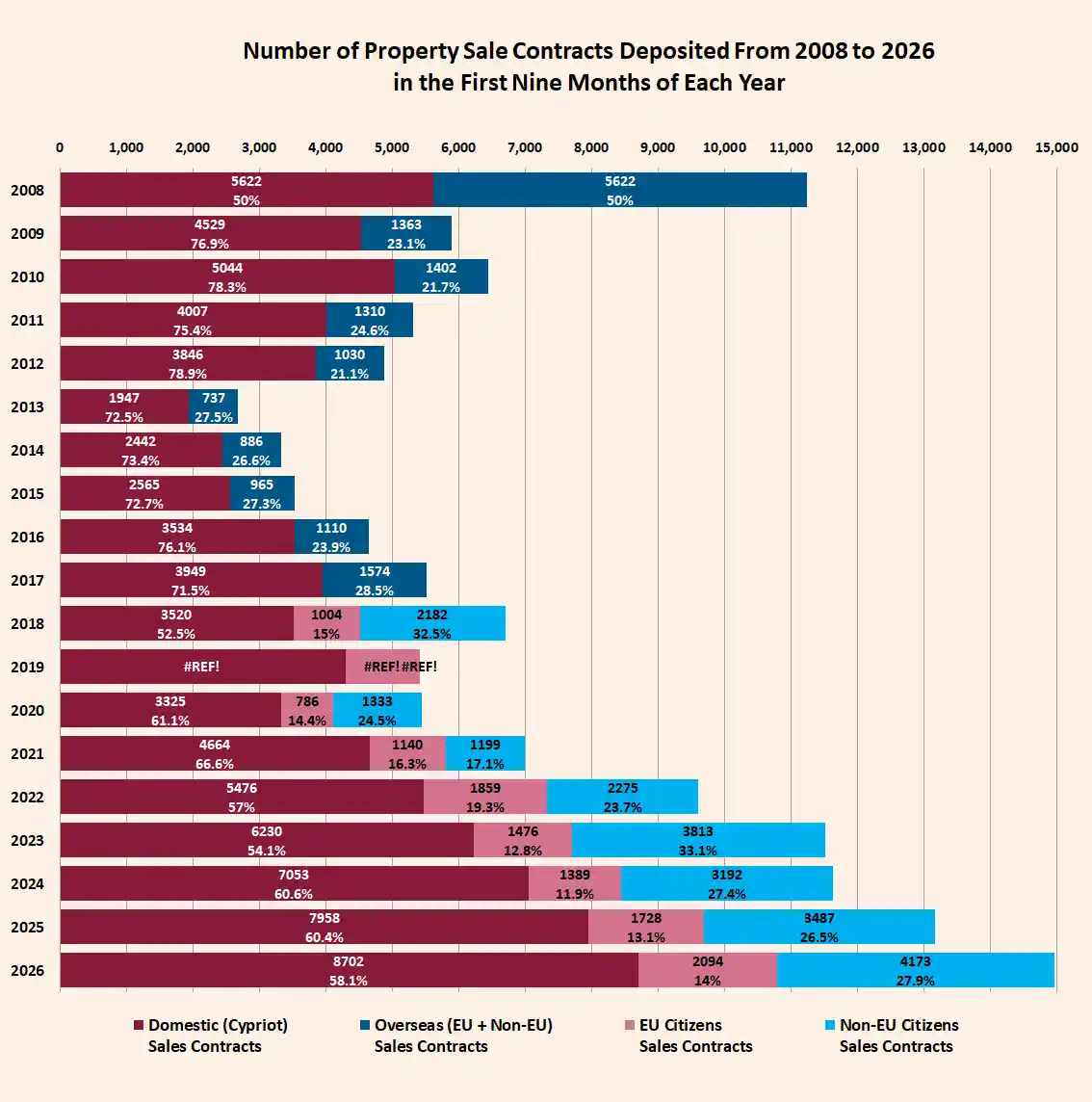
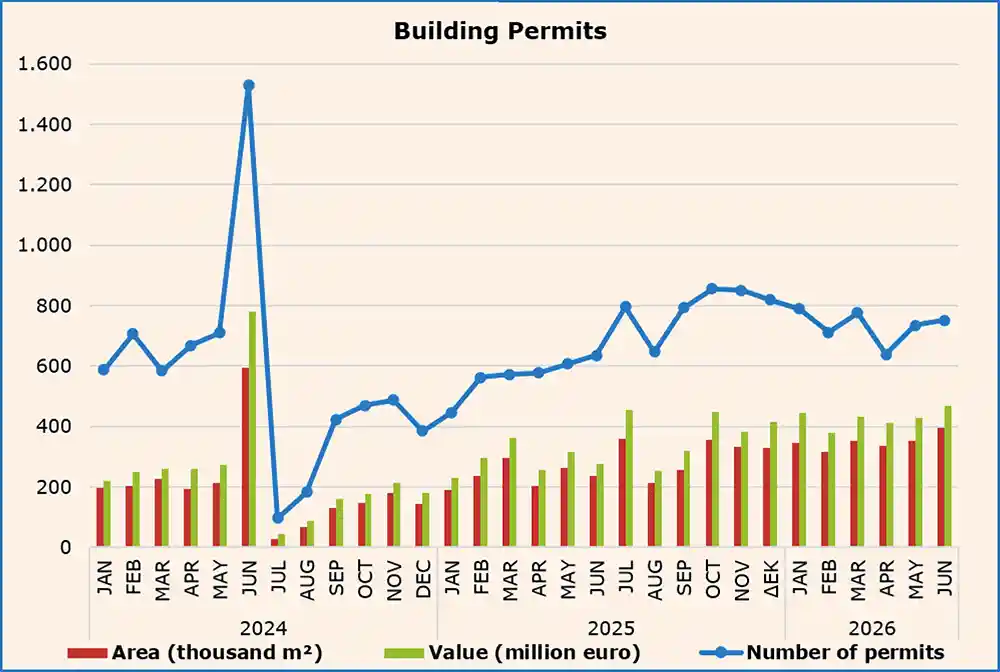
Property transactions increased by 15% during the first half of 2026, while the total floor area of licensed construction projects rose by 40% in the first quarter, prompting questions over the sustainability of the market’s rapid growth.

Speaking to news outlet StockWatch, three economists agreed that the latest figures reflect robust market fundamentals rather than speculative excess. Nevertheless, they warned that housing affordability is becoming the country’s most pressing real estate challenge.

Strong fundamentals continue to support demand

Former banker and Fiscal Council member Marios Clerides, Marios Kapnisis, Senior Manager, Deal Advisory at KPMG and property specialist, and economist Panayiotis Agisilaou, Director of Trojan Economics and lecturer at the Open University of Cyprus, all attributed the market’s resilience to long-term structural drivers.

While none believes Cyprus is experiencing a property bubble, they agreed that developments should continue to be monitored closely.

Population growth is driving genuine housing demand

According to Clerides, the current market differs significantly from previous speculative cycles because demand is being driven by demographic changes rather than excessive borrowing.

Cyprus has experienced substantial population growth in recent years, fuelled both by local demand and by the arrival of foreign professionals and employees relocating with international companies operating on the island.

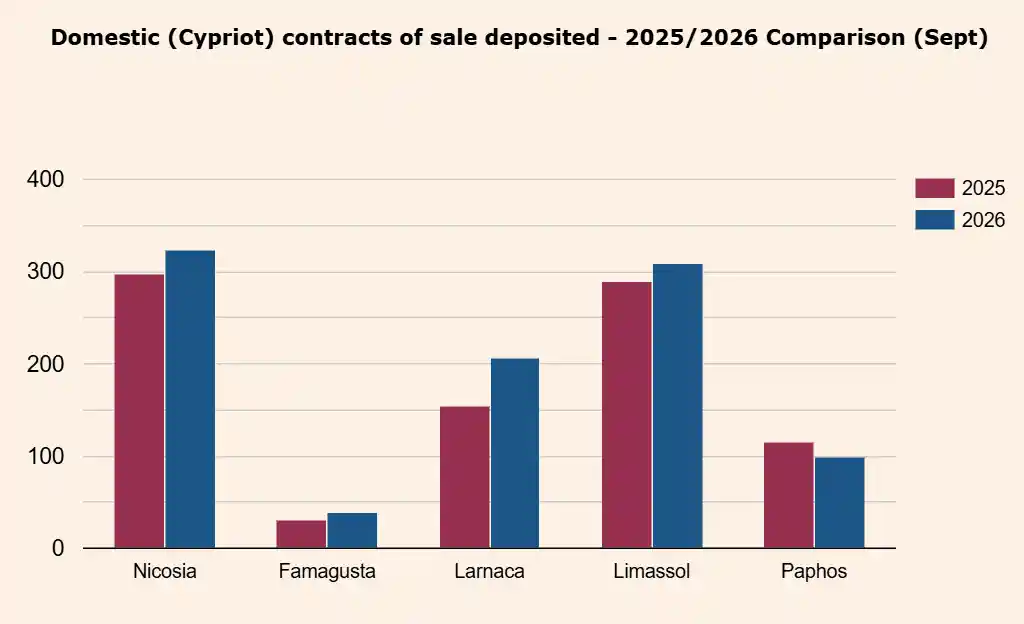
He noted that housing needs vary considerably across different population groups, while in cities such as Limassol, property prices have risen to levels that are increasingly beyond the reach of many local buyers.

Assessing whether a market is overheating, he argued, cannot be based solely on transaction volumes or construction activity.

Instead, demographic trends, land availability, household investment behaviour and wider economic conditions must all be considered.

Low savings returns continue to favour property investment

Clerides also highlighted the impact of persistently low deposit rates across the eurozone.

With bank savings offering limited returns, many households continue to view real estate as an attractive investment, either to generate rental income or to preserve capital.

He added that many private investors remain unfamiliar with alternative investment products, while Cyprus’ relatively small domestic stock market further reinforces the appeal of property ownership.

Housing affordability is becoming a growing concern

Although Clerides dismissed suggestions of a housing bubble, he warned that rising property prices are already creating significant social consequences.

Lower-income households are finding it increasingly difficult to buy or even rent homes in several parts of the country.

Looking ahead, he suggested Cyprus may eventually need to rethink its urban planning policies, placing greater emphasis on higher-density development and apartment living, particularly within major cities.

Credit-fuelled bubble not supported by the data

Kapnisis believes the first-half figures indicate that 2026 is likely to match or slightly outperform the levels recorded in 2025.

According to KPMG’s analysis, Cyprus recorded approximately 26,000 property transactions worth a combined €6.5 billion during 2025.

While residential property prices have been rising faster than wages, Kapnisis said the market lacks the defining characteristic of a credit-driven housing bubble — excessive bank lending.

During the first five months of 2026, new residential mortgages totalled €605 million, compared with approximately €1.34 billion during the whole of 2025.

Based on residential property accounting for around 70% of total transaction values, he estimates that only 35% to 40% of new home purchases are financed through bank borrowing.

The remainder is funded largely through buyers’ own capital and overseas purchasers, who account for roughly 40% of the overall market.

While this reduces systemic financial risk, it does not eliminate it entirely.

Construction activity is increasing, but context matters

Kapnisis also cautioned against interpreting the 40% rise in licensed construction floor area as evidence of runaway development.

Part of the increase reflects statistical distortions following the restructuring of Cyprus’ District Administrations and the Department of Town Planning during the second half of 2024.

Administrative delays depressed permit approvals during early 2025, making year-on-year comparisons appear stronger in 2026.

Even so, he acknowledged that construction activity is genuinely expanding.

Overall, he believes the market remains underpinned by strong economic sectors including tourism, professional services and the relocation of international companies together with highly paid foreign employees, rather than speculative investment.

Key risks remain under close watch

Despite the positive outlook, Kapnisis identified several risks that require careful monitoring.

These include:

  • Housing affordability for domestic buyers.
  • Persistently rising construction costs.
  • Concentrated price growth in coastal and luxury markets.
  • Potential changes in interest rates.
  • Continued reliance on overseas buyers, whose purchasing decisions are influenced by global economic conditions.

Should overheating emerge, he expects it to appear first within these specific market segments rather than across the entire property sector.

Structural overheating rather than a property bubble

Agisilaou described the current environment as one of structural overheating, rather than a speculative bubble.

He said the 15% increase in property sales during the first half of 2026 clearly demonstrates strong demand and elevated market activity, but does not, on its own, prove that a bubble is forming.

Demand continues to be supported by permanent population growth, positive net migration, corporate relocations and lower interest rates, while housing supply remains relatively slow to respond.

Foreign demand is placing particularly strong upward pressure on both sale prices and rents in certain locations.

Meanwhile, although the increase in licensed construction projects indicates that developers are responding to market signals, it does not necessarily translate into an immediate increase in housing supply.

New developments require considerable time before they are completed and become available to buyers.

Housing affordability remains the biggest long-term challenge

According to Agisilaou, the greatest threat facing the Cyprus property market is not a sudden collapse in prices but the gradual erosion of housing affordability.

If house prices and rents continue to outpace income growth, he warned that the market risks becoming increasingly divided.

A growing number of local households could be forced to relocate to more affordable areas or settle for smaller and older properties, while premium locations continue to be driven by stronger international demand.


Cyprus construction costs & apartment prices continue to rise

Cyprus’ construction costs and property prices continue to climb, driven by higher material costs, strong demand and sustained building activity, according to new market analysis by Ask Wire.

Speaking about the latest market trends, Ask Wire CEO Pavlos Loizou said international steel and copper prices, rising energy costs, supply chain pressures and continued construction activity remain the main drivers behind higher building material costs.

Apartment prices rise sharply

Figures from the Central Bank of Cyprus show that apartment prices increased by 10.8% year-on-year during the first quarter of 2026, while house prices rose by 3%.

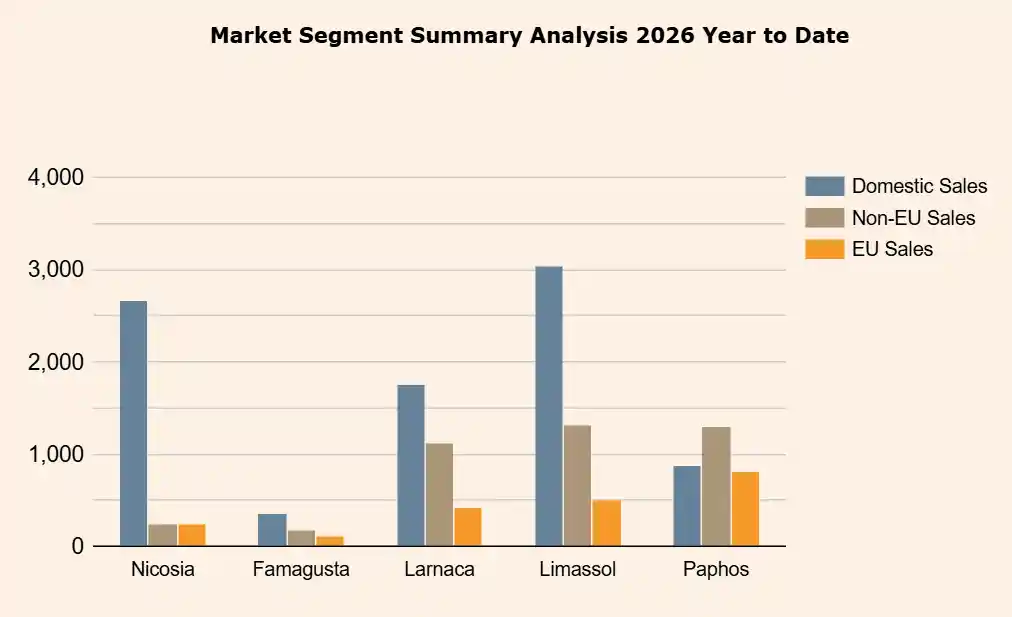
Ask Wire’s transaction data for the first half of 2026 also highlights significant regional differences in average apartment sale prices:

Limassol – ~€363,000

Paphos – ~ €262,000

Nicosia – ~€183,000

Larnaca ~ €171,000

Famagusta ~ €150,000

Loizou said Limassol remains Cyprus’ most expensive apartment market, largely due to its high-end beachfront developments and luxury residential towers.

“Paphos follows, ahead of Nicosia, Larnaca and Famagusta,” he said.

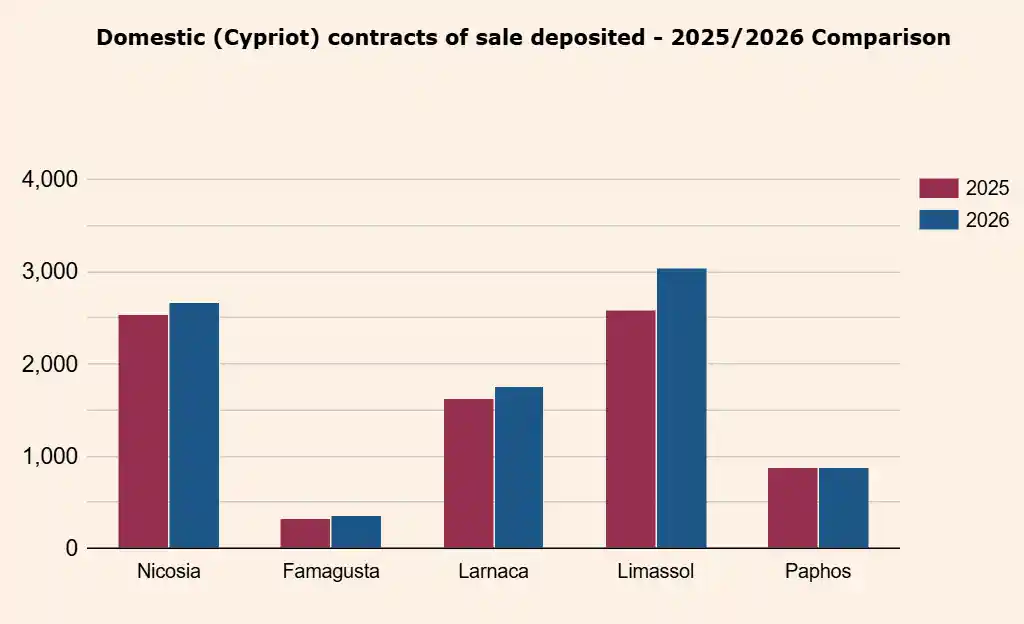
He added that although Nicosia’s market is primarily supported by domestic buyers, apartment prices have continued to rise compared with 2025.

“A typical two-bedroom apartment measuring around 75 to 90 square metres is generally priced close to, or slightly above, the average for each district. Final values depend on location, age, energy efficiency and, in coastal districts, proximity to the sea.”

Larnaca leads price growth

According to Loizou, Larnaca is recording the strongest annual increase in apartment prices, with values rising by approximately 8.9%, while price growth has begun to moderate in both Limassol and Paphos.

“Our data confirms this momentum,” he said.

“During the first half of 2026 we recorded 1,521 apartment transactions in Larnaca, the highest volume anywhere on the island.”

He attributed the city’s strong performance to several factors:

  • robust overseas demand;
  • greater affordability compared with Limassol;
  • a lower starting price base;
  • continued infrastructure improvements; and
  • stable rental yields from modern, energy-efficient one and two-bedroom apartments close to the coast.

Demand remains strong

Loizou said demand across the Cyprus property market remains robust with no signs of slowing.

“Property transactions reached a 17-year high in 2025, with transfers worth €4.7 billion. That momentum has continued into 2026.”

He noted that sale contracts increased by 13.8% during the first quarter of 2026, while Ask Wire’s own figures show strong transaction volumes across every district.

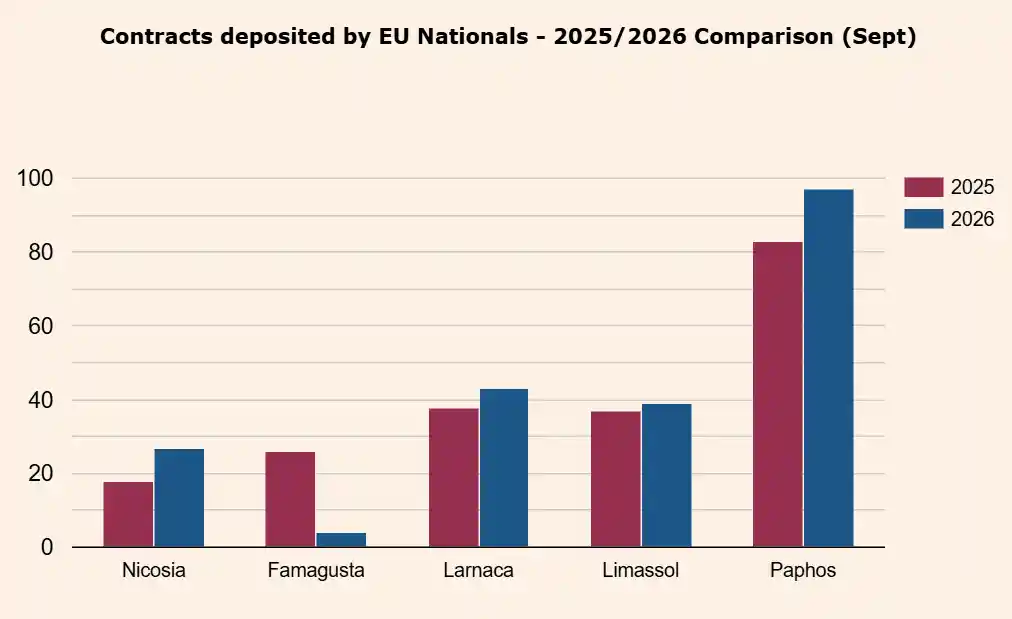
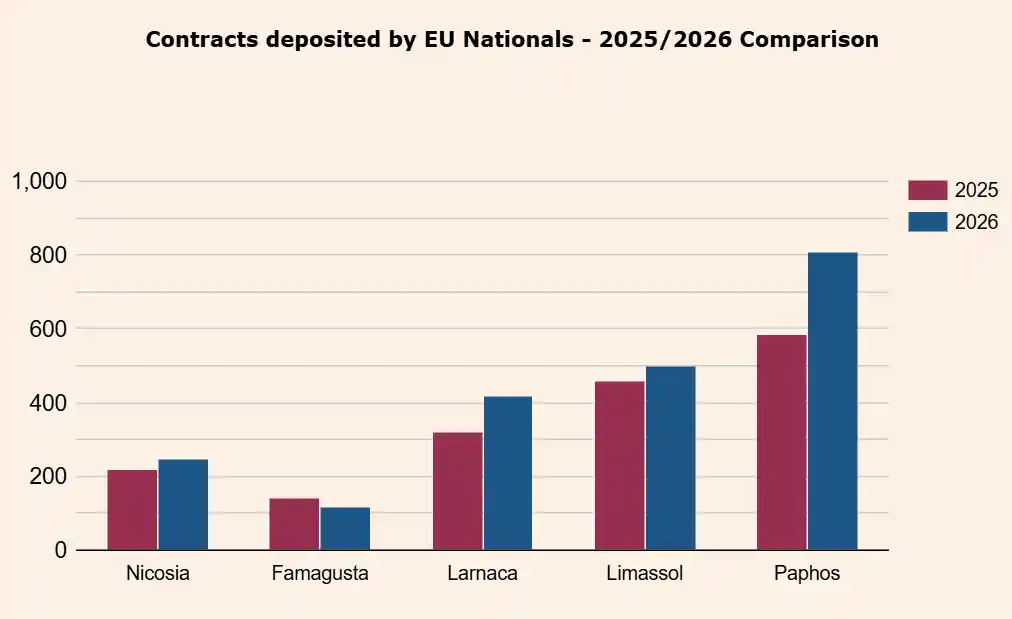
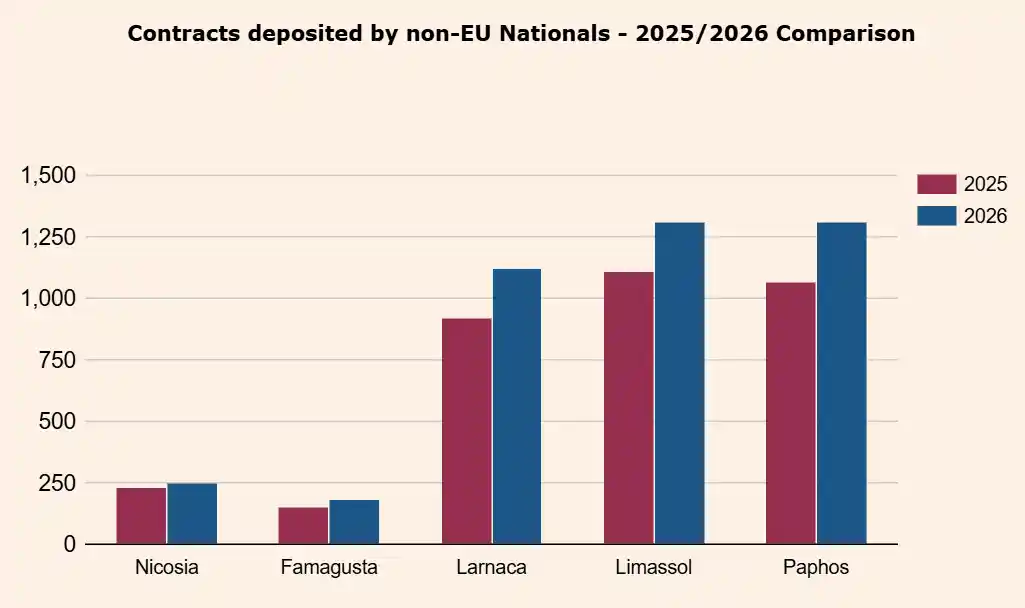
Foreign buyers continue to drive the market, accounting for as much as 75% of transactions in Paphos, supported by improving domestic demand as housing lending increased by 24.5% and mortgage interest rates fell to around 3.15%.

Loizou said the strongest demand continues to be for modern one and two-bedroom apartments near the sea, particularly those with high energy efficiency ratings.

Outlook for 2026

Looking ahead, Loizou expects property prices to continue rising during 2026, although at a more moderate pace.

He forecasts annual price growth of around 3% to 5% across Cyprus, with Larnaca expected to outperform the national average.

Newer apartments with strong energy performance are likely to achieve price growth of between 4% and 6%, he said.

While lower interest rates continue to support demand, affordability pressures, constrained housing supply and geopolitical uncertainty are expected to prevent another sharp surge in prices.

Large luxury homes may underperform as they rely more heavily on cautious high-net-worth buyers.

Overall, Loizou expects the market to remain resilient, with steady growth and no indication of a widespread price correction.

Cyprus to tighten dangerous buildings law with tougher penalties

Cyprus is set to overhaul its legal framework for dangerous buildings, introducing tougher enforcement powers, higher fines and new preventive measures aimed at protecting public safety, particularly in urban areas and historic town centres.

The proposed legislation, tabled by Parliament’s Standing Committee on Internal Affairs, would amend the Streets and Buildings Regulation Law to give authorities greater powers to identify, secure and, where necessary, demolish unsafe properties before they pose an immediate threat.

The reforms follow growing concern over repeated incidents involving collapsing buildings and falling masonry, highlighting weaknesses in the current legal framework.

Preventive action before buildings become dangerous

A key feature of the proposal is the introduction of a new legal category for “potentially dangerous buildings”.

For the first time, authorities would be able to intervene where a building shows signs of deterioration that could soon develop into a serious safety risk, rather than waiting until the structure is officially classified as dangerous.

The definition of a dangerous building would also be broadened considerably. Instead of focusing primarily on structural stability, it would also cover deficiencies relating to fire safety, poor maintenance, corrosion, subsidence, construction defects, structural failures and other conditions that could endanger occupants, neighbouring properties or members of the public.

New powers for authorities

Under the proposed law, following a visual inspection, the authorities could require the owner to appoint a qualified engineer or consultant to prepare a technical report or structural assessment.

Owners could also be instructed to carry out precautionary measures, including:

  • repairing defects;
  • removing hazardous elements;
  • installing protective measures; or
  • fencing off unsafe areas.

Property owners and occupiers would have 30 days to submit written representations after receiving formal notice.

For buildings already classified as dangerous, authorities would gain significantly stronger enforcement powers. They could require the immediate preparation of a technical remediation plan detailing all necessary repair works, protective measures or demolition where required.

Evacuation, sealing and demolition of dangerous buildings

The legislation would also allow authorities to order the evacuation of dangerous buildings.

If occupants refused to leave, the authority could apply to the court for an order permitting their removal and authorising the building to be sealed by installing physical barriers to prevent access and use of the building.

Where owners fail to comply with official notices, authorities would be empowered to:

  • disconnect water supplies;
  • request electricity disconnection from the Distribution System Operator;
  • carry out repairs or demolition themselves; and
  • recover all associated costs through civil proceedings.

Any expenditure incurred could also be registered as a legal charge against the property, ensuring recovery of public funds.

Owners would have the option of repaying the debt over up to 36 monthly instalments, subject to an additional fee of no more than 2% of the total cost.

Fines to double

The proposed legislation substantially increases financial penalties for non-compliance.

Maximum fines would rise from €10,000 to €20,000 for a first conviction and from €20,000 to €40,000 for subsequent convictions. Prison sentences would remain unchanged.

Administrative penalties imposed directly by the authorities would also double, increasing from €20,000 to €40,000.

The bill also introduces fixed penalty notices for the first time. Owners who fail to fence a dangerous building could face an on-the-spot fine of €2,000, while failure to seal an unsafe building could attract a €1,000 fine.

If these penalties are paid within 45 days, criminal proceedings for the specific offence would not be pursued. Failure to pay would result in prosecution before the courts.

Faster reporting and enforcement

The proposed reforms would require municipalities and community councils to notify the authorities immediately when they identify dangerous or potentially dangerous buildings within their jurisdiction.

The Director of Development Licensing would also be permitted to delegate specific responsibilities to officers within the District Local Government Organisations, helping accelerate enforcement and reduce delays.

The reforms represent one of the most significant changes to Cyprus’ dangerous buildings legislation in recent years and are intended to strengthen public safety following a series of building collapses and the continuing deterioration of ageing properties across the island.

Further reading

Proposal to tighten Cyprus dangerous buildings law with tougher penalties (Greek)

Cyprus launches iJustice platform to modernise courts

Cyprus has launched the first phase of its long-awaited iJustice platform, marking a significant step in the digital transformation of the country’s judicial system and raising hopes that more efficient courts will improve the investment climate, including the real estate sector.

The new iJustice platform was unveiled by Deputy Minister for Research, Innovation and Digital Policy Nikodemos Damianou during a press conference attended by representatives of the Judicial Service and the Cyprus Bar Association.

The launch forms the first stage of a broader programme to transform iJustice into a fully integrated court management system that will digitalise the entire lifecycle of court cases.

Modernising a system long affected by delays

Damianou described the project as an important milestone in modernising a sector where Cyprus has historically lagged behind in adopting digital technologies.

The new system enables the electronic filing, management, monitoring and administrative oversight of court cases. Built on a completely new technological platform, it offers enhanced functionality and a more user-friendly interface for judges, lawyers, court registrars, judicial officers and members of the public.

Among the new features are:

  • electronic management of interim applications;
  • greater alignment with Cyprus’ new Civil Procedure Rules;
  • preparation for integrating the Commercial Court and Admiralty Court into the system.

Damianou said the greatest advantage is the creation of a single, modern technological platform that can be expanded over time with new services and capabilities.

Lessons learned from earlier setbacks

The Deputy Minister acknowledged that difficult decisions had been required to get the project back on track, including terminating the previous contract after years of delays.

He revealed that the earlier procurement process took four years to complete before the project itself accumulated almost two years of further delays.

Since March 2025, development has followed a different approach, with close collaboration between the Judicial Service, the Cyprus Bar Association and end users to ensure the platform reflects the practical needs of the courts.

Rather than attempting a single large-scale rollout, the system is being delivered in phases, allowing faster implementation, better risk management and continuous improvements based on user feedback.

Full digital transformation planned by 2027

Future phases, scheduled for completion by 2027, will extend iJustice to additional courts and criminal jurisdictions while introducing further digital services.

The platform will also connect with other government information systems, including the Police warrant management system, enabling greater automation and more efficient information sharing across public services.

Officials are also examining the integration of artificial intelligence (AI) tools to assist legal research by helping users search legislation and case law more efficiently.

Cyprus’ forthcoming National Artificial Intelligence Strategy identifies the justice system as one of the sectors where technology could significantly improve efficiency and reduce delays.

Additional plans include:

  • remote court hearings;
  • AI-assisted digital recording and automatic transcription of proceedings;
  • courtroom display screens for presenting electronic evidence directly from digital case files.

According to Damianou, these initiatives form part of a unified strategy to fully digitalise the operation of Cyprus’ courts.

Benefits for property investment

The launch of iJustice comes against a backdrop of long-standing concerns over judicial delays, which have been widely recognised as a drag on Cyprus’ economy and property market.

As previously reported, lengthy court proceedings have discouraged investment, delayed commercial dispute resolution and weakened confidence among domestic and international property investors. Faster, more efficient courts are regarded as an essential element in improving the country’s competitiveness and strengthening the rule of law.

Judicial Service welcomes reforms

Judicial Service Registrar Andreas Tserkezos described Phase One of iJustice as a project of major importance that significantly strengthens the system’s security, performance and technical architecture while maintaining ease of use.

He said the objective is to use technology to save time and reduce costs while improving the delivery of justice.

Meanwhile, Cyprus Bar Association President Michalis Vorkas welcomed the government’s response to a long-standing request from the legal profession.

He said the combination of the new iJustice platform, the new Civil Procedure Rules and active participation by users has the potential to reduce court delays substantially, reinforce the rule of law and improve Cyprus’ investment environment.

Cyprus must turn housing pledge into homes

Cyprus’ pledge to deliver 10,000 new homes marks an important step towards tackling the country’s housing challenges, but meaningful progress will ultimately depend on whether the country can create the conditions needed to translate political commitments into completed developments.

After years of debate over rising rents, affordability and housing shortages, the national conversation has finally shifted towards increasing housing supply, the one factor most likely to bring lasting change to the market.

The commitment by Cyprus’ political parties deserves recognition because it acknowledges that boosting supply, rather than simply managing demand, is essential if housing affordability is to improve over the long term.

However, setting a target is only the beginning, with the greater challenge lying in removing the barriers that continue to slow residential development.

Housing should no longer be viewed solely as a social issue, but increasingly as a matter of economic competitiveness.

Countries seeking to attract international investment and highly skilled professionals are judged not only on taxation and the quality of their business environment, but also on whether they can offer quality housing at an affordable cost.

Without sufficient housing, attracting talent becomes more difficult, businesses face constraints on expansion and long-term economic growth slows.

This is especially relevant for Cyprus, which has established itself as an emerging technology and business hub.

As more international companies establish operations on the island and demand for skilled workers continues to grow, housing is becoming an increasingly important part of the country’s economic infrastructure.

One of the biggest obstacles to increasing supply remains the length of the development approval process.

Lengthy permitting procedures, multiple stages of approval, planning uncertainty and administrative delays all increase development costs before construction even begins, with those costs ultimately filtering through to homebuyers and tenants.

Modernising and accelerating the permitting system would therefore have an immediate impact on housing delivery.

Measures such as digital applications, parallel rather than sequential reviews, clearly defined approval timelines and dedicated fast-track procedures for strategic housing projects could significantly reduce delays while preserving transparency and regulatory oversight.

Reducing unnecessary obstacles within the development process should be regarded as an investment in Cyprus’ competitiveness rather than simply an administrative reform.

Increasing the number of homes alone, however, will not be enough, as the market also requires a broader mix of housing types.

Across Europe, professionally managed rental communities have become an increasingly important part of the housing market.

The Build-to-Rent model, under which residential developments are specifically designed and operated for long-term rental, has expanded rapidly in countries including the United Kingdom, Ireland and Spain.

These developments provide professionally managed accommodation, improve rental quality and, crucially, add new housing supply rather than competing for existing properties.

For Cyprus, Build-to-Rent should be viewed as one of several complementary solutions capable of improving housing availability while attracting long-term institutional investment into the residential sector.

International experience shows that no single policy has been sufficient to solve housing shortages.

Vienna has successfully combined public investment with non-profit housing associations for decades, creating one of Europe’s most affordable housing systems.

Ireland has accelerated housing delivery through stronger cooperation between the public and private sectors.

The United Kingdom has encouraged institutional investment in purpose-built rental developments through a stable planning framework and long-term policy certainty.

Although each country has adopted a different approach, they all share a common characteristic by increasing housing supply through cooperation between governments and private capital.

Cyprus has the opportunity to follow a similar path.

Doing so also requires a stable investment environment, with long-term residential developments depending on regulatory certainty, efficient planning procedures and tax policies that encourage rather than discourage new housing supply.

Measures relating to VAT, planning rules and development approvals should ultimately be judged on one simple question, whether they help deliver more homes.

If they do not, reform should be considered.

The debate should now move beyond whether 10,000 homes will be enough.

The more important question is whether Cyprus is prepared to create the conditions necessary not only to deliver those 10,000 homes, but also to continue building well beyond that target in the years ahead.

Housing is no longer simply about property, but increasingly about talent, competitiveness, investment and Cyprus’ long-term economic future.

The commitment has now been made, but success will ultimately be measured not by the number announced, but by how quickly and effectively Cyprus turns that ambition into new homes for the people who need them.

CM

Cyprus building costs rise as material prices increase

Anyone planning to build or renovate a property in Cyprus is facing higher costs once again, as construction material prices continued to become more expensive in June 2026.

The latest figures from the Cyprus Statistical Service (CySTAT) show that the Construction Materials Price Index reached 122.74 points in June 2026 (base year 2021=100), representing an annual increase of 3.12%. The data highlight broad-based price growth, with every major category of construction materials recording year-on-year increases.

Metal products record the sharpest annual increase

Metal products saw the strongest annual price growth, rising by 5.02% compared with June 2025.

They were followed by wood products, insulation materials, chemicals and plastics, which collectively recorded an increase of 4.07%.

Elsewhere, electromechanical equipment rose by 2.99%, minerals increased by 2.49%, while mineral products posted a more modest rise of 0.61%.

The latest figures suggest that inflationary pressures remain widespread across the construction sector, adding further costs for developers, contractors and homeowners undertaking renovation projects.

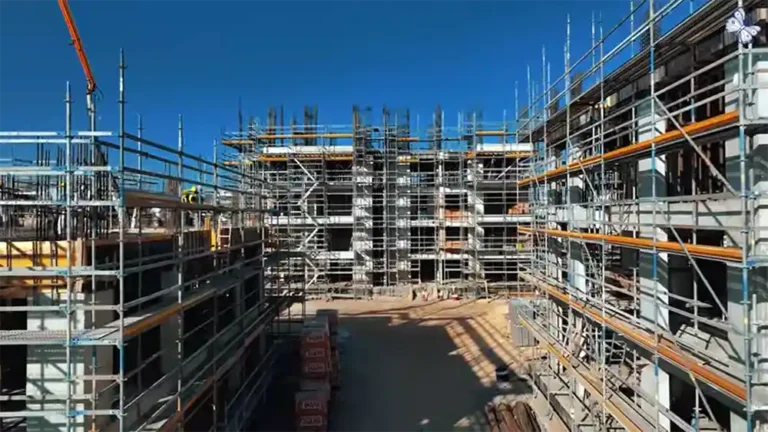
Construction materials at a building site in Cyprus as material prices increase in June 2026

Aluminium and plastics post the biggest category gains

A closer look at the data reveals notable differences between individual product groups.

Within the minerals category:

  • Aggregates increased by 1.56%
  • Cement materials rose by 3.82%
  • Stone products climbed by 1.30%

Among mineral products, cement-based products recorded a 0.79% increase, while ceramic products were virtually unchanged, edging up by just 0.01%.

In the wood, insulation, chemicals and plastics category:

  • Wood products increased by 4.38%
  • Insulation materials rose by 1.16%
  • Chemical products gained 2.64%
  • Plastic products jumped 6.53%

Meanwhile, metal products continued to experience significant price pressures. Iron and steel products increased by 3.76%, while aluminium and other metal products surged 7.56%—the largest annual increase recorded among all individual sub-categories.

Mixed picture for electromechanical equipment

Price movements within electromechanical products were more varied.

Electrical equipment recorded a substantial 6.23% increase, while heating and cooling equipment was the only category to decline, falling 1.67% over the year.

Other electromechanical products rose by 2.77%.

First-half figures point to continued cost inflation

For the January to June 2026 period, the overall Construction Materials Price Index increased by 1.62% compared with the corresponding period of 2025.

By main product category, the largest increases during the first half of the year were recorded in:

  • Electromechanical equipment (2.59%)
  • Wood products, insulation, chemicals and plastics (2.27%)
  • Minerals (1.89%)
  • Metal products (1.78%)
  • Mineral products (0.30%)

The continued rise in construction material prices is expected to maintain upward pressure on the cost of new developments and refurbishment projects across Cyprus, with higher input costs likely to remain a key challenge for the property and construction sectors throughout 2026.