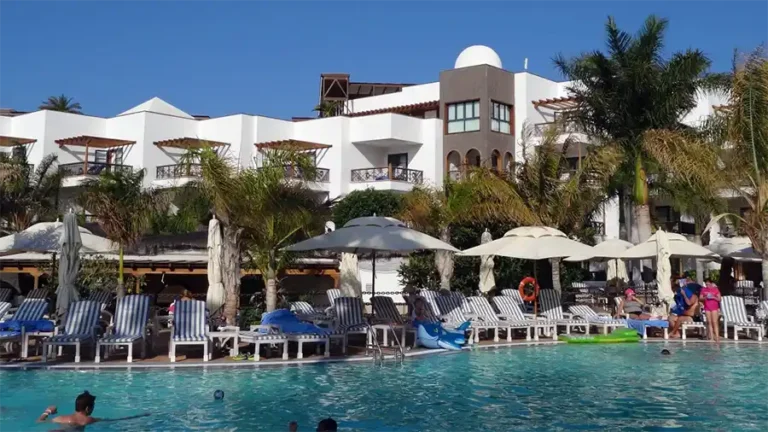
Communal swimming pools: essentials for owners & management committees

Cyprus introduced the Swimming Pools Law of 2025 and regulations in July, bringing long-awaited change and updated safety standards for all swimming pools across the island.

The new law followed two decades of campaigning, meetings with government officials, questions in the EU, complaints, vacuous announcement by the Interior Ministry, pool closures, passport confiscations, patchy law enforcement, petition, etc.

The new law classifies swimming pools into three distinct types:

Type 1 (Public & High-Risk) and Type 2 (Business-Related) Pools: These remain subject to the strictest regulations, requiring licensed operation, mandatory lifeguards during operating hours, regular inspections, and commercial-grade facilities.

Type 3 pool (Private & Shared-Use Pools) – all other pools, including those in self-catering accommodations, excluding:

(a) Type 1 swimming pools;
(b) Type 2 swimming pools;
(c) Pools intended for private use serving no more than five (5) residential units.

Type 3 swimming pools are the type most commonly found in apartment blocks and other residential complexes whose owners share swimming pools and other common facilities such as tennis courts, lifts, gardens, etc.

(The law categorises pools found in smaller apartment and other complexes comprising five are less units as ‘private use’ pools, i.e. the pool is used exclusively by the pool manager’s family and their guests, including those who rent the units. See rules for small communal pool & private pools later in this article.)

Before considering the specific requirements for Type 3 pools, the regulations require that all owners of swimming pools, regardless of their type, that are no longer in operation must securely fence the pool area and cover the pool. The owner must remove any water that has accumulated in the empty pool to prevent insects from breeding avoiding risks to people and animals.

Full details of the following may be found in the 2025 Swimming Pool Law and Regulations

Type 3 communal pool regulations

Although Type 3 pools have fewer obligations than Types 1 and 2, there are still clear rules that owners and Management Committees must follow. In summary:

    • No lifeguard is required.
    • No operating licence is needed, but authorities must be notified before its operation.
    • Basic safety measures including secure fencing/covers, a first-aid kit, and signage are required.
    • Pool inspections by the authorities are random and occur during the summer.
    • A “Swimming Pool Manager” must be appointed responsible for the day-to-day operation, safety and management of the pool ensuring compliance with the law.

Summary of mandatory and optional regulations

Water quality & technical requirements

Type 3 pools must fully comply with the following:

    • Continuous water renewal (full renewal within required time; 4 hours for existing pools).
    • Chemical requirements: pH 7.2–8.0; total alkalinity 80–120 mg/L.
    • Water must be visibly clear: Secchi disc visibility standard.
    • Monthly microbiological testing: by an accredited laboratory.
    • Recirculation system: must operate during pool use; include pumps, filters, flow meters, pressure gauges.
    • Water quality: water used for drinking fountains, washbasins, toilets, and showers, must be fit for human consumption.
    • Filtration standards and backwashing requirements.
    • Continuous disinfection (e.g., chlorine) with required free-chlorine levels checked at least 3 times daily.
    • Record-keeping of water tests in the official logbook.

Pool operation & maintenance

Key mandatory practices:

    • Keeping auxiliary areas (changing rooms, toilets) clean only if such facilities exist.
    • Daily removal of visible debris from the pool.
    • Suspension of pool use if hygiene or safety is compromised.

Responsible pool operator

Swimming pool managers must appoint a responsible person who meets minimum criteria:

    • 21+ years old, secondary education, clean criminal record.
    • First aid and health certificates are optional.
    • Duties include water renewal, disinfection monitoring, maintaining records, posting signs, and ensuring safe operation.

Safety measures

All pools must display basic safety and hygiene signs. Equipment requirements differ:

Mandatory measures

    • Rescue poles and life rings
    • First-aid kit
    • Emergency contact information

Optional measures

    • Spinal board
    • Manual resuscitator (BVM)
    • Dedicated emergency treatment area

Maximum number of bathers

Type 3 pools must follow the formula in the Seventh Table in the Regulations to determine maximum bather load.

Obligations of bathers

Type 3 pools must display and enforce bather obligations, including showering, hygiene, and safety rules.

Miscellaneous

    • Type 3 pools must comply with all applicable public health laws in addition to the regulations.
    • If auxiliary installations (spa, jacuzzi, etc.) exist, additional rules apply.

Owners or committees of existing communal pools must complete all required steps—including the audit, appointment of a “Responsible Person,” any necessary corrective works, and registration with the competent authority by 25 January 2026.

Download my 2-page Compliance Checklist for Type 3 Swimming Pools

Rules for small communal pool & private pools

If your pool serves 5 or less apartments and/or properties in a building complex, the rules are much simpler; most are not mandatory – they are recommended.

Private pools include those that serve an individual residential unit for use by the unit’s owner(s), their family and guests – including those who rent the unit.

Water quality & technical requirements

Recommended standards include:

    • Maintaining chemically safe water (pH 7.2–8.0; alkalinity 80–120 mg/L).
    • Keeping water clear to Secchi-disc visibility levels.
    • Ensuring continuous water renewal and proper circulation.
    • Using proper filtration and disinfection systems.
    • Conducting periodic microbiological testing.
    • Maintaining basic operational records for water checks.

Although not legally mandatory, private pools are expected to follow these guidelines for health and safety.

Operation & maintenance

This includes guidance on:

    • Keeping the pool clean and free of debris.
    • Cleaning any auxiliary areas (e.g., toilets, showers) if they exist.
    • Taking action if hygiene or safety risks arise.

Private pools are not subject to the staffing or operational obligations imposed on Type 3 pools.

Required safety measures

Examples of required safety measures:

    • Posting simple safety and hygiene rules.
    • Keeping a basic first-aid kit.
    • Having rescue equipment (e.g., pole, life ring).

Miscellaneous provisions

Private pools must still comply with general public health legislation, but the Swimming Pools Regulations themselves impose no mandatory operational or staffing requirements on private pools.

Download my 1-page Compliance Checklist for Private Swimming Pools

Cyprus ends cabinet power to grant ‘Golden Passports’

Cyprus’ House of Representatives has approved legislative amendments that formally end the government’s ability to grant ‘Golden Passports’ to investors, closing the final chapter of the controversial Cyprus Investment Programme (CIP). The vote, marked by heated exchanges, also updates regulations on granting honorary citizenship.

The ‘Golden Passports’ scheme was  definitively and irrevocably terminated in November 2020, in the wake of an undercover expose aired by the Al Jazeera news network. But the regulations giving the cabinet the authority to grant Cypriot passports stayed in place.

The new law approved yesterday removes that provision and the cabinet can no longer award Cypriot citizenship to investors, entrepreneurs and their families.

It introduces a 60-day deadline for appeals to the Independent Committee for the Examination of Citizenship Deprivation and requires publication in the Official Gazette of individuals stripped of citizenship.

The reforms aim to settle the EU’s infringement procedure launched in 2020 and prevent any revival of a citizenship-by-investment scheme.

Revised honorary naturalisation rules now allow citizenship to be granted to children of Greek soldiers who fell in 1974, as well as to prominent cultural figures who have made exceptional contributions to Cyprus. The Deputy Ministry of Culture becomes the competent recommending authority.

During the debate, Interior Committee Chair Aristos Damianou (AKEL) criticised the reform as Cyprus “shooting itself in the foot”, saying the country is compelled to act under EU pressure to avoid referral to the EU Court of Justice. He noted that 7,329 people obtained citizenship through the CIP, including investors who never visited Cyprus, and argued that the reputational damage was “irreparable”.

DISY MP Nikos Sykas countered that changes are natural once a programme is abolished, blaming CIP failures on “bad practices” under AKEL governance. Independent MP Alexandra Attalidou said the scheme had “rotten foundations” and allowed political profiteering, severely damaging Cyprus’ international image.

AKEL Secretary-General Stefanos Stefanou criticised widespread conflicts of interest, arguing that the scale of abuse cannot be excused by economic benefits. Socialist MP Kostis Efstathiou lamented the loss of the state’s sovereign ability to grant citizenship, saying abuses stemmed from overly broad executive powers.

DISY MP Onoufrios Koullas warned against generalising, noting the Golden Passports scheme supported jobs during a financial crisis, though around 100 applicants now face potential citizenship removal. Independent MP Andreas Themistokleous said abolishing exceptional naturalisation undermines state sovereignty.

The debate closed with further clashes over conflicts of interest and Cyprus’ international image, reflecting deep divisions over the legacy of the Golden Passports era.

In 2021, a report into the scandal led by former Supreme Court judge Myron Nikolatos revealed that more than half of the 3,000 citizenships granted between 2007 and August 2020 under the ‘Golden Passports’ scheme were unlawful.

Is build to rent a solution for Cyprus’ housing shortage?

0

Cyprus is approaching a decisive moment for its housing market. Rapid population growth, a widening gap between supply and demand, and institutions struggling to adapt are creating a challenging landscape with profound social and economic implications.

At TechIsland‘s Unlocking Cyprus’ Housing Potential event, Ask Wire CEO Pavlos Loizou delivered a detailed analysis in his lecture, “Housing Under Pressure: Aligning Cyprus’ Population, Infrastructure & Supply – Framing the Challenge”. His assessment underscored the true scale of a housing crisis already shaping the country’s future.

Loizou noted that the debate can no longer be confined to rising prices or the difficulty of securing accommodation. Since 2021, Cyprus has welcomed between 70,000 and 80,000 new residents. These arrivals fall into two broad groups: a large cohort of lower-income workers filling essential service roles, and an even larger group of highly skilled professionals linked to the tech sector and international firms.

During the same period, planning permission has been granted for 43,000 housing units, many targeted at middle and high-income buyers and not yet completed. The disconnect between real demand and the direction of new development is therefore expanding.

Sustainability: a building stock out of step with Europe

Compounding the issue is the age and inefficiency of much of Cyprus’ existing building stock, which falls short of modern European energy standards. Renovation rates remain low—a situation Loizou describes as a “structural mismatch that the market cannot correct without institutional tools and financial incentives”. Energy efficiency and sustainability, he argued, will become pivotal themes over the coming decade.

Changing demographics, mismatched supply

Cyprus’ demographic landscape is shifting rapidly. With a fertility rate of 1.44 and an ageing population, the country increasingly depends on foreign labour. These new residents typically form smaller households—between 1.6 and 2.1 people—and seek compact, modern homes near employment hubs.

Yet the market continues to produce suburban properties of 100–150 sqm, a model Loizou says no longer reflects actual demand.

Structural barriers in the construction sector

The development sector itself is constrained. Most companies are small and adhere to a traditional build-to-sell model. The absence of institutional investors capable of delivering purpose-built, long-term rental housing leaves the rental market exposed to intense pressure. Compounded by labour shortages and rising construction costs, the country lacks the mechanisms to deliver the quantity and type of housing genuinely needed.

The PODcaST and the housing reality

Loizou summarised the housing landscape through his PODcaST framework: Population, Old stock, Demographics, Supply constraints, and Tourism pressure. These five forces, he argued, will determine policy direction in the years ahead. Strategic decisions must be taken now: population growth requires a national position, and infrastructure – water, energy, transport, education, healthcare – must be planned on a ten-year horizon rather than via piecemeal reactions.
Integration of foreign workers and a redefinition of land-use policy will be central to Cyprus’ economic trajectory.

Policy proposals for a more balanced market

Among Loizou’s recommendations were the creation of institutional housing funds for long-term rentals, enhanced market transparency through regulation of agents and developers, mobilisation of capital for renovation works, and a reassessment of tax incentives affecting short-term rentals.

Affordable housing policies, he emphasised, are needed across all income brackets to support sustainable economic growth and social cohesion.

Is build to rent the solution?

Loizou also advocated the adoption of the Build to Rent (BTR) model—purpose-built residential developments intended solely for long-term leasing. In countries such as the UK, the Netherlands and Germany, BTR has become a key tool for expanding the rental housing stock.

In Cyprus, where supply has contracted sharply and rents are rising faster than wages, BTR could function as a vital “pressure-release valve”. Professionally managed developments offering stable contracts, energy-efficient units and shared amenities could rapidly expand the availability of affordable rental homes, stabilise prices, and support sustainable community growth.

A call for national alignment

Loizou concluded with a clear message: Cyprus must align its demographic scale, housing capacity and institutional framework. Without a national strategy, pressures will continue to mount, turning the housing challenge into a systemic risk for the country’s future.

Cyprus plans ways to reduce water waste from swimming pools

Concerns over excessive water consumption in private and commercial swimming pools have prompted the Ministry of Agriculture, Rural Development and Environment to consider a comprehensive package of measures.

Minister Maria Panayiotou confirmed that her department, together with the Town Planning Authority, is assessing options aimed at reducing waste at a time when water resources are under strain.

During a session of the Parliamentary Environment Committee, the Minister responded to comments from AKEL MP Nikos Kettiros, who highlighted that hundreds of thousands of tonnes of water remain locked in pools while agriculture suffers from shortages. Committee Chair Charalambos Theopemptou further noted that a single swimming pool uses as much water as five people consume over an entire year.

Panayiotou explained that the Water Development Department has long opposed the use of potable water (i.e. water that is safe for human consumption) in pools and consistently includes such restrictions in approval conditions.

She added that the government has held extensive consultations with industry stakeholders and examined international practice, including the use of seawater in swimming pools. This approach appears feasible for seafront hotels and for new developments currently at the design stage.

The Cyprus water crisis

Cyprus is facing its worst drought in over a century, with 2025 recorded as the driest year since 1901, according to Panayiotou.

Mobile desalination units are already fully operational, with seven major facilities under development in Limassol, Paphos, and Famagusta. Investments include €200 million for network upgrades and over €140 million for desalinated water purchases in 2026.

Authorities are also implementing measures to reduce leakage, promote water conservation, and expand network connections to 29 communities in Western Nicosia by 2030. While cloud seeding has been ruled out as ineffective, long-term plans include reviewing national water policy up to 2050 and exploring innovative solutions such as floating solar panels on dams.

Local MPs have urged swift action, citing crop losses and water scarcity. The government insists ongoing projects aim to prevent rationing, but additional desalination units remain essential to secure Cyprus’ water future.

When I checked the water levels of all the Cyprus reservoirs a few minutes ago, they stood at just 9.5 per cent of their total capacity compared to 22.5 percent a year ago.

Heavy fines are imposed on those found to be wasting water – I cannot wash our car, and we can’t water the garden.

The Kykkos Bishopric has held an all-night vigil and a procession, making stops for prayers for rain.

Cyprus property sales on track for best year since 2007

The 9 per cent increase in Cyprus property sales in November puts the island on track for its best performing year since 2007 – and the third most successful year since records began in the year 2000.

According to official statistics published by the Department of Lands & Surveys, total of 1,644 property sale contracts were deposited at Land Registry during the month, up from 1,506 in November last year. The growth extends the strong momentum seen in October, when transactions surged by 24 per cent to 1,638.

District sales November 2025 vs November 2024

District-level sales reveal a varied performance across the island.

Both Larnaca and Paphos recorded a 24 per cent rise in sales, while Nicosia recorded a 20 per cent increase, while Famagusta recorded a 3 per cent rise.

However, the number of sales in Limassol fell by 14 per cent. But despite this fall, Limassol still recorded the highest number of sales of all the districts.

  • Nicosia: 386 vs 322 (+20%)
  • Limassol: 439 vs 511 (-14%)
  • Larnaca: 387 vs 312 (+24%)
  • Famagusta: 76 vs 74 (+3%)
  • Paphos: 356 vs 287 (+24%)
Total contracts of sale deposited – 2024/2025 Comparison (Nov)

Year-to-date district property sales 2025 vs 2024

In the first eleven months of 2025, total sales rose 14 per cent to 16,455, compared with 14,458 in the same period last year, with all districts achieving double-digit gains.

  • Nicosia: 3,749 vs 3,212 (+17%)
  • Limassol: 5,085 vs 4,604 (+10%)
  • Larnaca: 3,598 vs 3,093 (+16%)
  • Famagusta: 798 vs 708 (+13%)
  • Paphos: 3,225 vs 2,841 (+14%)
Total contracts of sale deposited – 2024/2025 Year-to-Date Comparison

Cyprus is heading for the most successful year for property sales since 2007 and the third most successful year since records began in the year 2000.

Cyprus trapped buyer case exposes deep property & legal failures

A recent letter published in the Cyprus Mail by Mr Helmuth Porschen, entitled “Paying the price of a developer’s mortgage“, has once again thrown a harsh spotlight on the ongoing scandal of trapped buyers in Cyprus.

Mr Porschen’s question is simple, yet devastating: How can Kedipes threaten to auction his wife’s home over debts owed not by them, but by their property developer?

Unfortunately, his plight is far from unique. Mr Porschen is just one of thousands of innocent purchasers ensnared in a system that has failed them at every turn.

In his case, he is trapped not only by his developer’s unpaid mortgage but also by an incomplete development. Legally, the situation is brutally clear: the bank holds a superior claim because the developer’s mortgage was filed at the Land Registry before Mr Porschen’s contract of sale.

This is an all too familiar and tragic pattern – buyers are left exposed due to developers hiding existing mortgages, buyers receiving poor legal advice, or inadequate due diligence during the purchase process.

Kedipes, the state-owned credit-acquiring company, is one of several entities commonly known as “vulture funds” – organisations that swoop in to extract maximum value from distressed loans, with zero regard for their defenceless human victims.

Possible solutions

Trapped buyer law amendment may help

A recent amendment to the law may, however, offer Mr Porschen a lifeline. A trapped buyer can now request written consent from the party holding the charge – in this case Kepides – to have it lifted or cancelled. Should that consent be withheld without solid justification and the buyer has paid in full, a court order can be pursued to override the refusal.

But here lies yet another grim truth: at Mr Porschen’s age – late seventies – a court battle could take years. If Kedipes refuses to release the charge voluntarily, he could be trapped in legal limbo for the remainder of his life.

Sue his lawyer?

There is, however, another avenue. If his lawyer failed to warn him that the property was already mortgaged when he bought, Mr Porschen may sue for professional negligence. A landmark Supreme Court ruling fifteen years ago ordered a lawyer to pay €120,000 in compensation to clients who suffered losses after being misled over a developer’s unpaid mortgage. The circumstances appear strikingly similar, and Mr Porschen may well have strong grounds for a claim – though again, justice may be years away in the slow-moving Cypriot courts.

Planning violations – the victims have to pay

The issue of the incomplete development is yet another legal quagmire awaiting reform. Under current legislation, if a planning application for, say, 50 houses is approved and the developer builds only 49, none of the completed homes can receive Title Deeds. This bureaucratic absurdity leaves entire communities in limbo, with developers facing no real accountability for failing to complete projects or for committing planning infringements. Why, yet again, must the burden fall on innocent buyers?

For now, Mr Porschen’s best hope is to find competent legal representation. By his own account, his current lawyer “seems not to have any interest in this case and has done nothing so far.” With his home and peace of mind at stake, decisive action is urgently needed.

His story is a stark reminder that Cyprus’ trapped buyer crisis is far from over and continues to extract an unforgivable human cost.

(The UK Foreign, Commonwealth & Development Office (FCDO) publishes a list of English-speaking lawyers who may be able to assist Mr Porschen and others. See Lawyers in Cyprus.)