Surge in fraud by fake real estate agents, council warns

Hundreds of people have been defrauded by individuals posing as real estate agents, according to the Cyprus Real Estate Agents Registration Council, which is registering an average of three to five criminal cases per day against illegal brokerage activities.

Since 2023, the council’s lawyers have filed 565 criminal cases, publishing the names of those convicted on ktimatomesites.com for public awareness.

(Ed: A list of licenced real estate agents may be found at Licensed Agents for 2025)

Victims have reportedly been lured through fraudulent sales or double sales of land and houses, attempts to rent third-party apartments via online listings and schemes in which perpetrators collected down payments or commissions before disappearing.

Many complaints are submitted daily to the council by licensed agents and members of the public.

Official data shows the scale of the problem: from 2023 to the present term of the board, 565 criminal cases were filed against individuals and companies violating the Real Estate Agents Law.

Under the chairmanship of Marinos Kineyirou, prosecutions have followed a steady pattern in recent years.

In 2022, 460 cases were registered, resulting in convictions of 25 companies and 45 individuals in 55 cases.

In 2021, courts convicted 20 companies and 55 individuals in 50 cases. In 2020, 37 cases led to convictions of 22 companies and 40 individuals, while 2019 saw 28 cases with 15 companies and 30 individuals convicted.

In 2018, courts convicted 10 companies and 25 individuals in 25 cases.

President of the Real Estate Registration Council, Marinos Kineyirou, told Politis that “Our attitude towards illegal real estate brokerage is and will remain one of zero tolerance. It is not just a slogan; it is our everyday life,

“We are making a huge effort to combat it.”

Over the past three years, the council has bolstered its inspection teams in numbers and expertise across all of Cyprus’ districts. The aim, he said, is “identifying illegals and registering criminal cases against them, whether they are physical or for legal entities.”

“We have increased our efficiency and are now identifying illegalities at their source,” he added.

CM

Cyprus housing trends: homeownership above EU average

A new Eurostat report highlights notable contrasts in homeownership patterns across the European Union, with Cyprus standing out in several key areas.

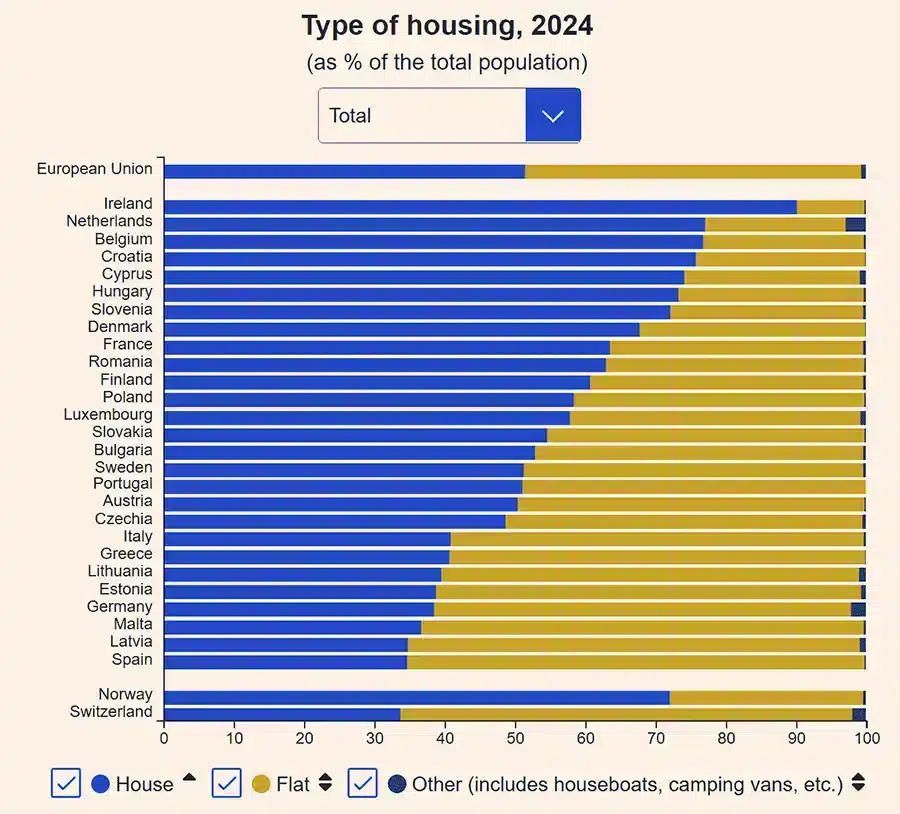
While nearly half of the EU population (48%) lives in apartments, only a quarter of Cypriots do so, placing the island among the Member States with the lowest share of apartment dwellers.

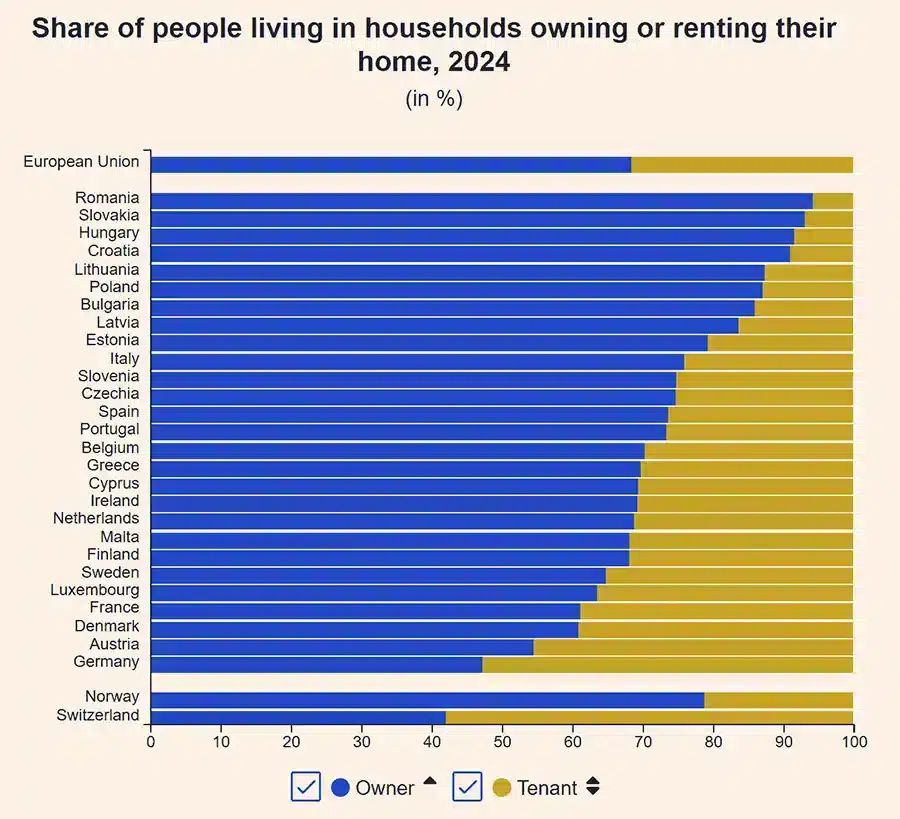
Homeownership in Cyprus remains slightly above the EU average. According to Eurostat, 69.4% of the Cypriot population owned their homes in 2024, compared with the EU average of 68%. The remaining 30.6% of households were renting.

homeownership vs renting

Across the EU, homeownership remains the dominant housing model in every Member State except Germany, where renting is more prevalent. In Germany, 53% of households rent their homes, followed by Austria (46%) and Denmark (39%). Overall, 32% of EU households rent, while 68% own their homes.

The highest levels of homeownership are observed in Romania (94%), Slovakia (93%), Hungary (92%) and Croatia (91%).

Cyprus among EU leaders in house living

Cyprus also ranks among the countries where residents are most likely to live in houses rather than apartments. In 2024, 74% of households lived in houses, the fifth-highest share in the EU. Only 25% lived in apartments. Ireland leads the rankings with 90% house occupancy, followed by the Netherlands and Belgium (both 77%) and Croatia (76%).

Across the EU, 51% of the population lives in houses and 48% in apartments, with the remaining 1% in alternative accommodation such as houseboats or caravans.

Urban vs rural homeownership disparities

Eurostat notes that housing type varies significantly not only between countries but also between urban and rural areas.

In EU cities, apartment living dominates, with 73% of residents in flats and only 27% in houses. Conversely, in rural regions, 83% of the population lives in houses, while just 16% live in apartments.

Countries with the highest proportion of apartment dwellers include Spain (65%), Latvia (64%) and Malta (63%).

Cyprus MP seeks extension to reduced 5% property VAT

A proposal submitted to the House of Representatives on Thursday seeks a one-year extension to the transitional period during which a reduced 5% VAT rate applies to the purchase or construction of a property intended as a primary residence, instead of the standard 19% rate.

The bill, introduced by Stavros Papadouris, President of the Movement of Ecologists, aims to amend the VAT Law so that the required declaration for securing the reduced VAT rate can be submitted within four years from the law’s commencement date, rather than the current three-year window.

The existing three-year transitional period, which began in June 2023, remains in effect until this coming June. However, significant delays have been reported in the issuance of planning and building permits by the newly established District Local Government Organisation (DLGOs), now responsible for these approvals.

Speaking to StockWatch, Mr Papadouris explained that numerous applicants who submitted their permit requests before October 2023 are still waiting for approval due to DLGO backlogs. As a result, the transitional VAT relief, which intended to ease the financial burden for homebuyers and developers risks, becoming ineffective for many.

He stressed that applicants should not be penalised for administrative delays, describing the situation as unfair for those unable to obtain their permits in time.

Since 1 July 2024, responsibility for building permits transferred from municipalities and district administrations to the newly formed DLGOs. Most of these bodies have so far struggled to cope with market demand. During a recent meeting between the presidents of the five DLGOs and the Cyprus Builders’ Federation (OSEOK), the urgent need to resolve ongoing licensing delays was highlighted once more.

Possible need for EU approval

Asked whether extending the timeframe might require approval from the European Commission, given that infringement proceedings had been instigated against Cyprus on the issue, while the Commission’s consent had been granted for initial three-year period, Mr Papadouris said the matter would be examined during the bill’s review.

He emphasised that the primary aim of the proposal is to ensure the transitional period can serve its intended purpose, noting that affected individuals bear no responsibility for the delays caused by the DLGOs.

Background: the 2023 property VAT framework

Under the legislation introduced in 2023, once the transitional period ends, a 5% VAT rate applies only to the first 130 sqm. of a residence valued up to €350,000. Houses and apartments measuring between 131 and 190 sqm. and valued up to €475,000 are subject to 19% VAT on the additional square metres.

In other words, 5% VAT applies to the first 130 sqm. (up to €350,000), while the remaining 60 sqm. up to the 190 sqm. cap are taxed at 19%. Properties exceeding 190 sqm. or €475,000 are subject to the full 19% VAT from the first square metre.

The transitional period applies to those who filed planning applications between early June and 31 October 2023, regardless of when construction is completed. Reports indicate that more than 10,000 applications have been submitted to date.

Debate on bill to deal with dangerous buildings continues

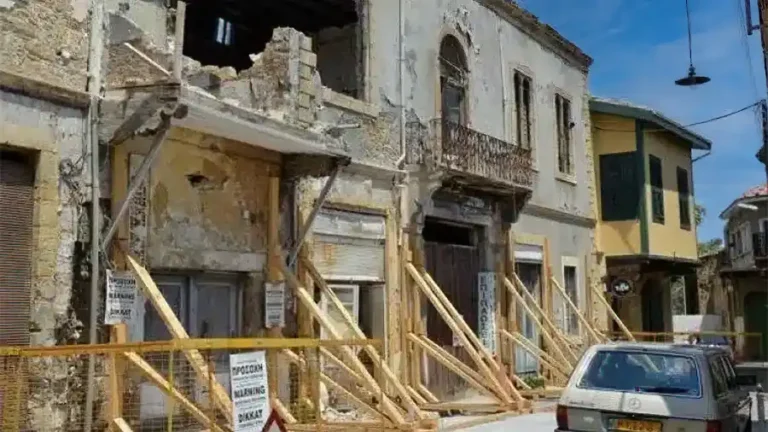
The debate over how Cyprus should deal with dangerous buildings intensified this week as the House Interior Committee continued its clause-by-clause review of a bill designed to strengthen safety regulations.

The proposal, submitted by DIPA MP Marinos Mousiouttas, seeks to amend the 2025 Roads and Buildings Regulation Act to allow authorities to respond more effectively when a structure is deemed unsafe.

According to the Interior Ministry, the updated legislation would close long-standing loopholes that have complicated efforts to shut down dangerous buildings. Officials said the clearer framework is intended to prioritise public safety and ensure that dangerous structures can be evacuated and sealed off without delay.

However, several MPs voiced concerns that the bill falls short on social protections for residents forced to leave their homes at short notice. EDEK MP Marinos Sizopoulos questioned how families would cope without guaranteed housing support, urging lawmakers to include explicit safeguards. Mousiouttas echoed the call, stressing that any technical assessment or intervention plan should be paired with social assistance, particularly in cities such as Limassol where building safety issues are more pronounced.

The attorney-general’s office reminded the committee that certain tenant protections are already in place. Nevertheless, officials emphasised that when public safety is at stake, authorities retain the power to order immediate evictions.

Under current law, occupants have 14 days to vacate a building declared dangerous. The technical evaluation procedure remains unchanged: an engineer or technician must inspect the structure and deliver an assessment within three days, confirming whether the building represents a hazard.

Further complexity emerged when the Nicosia District Local Government Organisation (NDLGO) submitted a memorandum highlighting that it had not been consulted during the drafting of the bill. The document raised technical questions surrounding articles 15A and 15B, particularly the definition of the “competent authority” responsible for action on dangerous buildings.

The NDLGO also sought clarification on whether technical reports submitted by engineers are intended solely for information, require approval, or fall under regulatory control. It questioned who bears responsibility when property owners refuse to leave a dangerous building, and how fines, linked in the bill to the “seriousness of the offence”, should be calculated.

NDLGO general director Konstantinos Parmaklis warned of significant complications in multi-owner buildings, noting that while some owners comply readily, others do not, making enforcement unpredictable and potentially hindering timely safety interventions.

As the committee continues its examination, the central challenge remains balancing urgent public safety needs with the practical realities and social implications of displacing residents from their homes.

The Cyprus building permits crisis freezing major developments

Cyprus’ building permits crisis is dragging on with no clear end in sight, freezing major property developments and undermining confidence in the island’s investment landscape, industry sources have warned.

Despite modest tweaks to the system, the District Local Government Organisations (DLGOs), the new authorities responsible for issuing building permits remain overwhelmed. Property professionals say the delays are now rippling through the entire sector, distorting market data, derailing construction timelines and threatening broader economic stability.

The Cyprus Building Contractors Association (OSEOK) recently held urgent talks with DLGO presidents to confront what many now view as an escalating bottleneck. Market insiders told Phileleftheros that monthly Statistical Service data no longer reflects genuine market trends because permit numbers have become so unreliable.

A troubled transition

Responsibility for building permits shifted from municipalities to the newly formed DLGOs on 1 July 2024, with the government promising a more streamlined process via the Ippodamos digital platform. Instead, the opposite occurred.

The transition faltered for four key reasons:

  1. Under-staffing: DLGOs assumed control without sufficient personnel to handle the volume of building permits applications.
  2. Inherited Backlogs: They did not begin with a clean slate; thousands of pending applications arrived on day one.
  3. Boom-time Pressure: The handover coincided with strong market activity, adding a surge of new building permits requests.
  4. Expanded Responsibilities: Additional licensing tasks were transferred to the DLGOs, further inflating workloads.

Developments frozen, plans in tatters

The fallout has been immediate and severe. Developers say numerous major projects are effectively frozen, jeopardising multimillion-euro investments and damaging Cyprus’ reputation as a reliable destination for international capital.

Households and businesses are also feeling the pain. Buyers who planned their lives around new-build delivery dates now face indefinite delays.

Large developments have been hit hardest. One flagship project reportedly spent two years obtaining planning consent, only to stall again because the building permits failed to materialise. Even temporary water supply approvals, which are normally routine, have become a new bottleneck.

A willingness to act, but no quick fix

At the recent meeting between OSEOK and DLGOs, the DLGO presidents expressed readiness to speed up licensing, acknowledging the central role of timely permitting in sustaining investment and growth. They argue that full autonomy, complete staffing and stronger financial resources are essential to resolving the crisis.

They also noted that application processing rates are now higher than incoming submissions, an early sign (they say) of gradual improvement. Yet for developers waiting months or years, patience is wearing thin.

Until the backlog is cleared and the system becomes reliably functional, Cyprus risks long-term damage to both its property market and its international investment standing.

Cyprus reviews rural planning zones to tackle housing crisis

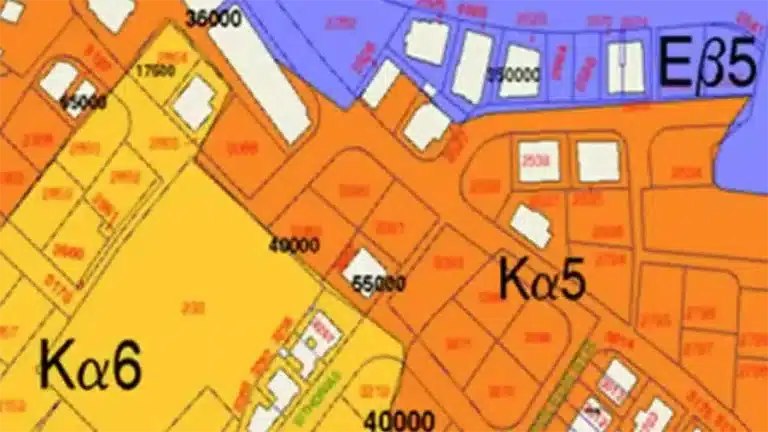
Cyprus’ Ministry of the Interior is weighing a series of changes to rural planning zones as part of wider efforts to confront the country’s mounting housing crisis. The developments were outlined in a parliamentary response issued by Interior Minister Konstantinos Ioannou to Paphos MP Charalambos Pazaros.

In his written reply, Ioannou acknowledged that the housing issue has reached critical levels, affecting both major urban areas and rural communities. He noted that revisions of planning zones are already under continuous review, forming a key pillar of the government’s strategy to promote balanced growth and secure long-term, sustainable housing.

As part of the ongoing update of the Rural Policy Statement, the Ministry is currently examining proposals that could reshape development prospects in several communities. Among the measures under consideration are:

  • The expansion of residential zones in areas where a genuine, documented housing need has been identified.
  • Incentive-driven initiatives to breathe life back into existing settlements by encouraging the restoration and reuse of older housing stock.

According to Ioannou, any change to zoning boundaries will proceed only after full technical assessment. Demographic trends, socio-economic data, available infrastructure and environmental impacts all form part of the Ministry’s decision-making criteria.

Alongside the planning zones review, the government is continuing its targeted housing schemes for rural, mountainous, border and disadvantaged regions. These initiatives — including the Housing Scheme for the Revitalisation of Mountainous, Borderline and Disadvantaged Areas and the Housing Scheme for the Revitalisation of Specific Rural Areas — are designed to support local economies and slow population decline in small communities.

The Minister also confirmed that the overhaul of rural planning zones is being rolled out in two phases due to the large number of communities involved. Local councils participating in Phase A submitted their proposals between December 2022 and September 2023, while submissions for Phase B run from January to June 2025. The Ministry is now in the process of evaluating all recommendations received.

Once the review is concluded, the government will issue a formal notice in the Official Gazette, and updated planning maps will be published online by the Department of Town Planning and Housing.