Grey future for Latchi

Where there is no enforceable law, there exists no wrong. That is precisely what is happening at the very entrance of Latchi – one of the last unspoilt parts of the island.

For the past two years, hidden forces have decided that the area must follow the “Ayia Napa syndrome” and cultivate an “all-inclusive” market for cheap tourism. Tour operators such as TUI Airlines and others have now targeted Latchi as one of their new destinations and nothing appears capable of stopping them. This would mark the beginning of no return for Latchi.

Others welcome the transformation on the promise that it would create jobs; boost a small sector of local businesses and it would be “good for the area.”

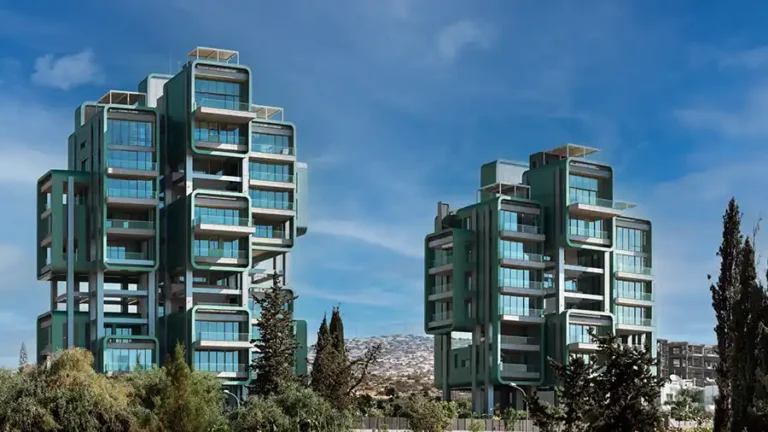
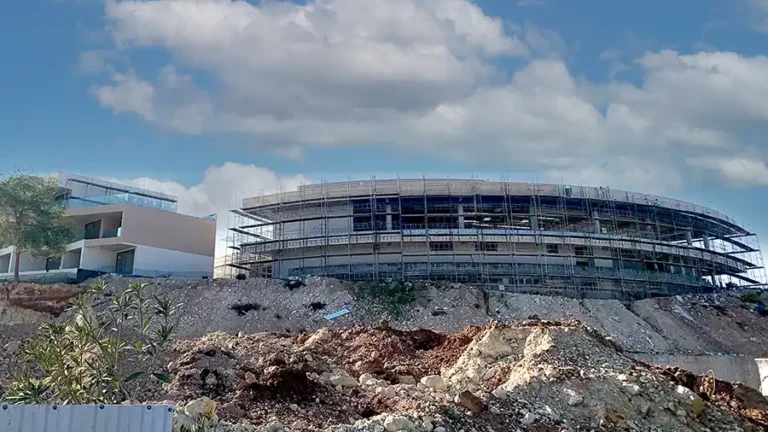
The Israeli-owned “Leonardo Latchi Resort” under construction has become riddled with illegalities and court rulings for violations of Cyprus’s planning and building regulations. The approximate 700-bed cosher resort would mostly cater to the Israeli/Jewish market; a market that is growing rapidly. Another large hotel nearby that once offered positive prospects for the area, remains unfinished – after fifteen years –  due to similar violations and court orders. Both have arrogantly ignored zoning laws, adding extra floors without planning permission – only in Cyprus!

This crafty practice of disregarding building regulations and adding more floors has become alarmingly common. The massive Guru project in Platres is yet another example of blatant arrogance, breaching zoning regulations by constructing additional unauthorized floors. The scheme is simple: start building without permits, and then worry about obtaining them later.

Government bureaucracy has lost all control and offenders are fully aware that an illegal structure in Cyprus is almost impossible to be demolished. This reality encourages culprits to continue breaking the law.

The Mayor of Paphos, Mr Phedonas, has publicly condemned Paphos EOA (the new authority responsible for issuing building and planning licenses) for failing to enforce regulations. He revealed that most hotels and other projects in the Paphos region operate unlawfully without proper licensing; the result of government incompetence and deep-rooted corruption.

Polis Chrysochous is not immune to such behaviour. The construction of the Leonardo Holiday Resort at the entrance of Latchi is a prime example of mocking the law and reinforces the notion that “where there is no law, there is no wrong.”

This highly controversial development would not have been possible without the support of Polis municipality and its councillors. One week before handing its authority over to the EOA, the council amended local bylaws to allow three-storey buildings that “accommodate and serve tourists.” Projects that illegally added extra floors in the past were effectively legalized at the stroke of a pen.

Meanwhile, bulldozers at the Leonardo resort continue devouring an entire hill, reducing it to street level. Citizens on the other hand are kept in the dark, unaware of what is happening in their own community. Transparency is non-existent. The mayor, his thirteen vice mayors and municipal officials responsible for protecting the environment in the public interest, turn a blind eye to many on-going local illegalities—silence is bliss.

The construction site will soon be smothered in concrete in the name of “progress” and greed. One must ask why such environmental brutality was ever allowed to begin in the first place? Yet government departments simply blame one another while lawlessness grows.

The two Latchi hotels scheduled to open in 2026 will introduce an additional 1,000 beds to the region. Without doubt, this increase has fuelled the renewed interest of TUI Airlines and other tour operators eager to exploit the natural beauty of the area. Some may argue that this is “great news,” and refuse to acknowledge the long-term demographic consequences of mass tourism will have upon the small selective community; a community of just over five thousand citizens!

The municipality – acting irresponsibly but also incompetently – failed to address infrastructure concerns before approving and supporting such an oversized and unsightly project. A proper five-star hotel would have been welcome, but not this monstrosity conceived behind closed doors without public accountability.

By next year, reality will set in, though it will be far too late to reverse the environmental and cultural damage. Can the area truly cope with cheap mass tourism? Can it socially deal with the demographic changes? Can it manage car parking, road congestion – especially when the new Latchi Marina is in full operation – sewerage, and water supply? Most importantly, can the already strained small hospital in Polis Chrysochous cope with the added demand? These are serious questions that require real answers, yet officials remain silent when it comes to the Leonardo Latchi Resort that could be politically protected.

Clever relaxation

The unlawful practice of adding extra floors to commercial buildings without the necessary permits raises the question: who is advising offenders on how to manipulate and abuse the system? Only paid architects, engineers, and corrupt officials familiar with Cyprus’ planning bureaucracy could orchestrate the scheme. Such advice accompanied with backhanders do not come cheap, yet there are always those willing to pay.

To this day, these practices remain widespread, especially with the influx of third-country investors entering the Cyprus property market. Many of these investors show little respect for local life or the environment, yet the government provides them with a variety of “relaxations,” claiming it benefits the economy.

One such relaxation involves allowing major extensions that were built without permits to be legalized – at a price. This enables developers to purchase additional, but phantom, permissible land coverage. In effect, the government profits from lawbreakers by selling them “legality.”

All the offenders must do is to purchase a phantom sintelesti (coverage density factor) – 10%, 20%, 30%, or more – from land located anywhere across the island. The virtual sintelesti is then transferred to the non-compliant project and instantly making the illegal construction “legal.”

The sale of sintelesti applies to all kinds of developments. One can buy a sintelesti from the Paphos region and transfer it to a restaurant or club in Nicosia or Ayia Napa. This practice is unheard of in any other European country but helps to fill government coffers with millions.

It is a win-win arrangement for the players – except for the local environment and the quality of life for the communities. Latchi is certainly facing a grey dilemma for its future indeed…

About the author
Andreas C Chrysafis is a UK published author of five books and over 450 press articles but also a recognized artist. He is not political-affiliated but a strong advocate for Democracy, Transparency, Equality and Human Right and a robust opponent to Corruption.

Cyprus’ 50 priciest property sales in September 2025

Cyprus’ luxury property market recorded a relatively subdued September 2025, despite several high-value transactions across the island’s leading districts, according to fresh analysis by Ask Wire, the technology-driven firm specialising in tracking property sales, asking prices, and construction activity.

The company processed and published data on the 50 most expensive property sale transactions completed in September 2025, with their combined value reaching €46.8 million.

The ten most expensive sales nationwide totalled €21.3 million, led by a €5.1 million apartment in Ayios Antonios, Limassol as the most expensive deal of the month.

Limassol retains dominance in high-value property sales

Limassol secured five of the top ten sale transactions, further cementing its position as the epicentre of Cyprus’ premium real estate sector. Paphos followed with three high-value sales, while the free areas of Famagusta district and Larnaca each recorded one major transaction.

The 10 most expensive property sales – September 2025

No Property Type Sale Price District / Municipality – Community
1 Apartment €5.1 million Limassol / Ayios Antonios
2 House €2.7 million Paphos / Ayios Theodoros
3 Field €2.65 million Famagusta / Ayia Napa
4 Field €1.8 million Paphos / Pegeia
5 Apartment €1.7 million Larnaca / Voroklini
6 Offices €1.68 million Limassol / Mesa Geitonia
7 Offices €1.68 million Limassol / Mesa Geitonia
8 Field €1.5 million Paphos / Pegeia
9 House €1.27 million Limassol / Ayios Tychonas
10 House €1.25 million Limassol / Ayios Tychonas

Source: Department of Lands and Surveys, Analysis: Ask Wire

District breakdown

Limassol accounted for 34.2% of the total value of the top 50 transactions, with its ten costliest sales amounting to €16 million.

Paphos followed with €11.3 million (24.1%), while the free area of Famagusta achieved €7.35 million (15.7%), surpassing both Nicosia and Larnaca in premium-property transaction values.

Values of the ten most expensive sales by district were:

  • Limassol: €16m (34.2%)
  • Paphos: €11.3m (24.1%)
  • Famagusta (free area): €7.35m (15.7%)
  • Nicosia: €6.15m (13.1%)
  • Larnaca: €6m (12.8%)

Highest-value sales per district

  • Famagusta: Field, €2.65m (36% of district total)
  • Larnaca: Apartment, €1.7m (28.3%)
  • Limassol: Apartment, €5.1m (31.9%)
  • Nicosia: Field, €1m (16.3%)
  • Paphos: House, €2.7m (23.9%)

Market commentary

Ask Wire CEO Pavlos Loizou described September’s high-value market as “measured,” noting:

“The month could be considered somewhat subdued, with only 15 sales above €1 million, a figure reflected in the €46.8 million total value of the top 50 transactions.

“Residential property stood out, with 22 house sales and six apartment sales. Land followed with 13 field transactions and two plots. Notably, two of the five office sales ranked among the top ten of the month. The combined €6.1 million value of the five office transactions equals the total value of Nicosia’s top ten deals and exceeds that of Larnaca’s.”

He added that Limassol’s four out of five office transactions are consistent with the city’s evolving development model, reinforcing its role as a hub for high-value investment.

Overall market outlook

The data suggests that residential properties continue to dominate Cyprus’ premium real estate transactions, while the land and office segments, particularly in Limassol, are strengthening the city’s position as a key location for high-value investment activity.

How can the Cyprus property sector remain competitive?

2

Yiannis Misirlis, chairman of the Cyprus Property Developers Association, and Andreas Demetriades, president of the Association of Large Investment Projects, shared their views on Cyprus’ real estate market and what needs to be done if it is to remain competitive in the November issue of GOLD magazine.

I’ve summarised the main points raised in the article below.

The Cyprus real estate market remains robust, with property sales rising 13% in the first nine months of 2025 and September sales up 15% year-on-year. This sustained growth reflects increasing investor confidence as Cyprus strengthens its position as a regional business and investment centre.

Demand is shifting toward high-quality, sustainable and technologically advanced developments. Modern workplaces with energy-efficient features, eco-friendly materials and smart systems are in high demand, driven by environmental awareness and long-term cost benefits. Lifestyle-focused projects, particularly gated communities offering security, privacy and shared amenities, are also gaining popularity.

To maintain competitiveness, Cyprus needs policies that promote efficiency, innovation and green growth. Faster licensing procedures, tax incentives for energy-efficient construction and strong infrastructure, such as transport, digital networks and community services, will be essential to support future development. Developers are increasingly adopting ESG standards, integrating renewable energy, smart-home technologies and responsible construction practices, but further collaboration between the private sector and government is required for a fully modern and resilient built environment.

A new development model centred on digital transformation, sustainability and more efficient public administration is needed. Priorities include expanding e-governance, accelerating the green transition, reforming the tax system, decentralising public services, improving the justice system, reducing permitting delays and addressing labour shortages.

To enhance the business environment, the establishment of a Deputy Ministry of Development & Competitiveness is proposed, incorporating a Unified Investor Service and a One-Stop Service for strategic investments. Such reforms would strengthen Cyprus’ attractiveness as a business, investment and tourism destination.

Cyprus already benefits from a strategic location, competitive tax regime, skilled workforce, strong financial sector and stable legal framework. Emerging sectors including healthcare, education, energy, technology and innovation, offer further potential, while expected Schengen accession is set to boost openness and investor confidence.

A comprehensive sustainability-focused strategy is now essential. Many developers already integrate environmental studies, photovoltaic systems, green spaces and water management solutions. Broader adoption of green practices will reduce environmental impact and support Cyprus’ transition to a low-emission, resource-efficient and competitive economy.

Further reading

You can read the full article in the November issue of GOLD magazine.

Delays in planning approvals take centre stage

0

Delays in planning approvals in Cyprus were on the agenda on Thursday when the Cyprus Federation of Building Contractors Associations (OSEOK) met with the Presidents of the District Local Government Organisations (DLGO) during a working lunch.

OSEOK President, Stelios Gavriel, underscored the persistent delays affecting development permits, reaffirming the Federation’s commitment to supporting efforts to streamline and accelerate the approval process.

The DLGO Presidents stressed that fast-tracking planning approvals and stimulating investment activity remain central to their mission. They noted that achieving these objectives will require greater administrative autonomy, the completion of staffing structures, and strengthened revenue bases to support operational efficiency.

Despite inheriting a substantial backlog of pending applications in July 2024, the DLGO Presidents reported encouraging signs of progress. Application processing rates now exceed the number of new submissions, signalling gradual improvement in the system’s capacity and performance.

Cyprus: slowest planning approvals in EU

Adding further context to the challenges facing the sector, a recent European Commission report, “Housing in the European Union: Market Developments, Underlying Drivers, and Policies” revealed that Cyprus has the longest average timeframe for completing all construction-related procedures in the EU, at 507 days.

Cyprus was followed by Slovakia (300 days) and Romania (260 days), highlighting a notable gap between Cyprus and other Member States. Meanwhile, Denmark (64 days), Finland (65 days), and Lithuania (74 days) recorded the fastest completion times.

The report emphasised that regulatory stringency and implementation vary widely across Europe, reflecting differences in administrative frameworks and national priorities.
(The findings were based on World Bank 2020 data.)

Cyprus property prices rise in Q3 2025 as Limassol leads

The Cyprus property market delivered another quarter of steady growth in Q3 2025, with the latest RICS Cyprus Property Index with KPMG in Cyprus highlighting solid, if varied, performance across districts and property types.

Limassol once again emerged as the island’s leading district, registering the strongest quarterly growth overall, driven mainly by robust demand for warehouses (3.75%) and apartments (2.74%).

Nicosia, Paphos and Famagusta also recorded modest price increases, mostly in houses and apartments.

Larnaca’s values were broadly stable across most property types, with the exception of offices, which achieved a modest rise.

Meanwhile, the retail sector recorded the most subdued performance of the quarter, including a noticeable fall in retail values in Nicosia.

Year-on-rear: residential leads the Cyprus property market

Annual comparisons reinforce the dominance of the residential sector:

  • Apartments and houses posted the strongest YoY increases of 4.50% and 4.11% respectively.
  • Warehouses and offices followed with more moderate gains of 3.69% and 3.09% respectively.
  • Retail continued its position as the weakest performer, with only a marginal annual growth of 0.73%.

This trend aligns with the long-term track, where residential property, particularly apartments, have shown the greatest resilience over time.

Holiday properties

Holiday-driven assets remain among Cyprus’ strongest year-on-year performers:

  • Holiday Apartments led the way at 3.43%, reflecting ongoing strong demand from the tourism sector.
  • Holiday Houses posted annual increases of 2.11%, supported by consistent interest in lifestyle-driven investments.

District-level analysis shows that the biggest quarterly increases came from Larnaca’s apartments and Paphos’ houses, while Paphos apartments delivered only marginal gains and Larnaca houses remained flat.

Rental values: apartments drive growth

Rental values continued to rise compared with the previous year, with apartments recording the strongest increase:

  • Apartments 4.78%
  • Holiday Apartments 2.87%.
  • Offices 2.53%
  • Houses 2.22%
  • Holiday houses 1.98%
  • Warehouses 1.79%
  • Retail 0.54%.

This reflects ongoing rental pressure in the residential market, driven by domestic demand, foreign workers, and short-term rental activity.

Rental yields

Yields generally edged lower over the year across most property categories. The exception was Apartments, which recorded a marginal increase, further underlining their strong market position.

  • Apartments – 5.42% (+0.02%)
  • Houses – 2.97% (-0.05%)
  • Retail 5.76% (-0.01%)
  • Warehouse 4.19% (-0.08%)
  • Office 5.59% (-0.03%)
  • Holiday Apartments 5.68% (-0.03%)
  • Holiday Houses 2.79% (no change)

Statements by KPMG and RICS

Christophoros Anayiotos, on behalf of KPMG Cyprus, stressed that the Cyprus property market shows variations depending on category and district, highlighting the significant rise in Limassol, moderate activity in Nicosia, Paphos and Famagusta, and stability in Larnaca.

He pointed out that rental prices increased slightly, with flats and houses leading the way, while the remaining categories show marginal changes.

According to him, the third quarter presents a resilient picture in the residential sector and a restrained one in commercial properties.

From RICS Cyprus, Simon Rubinsohn stated that the steady trajectory of the Cypriot economy supports the Cyprus property market.

He noted that as economic growth remains strong, employment is reaching historically high levels, and inflation remains exceptionally low.

He also emphasised that tourism is one of the fastest-growing sectors of the economy, with arrivals reaching historic highs during the summer months.

Landmark reform for trapped buyers

In a landmark move to address one of Cyprus’ most persistent property challenges, the House of Representatives has unanimously passed an amendment law that effectively resolves thousands of cases of ‘trapped’ property buyers.

These long-standing cases have prevented thousands of purchasers from obtaining their title deeds and official recognition as the legal owners of their properties.

Who are the ‘trapped buyers’?

‘Trapped buyers’ are individuals or entities who purchased property in Cyprus by often paying in full for their property but never received their title deeds due to existing mortgages, developer debts, building permit issues or any other legal encumbrance or prohibitions.

The interior ministry, in collaboration with the House legal committee, formed an ad hoc working group to draft legislation aligned with the Constitution and judicial decisions.

The recently enacted Amendment Law 110(I)/2025 of “The Transfer and Mortgage of Immovable Property Laws of 1965” was formally approved by the House of Representatives on June 25, 2025 and published on July 4.

This legislative reform was both urgent and necessary, following a landmark Supreme Court ruling in Civil Appeal No. 285/2018, issued on June 20, 2024.

In that decision, the court found that Articles 44I to 44KB of 2015 legislation, were unconstitutional, as they violated Articles 23 and 26 of the Constitution, which protect property rights and freedom of contract.

As a result, thousands of trapped buyers’ applications, became legally unprocessable, leaving thousands of purchasers in a state of legal limbo

The new law introduces a new, constitutionally sound framework and key amendments to protect trapped buyers.

Specifically, the recently enacted law sets conditions for applying the provisions of Articles 44IH and 44I to Article 44KZ, which regulate the transfer of property into the purchaser’s name.

It aims to restore legal clarity and provide a structured, constitutionally compliant mechanism to address the long-standing challenges faced by purchasers who, despite having fulfilled their contractual obligations, were denied legal ownership of their properties.

Key amendments

Contract timing requirements

The purchase/sale contract of the property must have either:

  • Been concluded and lodged at the District Land Registry Office in accordance with the provisions of the Sale of Immovable Property (Specific Performance) Act, by December 31, 2014,

or

  • Been concluded by December 31, 2024 and subsequently lodged at the competent District Land Registry through a court order, in accordance with the provisions of the Sale of Immovable Property (Specific Performance) Act, based on an application filed with the competent District Court no later than December 31, 2024.

Title Deed issuance

For the application of trapped buyer, a separate title deed must have been issued for the property.

For existing applications of trapped purchasers were submitted before the entry into force of the Amended Law N. 110(I)/2025, and no separate title deed has been issued yet for the property due to issues with building or planning permits etc, the new law offers that the Director of Land Registry shall proceed with the examination of applications, provided that issuing a title deed for the property is feasible

The title deed must be issued within two years and eight months from the date of the amending law and following relevant notification from the director to the applicant. If the documents are not provided within the specified timeframe, the director has the authority to reject the application.

Thus, the applicant now has eight months from the relevant notice by the director to submit the necessary technical certificates (e.g. planning permit, building permit etc).

Encumbrance issues on the property:

If the property has legal encumbrances (like mortgages) or prohibitions (like Memo) registered before the contract was deposited (precede the lodgement) to the Land Registry, purchasers must either:

  • Provide written consent from the holder(s) of those encumbrances (creditors or entity holdings) for their release, cancellation or removal. Once the written consent is obtained, the director, is authorised to cancel the encumbrance, allowing the property to be transferred to the purchaser even if there are subsequent encumbrances.

or

  • The purchaser has the right to apply to the court and obtain a court order confirming the involved parties (creditor or encumbrance holder) are unreasonably and unjustifiably refusing to provide the required written consent for the release, removal, or cancellation of the encumbrance as stated above, and that the refusal is abusive or unjustified and simultaneously ordering the removal of the said encumbrance, provided that the purchase price has been paid in full. The submission of the application to the District Court must be made within 45 days from the date of such refusal took place.

Extended payment deadlines

In cases where the sale/purchase price for the property has not been paid in full the director shall serve a written notice to the purchaser, requesting that the outstanding balance be paid within 60 days (previous was 30 days) into the Land Registry temporary account (escrow account).

In conclusion, the recently amended law marks a pivotal moment in Cyprus’ ongoing efforts to address one of its most complex property challenges. Designed to withstand constitutional scrutiny, the new law introduces a clear and structured legal framework aimed at resolving the problem of trapped purchasers.

This reform lays the groundwork for a more transparent and reliable property transfer system and is a critical step toward rebuilding public confidence in Cyprus’ property market and legal framework.

Evi Cherouvim, LLB, LLM in International Commercial and Business Law, is an associate at Polycarpos Philippou & Associates LLC. The firm specialises in assisting clients with issues related to their title deeds. This article provides general information only and does not constitute legal advice.

CM