

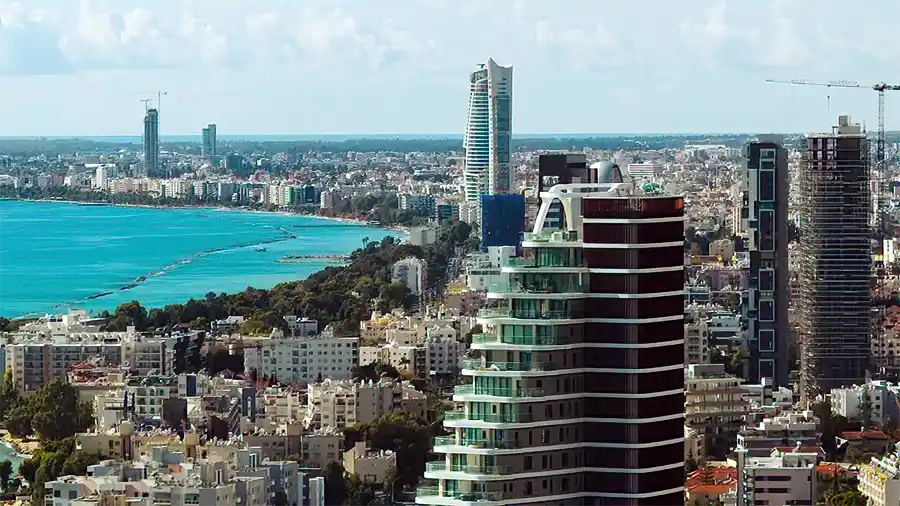
The Cyprus property market delivered another quarter of steady growth in Q3 2025, with the latest RICS Cyprus Property Index with KPMG in Cyprus highlighting solid, if varied, performance across districts and property types.
Limassol once again emerged as the island’s leading district, registering the strongest quarterly growth overall, driven mainly by robust demand for warehouses (3.75%) and apartments (2.74%).
Nicosia, Paphos and Famagusta also recorded modest price increases, mostly in houses and apartments.
Larnaca’s values were broadly stable across most property types, with the exception of offices, which achieved a modest rise.
Meanwhile, the retail sector recorded the most subdued performance of the quarter, including a noticeable fall in retail values in Nicosia.
Year-on-rear: residential leads the Cyprus property market
Annual comparisons reinforce the dominance of the residential sector:
- Apartments and houses posted the strongest YoY increases of 4.50% and 4.11% respectively.
- Warehouses and offices followed with more moderate gains of 3.69% and 3.09% respectively.
- Retail continued its position as the weakest performer, with only a marginal annual growth of 0.73%.
This trend aligns with the long-term track, where residential property, particularly apartments, have shown the greatest resilience over time.
Holiday properties
Holiday-driven assets remain among Cyprus’ strongest year-on-year performers:
- Holiday Apartments led the way at 3.43%, reflecting ongoing strong demand from the tourism sector.
- Holiday Houses posted annual increases of 2.11%, supported by consistent interest in lifestyle-driven investments.
District-level analysis shows that the biggest quarterly increases came from Larnaca’s apartments and Paphos’ houses, while Paphos apartments delivered only marginal gains and Larnaca houses remained flat.
Rental values: apartments drive growth
Rental values continued to rise compared with the previous year, with apartments recording the strongest increase:
- Apartments 4.78%
- Holiday Apartments 2.87%.
- Offices 2.53%
- Houses 2.22%
- Holiday houses 1.98%
- Warehouses 1.79%
- Retail 0.54%.
This reflects ongoing rental pressure in the residential market, driven by domestic demand, foreign workers, and short-term rental activity.
Rental yields
Yields generally edged lower over the year across most property categories. The exception was Apartments, which recorded a marginal increase, further underlining their strong market position.
- Apartments – 5.42% (+0.02%)
- Houses – 2.97% (-0.05%)
- Retail 5.76% (-0.01%)
- Warehouse 4.19% (-0.08%)
- Office 5.59% (-0.03%)
- Holiday Apartments 5.68% (-0.03%)
- Holiday Houses 2.79% (no change)
Statements by KPMG and RICS
Christophoros Anayiotos, on behalf of KPMG Cyprus, stressed that the Cyprus property market shows variations depending on category and district, highlighting the significant rise in Limassol, moderate activity in Nicosia, Paphos and Famagusta, and stability in Larnaca.
He pointed out that rental prices increased slightly, with flats and houses leading the way, while the remaining categories show marginal changes.
According to him, the third quarter presents a resilient picture in the residential sector and a restrained one in commercial properties.
From RICS Cyprus, Simon Rubinsohn stated that the steady trajectory of the Cypriot economy supports the Cyprus property market.
He noted that as economic growth remains strong, employment is reaching historically high levels, and inflation remains exceptionally low.
He also emphasised that tourism is one of the fastest-growing sectors of the economy, with arrivals reaching historic highs during the summer months.
