

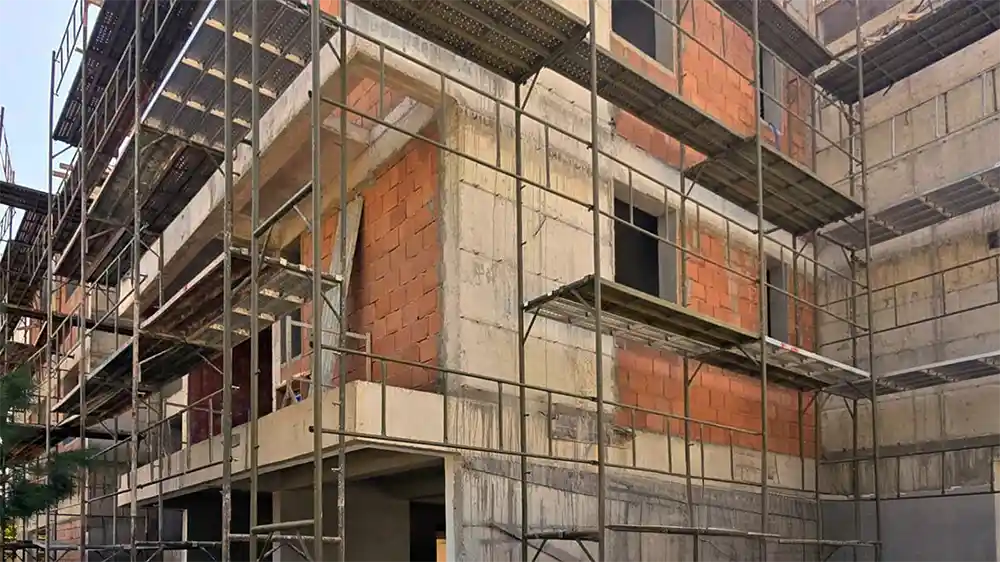
Cyprus’ strategy to attract overseas investment has delivered economic benefits. But without proper planning for housing, it has also added pressure to rents and left some groups carrying more of the housing costs, argues the author writing in Politis.
Over the past decade, Cyprus has built much of its growth strategy around attracting foreign capital, companies and workers. Policies have included permanent residency schemes linked to investment, tax incentives, support for company relocations and the employment of third-country nationals.
These policies should not be judged in purely positive or negative terms. After 2013, Cyprus urgently needed capital, new industries and a broader tax base. The measures helped support recovery, created a significant technology and services sector, increased public revenue and brought skilled workers into a relatively small labour market. The direction was right.
The challenge was the speed of change and the failure to plan for its consequences. The policies all increased demand for housing, but supply takes years to respond, from planning approval to completion. When demand outpaces construction, prices rise before more homes become available.
Investment schemes affected housing in different ways
It is important to distinguish between the policies, because they affect the housing market through different channels.
Residency schemes linked to property purchases did not necessarily create the same demand for homes to live in as company relocations did. Instead, they influenced what developers built. Developers naturally focused on projects with a reliable buyer at a known price. Land, labour, finance and planning capacity were directed towards properties that were often not occupied permanently. In effect, this redirected construction resources.
Company relocations and the arrival of their employees created a different kind of demand: people looking for somewhere to live, often with families, schools to consider and a need to be near particular urban centres. Much of this demand was for rental homes.
New arrivals on higher salaries then competed with local tenants for the same limited supply, putting pressure on rents. The impact was concentrated in three or four areas rather than spread evenly across the island. Cyprus therefore faced local housing pressures with national consequences.
I am not aware of a comprehensive, published housing impact assessment carried out before these policies were introduced. Decisions were assessed by their economic inputs: how many companies, how much investment and how much revenue. The question “Where will these people live?” was not part of the calculation.
What should have been assessed?
A proper assessment would have considered the homes genuinely available in each area and price bracket, rather than the total number of properties.
It would also have examined how quickly the construction sector could respond, taking account of planning times and labour availability. Demand forecasts should have included a range of scenarios, from cautious to extreme, and stated what proportion of new arrivals might seek rental homes. Schools, transport and other infrastructure should have been included as part of the analysis.
No single ministry holds all the relevant information. Investment policy, tax incentives, planning permission and local development are handled across different departments and levels of government. Without a system to bring these strands together, each decision may make sense on its own while creating problems collectively.
Benefits were real, but shared unevenly
The benefits should not be underestimated. They included corporation tax, VAT and social insurance contributions, jobs for Cypriots in well-paid roles, growth in professional services and more demand for shops and restaurants. Private education and healthcare also expanded.
But the gains were concentrated in property, construction and professional services, and in a small number of urban centres. Workers outside these sectors saw housing costs rise without a corresponding increase in income.
That amounts to a transfer from tenants to property owners. The benefits were felt nationally, while the housing costs fell more heavily on particular groups, especially younger people and lower-income households.
A fair assessment needs more than a balance sheet
A fair review should include the net fiscal impact of each programme, the real economic contribution of those who came to Cyprus, and an analysis of who gained and who lost. Without the distributional analysis, the debate remains accounting rather than economic—and risks losing the public support needed for these policies to last.
The main lesson from the past decade is that investment schemes need clear safeguards and formal oversight from the outset. These should not be added years later. Cyprus has seen the risks of running a scheme for years with loose criteria, unclear supervision and no systematic review. The cost is not only fiscal or economic; it is also a loss of credibility. For a small, outward-facing economy, credibility is among its most valuable assets. It can be lost quickly and take a long time to rebuild.
Safeguards should be specific and measurable. They should include robust checks before approval, verification of where funds come from, and evidence of real economic activity rather than formal compliance alone. Beneficiaries should be reviewed regularly, with the option to withdraw approval where necessary. Independent oversight should have access to data and clear accountability. Quantitative and geographic thresholds could trigger automatic reviews, supported by an annual public report.
These measures are not about burdening investors with bureaucracy or treating them with suspicion. Clear rules and predictable oversight can attract serious investors by giving them confidence that the status they receive will remain secure. The greater risk to Cyprus’ appeal is not scrutiny, but the absence of it.
Measure results – and be ready to change course
Every policy should be assessed by its results and impact, not only by the intention behind it. That means setting indicators from the start, measuring performance regularly and publishing the findings. It also means being ready to amend or end a scheme if the evidence shows it is failing or causing greater harm than benefit.
The assessment must go beyond how much capital entered the country. It should examine what stayed in the real economy, who benefited, who carried the costs, and what pressures were passed on to housing costs and infrastructure.
Reviewing a policy is often treated as an admission of failure. It is the opposite: it allows a policy to adapt in time and gives it a better chance of lasting.
By Tasos Iasemidis
Adapted from an article published by Politis
