

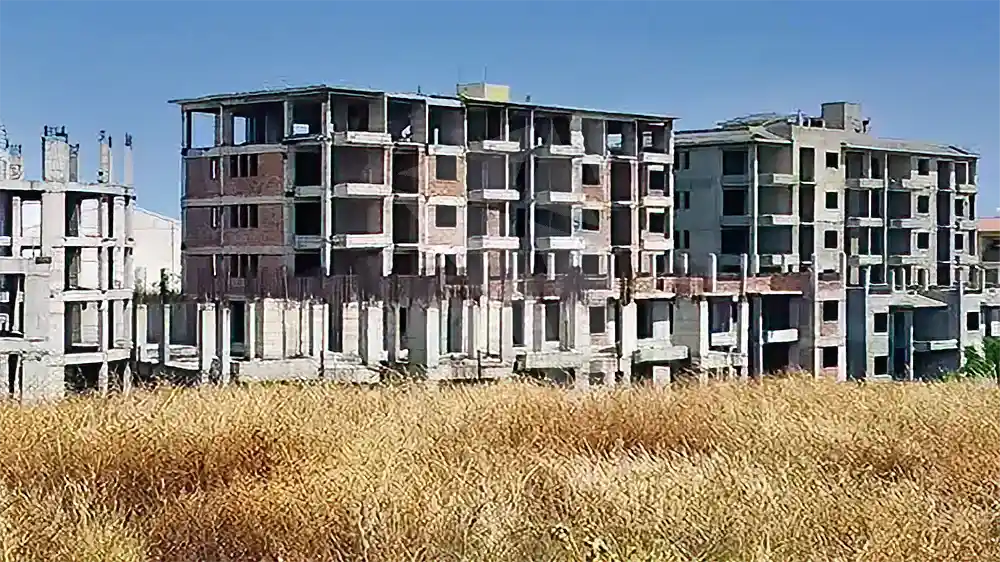
Cyprus’ housing shortage stands at an estimated 39,000 homes, with rising prices and rents adding pressure for residents. New construction and government-backed affordable housing schemes could increase supply, but labour shortages and strong demand remain challenges according to the EU 2026 CY Housing Annex.
House prices rose by around 28% between 2020 and 2025, broadly in line with the EU average. Demand from non-resident buyers, investment in housing and higher construction costs have all contributed to the increase. Housing transactions have more than doubled since 2020.
Coastal cities face the sharpest price pressures
Prices vary across the island. In coastal areas including Limassol, Paphos and Larnaca, house prices are reported to be 39% above the national average. Demand linked to tourism and foreign businesses, alongside the use of homes for short-term lets, adds pressure in these locations.
Rents have risen faster than house prices. Across Cyprus, rent accounted for 22% of household income in 2025, matching the EU average. But that figure masks greater pressure on lower-income households: rent represented 28.3% of income for households at risk of poverty.
Affordable housing plans target four cities
The government announced plans in December 2025 to build 500 affordable homes in Nicosia, Limassol, Larnaca and Paphos, at a cost of €70 million. A wider housing strategy is expected to add more than 1,900 units, with nearly 200 designated as affordable.
Other measures include affordable rental projects, grants for young homebuyers and support for student accommodation. Their impact will depend on how quickly the homes are delivered and whether residents can afford them.
Construction faces labour shortages
Residential construction is expanding, and investment in dwellings reached around 8% of GDP in 2024, the highest share in the EU. Building permits also point to further growth in supply.
However, labour shortages could slow progress. In October 2025, 41.4% of Cypriot construction employers expected worker shortages to limit production, compared with 27.5% across the EU. The construction sector’s productivity was also about 67% of the EU level.
Short-term rentals and housing quality add to the challenge
Registered short-term rental listings almost doubled between 2023 and 2026. More than 9,000 registered properties offered nearly 40,000 beds, while authorities estimated the actual supply was higher. In mid-2024, more than 7,000 of 14,446 short-term rental properties were reported to be unregistered.
Housing quality is another concern. As reported in the EU 2026 CY Housing Annex, in 2023, 32.1% of people in Cyprus lived in homes affected by leaks, damp or rot, compared with an EU average of 15.5%. The annex also reports that social rental housing accounts for close to 0% of the housing stock, against an EU average of 8%.
Cyprus is building more homes and has announced new affordable housing schemes. With an estimated shortfall of 39,000 dwellings, the key test will be whether new supply reaches the residents who need affordable, secure housing.
