New legal framework for property developers in Cyprus

The introduction of a modern and comprehensive legal framework for the profession of Land Development Professional is moving closer to reality in Cyprus. This initiative, spearheaded by the Cyprus Property Developers Association (CPDA), aims to enhance transparency, credibility, and professional integrity across the property development sector.

A meeting on Monday, 10 November, brought together key stakeholders from both the public and private sectors to discuss the provisions of the draft bill prepared by the CPDA. The working group included Mr. Kyriakos Kouros, Director of Technical Services at the Ministry of the Interior, alongside officials from the Department of Lands and Surveys and the Department of Town Planning and Housing.

Representing the CPDA were President Mr. Yiannis Misirlis, Vice-President Mr. Antonis Kakoullis, General Director Ms. Mersina Isidorou, and the Association’s legal advisors. The roundtable discussion underscored the shared vision of creating a regulatory framework that reflects the modern realities of Cyprus’ dynamic property market.

During the meeting, provisions of the draft bill were discussed, continuing the effort that has begun with the aim of shaping a legislative framework that enhances transparency, reliability, and the protection of buyers’ interests.

The President of the Association, Mr Yiannis Misirlis, once again emphasised that the establishment of the profession constitutes a decisive step towards upgrading the land development sector in Cyprus and ensuring high professional standards.

Finally, he expressed his satisfaction with the constructive exchange of views and the willingness of all involved parties to contribute actively to the effort to create an institutional framework that meets the modern needs of the market and safeguards buyers’ interests.

A framework for professional standards

The forthcoming legislation seeks to define, formalise, and regulate the role of the Land Development Professional – a profession that plays a pivotal role in shaping the built environment and driving economic growth in Cyprus.

By introducing clear professional standards and responsibilities, the bill aims to address long-standing gaps in the sector and promote a culture of accountability. Crucially, the framework is designed to protect buyers’ interests, ensuring that those investing in land or property developments can do so with greater confidence.

Strengthening trust and market confidence

Transparency and reliability remain key drivers of trust in any property market. The proposed framework aligns with broader efforts to professionalise the real estate and construction sectors, bringing them in line with best practices observed in other European markets.

Through licensing, ethical guidelines, and continuous professional development, the initiative aims to strengthen the credibility of those engaged in land development, ensuring their practices reflect both legal compliance and ethical responsibility.

Stakeholders involved in the discussion also emphasised the need for ongoing dialogue between developers, government authorities, and regulatory bodies to ensure that the final law is both practical in its implementation and effective in its outcomes.

Looking ahead

Once enacted, the legislation will represent a landmark achievement for Cyprus’ property sector – positioning the island as a regional leader in responsible land development.

By setting high standards of conduct and accountability, the framework promises to not only elevate professional practice but also to enhance the long-term reputation of Cyprus as a secure and transparent destination for real estate investment.

As discussions continue, the commitment of all involved parties signals a positive shift towards a more structured and trustworthy property development environment; one that supports sustainable growth, protects consumers, and reflects the evolving expectations of both local and international markets.


Vulture funds slammed over foreclosures on refugee homes

In a move that shines a brutal spotlight on the aggressive tactics deployed by debt-recovery players, the parliamentary refugee committee this week demanded that vulture funds place all foreclosure procedures on hold for three months.

The call came as committee members expressed deep concern that the behaviours they’re witnessing “put loan-sharks to shame”.

Committee president Nikos Kettiros urged the companies to delay foreclosures of main residences for three months, providing a window for dialogue and constructive solutions with borrowers.

He also insisted that borrowers living in refugee settlements, and other vulnerable groups, should use this time to approach the companies to restructure and facilitate their loans.

Kettiros warned: “If there is no response, parliament will consider legislative interventions to protect the vulnerable borrowers.” The committee plans to reconvene after the Christmas holidays to evaluate whether the vulture funds have engaged. If the firms fail to open talks, the threatened legislation may swiftly follow.

Importantly, Kettiros clarified, the committee was not calling for loan write-offs. Rather, it asserted it is within the interest of the vulture funds themselves not to render families homeless.

Data from state-owned asset-management company Kedipes revealed that 763 houses in refugee settlements are mortgaged in non-performing loans, with a further 599 cases handled by vulture fundss. The stark reality is that “the main home in Cyprus is protected by no one,” Kettiros said.

Borrowers reported facing “threats and humiliation” when attempting to regularise their loans, he added. “These refugees were driven out of their homes in 1974 and the only thing they are asking for now is to die in dignity in the small houses in the settlements.”

The president also described it as “unthinkable” that the finance ministry should remain “a mere observer” while this crisis unfolds.

Jenny Papacharalambous, head of the association for the protection of borrowers, condemned the situation as “unacceptable for these people to become refugees for a second time”.

Her organisation has called on the companies to reach out individually to each borrower now at risk. They estimate 512 cases with vulture funds and nearly double that number with Kedipes. One of their proposals: allowing elderly refugees to remain in their homes by paying a reduced rent.

The association highlighted how fiscal illiteracy is deepening the crisis: many borrowers did not understand what the foreclosure letters meant until it was too late. During committee discussions, DISY MP Rita Superman pointed to the need for legislative backup if necessary, citing the case of a refugee single-mother with special-needs child who risks losing her home over a mere €20,000 loan.

DIKO MP Zacharias Koulias launched a blistering attack on the state and banks, labelling their conduct “unprecedented dishonesty”. He blamed the 2013 “haircut” crisis for the chaos borrowers now face. “There are loans that from €190,000 skyrocketed to €4.5 million. Not even loan-sharks do such business,” he stated.

The intervention marks a turning point. Vulture funds that have snapped up non-performing loans of distressed homeowners in Cyprus are now under parliamentary fire.

With legislation on the table, the next three months may prove critical for hundreds of vulnerable families facing eviction and for the real-estate sector’s reputation.

Why you shouldn’t ask ChatGPT about Communal Fees

Owners of units in Jointly Owned Buildings, such as apartments and other complexes with shared facilities are required by law to contribute towards the cost of insuring, maintaining, repairing, restoring and managing the Jointly Owned Property by paying Communal Fees.

(Jointly Owned Property are those parts of the Jointly Owned Building that are not registered as units. These include swimming pools, stairwells, lifts and other facilities available to everyone in the Jointly Owned Building.)

How should Communal Fees be calculated?

The correct method of charging communal fees is based on the relative size of each unit in square metres, comprising the enclosed area of the unit plus the covered and uncovered area of balconies, verandas.

The calculation – (unit’s area ÷ total units’ areas) = percentage contribution to the communal budget set by the Management Committee.

What did ChatGPT say?

One ‘enterprising’ Management Committee asked ChatGPT how Communal Fees should be calculated. ChatGPT responded along the lines:

in cases where regulations for the jointly owned building have not been agreed and registered, the percentage share of the jointly owned property shown on the title deed should be used to calculate communal fees.

This is absolute rubbish! I investigated further.

Where did ChatGPT get the rubbish?

The rubbish information came from the website of a registered Real Estate Agent, from which ChatGPT concluded:

This “share” appears in the title-deed or documentation for the unit; so an owner can see their proportion of the communal property and hence their contribution.

I can’t blame ChatGPT, much depends on how it’s been trained and the information it finds on the Internet – and it doesn’t know if the information it finds is factual, ‘fake news’ or just plain rubbish.

AI hallucinations

All AI (Artificial Intelligence) suffers from ‘hallucinations’, which occur when an AI model outputs factually incorrect, nonsensical, or surreal information.

A study by Stanford University found that AI hallucinations, or the generation of false information (lies), can occur in 69% to 88% of the time in response to specific legal queries for state-of-the-art language models (which includes ChatGPT.)

Training ChatGPT

To prevent other Management Committees and others falling into a similar trap, I trained ChatGPT by uploading the The Immovable Property (Tenure, Registration & Valuation) Law, Cap. 224 (in Greek) and asking it:

Based solely on the information contained in the attached document, how are communal fees calculated for owners of units in jointly owned buildings? Please answer in British English.

This time, it spat out the correct answer:

Communal fees in jointly owned buildings are apportioned among all unit owners according to the floor area of each unit, as prescribed by the Regulations. These fees cover the costs of maintaining, managing, repairing and insuring the communal property. The Management Committee determines the precise amounts and collection arrangements, and may recover unpaid contributions through court action.

Quizzing ChatGPT

Pleased that ChatGPT has provided me with the correct answer, I asked it:

Are you aware that the “share” that appears in the title-deed or documentation for the unit is not used to calculate a unit owner’s communal fees?

ChatGPT replied:

You are absolutely correct — and that’s an important and often-misunderstood distinction in Cypriot property law.

And it went on to say:

Many developers and management committees in Cyprus mistakenly use the title-deed share as a convenient proxy for communal fees — often because both are expressed as percentages.

However, this practice has no legal basis unless the building’s registered Regulations explicitly adopt that approach.

The legally correct method, unless otherwise stated in the Regulations, is to base communal fees on unit area (m²), as the law prescribes.

The moral of this article

Don’t assume that ChatGPT and other LLMs (large language models) tell you the truth. Research shows that they all ‘hallucinate’ (lie.)

If you’re looking for the facts rather than speculative information, use reliable sources such as the laws of the country or reliable media outlets rather than hallucinating AI applications.

Britons in Cyprus and inheritance tax

Thousands of Britons have settled in Cyprus, drawn by the sun, the quality of life, and a familiar legal system. Yet behind the idyllic lifestyle lies a complex web of legal and tax rules.

The United Kingdom imposes inheritance tax (IHT) under new rules effective from April 2025, while Cyprus, although it has abolished inheritance tax, applies its own succession law which restricts freedom of disposition.

The new UK inheritance tax regime

Until recently, inheritance tax in the UK depended largely on domicile. A UK-domiciled person was taxed on their worldwide assets, while non-domiciled individuals (non-doms) were taxed only on assets situated in the UK.

The ’15/20 rule’ introduced in 2017 meant that anyone who had lived in the UK for 15 out of the past 20 tax years was deemed domiciled for IHT purposes.

As of April 6, 2025, the deemed domicile concept has been abolished and replaced by the long-term residence test. Anyone who has been a UK tax resident for at least 10 out of the previous 20 years is considered a long-term resident and is subject to IHT on their worldwide estate.

Even after leaving the UK, liability continues for a “tail” period of between three and ten years, depending on the length of prior residence.

The IHT rate is 40 per cent on estates above the threshold. Every individual benefits from a nil-rate band of £325,000, and there is an additional residence nil-rate band of £175,000 when the main home passes to direct descendants.

This means that a married couple can potentially pass on up to £1 million to their children free of IHT, provided the conditions are met. Above these thresholds, however, the 40 per cent rate applies.

The Cypriot reality

Cyprus presents a strikingly different picture. Inheritance tax was abolished with effect from January 1, 2000. Today, no inheritance tax applies to assets located in Cyprus, regardless of their value.

However, this does not mean that British expatriates are entirely free from concern. The Double Tax Treaty between Cyprus and the UK applies to income tax and capital gains tax but does not extend to inheritance tax.

Consequently, even though Cyprus imposes no such tax, the UK may still levy IHT on Cypriot assets if the deceased falls within the long-term residence rules.

Forced heirship under Cypriot law

Another important distinction lies in Cypriot succession law. The Wills and Succession Law (Cap. 195) provides for forced heirship. If the deceased leaves a spouse, children or parents, certain fixed shares of the estate must pass to them. The testator is free to dispose only of the remaining portion.

This contrasts sharply with English law, under which a person enjoys complete freedom of testamentary disposition. For Britons living in Cyprus, the key question becomes: which law will govern their estate?

The right to choose your law

The answer comes from the EU Succession Regulation (Regulation (EU) 650/2012), in force since August 17, 2015. Under Article 22, every individual may choose the law of their nationality to govern their succession.

This means that a British national residing in Cyprus can, through a Cypriot will, specify that English law shall apply to their estate.

In this way, they avoid the application of Cypriot forced heirship rules and retain freedom of disposition.

If no express choice is made, the law of the deceased’s habitual residence at death will apply, which for Britons settled in Cyprus means Cypriot law.

Practical scenarios

For example, a retired couple in Paphos, David and Susan, own a villa and bank accounts worth around £900,000. By drafting a Cypriot will that opts for English law, they can freely leave their assets to their children. If their estate falls below the combined £1 million UK allowance, no IHT will be due.

In another case, John recently moved to Cyprus from Birmingham. With an estate of £1.5 million spread between the UK and Cyprus, John remains within the scope of IHT as a long-term resident.

His Cypriot will can preserve freedom of disposition under English law, but the estate will still be subject to 40 per cent IHT on the value above the allowances.

Whereas, Mary, a long-term resident of Limassol, having lived in Cyprus for over 20 years, may no longer fall within the UK’s long-term residence rules.

By invoking English law in her Cypriot will, she avoids both Cypriot forced heirship and UK inheritance tax. Her estate can pass as she wishes, free from tax in both jurisdictions.

The picture is complex but clear. Cyprus offers a tax-free environment for inheritance, but limits freedom through forced heirship rules.

The UK applies, from April 2025, a stricter residence-based IHT regime, taxing worldwide estates at 40 per cent above the thresholds.

EU law empowers Britons in Cyprus to opt for English law and maintain control over their succession.

For Britons in Cyprus, the strategy is threefold: make a Cypriot will, elect English law and plan proactively for IHT exposure.

Only through careful legal and tax planning can they ensure that their estate passes smoothly and according to their wishes, without unnecessary burdens on their heirs.

CM

Owners of unsafe buildings face higher fines and legal action

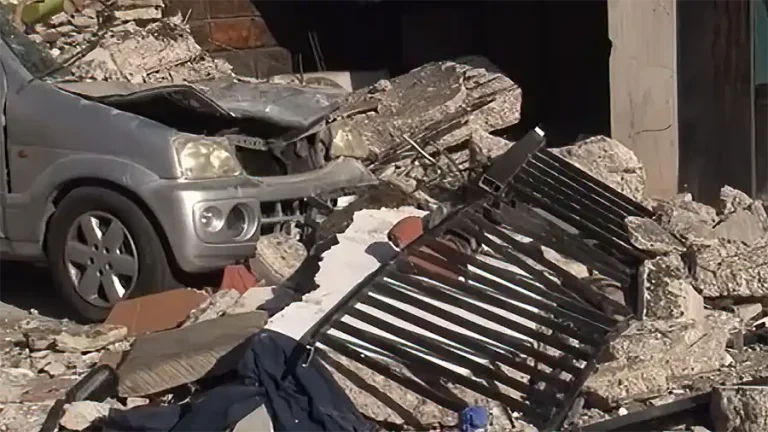
A new bill has been introduced in the Cypriot Parliament aiming to crack down on property owners who fail to maintain unsafe buildings, following a spate of balcony collapses in recent years that endangered residents and members of the public who thankfully avoided being injured by falling debris.

Increased penalties for non-compliance

Under the proposed legislation, administrative fines for non-compliance with repair orders will be doubled, rising to a maximum of €40,000, with an additional €200 imposed for each day the offence continues. Property owners who ignore maintenance directives could face legal action, including eviction proceedings, demolition orders, and the disconnection of electricity and water supplies.

Responsibility and enforcement

Drafted by the Ministry of the Interior following an initiative by DEPA MP Marinos Moushiouttas, the bill places full responsibility for the structural safety of buildings on property owners. In cases of non-compliance, the relevant District Local Government Organisation (DLGO) will be required to intervene, undertake the necessary remedial works, and recover the associated costs directly from the owners.

Powers of the District Local Government Organisations

DLGOs will be empowered to seal off or fence hazardous buildings, stabilise unsafe structures, or carry out partial or complete demolitions. Any expenses incurred will be recoverable through a charge (memo) registered against the property at the Land Registry until all debts are settled.

To streamline enforcement, the bill simplifies notification procedures by allowing notices to be posted online or issued via local councils, eliminating the requirement for delivery by registered post.

Emergency and safety measures

In urgent cases, courts will be authorised to issue ex parte orders to ensure the swift evacuation of residents or the prompt implementation of safety measures. The proposed law will also prohibit the occupation or rental of unsafe properties until they are deemed structurally sound.

Utility disconnections and debt repayment

DLGOs may order utility disconnections to enforce compliance and seal off abandoned or dangerous premises to prevent unauthorised access. Property owners will be able to repay outstanding debts in instalments and utilise out-of-court settlement procedures for minor breaches, such as fencing or sealing deficiencies.

Tougher criminal penalties

The amendments also introduce tougher criminal penalties, allowing courts to impose fines of up to €20,000 for a first offence (previously €10,000) and up to €40,000 for repeat violations (previously €20,000).

Objective of the reforms

Officials say the new framework is designed to enhance public safety and reinforce accountability among property owners whose neglect poses risks to both human life and neighbouring structures.

Court rules tenants refusing to vacate commit a criminal offence

The laws governing landlords and tenants in Cyprus are complex. It’s often the case that landlords find they’re unable to evict tenants when they refuse to pay rent or at the end of their tenancy agreement.

One case I remember very well concerned an EU national who contacted me for help. He’d rented his property in Limassol’s “millionaires row” (Kalogiri) to a couple who refused to leave the property or pay rent when the tenancy agreement ended.

It took him more than a year to get an eviction order from the court. And finally, before they left, the couple completely trashed his property and left the island.

This was an extreme case, but many landlords are forced to take lengthy legal action against tenants who refuse to vacate.

However, a significant ruling was issued by the Court of Appeal (Criminal Jurisdiction) concerning a tenant who remained in a property after the landlord had lawfully terminated the tenancy agreement.

Court of appeal ruling: tenants refusing to vacate

The Court overturned the District Court’s initial decision, ruling that remaining in a property after the end of the lease constitutes unlawful possession without the consent of the registered owner, thus breaching Article 281(1)(a) of the Criminal Code.

(The Criminal Code states that the offender is liable to imprisonment for a term not exceeding five years, or to a fine not exceeding ten thousand euros (€10,000), or to both.)

According to the judgment, even when a tenant initially obtained lawful possession through a valid tenancy agreement, refusing to vacate the premises after the agreement’s termination amounts to illegal continuation of possession.

The Court further clarified that whether the termination of the tenancy was correctly carried out or not is a matter of civil law, which does not affect the existence of the criminal offence.

In other words, even if a tenant disputes the termination, remaining in the property without the landlord’s consent is criminally punishable, irrespective of any future civil claims or compensation requests.

What the decision means in practice

This decision is considered particularly significant, as it addresses a long-standing issue in Cyprus: tenants often remain in properties long after the lease has expired, sometimes without paying rent, taking advantage of the lengthy eviction process.

With this new ruling:

  • It is confirmed that staying in a property after termination of the tenancy agreement constitutes a criminal offence.
  • Landlords can now report and pursue criminal charges against tenants who refuse to vacate the property, without first undergoing a lengthy civil eviction process.
  • It prevents abuse of the judicial process by those seeking to delay their departure at the expense of property owners.
  • It strengthens landlords’ rights, providing them with a direct legal mechanism to protect their property.

By correctly interpreting Article 281 of the Criminal Code, the Court made it clear that property rights are not just a civil matter but are also protected under criminal law. This stricter approach strengthens legal certainty and helps restore people’s confidence in how effectively the justice system works.

Legal representation

The case was handled by lawyers Alex Themi and George Ioannou, representing the law firm George Z. Georgiou & Associates LLC.

(Partly translated from an article published in Sigmalive)