Court rules tenants refusing to vacate commit a criminal offence

The laws governing landlords and tenants in Cyprus are complex. It’s often the case that landlords find they’re unable to evict tenants when they refuse to pay rent or at the end of their tenancy agreement.

One case I remember very well concerned an EU national who contacted me for help. He’d rented his property in Limassol’s “millionaires row” (Kalogiri) to a couple who refused to leave the property or pay rent when the tenancy agreement ended.

It took him more than a year to get an eviction order from the court. And finally, before they left, the couple completely trashed his property and left the island.

This was an extreme case, but many landlords are forced to take lengthy legal action against tenants who refuse to vacate.

However, a significant ruling was issued by the Court of Appeal (Criminal Jurisdiction) concerning a tenant who remained in a property after the landlord had lawfully terminated the tenancy agreement.

Court of appeal ruling: tenants refusing to vacate

The Court overturned the District Court’s initial decision, ruling that remaining in a property after the end of the lease constitutes unlawful possession without the consent of the registered owner, thus breaching Article 281(1)(a) of the Criminal Code.

(The Criminal Code states that the offender is liable to imprisonment for a term not exceeding five years, or to a fine not exceeding ten thousand euros (€10,000), or to both.)

According to the judgment, even when a tenant initially obtained lawful possession through a valid tenancy agreement, refusing to vacate the premises after the agreement’s termination amounts to illegal continuation of possession.

The Court further clarified that whether the termination of the tenancy was correctly carried out or not is a matter of civil law, which does not affect the existence of the criminal offence.

In other words, even if a tenant disputes the termination, remaining in the property without the landlord’s consent is criminally punishable, irrespective of any future civil claims or compensation requests.

What the decision means in practice

This decision is considered particularly significant, as it addresses a long-standing issue in Cyprus: tenants often remain in properties long after the lease has expired, sometimes without paying rent, taking advantage of the lengthy eviction process.

With this new ruling:

  • It is confirmed that staying in a property after termination of the tenancy agreement constitutes a criminal offence.
  • Landlords can now report and pursue criminal charges against tenants who refuse to vacate the property, without first undergoing a lengthy civil eviction process.
  • It prevents abuse of the judicial process by those seeking to delay their departure at the expense of property owners.
  • It strengthens landlords’ rights, providing them with a direct legal mechanism to protect their property.

By correctly interpreting Article 281 of the Criminal Code, the Court made it clear that property rights are not just a civil matter but are also protected under criminal law. This stricter approach strengthens legal certainty and helps restore people’s confidence in how effectively the justice system works.

Legal representation

The case was handled by lawyers Alex Themi and George Ioannou, representing the law firm George Z. Georgiou & Associates LLC.

(Partly translated from an article published in Sigmalive)

EU report: Why property prices in Cyprus continue to rise

1

Property prices in Cyprus continue to rise, reflecting a broader trend seen across Europe. According to the European Commission’s recent analysis, ‘Housing in the European Union: Market Developments, Underlying Drivers, and Policies‘ housing affordability has become not only an economic issue but also a political priority for many governments.

Over the past decade, house prices in the EU have grown around 10% faster than household incomes, making home ownership increasingly difficult for many. Although the situation varies from country to country, the challenge of affordable housing is now common to all member states – including Cyprus.

The Cypriot market in the European context

In Cyprus, property prices have surged in both urban and coastal areas, driven by rising demand, foreign investment, and limited supply of new housing. The Commission’s findings suggest that this pattern mirrors the wider European experience: when demand outpaces supply, prices inevitably rise.

While Cyprus has enjoyed steady economic growth and continued interest from overseas buyers, construction activity has struggled to keep up. The number of new housing units built each year remains below pre-financial crisis levels, which intensifies competition for available properties and pushes prices higher.

Supply constraints and regulation

The European Commission identifies restricted housing supply as the primary cause of Europe’s price surge. Regulatory barriers, which range from complex planning procedures to local zoning rules, are also part of the problem.

In Cyprus, similar challenges exist. Lengthy permit approvals, land-use restrictions, and rising construction costs are all limiting the speed at which new homes can be delivered to the market. While these regulations often aim to maintain quality and protect the environment, they can inadvertently slow development and reduce affordability.

Policy dilemmas: When support measures backfire

The Commission warns that some policies designed to promote affordability may backfire. For example, incentives that stimulate demand, such as housing grants or tax benefits, can drive prices up further if supply remains constrained.

This insight is highly relevant for Cyprus, where housing affordability has become a key concern for local residents, particularly younger buyers. Balancing investment appeal with sustainable affordability is now central to the national housing debate.

In efforts to balance investment appeal with sustainable affordability, three bills were put before MPs earlier this week designed to tighten the rules for non-EU citizens buying property.

Looking ahead

As the housing issue gains political traction across Europe, Cyprus faces the same fundamental challenge: how to increase supply without compromising quality or sustainability. The European Commission’s findings make clear that coordinated action, both at national and EU levels, is needed to ensure access to affordable housing for all.

For Cyprus, this could mean reforming planning systems, encouraging affordable housing development, and addressing regulatory bottlenecks that restrict new supply. The goal is clear: a housing market that supports both economic growth and social stability.

June 2026 deadline set for old 5 per cent VAT housing scheme

Anyone who benefited from the previous 5 per cent VAT scheme for the purchase or construction of a main residence in Cyprus will remain covered only until June 2026, when the transitional provisions of the 2023 legislation come to an end.

Under those temporary arrangements, buyers or developers who had applied for a planning permit between June 1 and October 31, 2023, could still secure the reduced rate, regardless of when construction would be completed.

For three years, from June 16, 2023 to June 15, 2026, the old and new frameworks have effectively coexisted.

The 2016 law, widely seen as too lenient, had allowed 5 per cent VAT on the first 200 square metres of a home, irrespective of its overall size or value.

Following strong pressure from the European Commission, the House of Representatives passed the Amending VAT Law N.42(I)/2023, published in the Government Gazette on June 16, 2023, introducing stricter rules.

Under the new framework, 5 per cent VAT applies only to the first 130 square metres of a property, for a maximum value of €350,000, provided the total area does not exceed 190 square metres and the total transaction value remains below €475,000.

Beyond that, the standard 19 per cent rate applies. For persons with disabilities, the reduced rate covers up to 190 square metres, though the same value cap still holds.

According to Finance Minister Makis Keravnos, the transitional measures apply to buildings that obtained or applied for a planning permit by October 31, 2023, provided the required declaration for the reduced rate is submitted to the Tax Department within three years, by June 15, 2026.

He reminded that anyone who benefitted from the reduced VAT but later used the property for other purposes must repay the full amount, whether they were part of the residency-by-investment programme or any other scheme. In practice, these taxpayers face an additional 14 per cent charge.

The minister also pointed to ongoing recovery campaigns by the Tax Department, which over the past three years has carried out more than 5,000 inspections, recovering around €50 million from cases where homes were purchased under the 5 per cent rate but were never used as main residences.

Many of the violations were found in coastal areas, or in student-heavy districts such as Aglandzia and Engomi, where properties were rented out on digital platforms.

In the months ahead, the department is expected to issue further clarifications on how the reduced VAT will be calculated in cases where the area or value of a property exceeds the limits.

A VAT calculator is already available on its website to help buyers estimate the amount payable.

The 2023 law also updated rules for repeat applications and family transfers. Previously, anyone applying for a new reduced rate before the ten-year period had expired was obliged to return the full VAT benefit. Now, repayment will be calculated proportionally, based on the remaining years of that period.

In addition, if ownership of a dwelling is transferred to an adult child who meets the criteria for the 5 per cent rate, no repayment is due, provided the child uses it as a main home.

When a parent continues to live in the dwelling after transfer, no repayment applies either, though the Tax Department must be informed in writing.

Meanwhile, checks are being intensified on homes in coastal and tourist areas, as the authorities seek to ensure that the reduced rate genuinely applies only to primary residences. The Tax Department carries out inspections all year round but increases them in summer, when misuse tends to rise.

A voluntary compliance campaign is also under way, encouraging owners who no longer meet the criteria to come forward and settle their dues.

In cases of financial hardship, repayment can be arranged in up to 12 instalments, with longer periods approved by the Tax Commissioner in exceptional cases.

Finally, Keravnos confirmed that the EU infringement case against Cyprus has now been formally closed by the European Commission, after Brussels accepted the 2023 amendment as compliant with EU law. Cyprus will therefore not face any fines or additional payments.

CM

Cyprus property sales record double-digit gains in October

Property sales in Cyprus recorded an annual increase of 24 per cent in October, with all districts posting double-digit gains, according to official statistics published by the Department of Lands & Surveys.

October was one of the strongest months of 2025, with 1,638 property sale contracts deposited across Cyprus compared to 1,318 in October 2024.

All districts recorded gains:

  • Nicosia: 372 vs 297 (+25.3%)
  • Limassol: 490 vs 402 (+21.9%)
  • Larnaca: 342 vs 284 (+20.4%)
  • Famagusta: 96 vs 63 (+52.4%)
  • Paphos: 338 vs 272 (+24.3%)

If the market continues its upward trajectory, 2025 is poised to be the second most active year for property sales in more than two decades.

Total contracts of sale deposited – 2024/2025 Comparison (Oct)

In the first ten months of 2025, total sales rose 14 per cent to 14,811, compared with 12,952 in the same period last year, with all districts achieving double-digit gains.

  • Nicosia: 3,363 vs 2,890 (+16.4%)
  • Limassol: 4,646 vs 4,093 (+13.5%)
  • Larnaca: 3,211 vs 2,781 (+15.5%)
  • Famagusta: 722 vs 634 (+13.9%)
  • Paphos: 2,869 vs 2,554 (+12.3%)
Total contracts of sale deposited – 2024/2025 Year-to-Date Comparison

Property sales: market segment analysis

Domestic (Cypriot) buyers accounted for 955 sales in October – 58.3 per cent of total sales.

Foreign buyers from the EU filed 232 sales documents – 14.2 per cent of total sales, while foreign buyers from outside the EU filed 451 sales documents – 27.5 per cent of total sales in the month.

In the first ten months of 2025, domestic (Cypriot) buyers accounted for 8,913 sales – 60.2 per cent of total sales.

Foreign buyers from the EU filed 1,960 sales documents – 13.2 per cent of total sales, while foreign buyers from outside the EU filed 3,938 sales documents – 26.6 per cent of total sales in the first ten months of 2025.

As we reported yesterday, three draft laws have been submitted to the House of Representatives as part of an ongoing political effort to introduce tighter restrictions and enhanced oversight on property sales to non-EU nationals and companies with foreign interests.

Property sales to the domestic (Cypriot) market

Domestic contracts of sale deposited – 2024/2025 Comparison (Oct)

Domestic contracts of sale deposited – 2024/2025 Year-to-Date Comparison

Property sales to EU nationals

Contracts deposited by EU Nationals – 2024/2025 Comparison (Oct)

Contracts deposited by EU Nationals – 2024/2025 Year-to-Date Comparison

Property sales to non-EU nationals

Contracts deposited by non-EU Nationals – 2024/2025 Comparison (Oct)

Contracts deposited by non-EU Nationals – 2024/2025 Year-to-Date Comparison

Market segment district analysis

Market Segment Summary Analysis Year-to-Date

Total sales 2008 to 2025

Contracts Deposited 2008 to 2025 Year-to-Date Comparison

Cyprus moves to tighten property rules for non-EU buyers

Three draft laws have been submitted to the House of Representatives as part of an ongoing political effort to introduce tighter restrictions and enhanced oversight on property sales to non-EU nationals and companies with foreign interests.

The issue has drawn significant parliamentary attention in recent months, as available data presented before the House reveal the growing scale of the matter. Two of the proposed bills were tabled by AKEL, while a third joint proposal was submitted by DIKO, DISY, and DIPA.

AKEL’s proposals

AKEL has submitted a package of two bills aiming to strengthen control over the acquisition of real estate by foreign nationals and foreign-controlled companies.

According to the party’s statement, the goal is to “put the brakes” on unregulated land purchases, protect housing rights for low and middle-income citizens, and safeguard both the economy and national security.

The proposals seek to modernise and tighten the current legal framework governing property ownership by non-EU nationals.

The first bill redefines key terms and procedures, aiming to close loopholes that allow indirect or unregulated land acquisition. It broadens the definition of a “foreign-controlled company” to include any entity whose ultimate beneficial owner, under anti-money laundering legislation, is a non-EU national. This applies even to Cypriot or European companies under such control.

Additionally, it introduces specific conditions and criteria for the issuance of permits allowing non-EU nationals to acquire property—criteria that would be detailed and approved by Parliament through secondary regulations.

The bill also abolishes provisions that have been open to interpretation, including those concerning the acquisition of large land areas.

A significant change exempts non-EU nationals from the requirement to obtain Cabinet approval when purchasing one residence or apartment of up to 200 sq. m., a shop of up to 200 sq. m., or an office up to 300 sq. m. Similar exemptions apply to foreign-controlled companies.

Particular emphasis is given to banning the acquisition of forest and agricultural land, as well as properties adjacent to the buffer zone or to critical national infrastructure, touching on national security concerns.

Stricter oversight at the transfer stage

AKEL’s second bill amends the Immovable Property (Transfer and Mortgage) Law to ensure legal compliance from the source.

It stipulates that the Director of the Department of Lands and Surveys may not accept any transfer or registration of a sale, exchange, or assignment contract if it falls under the restrictions imposed by the Foreign Acquisition Law.

This measure seeks to prevent indirect property acquisitions via corporate structures or assignment contracts, while ensuring transparency regarding the ultimate beneficial owners of legal entities.

Together, the two proposals aim to make the existing system more effective, introduce robust control mechanisms, curb abusive practices, and enhance transparency in the land and property market.

Joint proposal by DIKO, DISY, and DIPA

A separate bill, submitted jointly by DIKO, DISY, and DIPA, introduces substantial restrictions on property purchases by individuals and companies from third countries.

The bill proposes to revise and modernise the Immovable Property Acquisition (Aliens) Law, setting clear limits on what non-EU citizens can buy, just a single residence or apartment on a single plot.

It also restricts property acquisition by legal entities, requiring that at least 51% of ownership or voting rights be held by citizens of Cyprus, another EU member state, or an EEA contracting state.

Furthermore, the bill prohibits the purchase of forest and agricultural land by non-EU nationals.

The proposal is co-signed by MPs from all three parties, including Zacharias Koulias, Panicos Leonidou, Pavlos Mylonas, Chrysantos Savvides, Christos Orfanides (DIKO); Kyriakos Hadjiyiannis and Nikos Sykas (DISY); and Alekos Tryfonides and Michalis Giakoumis (DIPA).

According to the sponsors, the proposed legal reforms are necessary to prevent the creation of Cypriot “front” companies acting as intermediaries for foreign property acquisitions, while protecting the agricultural sector and rural landscape.

The proposed laws (in Greek) may be found on StockWatch:

The Acquisition of Immovable Property (Foreigners) (Amendment) (No. 4) Law of 2025

The Acquisition of Immovable Property (Foreigners) (Amendment) (No. 3) Law of 2025

The Transfer and Mortgage of Real Estate (Amendment) (No. 2) Law of 2025

Cyprus expands desalination network to tackle drought risk

The Cyprus government is moving ahead with the construction of a number of desalination projects in Limassol, Larnaca and Famagusta districts to safeguard the islands water reserves amid growing concerns about drought conditions expected in 2026.

The Water Development Department (WDD) plans to install three new mobile desalination units in Episkopi, Vasilikos and Ayia Napa, the construction of a permanent plant in eastern Limassol and the replacement of the ageing facility in Dhekelia. The installations aim to secure uninterrupted water supply to all districts and reinforce Cyprus’ resilience to climate change.

(A number of hotels have applied to have small desalination plants installed on their premises. If approved, these will produce up to 1,500 cubic metres of water/day.)

Water reserves at critical levels

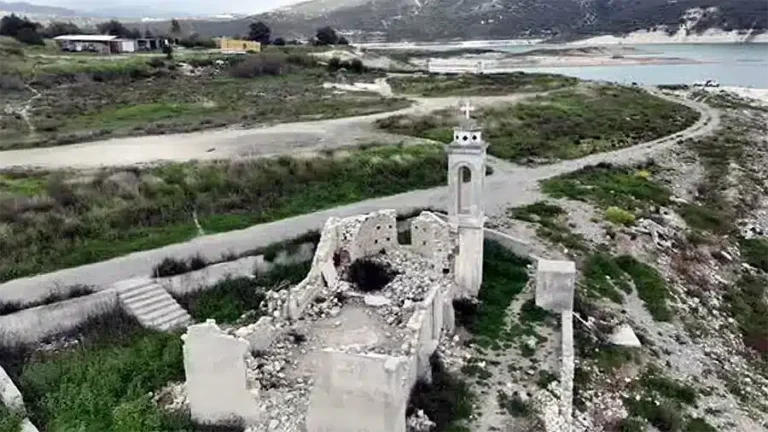
According to the WDD, Cyprus’ dam reserves have dropped to just 10.8% of total capacity, compared with 25.9% last year. Water levels at the Kouris Dam (above), the islands largest, stand at just 9.8%.

In efforts to save water, individuals found wasting water face severe fines and those who continue to waste water will face criminal charges.

With dam reserves at historic lows and rainfall forecasts remaining uncertain, the new desalination projects are seen as vital to the islands long-term water security and represent the state’s largest investment in this sector over the past decade.

Currently, five permanent desalination plants operate in Paphos, Episkopi, Vasilikos, Larnaca and Dhekelia, with a combined capacity of 235,000 cubic metres per day. An additional four mobile units in Moni, Kissonerga, Garyllis and Limassol Port are operating or nearing completion, adding another 47,000 cubic metres per day by early 2026.

New mobile desalinisation units for summer 2026

Three new mobile desalination units will be deployed by summer 2026:

Episkopi (Kourion) – Located near the existing Limassol plant within the British Bases. The tender was announced on 30 September 2025, with a five-year operating term.

Vasilikos (EAC Power Station) – To be installed in cooperation with the Electricity Authority of Cyprus at Mari, near the current facility. The tender is expected in November 2025.

Famagusta Area (Ayia Napa and Paralimni-Deryneia) – Sites have been pre-assessed, with priority given to Ayia Napa. The plant will link to the Kokkinochremmos reservoirs, enhancing the regions water security. A second installation will follow in Paralimni-Deryneia to serve the Protaras tourism area.

Each mobile unit will produce 10,000 cubic metres of water per day and is expected to cost approximately €3 million annually.

Permanent desalination plant in eastern Limassol

Plans are progressing for a new permanent desalination plant in eastern Limassol, with a capacity of 60,000–80,000 cubic metres per day to meet the growing needs of the fast-developing urban area. After an analysis of seven potential sites, the WDD has identified a location near the Limassol Sewerage Boards treatment facility, west of the proposed Monagroulli tourist area. The project is expected to be completed within five years.

Replacement of the Dhekelia desalination plant

The WDD will also replace the old permanent desalination unit at Dhekelia, whose contract expires in 2027. The new facility, with a capacity of 80,000–100,000 cubic metres per day, will serve the Famagusta area and part of Larnaca. Construction will take place adjacent to the existing site.

To expedite delivery, the Ministry of Agriculture has classified the projects as critical and urgent, allowing procedural exemptions from certain environmental and planning approvals. Amendments to the Forest Regulations are also proposed to permit the use of state coastal forest land for desalination purposes.

Budget Impact: Water Supply Costs Up 23% in 2026

The Ministry of Agriculture, Rural Development and Environments 2026 budget includes a 23% increase in water procurement costs, driven by prolonged drought and higher desalination and recycling costs. The draft budget allocates €142.1 million for water purchases, up from €116 million in 2025; an increase of €26.1 million.

According to the WDDs projections, water reserves in Nicosia, Limassol, Larnaca and Famagusta are expected to decline further in 2026, making irrigation restrictions likely. However, Paphos is not expected to face shortages, thanks to its established desalination capacity.