

The Cyprus government is moving ahead with the construction of a number of desalination projects in Limassol, Larnaca and Famagusta districts to safeguard the islands water reserves amid growing concerns about drought conditions expected in 2026.
The Water Development Department (WDD) plans to install three new mobile desalination units in Episkopi, Vasilikos and Ayia Napa, the construction of a permanent plant in eastern Limassol and the replacement of the ageing facility in Dhekelia. The installations aim to secure uninterrupted water supply to all districts and reinforce Cyprus’ resilience to climate change.
(A number of hotels have applied to have small desalination plants installed on their premises. If approved, these will produce up to 1,500 cubic metres of water/day.)
Water reserves at critical levels
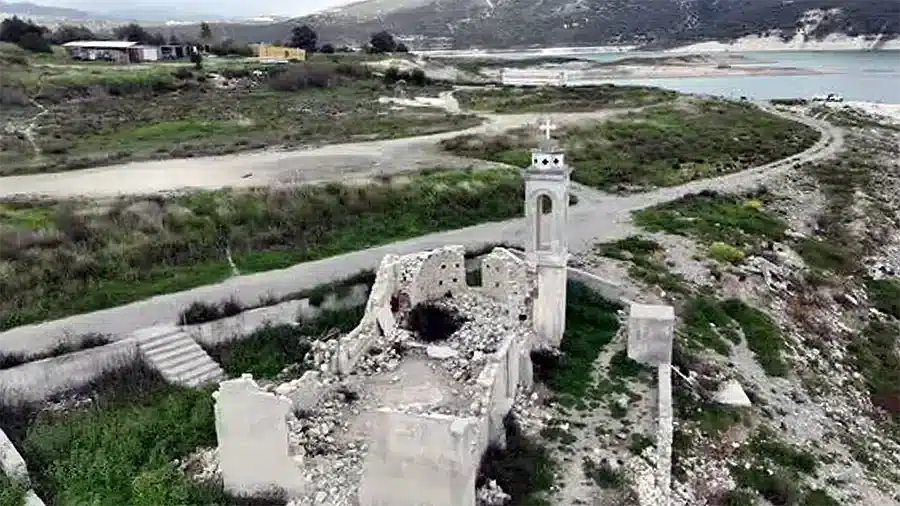
According to the WDD, Cyprus’ dam reserves have dropped to just 10.8% of total capacity, compared with 25.9% last year. Water levels at the Kouris Dam (above), the islands largest, stand at just 9.8%.
In efforts to save water, individuals found wasting water face severe fines and those who continue to waste water will face criminal charges.
With dam reserves at historic lows and rainfall forecasts remaining uncertain, the new desalination projects are seen as vital to the islands long-term water security and represent the state’s largest investment in this sector over the past decade.
Currently, five permanent desalination plants operate in Paphos, Episkopi, Vasilikos, Larnaca and Dhekelia, with a combined capacity of 235,000 cubic metres per day. An additional four mobile units in Moni, Kissonerga, Garyllis and Limassol Port are operating or nearing completion, adding another 47,000 cubic metres per day by early 2026.
New mobile desalinisation units for summer 2026
Three new mobile desalination units will be deployed by summer 2026:
Episkopi (Kourion) – Located near the existing Limassol plant within the British Bases. The tender was announced on 30 September 2025, with a five-year operating term.
Vasilikos (EAC Power Station) – To be installed in cooperation with the Electricity Authority of Cyprus at Mari, near the current facility. The tender is expected in November 2025.
Famagusta Area (Ayia Napa and Paralimni-Deryneia) – Sites have been pre-assessed, with priority given to Ayia Napa. The plant will link to the Kokkinochremmos reservoirs, enhancing the regions water security. A second installation will follow in Paralimni-Deryneia to serve the Protaras tourism area.
Each mobile unit will produce 10,000 cubic metres of water per day and is expected to cost approximately €3 million annually.
Permanent desalination plant in eastern Limassol
Plans are progressing for a new permanent desalination plant in eastern Limassol, with a capacity of 60,000–80,000 cubic metres per day to meet the growing needs of the fast-developing urban area. After an analysis of seven potential sites, the WDD has identified a location near the Limassol Sewerage Boards treatment facility, west of the proposed Monagroulli tourist area. The project is expected to be completed within five years.
Replacement of the Dhekelia desalination plant
The WDD will also replace the old permanent desalination unit at Dhekelia, whose contract expires in 2027. The new facility, with a capacity of 80,000–100,000 cubic metres per day, will serve the Famagusta area and part of Larnaca. Construction will take place adjacent to the existing site.
To expedite delivery, the Ministry of Agriculture has classified the projects as critical and urgent, allowing procedural exemptions from certain environmental and planning approvals. Amendments to the Forest Regulations are also proposed to permit the use of state coastal forest land for desalination purposes.
Budget Impact: Water Supply Costs Up 23% in 2026
The Ministry of Agriculture, Rural Development and Environments 2026 budget includes a 23% increase in water procurement costs, driven by prolonged drought and higher desalination and recycling costs. The draft budget allocates €142.1 million for water purchases, up from €116 million in 2025; an increase of €26.1 million.
According to the WDDs projections, water reserves in Nicosia, Limassol, Larnaca and Famagusta are expected to decline further in 2026, making irrigation restrictions likely. However, Paphos is not expected to face shortages, thanks to its established desalination capacity.
