Cyprus expands desalination network to tackle drought risk

The Cyprus government is moving ahead with the construction of a number of desalination projects in Limassol, Larnaca and Famagusta districts to safeguard the islands water reserves amid growing concerns about drought conditions expected in 2026.

The Water Development Department (WDD) plans to install three new mobile desalination units in Episkopi, Vasilikos and Ayia Napa, the construction of a permanent plant in eastern Limassol and the replacement of the ageing facility in Dhekelia. The installations aim to secure uninterrupted water supply to all districts and reinforce Cyprus’ resilience to climate change.

(A number of hotels have applied to have small desalination plants installed on their premises. If approved, these will produce up to 1,500 cubic metres of water/day.)

Water reserves at critical levels

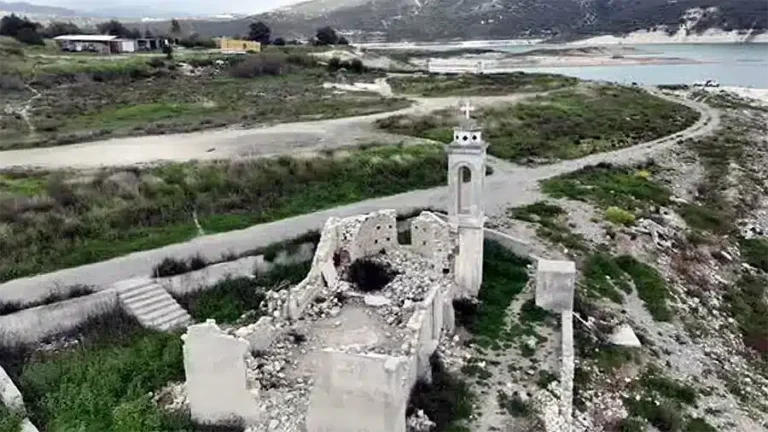
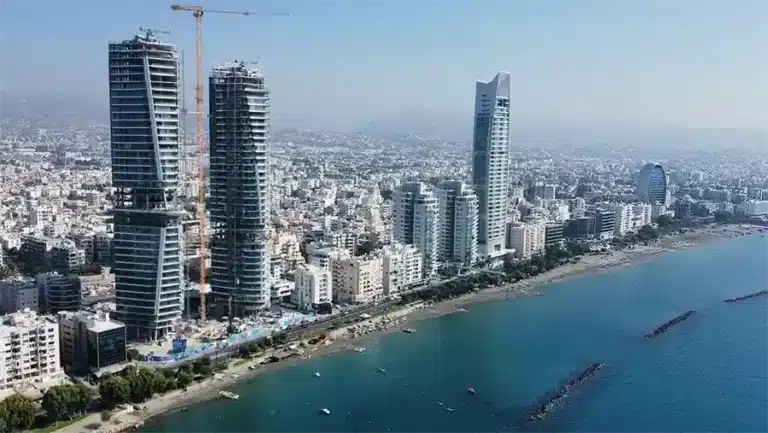
According to the WDD, Cyprus’ dam reserves have dropped to just 10.8% of total capacity, compared with 25.9% last year. Water levels at the Kouris Dam (above), the islands largest, stand at just 9.8%.

In efforts to save water, individuals found wasting water face severe fines and those who continue to waste water will face criminal charges.

With dam reserves at historic lows and rainfall forecasts remaining uncertain, the new desalination projects are seen as vital to the islands long-term water security and represent the state’s largest investment in this sector over the past decade.

Currently, five permanent desalination plants operate in Paphos, Episkopi, Vasilikos, Larnaca and Dhekelia, with a combined capacity of 235,000 cubic metres per day. An additional four mobile units in Moni, Kissonerga, Garyllis and Limassol Port are operating or nearing completion, adding another 47,000 cubic metres per day by early 2026.

New mobile desalinisation units for summer 2026

Three new mobile desalination units will be deployed by summer 2026:

Episkopi (Kourion) – Located near the existing Limassol plant within the British Bases. The tender was announced on 30 September 2025, with a five-year operating term.

Vasilikos (EAC Power Station) – To be installed in cooperation with the Electricity Authority of Cyprus at Mari, near the current facility. The tender is expected in November 2025.

Famagusta Area (Ayia Napa and Paralimni-Deryneia) – Sites have been pre-assessed, with priority given to Ayia Napa. The plant will link to the Kokkinochremmos reservoirs, enhancing the regions water security. A second installation will follow in Paralimni-Deryneia to serve the Protaras tourism area.

Each mobile unit will produce 10,000 cubic metres of water per day and is expected to cost approximately €3 million annually.

Permanent desalination plant in eastern Limassol

Plans are progressing for a new permanent desalination plant in eastern Limassol, with a capacity of 60,000–80,000 cubic metres per day to meet the growing needs of the fast-developing urban area. After an analysis of seven potential sites, the WDD has identified a location near the Limassol Sewerage Boards treatment facility, west of the proposed Monagroulli tourist area. The project is expected to be completed within five years.

Replacement of the Dhekelia desalination plant

The WDD will also replace the old permanent desalination unit at Dhekelia, whose contract expires in 2027. The new facility, with a capacity of 80,000–100,000 cubic metres per day, will serve the Famagusta area and part of Larnaca. Construction will take place adjacent to the existing site.

To expedite delivery, the Ministry of Agriculture has classified the projects as critical and urgent, allowing procedural exemptions from certain environmental and planning approvals. Amendments to the Forest Regulations are also proposed to permit the use of state coastal forest land for desalination purposes.

Budget Impact: Water Supply Costs Up 23% in 2026

The Ministry of Agriculture, Rural Development and Environments 2026 budget includes a 23% increase in water procurement costs, driven by prolonged drought and higher desalination and recycling costs. The draft budget allocates €142.1 million for water purchases, up from €116 million in 2025; an increase of €26.1 million.

According to the WDDs projections, water reserves in Nicosia, Limassol, Larnaca and Famagusta are expected to decline further in 2026, making irrigation restrictions likely. However, Paphos is not expected to face shortages, thanks to its established desalination capacity.
Cyprus aligns with EU on foreign direct investments screening

Cyprus has taken a major step to tighten controls over foreign direct investments with the approval of a new law aimed at safeguarding national security and aligning the country with EU regulations.

Parliament passed the legislation on Thursday, establishing a national mechanism to monitor foreign direct investments in “sensitive strategic areas.”

The move brings Cyprus into full compliance with the EU’s FDI Screening Regulation, which came into effect in October 2020. The regulation sets out a framework for cooperation among EU member states and the European Commission to assess foreign direct investments that could affect security or public order.

Under the new Cypriot law, any foreign investments exceeding €2 million will be subject to screening by the national authority. The legislation also covers land and property acquisitions, but only where these are linked to “vital infrastructures.” The government will identify and map such critical areas across the island, with interim guidance provided by the Finance Ministry to assist potential investors.

Importantly, individuals with dual nationality will not be classified as foreign investors under the law. Designated foreign investors must notify the national FDI monitoring authority before proceeding with their investment, which may impose conditions or fines for non-compliance.

Although opposition party AKEL proposed amendments during the plenary session, these were ultimately rejected.

Developers welcome direct investments framework

The Cyprus Land and Property Developers Association welcomed the new direct investments framework, calling it a significant milestone for enhancing transparency, investor confidence, and Cyprus’ international reputation. The Association highlighted that the law strengthens the island’s standing as a credible, modern investment destination by balancing national security with economic openness.

By aligning with the EU’s joint investment supervision mechanism, Cyprus aims to promote both strategic protection and continued economic growth. Industry representatives believe that clear, transparent procedures will help maintain investor trust and ensure long-term stability in the property and investment sectors.

The Association reaffirmed its commitment to collaborate with authorities and contribute to constructive dialogue, ensuring that the new system remains balanced, sustainable, and beneficial to both the Cypriot economy and society.

Cyprus land market surges in first half of 2025

Cyprus’ land market performed strongly in the first half of 2025, according to new figures from Landbank Analytics. The figures highlight agricultural land sales as the ‘silent giant’ of property investment, reflecting strategic land development activity across the island.

Transactions involving plots and fields achieved a total value in excess of €360.4 million, with 1,130 land sales recorded out of a total 8,729 property sales across Cyprus.

Plots accounted for most transactions by volume, while fields achieved significantly higher average sale values, pointing to large-scale or strategically located investments.

In the first six months of 2025, 794 plots were sold achieving a total value of €189.9 million, while 336 fields were sold for a total of €170.5 million. The average sale value for fields stood at around €507,440, compared with €239,170 for plots.

This difference reflects the fact that field sales often involve larger parcels of land in strategic locations with strong development potential. Plots, on the other hand, tend to serve traditional residential purposes, while fields are increasingly seen as strategic investment assets.

District trends

Nicosia land market

Plots dominated the market in Nicosia by transaction volume, yet fields recorded the highest average sale price across all property categories.

During the first half of 2025, there were 341 plot sales, making them the second most popular property type after apartments, compared with 83 field sales.

However, the average sale price of fields reached €363,654, exceeding residential properties (€283,641). By contrast, the average plot price stood at €220,331.

Limassol land market

Limassol mirrored Nicosia’s trend, with plots remaining the preferred choice among land buyers, with 191 plot sales, the second most traded asset class after apartments (201 sales).

Yet, the average value of 90 field transactions soared to €687,800, more than double the €305,000 average for plots.

Larnaca land market

Land sales in Larnaca were clearly driven by plots, with nearly three times as many transactions as fields.

A total of 173 plots were sold, ranking as the second most popular asset after apartments.

Field sales totalled 64, achieving an average sale price of €416,300—the highest across Larnaca’s land market.

Plots recorded an average price of €204,500.

Paphos land market

In Paphos, there were 123 land transactions in total.

The most important finding was the high sale value of fields, averaging €846,700, compared with €252,000 for plots.

Famagusta land market

Famagusta district presented an entirely different picture, with fields dominating the land market both in transaction numbers and total value.

A total of 53 field sales were recorded in the first half of 2025, compared with just 12 plots.

The average price for fields was €241,000, while plots averaged €134,500.

A healthy market driven by strategic investments

Andreas Christoforides, CEO of the Landbank Group, commented that the data “clearly confirms that the land market is the driving force of Cyprus’s property sector.

“Plot transactions across all districts fuel the ongoing demand for residential and commercial development, forming the core of daily real estate activity,” he noted.

At the same time, he added, “The market for fields consistently shows higher average prices, emerging as the silent giant of strategic investment.”

He highlighted that average field prices in Paphos approach €850,000, while Limassol averages nearly €700,000, figures that reflect strong investment potential rather than traditional agricultural value.

“These transactions often involve large tracts of land in tourist zones, sites with zoning potential, or land earmarked for large-scale developments such as renewable energy parks or integrated luxury resorts,” said Christoforides.

Paphos and Limassol lead the high-value segment, while Famagusta’s land activity remains focused almost entirely on field purchases, mainly for tourism or agricultural development.

“The data indicate a healthy and maturing market, with investors strategically positioning themselves in land with growth potential, ensuring continued momentum in the years ahead,” he concluded.

Cyprus apartment prices hit all time high

Apartment prices in Cyprus reached an all-time high in the second quarter of 2025, according to the latest Central Bank data series (MS Excel), which tracks the market back to 2006.

The new peak surpasses the previous record set in 2008, just before the real estate bubble burst during the Global Financial Crisis. Following that downturn, prices continued to decline and were hit again in 2013, when Cyprus experienced a deep economic crisis linked to bank failures, excessive property debt, and exposure to Greek sovereign risk.

Since the economic crisis, prices have gained their lost ground and, by Q2 2025, the Central Bank’s Residential Property Price Index had risen to 101.1 points. This is higher than its lowest level of 72.2 in Q2 2006, but still below the 2008 peak of 107.7.

A combination of limited new housing supply, rising incomes in certain population groups, and stronger foreign demand has accelerated price growth. This surge has stimulated new construction, but output remains insufficient to meet demand, while the rising cost of building materials continues to push prices higher for both domestic and international buyers.

Record high in apartment prices

In Q2 2025, the apartment price index climbed to 118.2 points, surpassing the previous record of 105.8 in Q4 2008, setting a new record high after 17 years.

Regional trends show significant variation:

  • Limassol: 143 points, the highest level recorded, up 93% over the past decade. Prices have risen steadily since 2019.
  • Nicosia: 4 points, just 2% below its 2010 peak.
  • Larnaca: 6 points, doubling (+101%) in ten years.
  • Paphos: 9 points, up nearly 99% over the decade.
  • Famagusta: 8 points, an increase of 48% in ten years.

For houses, the index stands at 92.7 points, representing a 24% increase over the past decade. The strongest house price growth occurred in Paphos and Famagusta.

Property prices across Europe

Cyprus is part of a broader trend of rising housing costs across Europe. Eurostat data for Q2 2025 shows:

  • Housing prices rose 1% year-on-year in the euro area and 5.4% in the EU.
  • Compared with Q1 2025, prices increased 7% in the eurozone and 1.6% in the EU.

Portugal recorded the largest annual increase at +17.2%, followed by Bulgaria (+15.5%) and Hungary (+15.1%). Cyprus recorded a +1.0% annual increase. Finland was the only country to see a decline (-1.3%).

Quarter-on-quarter, only France and Belgium saw prices fall. The strongest gains were observed in Portugal, Luxembourg, and Croatia. Cyprus recorded a modest +0.2% quarterly increase.

Nationalities of foreign buyers driving Cyprus property market

New official data highlights the growing scale of property purchases in Cyprus by foreign buyers, with more than 1,600 residential properties, plots and fields changing hands in the past year.

The figures were submitted to the House of Representatives by Interior Minister Constantinos Ioannou, in response to a parliamentary question from AKEL MP Christos Christofides.

According to the data, a total of 1,669 properties were sold to overseas buyers in the past twelve months, involving only natural persons (not companies). These transactions covered a range of property types, including residential properties, land plots and fields.

Paphos continues to top the table, recording the highest number of sales to both EU citizens and buyers from third countries. Larnaca and Limassol follow closely behind, while Nicosia and Famagusta have shown noticeable increases compared to previous years.

The largest groups of buyers were British, Russian, Israeli and Greek nationals, with residential properties remaining the most sought-after. However, the sale of land plots and agricultural fields has also seen a clear upward trend.

962 residential properties sold to foreign buyers

Between 15 September 2024 and 15 September 2025, a total of 962 registered residential properties were sold to foreign buyers. Of these, 385 were purchased by EU citizens, while 577 were bought by non-EU nationals.

  • Paphos led with 189 sales to EU citizens and 313 to third-country buyers.
  • Limassol followed with 70 and 102 respectively.
  • Larnaca recorded 41 sales to EU buyers and 77 to non-EU buyers.
  • Famagusta saw 43 and 71 sales respectively.
  • Nicosia recorded 42 sales to EU nationals and 14 to non-EU nationals.

The Ministry clarified that the figures refer only to properties with registered titles, meaning some sales could not be traced where title modernisation is still pending.

Rising land and field sales to foreign buyers

During the same period, 350 land plots were sold nationwide, 218 to EU citizens and 132 to third-country buyers.

Limassol recorded the highest number of plot purchases by EU nationals (98), while most plot sales to non-EU nationals took place in Larnaca (84).

Additionally, 357 agricultural fields were sold, 276 to EU buyers and 81 to non-EU buyers. Limassol, Paphos and Nicosia were the busiest districts for EU purchasers, while non-EU buyers focussed on Nicosia and Limassol.

Nationalities dominating each district

  • Nicosia: Greek nationals topped the list with 403 recorded property transactions.
  • Famagusta: British buyers led with 220 purchases.
  • Larnaca: Israeli citizens were the largest group, recording 850 transactions, followed by Lebanese buyers with 723.
  • Limassol: Russian nationals were dominant with 846 sales, followed by Israelis with 571.
  • Paphos: British nationals led significantly with 890 purchases, followed by Israeli buyers with 683.

The detailed tables submitted to Parliament by the Interior Minister are presented below.

Sales of registered residential properties

District European
Buyers
Non-European
Buyers
Nicosia 42 14
Famagusta 43 71
Larnaca 41 77
Limassol 70 102
Paphos 189 313
Nationwide Total 385 577

Sales of vacant building plots

District European Buyers Non-European Buyers
Nicosia 65 17
Famagusta 5 0
Larnaca 31 84
Limassol 98 25
Paphos 19 6
Nationwide Total 218 132

Sales of fields/rural land

District European Buyers Non-European Buyers
Nicosia 59 33
Famagusta 7 0
Larnaca 47 16
Limassol 98 20
Paphos 65 12
Nationwide Total 276 81

Top 10 foreign property ownership/nationality/district

Nicosia District

Nationality Sales Deposited Sale Agreements Total Properties
Greece (EU) 288 115 403
Romania (EU) 92 20 112
Russia (Non-EU) 33 47 80
Lebanon (Non-EU) 23 56 79
Bulgaria (EU) 42 12 54
United Kingdom (Non-EU) 32 12 44
France (EU) 22 10 32
China (Non-EU) 10 21 31
Syria (Non-EU) 18 9 27
Ukraine (Non-EU) 12 7 19

Famagusta District

Nationality Sales Deposited Sale Agreements Total Properties
United Kingdom (Non-EU) 152 68 220
Bulgaria (EU) 45 12 57
Romania (EU) 41 13 54
Poland (EU) 23 20 43
Israel (Non-EU) 6 33 39
Greece (EU) 16 14 30
Lebanon (Non-EU) 17 12 29
Germany (EU) 16 5 21
Russia (Non-EU) 9 8 17
Slovakia (EU) 8 8 16

Larnaca District

Nationality Sales Deposited Sale Agreements Total Properties
Israel (Non-EU) 191 659 850
Lebanon (Non-EU) 181 542 723
United Kingdom (Non-EU) 143 159 302
Greece (EU) 117 48 165
Russia (Non-EU) 58 77 135
Germany (EU) 58 37 95
Romania (EU) 47 22 69
Poland (EU) 36 32 68
Ukraine (Non-EU) 22 40 62
France (EU) 21 37 58

Limassol District

Nationality Sales Deposited Sale Agreements Total Properties
Russia (Non-EU) 254 592 846
Israel (Non-EU) 158 413 571
Greece (EU) 195 66 261
Ukraine (Non-EU) 76 116 192
United Kingdom (Non-EU) 113 74 187
China (Non-EU) 35 118 153
Romania (EU) 77 38 115
Germany (EU) 38 33 71
Belarus (Non-EU) 24 42 66
Portugal (EU) 27 32 59

Paphos District

Nationality Sales Deposited Sale Agreements Total Properties
United Kingdom (Non-EU) 561 329 890
Israel (Non-EU) 252 431 683
Russia (Non-EU) 120 207 327
Greece (EU) 211 46 257
Germany (EU) 133 88 221
China (Non-EU) 73 116 189
Poland (EU) 80 89 169
Romania (EU) 77 37 114
Ukraine (Non-EU) 38 65 103
Ireland (EU) 64 27 91

Cyprus apartment rental prices rise in most major cities

Rental prices for “standard apartments” in Cyprus saw mostly upward movement between August 1, 2025, and October 1, 2025, according to a recent study conducted by consulting firm Perprice.

The research focused on one, two, and three-bedroom standard apartments across the country’s four largest cities: Limassol, Nicosia, Paphos, and Larnaca.

For the purposes of the study, “standard apartments” refer to residential units under 200 square metres that are not penthouses, are not located in luxury high-rise developments, do not have sea frontage, and do not include swimming pools. These types of properties represent up to 40 percent of the housing market nationwide, making them a key indicator of broader rental trends.

The findings revealed that average rental prices increased across most cities, mirroring price patterns seen across the wider residential rental market. The only exceptions were three-bedroom units in both Limassol and Larnaca, where declines were recorded.

Paphos saw the most significant rise in average rental prices, increasing by 4.8 percent during the two-month period, from an average of €1,178 to €1,234.

Nicosia recorded a moderate increase of 1.4 percent, with prices rising from €1,008 to €1,022.

Larnaca experienced a marginal change, moving from €1,125 to €1,126.

Limassol was the only city to register an overall decline, with average prices falling by 1.9 percent, from €1,969 to €1,931.

City-by-city rental prices breakdown

Nicosia – All apartment types recorded slight increases. One-bedroom units rose to €687, two-bedroom units to €1,001, and three-bedroom units to €1,336. The supply of available rentals slightly decreased from 1,705 to 1,693.

Limassol – The city saw mixed results. One-bedroom apartments rose to €1,409 and two-bedroom units climbed to €1,981. However, rent for three-bedroom apartments fell sharply by 7.7 percent to €2,197. The number of listings remained nearly stable, rising to 2,524.

Paphos – Two and three-bedroom apartments recorded notable increases, rising to €1,207 and €1,511 respectively. One-bedroom units saw a slight decrease, falling to €882. Rental availability declined, dropping from 335 to 298 units.

Larnaca – One and two-bedroom apartments saw minor increases, rising to €882 and €1,163 respectively. Meanwhile, three-bedroom units dropped to €1,256. The total number of apartments for rent increased from 491 to 542.

The report notes that the fluctuations may be seasonal and do not necessarily indicate long-term trends in the country’s rental market.

Impact of increasing prices

The sharp rise apartment rental prices worsens the shortage of affordable housing. Demand is exceeding supply, making it increasingly difficult for residents to secure suitable accommodation. At a land development conference in March 2025, Interior Minister Constantinos Ioannou noted that geopolitical tensions, inflation, higher construction costs, rising interest rates and strong demand from foreign workers have further restricted housing availability for locals.

To address the issue, the government has proposed removing apartment quota limits in tourist zones and reducing minimum apartment sizes to create more units. A new housing scheme to encourage mixed-use developments in commercial areas has also been introduced to support workers and ease pressure in urban centres. However, these measures are expected to take time to show results.

In the meantime, affordable rentals remain limited, competition for vacancies is intense, and landlords have become more selective; sometimes increasing rents and scrutinising potential tenants more closely, including their income and family situation.