Cyprus at number seven in Top of the Props

CYPRUS has moved up three places from number 10 to number 7 in the July 2009 Top of the Props chart published by themovechannel.com

The most popular investment destination for British overseas property buyers was the USA, which pushed last month’s number 1, Spain, into second place. These were followed by France and Portugal, in third and fourth places.

Turkey sneaked into fifth place, followed by Italy and Cyprus at six and seven. Rounding off July’s Top of the Props chart was Bulgaria in eighth place, followed by the UAE. Egypt took the final place in the lineup, coming in tenth.

RankCountryShareChangeComment
1USA14.02Up 11 month in top spot
2Spain11.46Down 1
3France9.4Non-mover
4Portugal6.39Non-mover
5Turkey5.69Up 2
6Italy5.12Down 1
7Cyprus2.93Up 3
8Bulgaria2.63Up 5New to top 10!
9UAE2.51Down 3
10Egypt2.09Down 1
11Thailand1.62Up 11
12Greece1.54Down 1
13Malaysia1.52Up 7
14Morocco1.49Up 1
15Germany1.29Up 1
16Brazil1.27Down 8
17Australia1.27Down 3
18Grenada0.72Up 15
19Philippines0.67Up 8
20Canada0.67Up 3
21Croatia0.65Down 3
22Sweden0.55Down 3
23India0.5Up 6
24Hungary0.5Up 16
25Tunisia0.47Non-mover
26Dominican Republic0.4Down 2
27Panama0.35Down 10Biggest faller
28New Zealand0.35Up 10
29Indonesia0.32Up 15
30Romania0.32Down 4
31South Africa0.27Up 17Highest climber
32Austria0.27Highest New Entry
33Costa Rica0.27Down 3
34Bahamas0.25Non-mover
35St Lucia0.22Up 14
36Barbados0.2Down 5
37Albania0.15Down 5
38Ireland0.15New Entry
39Poland0.12Down 2

IN A SEPARATE survey published by homesoverseas.co.uk, Cyprus has moved up one place to number 8.

Property in Spain has replaced property in Portugal, as the most searched for destination to buy a home abroad based on country page views, and property views, on their website over the past month.

Elsewhere, Greece property has risen from fourth to third, Italy property has fallen a position to fourth, French property is up a place to fifth, Turkey property is down a place to sixth, USA property has gone up from eighth to seventh, Cyprus property is up a place to eighth, Thailand property is down from seventh to ninth, while Egypt property retains tenth spot.

Here are the homesoverseas.co.uk top 10 most searched for destinations in which to buy a home overseas at the moment, last month’s position in brackets:

  1. Spain (2nd)
  2. Portugal (1st)
  3. Greece (4th)
  4. Italy (3rd)
  5. France (6th)
  6. Turkey (5th)
  7. USA (8th)
  8. Cyprus (9th)
  9. Thailand (7th)
  10. Egypt (10th)

Sales to non-Cypriots down 75 per cent

FIGURES published by the Land Registry Department reveal that the number of properties sold to foreign nationals during the seven months to July fell to just below 1,100 from the 4,552 sold during the same period in 2008.

Worst hit areas are Larnaca and Famagusta, where sales to non-Cypriots have fallen by 80%.

This year, house prices have fallen for the first time since 2005. The average cost of a home fell by 2.2% in the first quarter of 2009, according to the Home Price Index produced on behalf of BuySell by MAP S. Platis. (The BuySell Home Price Index for the second quarter of 2009 has yet to be published).

The Land Registry Department has predicted that prices will fall further during the second half of the year. Last month it said that the lack of property sales together with the large debts owed by developers to the banks will result in house prices starting to fall noticeably from September.

In the first half of the year, developers tried to attract buyers with gifts such as free air-conditioning etc. In the second half, they couldn’t bear the pressure of the economic crisis and decided to cut property prices,” said Chairman of the Association of Real Estate Agents Solomon Kourouklides.

Cyprus slips into recession

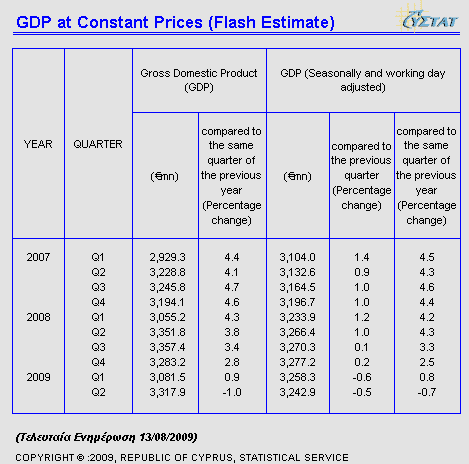
THE LATEST estimates provided by CySTAT, the Cyprus Statistical Service, reveal that Cyprus went into recession during April-June 2009 as its Gross Domestic Product (GDP) contracted over the period for the second successive quarter.

Real GDP (seasonally adjusted) shrunk by 0.5% in the second quarter, following a contraction of 0.6% during the first quarter of the year.

The economy’s contraction during the second quarter is attributed mainly to the very negative growth rates experienced by hotels & restaurants as well as the negative performance of manufacturing, construction, trade and transport activities.

On a more positive note, financial intermediation (banking) and broad services (mainly the public sector) continue to record positive growth rates but at a slower rate, according to the Statistical Service’s figures.

Cyprus Statistical Service - Flash Figures
Cyprus Statistical Service - GDP Flash Estimates

Tourism and construction performance

Tourism and construction play a major role in the Cyprus economy. The service sector (including tourism) contributes 79% to GDP and employs 71% of the labour force.

Tourist arrivals dropped by 10.8% to 883,002 during the first half of 2009 while property sales fell to 3,591 compared to the 8,610 sold during the first half of 2008.

So far this year, sales of property to non-Cypriots have fallen by a massive 75%.

Last week, Finance Minister Charilaos Stavrakis said that one of the main sources of the gaping hole in public revenue was a result of the considerable drop in property transactions across the island.

Developers and estate agents have consistently lobbied the government to decrease taxation on the housing market and to reduce the red tape surrounding the process for securing title deeds, two factors which they believe seriously damaging the housing sector in Cyprus.

Residential property construction slows

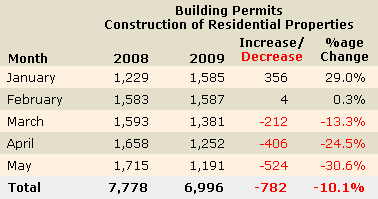
THE STATISTICAL Service announces that the number of building permits authorized by the Municipal Authorities and the District Administration Offices during May 2009 stood at 830.

The total value of these permits reached €225.5 million and the total area 254.8 thousand square metres. These building permits provide for the construction of 1,191 dwelling units.

During the period January – May 2009, 3,697 building permits were issued; an increase of  5.0% compared to the corresponding period last year. The total value of these permits decreased by 1.1% and their total area decreased by 9.5%.

The number of residential properties for which building permits have been issued fell back by 30.6% compared to May last year, following a 24.5% reduction in April.

Number of residential properties for which permits have been issued

Compared to last year, the total number of residential properties for which building permits have been issued has fallen by 10.1%.

The end of Cyprus’ remarkable real estate boom

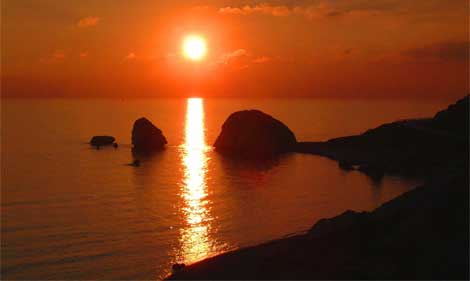
Sunset at Petra tou Romiou (Aphrodite's Rock)

CYPRUS’ remarkable three-year housing boom ended in 2008. The market’s peak was in November 2008; after that, prices began to fall.

According to MAP S.Platis, who prepare the BuySell Home Price Index, average home prices fell by 2.17% (-3.22% in real terms) year-on-year, to € 187,053 in March 2009.

The crunch was mainly caused by lower demand from British buyers, who comprise around 70% of all foreign buyers in Cyprus. The UK recession and the weakening of the pound against the euro has prompted British buyers to look for non-Euro destinations, according to Global Finance, a business and finance magazine. Property demand from non-Cypriots buyers fell by 50% in the last period of 2008.

Sales dropped in the first half of 2009 to 842 properties, from more than 3,800 properties sold during the previous year’s equivalent period (Cyprus Land Registry). It could take four years for Cyprus’ property market to return to normal, according to the Land Registry’s Andreas Christodoulou.

At the peak of the boom, property prices were rising by 20% per annum at one point, boosted by huge external demand, low interest rates and the expected imposition of VAT on purchase of new property.

Now that the UK is in recession, Cyprus house prices are expected to continue falling. Domestic demand is also expected to weaken, with Cyprus’ GDP growth likely to slow to 0.3% in 2009. Unemployment rose to 4.6% in Q1 2009, up from an average of 3% in 2007-2008.

High interest rates

Variable-rate mortgages account for 97.8% of all housing loans in Cyprus, making the market vulnerable to interest rate shocks. Cyprus’ interest rates are among the Euro area’s highest, though rates fell slightly to 6.4% in May 2009, from a 6.8% average in Q1 2009.

Banks in Cyprus have been slow to respond to interest rate cuts, and there is a big margin between the Central Bank key rate and their interest rates. That is because there’s little inter-bank lending, so banks rely on customer deposits for funding. Many banks pay high rates to attract deposits, according to Finance Minister Charilaos Stavrakis.

Note: The adoption of the Euro in January 2008 led to a significant change in the method of calculating interest rates (from May 2008), and the data are now harmonized to the European Central Bank’s requirements.

Unparalleled growth of the mortgage market

There has been an enormous growth in housing loans, which have risen from 6.8% of GDP in 2005 to 49% in 2008, due partly to intense competition between banks. Most banks in Cyprus offer 70% mortgages, with a maximum of 30 years repayment.

Lower rental yields

The slowdown in tourism and the global crisis have contributed to a fall of rental yields in Cyprus, according to Cyprus Property Magazine. The average rental yield in Cyprus as of August 2008 was 3.81%, according to the Global Property Guide – lower the 4.7% average yield the previous year. Nicosia has the highest yields, at 4%.

Costs of buying a 120m2 square metre (sq. m.) apartment in Cyprus:

  • Nicosia: average price: €1,736/m2. Rental yield: 3.76%.
  • Limassol: average price €2,513/m2 Rental yield: 3.45%.
  • Paphos: average price €2,149/m2 Rental yield 2.83%.
  • Larnaca: average price €1,673/m2 Rental yield 3.64%.

Economic slowdown

Cyprus has been shielded from the crisis, largely because of its low reliance on exports, prudent fiscal policies, the adoption of the Euro, resilient financial sector, and limited exposure to subprime mortgages, as noted recently by the IMF. Nevertheless it is headed for a sharp economic slowdown in 2009, as the crisis enmeshes its key economic partners – the U.K., Greece, and Russia. GDP is expected to grow by 0.3% in 2009.

The number of building permits for residential properties fell 24% in April 2009, to 1,252, from 1,658 permits last year. Tourist arrivals dropped by 10.8% to 883,002 during the first half of 2009. Tourism and construction play a major role in Cyprus’ economy. The service sector (including tourism) contributes 79% to GDP and employs 71% of the labour force.

Consequently, unemployment rose to 4.6% in Q1 2009, though Cyprus still has one of the EU’s lowest unemployment rates.

Read the full article in the Global Property Guide

Desalination plant at Episkopi

LAST Friday, an agreement was signed between the Cyprus government and the Limassol consortium MN – Limassol Water Company (which consists of the Israeli company Mekorot Development and Enterprise Ltd and the Cypriot company Netcom Limited), for the construction of a desalination plant at Episkopi in Limassol.

The plant will provide 40,000m3 of desalinated water a day with the provision to expand this to 60,000m3 a day.

The agreement was signed by the Director of the Water Development Department of the Ministry of Agriculture, Natural Recourses and the Environment Mr Sofoclis Aletraris on behalf of the Republic of Cyprus, by Mr Giora Gutman of Mekorot Development and Enterprise Ltd and Mr Adamos Adamides of Netcom Limited on behalf of the consortium MN – Limassol Water Company.

The desalination contract is for 20 years and the sale price of water to the Water Development Department is €0.8725/m3.

The construction of the new desalination plant is an important project which will cover the water needs of Limassol.

The construction of the plant will begin immediately after the signing of the agreement, so that the desalination plant can operate within 24 months in accordance with the terms of the Contract.