

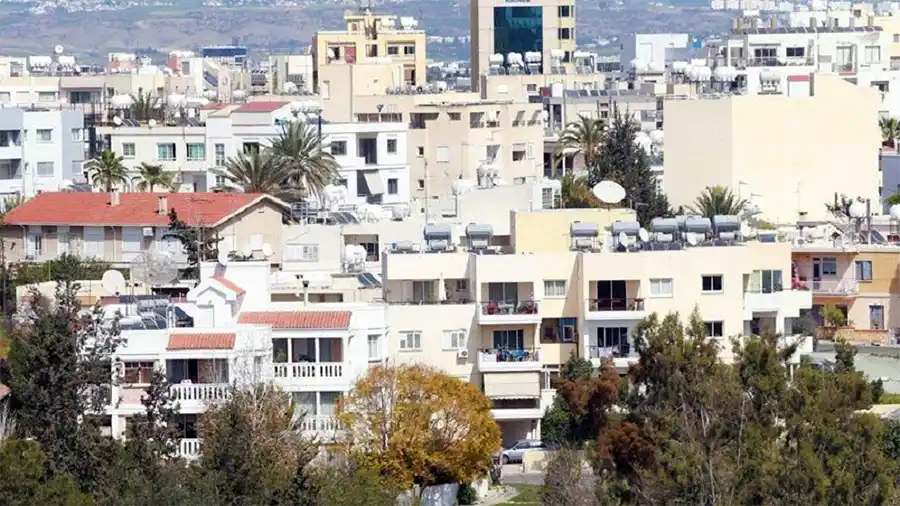
The Cyprus housing crisis did not begin with today’s soaring property prices. It began when the country stopped building and, more than a decade after the financial crisis and haircut, the consequences are becoming impossible to ignore.
The shortage of homes is pushing up prices and rents, with its roots firmly planted in the collapse of residential construction that followed the financial crisis. That crisis, compounded by the deposit haircut, pushed Cyprus off the investment map and out of international markets.
The numbers tell a stark story. Between 2012 and 2018, the supply of new homes collapsed, leaving thousands of properties that would have been needed to meet future demand unbuilt. The result is a housing market now trying to catch up with a deficit created years ago – and the gap remains enormous.
The five years that changed Cyprus housing
The damage was not done overnight. In 2008, at the peak of the construction boom, Cyprus completed 18,195 new residential units. A year later, the figure had fallen to 16,644, before dropping to 13,434 in 2010 and 9,091 in 2011.
Then came the collapse. Just 6,565 homes were completed in 2012, followed by 3,833 in 2013 and 2,718 in 2014. By 2015, only 2,390 new homes were completed. In seven years, residential completions had fallen by almost 87%. That was not simply a normal market correction; it was a collapse in the country’s ability to produce new housing, with consequences that were bound to emerge long after the economy began to recover.
The real warning was hiding in the building permits
Completed homes show what the market delivered. Building permits show what it was preparing to deliver next, and here the picture is even more disturbing.
In 2009, permits covered 16,688 residential units, while the figure stood at 14,312 in 2010. By 2011, it had fallen to 8,839, dropping to 5,879 in 2012 and 4,141 in 2013. By 2014, permits covered only 2,855 residential units. For a growing country, that was a huge warning sign because every home that was not approved and built would eventually be missing from the market.
Cyprus created a housing hole – and never fully filled it
Using a conservative benchmark of 10 residential units per 1,000 people, the scale of the missing supply becomes clear. Between 2011 and 2024, Cyprus would have been expected to issue permits for around 125,934 residential units. Instead, permits were issued for only 101,337, leaving a difference of 24,597 homes.
Nearly 25,000 residential units.
That is the size of the hole left behind by years of weak construction. The most damaging period was concentrated in just five years: between 2015 and 2019, the net production gap was about 16,400 residential units, representing roughly two-thirds of the shortfall still evident at the end of 2024.
This is the part of the housing crisis that is often overlooked. Prices did not create all of the problem, nor did foreign buyers or the recent surge in construction costs. A large part of today’s shortage was built into the market years ago, when Cyprus dramatically reduced the number of homes it was producing.
The market has recovered – the shortage has not.
There is no question that construction has recovered. Building permits covered 9,627 residential units in 2019, rising to 10,506 in 2021, 11,041 in 2023 and 11,329 in 2024.
Then came another major jump. In 2025, permits covered 16,171 residential units, 42.7% higher than in 2024 and the highest figure since 2009.
On the face of it, that sounds like good news. But there is a crucial catch: a building permit is not a completed home. It does not put a key in a buyer’s hand, give a family somewhere to live or immediately increase the number of properties available to rent.
It is future supply. Cyprus therefore cannot build its way out of today’s housing shortage overnight. Even a major increase in permits will take time to translate into completed homes and occupied properties.
The population kept growing while housing supply fell behind
The pressure becomes even clearer when population growth is taken into account. From 2019 to 2024, Cyprus’s population increased from about 902,400 to 983,000, representing growth of roughly 8.9%. Over the same period, the country’s housing stock increased from about 482,000 to 517,000 homes, a rise of approximately 7.3%.
In other words, the population was growing faster than the housing stock. That is exactly the kind of imbalance that puts pressure on prices and rents.
The contrast with earlier decades is striking. Between 1995 and 2011, the population grew by about 31%, while the housing stock grew by 69%. Homes were being added at more than twice the rate of population growth.
That relationship has now changed dramatically.
One home for every 113 people
The most striking evidence comes from comparing completed homes with the population. In 2008, Cyprus completed 18,195 homes for a population of roughly 796,900. That meant 22.8 new homes for every 1,000 people, or roughly one new home for every 44 people in a single year.
By 2024, only 8,692 homes were completed for a population of around 983,000. That equated to just 8.8 homes per 1,000 people, or approximately one new home for every 113 people.
The rate of new housing delivery per head was therefore around 61% below the level recorded in 2008. The 2008 figure was exceptional and should not be treated as a normal benchmark, but the comparison nevertheless exposes the scale of the change: Cyprus has a much larger population yet is producing far fewer homes for each person.
The housing crisis is older than the headlines suggest
This matters because the political and property debate often focuses on what has happened recently. House prices are blamed, foreign demand is blamed, construction costs are blamed and planning delays are blamed. All may have a role, but the figures point to something deeper.
Cyprus spent years dramatically under-producing new homes. The consequences have arrived with a delay. The missing homes did not simply disappear from a spreadsheet; they disappeared from the housing market.
They represent properties that could have housed families, young people and workers. They represent supply that could have helped moderate rents and prices. And they represent a construction deficit that cannot be repaired simply by announcing more building permits today.
Cyprus is now paying for yesterday’s decision
The central lesson is brutally simple: when a country stops building homes for years, the shortage eventually catches up with it.
Cyprus allowed residential construction to collapse after the financial crisis. The economy recovered, the property market recovered and foreign investment returned, but housing supply never fully repaired the damage.
By the end of 2024, the estimated shortfall was still close to 25,000 residential units. That is not simply a legacy of the past; it is part of the explanation for the housing pressures facing Cyprus today.
The construction cranes may be back and building permits may be rising, but the homes that were never built cannot be recovered. Until enough new homes are actually completed and occupied, Cyprus will continue to pay the price for the years when it stopped building.
(Based on an article by Charalambos Zakos, first published in Philenews)
