

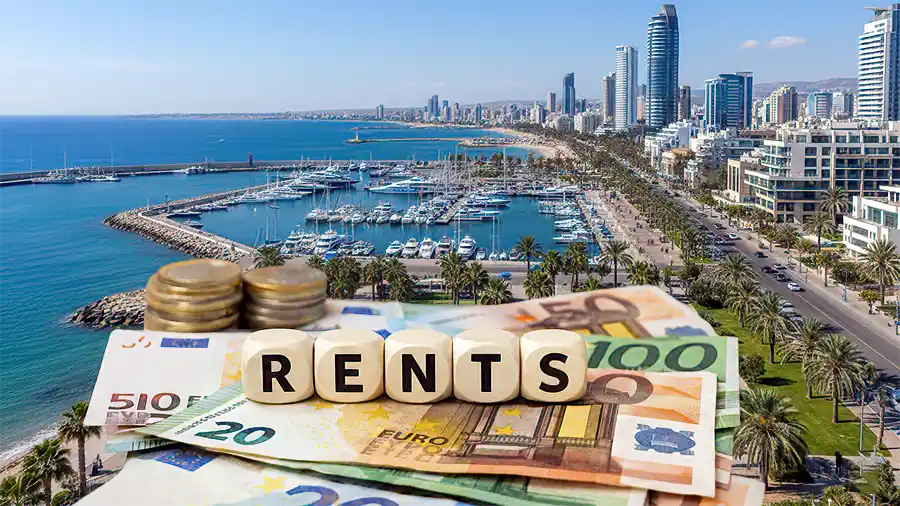
The cost of renting in Cyprus has become prohibitively high for much of the population, placing severe strain on household finances. Combined with the broader rise in living costs, escalating rents are making day-to-day life increasingly difficult.
Recent increases exceeding 30 per cent have intensified pressure on tenants, with wages struggling to keep pace. Data analysed by the European Trade Union Institute reinforces a growing body of evidence pointing to the scale of the problem: incomes are no longer sufficient to cover housing costs.
In Nicosia, the average rent for a two-bedroom flat now reaches €924, equivalent to 85 per cent of the minimum wage of €1,088. Across Cyprus, average rents stand at 42.4 per cent of minimum earnings. In cities such as Limassol, rents are significantly higher.
Rising rents leave households struggling
Industry figures warn that the sharp rise in rental prices is leaving many residents struggling to make ends meet.
Polys Kourousides, president of the Cyprus Association of Property Valuers, notes that rental increases in recent years, which combined with inflation driven largely by energy costs, have created a difficult environment for households. He argues that current government measures fall short, citing the absence of a comprehensive affordable housing strategy.
Supply shortages and Airbnb pressures
Limited housing supply is a key factor behind the upward trend. Andreas Christoforides, chief executive of Landbank Group, highlights a shortage of resale properties as a major driver of rising rents.
He also points to the growing popularity of short-term letting platforms such as Airbnb, which has encouraged landlords to shift properties away from long-term rental markets, further tightening supply.
Figures from Eurostat underline the trend: rents in Cyprus rose by 30.3 per cent between 2015 and the fourth quarter of 2025, compared with an EU average increase of 22 per cent.
Government support and EU focus
In response, Interior Minister Constantinos Ioannou has announced an additional €11 million in housing subsidies. The funding aims to support a further 277 young individuals and couples who applied under a housing assistance scheme for those up to the age of 41.
The initiative forms part of a broader state housing policy focused on increasing housing supply, particularly affordable homes in urban and suburban areas, and improving purchasing power among younger and vulnerable groups.
Housing affordability is also rising up the European agenda. The issue is expected to feature prominently at an informal ministerial meeting in Nicosia on 12 May, held as part of Cyprus’ Presidency of the Council of the EU.
A wider European rents affordability crisis
Across the European Union, the affordability gap is widening. In many capital cities, average rents exceed national minimum wages by €218. In cities such as Prague, Lisbon and Dublin, the gap is more than €700.
Lower-paid workers in countries including Ireland, Netherlands and Luxembourg spend more than half their income on rent, while in many others the figure is more than a third.
The European Parliament has recently called for stronger action, urging policies that ensure access to decent, sustainable and affordable housing.
