
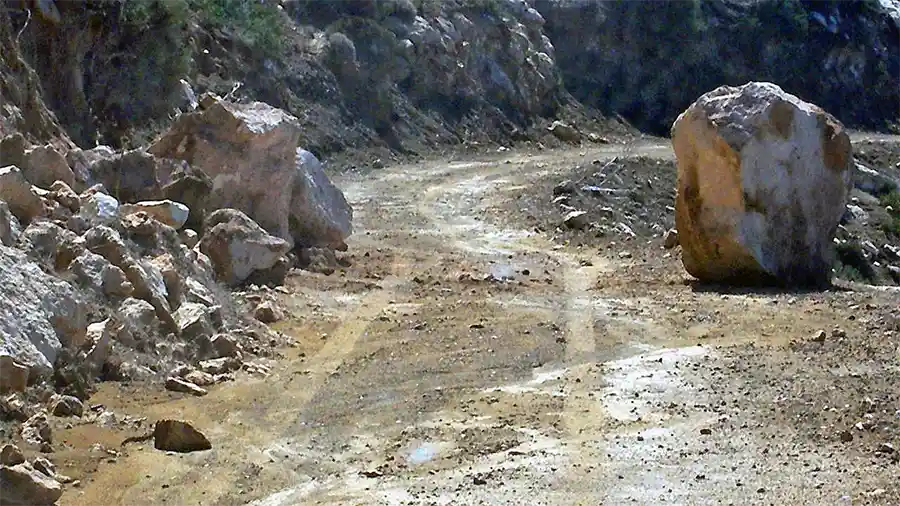
Cyprus has registered 112 rural roads since the start of the year, helping to improve access to land that has been difficult to develop. The Interior Ministry has also examined 500 requests, Interior Minister Constantinos Ioannou said.
The new procedures aim to address a long-standing obstacle to development in many communities: plots without access to a registered road.
Speaking on Politis radio, Mr Ioannou said the ministry is also piloting urban land readjustment in ten areas across Cyprus, with European Union funding.
Urban land readjustment for landlocked areas
Where a rural road already exists but is not registered, the process can now move forward to register it. For plots with no road access, communities can request a new road to be planned and registered as a rural road.
Urban land readjustment offers another option for areas where plots are landlocked. Under the scheme, a wider area with many owners is brought together, a road network is created and land shares are redistributed among the owners.
Mr Ioannou said the approach is used abroad and has also been applied in Cyprus in the past. He encouraged more communities to consider it as a way to open up areas that are difficult to access.
Compulsory acquisition to keep road projects moving
Previously, registering a rural road depended on securing the consent of affected landowners. This often caused delays, or meant consent could not be obtained from everyone. As a result, roads were sometimes registered in sections that could not function as complete routes.
Under the new framework, land can be compulsorily acquired where consent has not been secured, allowing the whole road to proceed as one project.
Mr Ioannou said compensation costs are limited because valuations take account of the increase in a plot’s value resulting from the road.
Communities have been asked to rank their requests and initially submit their two or three highest-priority rural roads. The number of plots served is one of the main factors.
Under the previous process, only 10 to 12 roads were registered each year. The new process has already resulted in 112 registrations, the minister said.
Timetables and proposed changes to acquisition law
A new guide sets out the responsibilities of the services involved and the timetable for each stage of the process.
Contact points have also been appointed at District Administrations and the Department of Lands and Surveys, so communities know where to direct their requests. If delays arise, community leaders can raise complaints with the relevant District Administration.
Mr Ioannou also outlined a draft bill on compulsory acquisitions. It proposes changes to compensation, interest rates and the period for which the state can retain an acquisition.
Some owners, he said, have waited up to 20 years for compensation because of disagreements with the Department of Lands and Surveys.
The bill is under public consultation. It will then be sent to the Law Office before being submitted to Parliament.
Translated and adapted from an article published by Politis
