
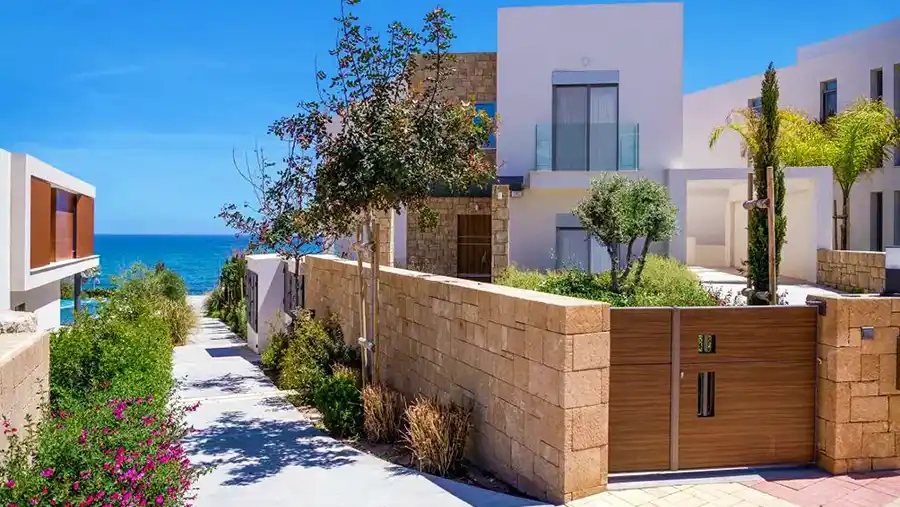
The Cyprus housing scheme could let eligible homeowners build a separate home for a parent or child on property they already own. That might mean adding a storey, converting or extending part of the existing house, or building on spare land within the same plot. Applications can be submitted up to and including 31 December 2027.
The Council of Ministers approved the housing scheme on 10 September 2026. It allows the planning authority to approve more floor space or greater site coverage where needed. Homeowners still need planning permission, but they can apply under the scheme without making a separate request for a departure from the development plan under section 26(2).
Who qualifies for the Cyprus housing scheme?
The extra home must be for a parent or child to live in permanently. The existing house must have all the necessary planning and building permits. The plot must also be in an area where residential development is permitted, and the usual floor-space allowance must already be used up or be too small for the new dwelling.
The planning authority looks at each case individually, considering the surrounding area and the family’s circumstances. You’ll need to provide details of your immediate family and property search certificates for all family members covering the community or administrative area where the plot sits. The owner, their spouse and the relevant parents or children must have no other home in the same administrative area.
How much can you build?
The new home can have up to 150 sq m of floor space. On plots with a net area of at least 1,000 sq m, the authority can allow up to 180 sq m, depending on the family’s needs.
You could convert space within the existing building, such as part of a covered parking area, or build an extension. The scheme allows the level used for such a conversion or extension to be left out of the building’s storey count. If you want to build upwards, you’ll need to show that the existing building can safely take the extra storey and keep to the approved building line.
There’s also scope to build a separate dwelling on spare ground, even if it takes the plot over the usual site coverage limit. Minimum distances from plot boundaries still apply, and the authority must protect the amenity of neighbouring properties. The work must also suit the character of the existing building and the surrounding area, with materials of an acceptable appearance and quality.
What if the plot is shared or parking is tight?
On a jointly owned plot with two to four existing homes, the authority can consider an additional dwelling above the approved building or part of it. All co-owners or their authorised representatives can sign the application. In certain cases, the relevant share owner can sign alone if the requirements of section 90 of the planning law are met.
The authority can also accept up to two parking spaces serving the existing and new homes where the spaces lack independent access and drivers have to reverse onto the road, provided the circumstances justify it and road safety is protected. If the required parking for the new dwelling cannot be provided, the authority may accept a €2,000 payment in lieu, or a lower amount where the relevant ministerial order sets one. See the Ministry of the Interior FAQs
Which properties are excluded?
The scheme excludes:
- Listed buildings and Areas of Special Character.
- Apartments in existing blocks and homes that form part of existing unified residential developments.
- Plots outside the development boundaries set by the applicable development plans, and plots in designated tourist zones.
- Environmentally sensitive areas, protected landscapes, nature conservation areas and areas controlled under the Antiquities Law.
Owners also cannot use the scheme to legalise unauthorised structures that were already in place when the Council of Ministers approved the scheme.
The 10-year rule and when to apply
The title deed will carry a restriction blocking the sale or transfer of the new home for 10 years, with an exception for inheritance. The scheme also bars short-term lets and other commercial use.
Submit your planning application to the planning department of the relevant District Local Government Organisation by 31 December 2027. Once you receive notice that planning permission has been granted, you have one year to apply for a building permit. Miss that deadline and the planning permission lapses. Planning permission lasts a maximum of three years and can only be extended if work is actively under way and has reached a stage where the approved development cannot be reversed.
