

The cost of construction materials in Cyprus continued to move higher in May 2026, according to the latest figures released by the Statistical Service earlier today, adding further pressure to the country’s building sector.
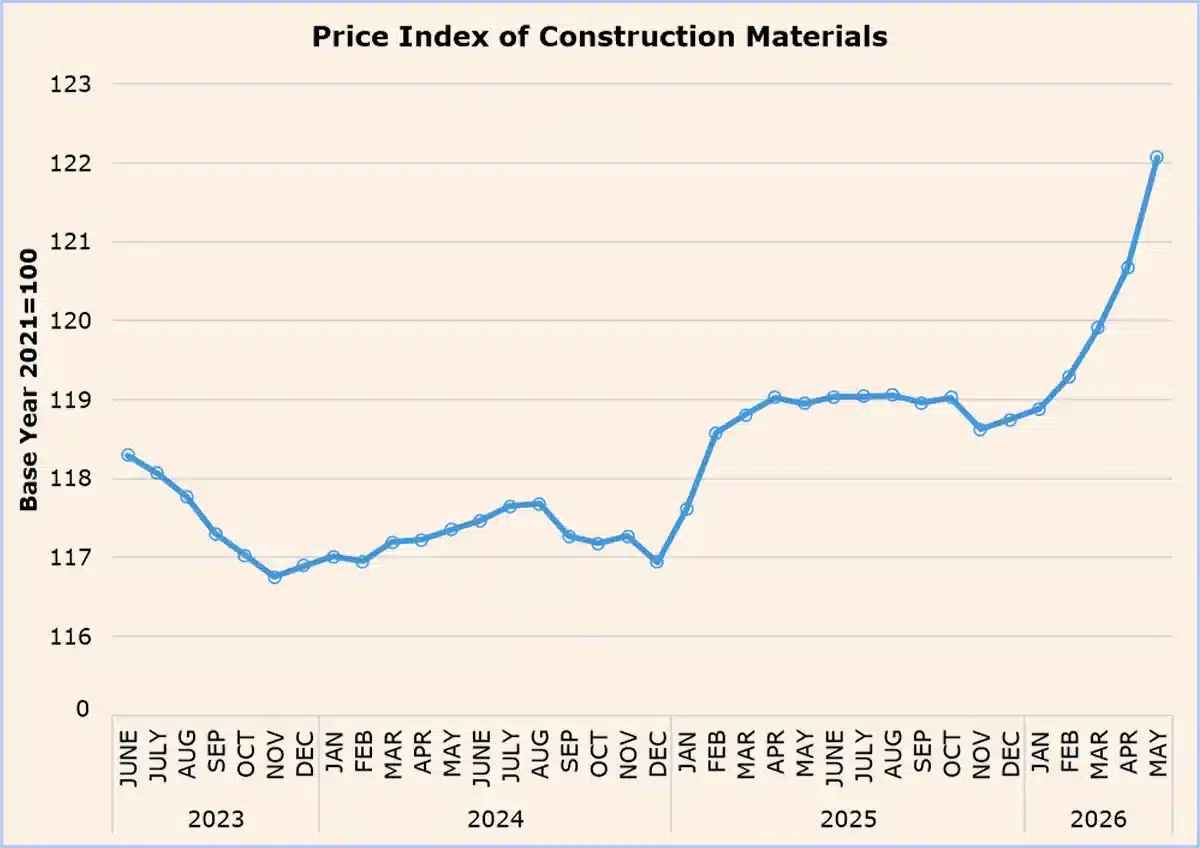
The Construction Materials Price Index reached 122.07 points in May, based on 2021=100, representing an increase of 1.16% compared with April and a year-on-year rise of 2.62%.
Over the first five months of 2026, the index increased by 1.32% compared with the corresponding period in 2025, highlighting the continued upward trend in construction-related costs.
Metal products lead annual price increases
The largest annual increases were recorded in metal products, which rose by 4.31%, followed by wood products, insulation materials, chemicals and plastics, up 3.49%. Electromechanical equipment also posted a notable increase of 2.97%.
Mineral products recorded a 2.03% rise, while other mineral-based materials saw a more modest increase of 0.22%.
Looking at individual categories, aluminium and other metal products recorded the strongest annual growth, climbing by 7.17%. Electrical materials followed with a 5.97% increase, while plastic products rose by 5.93%.
Not all categories moved higher. Heating and cooling equipment prices fell by 1.65%, while ceramic products recorded a decline of 0.74% compared with a year earlier.
Monthly increases driven by aluminium and timber
On a monthly basis, aluminium and other metal products again led the gains, rising by 3.82% in May. Wood products increased by 2.08%, while overall metal products rose by 2.20%.
These increases were among the key contributors to the rise in the overall construction materials index during the month.
Construction sector still facing cost pressures
The latest data suggests that the cost of essential construction materials continues to trend upwards, maintaining pressure on contractors, developers and the wider property sector.
However, the pace of price growth remains significantly lower than the sharp increases experienced during previous years, offering some signs of stabilisation despite ongoing inflationary pressures across parts of the construction supply chain.
