

Almost three in 10 people in Cyprus were living in homes with improved energy performance in 2025, according to the latest figures from Eurostat. While the country has outperformed the European Union average, the data also reveal a significant gap between wealthier households and those facing financial hardship.
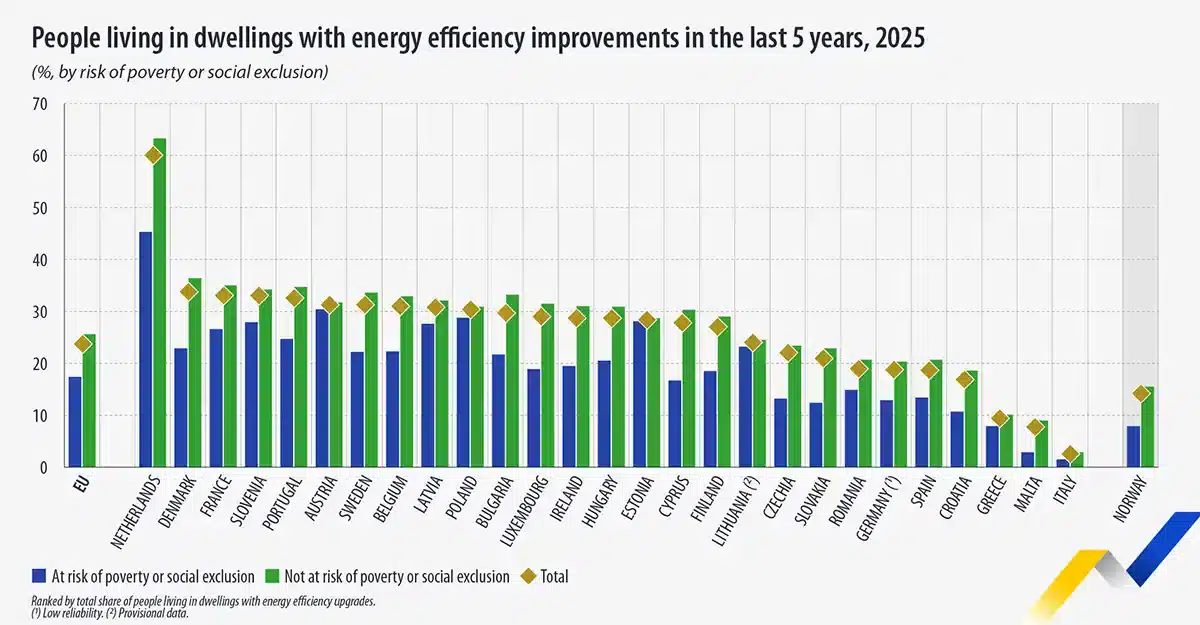
Eurostat found that 28% of Cyprus’ population lived in a property where energy efficiency improvements had been completed within the previous five years. This compares with the EU average of 23.9%, highlighting the growing uptake of energy-saving home upgrades across the island.
Cyprus home energy efficiency ranks above the EU average
Among EU member states, the Netherlands recorded the highest proportion of residents living in energy-efficient homes, at 60.5%. Denmark followed with 34%, while France and Slovenia each reported 33.3%.
By contrast, Italy recorded the lowest share at 2.6%, followed by Malta at 7.8% and Greece at 9.5%.
The figures suggest that Cyprus has made steady progress in improving the energy performance of its residential housing stock, reflecting increased investment in home renovation and energy efficiency measures.
Financial divide remains a concern
Despite this progress, the data highlight a pronounced disparity between different income groups.
Among people considered at risk of poverty or social exclusion, just 16.7% lived in homes that had benefited from energy efficiency improvements during the previous five years. In comparison, 30.3% of those not considered at risk lived in upgraded properties.
As a result, Cyprus ranks among the EU countries with the widest gap between financially vulnerable households and those in a stronger economic position when it comes to accessing energy-efficient housing.
Across the European Union as a whole, 17.4% of people at risk of poverty or social exclusion reported living in homes with improved energy performance. That figure rises to 25.6% among households not considered at risk.
The findings underline both the progress Cyprus has made in improving residential energy efficiency and the continuing challenge of ensuring that lower-income households are not left behind as the country works towards its climate and housing objectives.
