

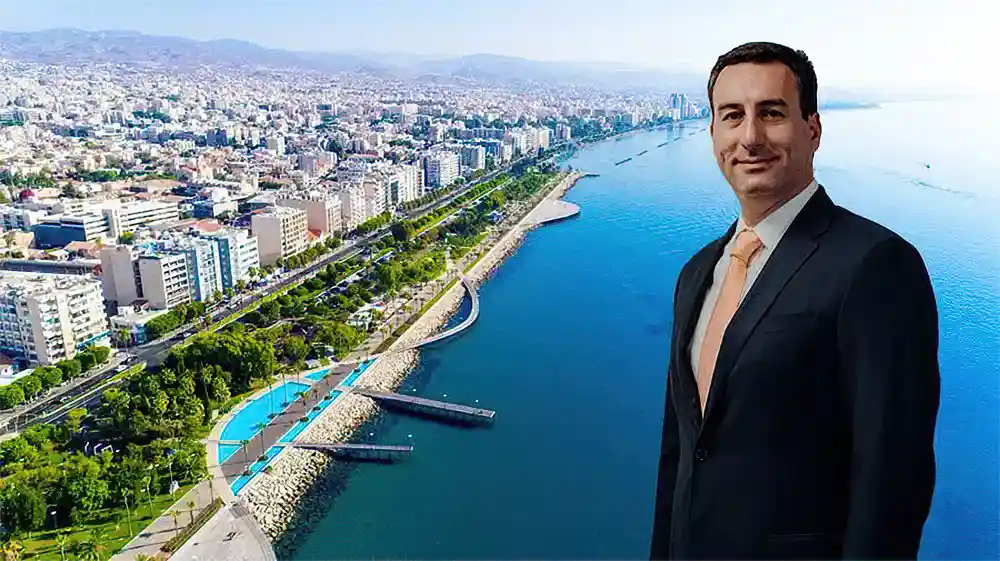
Cyprus is building more homes, but many local households are finding it harder to afford them. Ask Wire founder and chief executive Pavlos Loizou has warned that a sharp rise in building permits could put pressure on parts of the Cyprus property market in 2027 and 2028.
Speaking on Property Talk by Bazaraki, Loizou said the growth in residential construction does not necessarily mean developers are building the homes local residents need. In coastal cities, he said, many projects are aimed at foreign buyers with greater purchasing power.
That leaves the property market increasingly exposed to whether overseas demand can continue. Loizou sees less risk of oversupply in housing designed for local buyers, but is more concerned about developments aimed specifically at foreign purchasers.
“Both can be true at the same time,” he said of rising construction and worsening affordability. The key question, he explained, is who the homes are being built for—and whether demand from those buyers will last.
Building permits point to more homes ahead
The volume of recent building permits is one signal to watch. Ask Wire’s September analysis found that permits for 8,978 residential units were issued between January and May 2026. That was 63.7% more than the 5,484 units recorded during the same period in 2025.
Larnaca saw a particularly large increase, from 953 permitted units to 2,342. Limassol and Nicosia also recorded substantial growth.
Permits do not mean that every home will be built immediately. But projects approved in earlier years are already progressing towards completion, while the latest approvals could add further supply in 2027 and 2028. Whether buyers absorb those homes may depend in part on continued foreign demand.
Sales are rising, but affordability remains strained
Loizou did not describe the property market as having suffered a general collapse in demand. He cited first-quarter 2026 figures showing apartment sales rose across several price bands compared with the same period a year earlier: by 18% for apartments under €200,000, 36% for those priced between €200,000 and €400,000, and 41% for properties between €400,000 and €1 million.
He said activity weakened in the second quarter amid geopolitical tensions. He also noted a growing divide between new-build and resale homes: newly built apartments are driving more transactions, while older properties are losing ground.
Across the market, 14,969 sale contracts were deposited with the Land Registry during the first nine months of 2026, up 13.6% from 13,173 in the same period of 2025.
Yet higher sales do not necessarily make homeownership more accessible to Cypriot households. Construction materials have become about 20% more expensive since 2021, Loizou said, with labour costs also rising. Developers face pressure to pass these costs on to buyers, making higher-income purchasers a more attractive market.
As a result, coastal developments often focus on smaller apartments, investment properties and homes intended to generate rental income, rather than the needs of Cypriot families.
Nicosia’s domestic property market offers a contrast
Nicosia depends more heavily on domestic demand than Limassol, Paphos and Larnaca. Government departments, semi-governmental organisations, banks, universities and related services help support employment and housing demand in the capital.
Loizou called the city “boringly reliable”, pointing to the steadier base of local jobs and residents. He also warned that developers based in Nicosia are looking increasingly towards coastal cities, where foreign purchasers may offer higher returns and faster transactions. That shift could limit the supply of homes aimed at the domestic market.
The affordability challenge is clear in Loizou’s example of a €250,000 apartment. A buyer could need around €50,000 for a 20% deposit, plus €12,500 in VAT if the reduced 5% rate applied to the full purchase price. That would mean €62,500 upfront, before other costs, with the balance requiring mortgage finance.
For a person earning about €1,700 a month, buying alone at that price would be extremely difficult, he said. Younger buyers may therefore rely on two incomes, stay with parents for longer, build on family land or look further from city centres for cheaper housing.
Loizou calls for more public rental housing
Loizou questioned whether restrictions on foreign purchases would resolve the underlying issues, noting the complexity of distinguishing between EU citizens, non-EU nationals and companies established within the bloc. He also raised concerns about proposed restrictions near strategically important sites, including ports.
His broader concern was how property-sale proceeds are used. He argued that money generated through property transactions often goes towards consumption or further housing, rather than investment that supports longer-term economic growth.
He was also critical of relying on incentives to encourage private development, arguing that such measures can raise land values without delivering enough affordable homes. Instead, he called for a stronger state role in rental housing and better use of publicly owned urban land.
One proposal would see public sites used to build homes for long-term rental rather than sale. Loizou also backed progressively taxing idle land to discourage owners from leaving suitable plots undeveloped while infrastructure and planning capacity are available.
He called for property-related databases held by the Land Registry, planning authorities and tax authorities to be linked. Better data sharing, he argued, could improve transparency, administration and tax compliance while reducing bureaucracy.
Other priorities he outlined included limiting further expansion of development zones, encouraging construction on existing land and creating purpose-built accommodation for workers outside major urban centres. Such housing could help address overcrowding among lower-paid workers and support businesses struggling to find homes for staff.
Better property market data could help decision-making
The discussion also covered the growing role of data and artificial intelligence in real estate. Ask Wire, which operates in Cyprus and Greece, analyses property transactions, listings, development activity and environmental risks. Its Edge platform tracks development projects using information from developers, planning processes and property transactions.
Loizou said the company had mapped 1,752 projects since January 2024 and was adding about 60 to 80 projects each month. He cautioned that AI-generated property assessments are only as reliable as the data behind them.
His warning, ultimately, is about the type and timing of new supply. Cyprus may need more homes that local households can afford, while a growing pipeline of developments aimed at foreign buyers could leave some parts of the market more exposed if demand changes.
