Alarm bells as property construction stretched

1

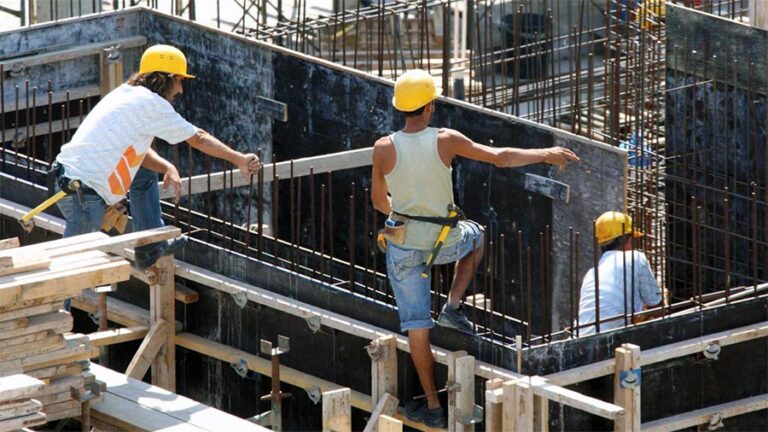
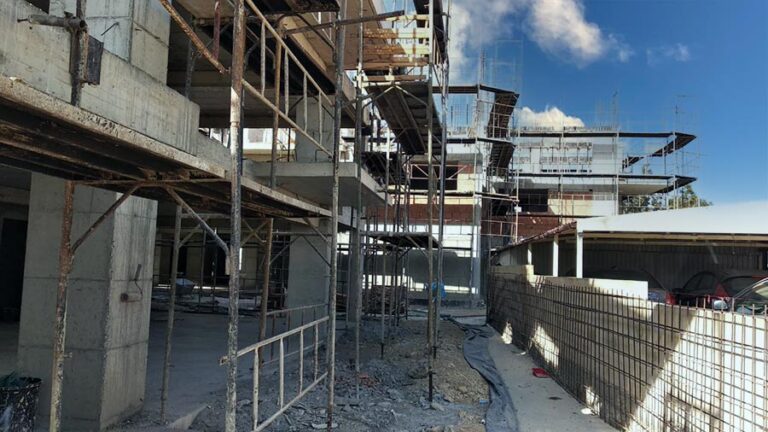
Market insiders warn the economy could be overheating, as the island looks like an extensive construction site, driven by the multitude of projects powered by Israeli investment despite the Hamas war.

They emphasise that Cyprus stands as a secure environment for Israelis, anticipating a further surge in their activities once the conflict is ended.

However, they draw attention to the potential overheating of the real estate market, stemming from the numerous private projects and an unprecedented influx of public works affecting supply as demand rises.

Resilient Market

Recent data from the Land Registry concerning sales documents for the first ten months of 2023 not only mirror the resilience of Cyprus’ real estate but also underscore concerns about market overheating.

According to recent data, the ten-month period marked the industry’s best performance since 2008, recording 12,825 property sales.

These figures represent a substantial increase of 36.2% compared to the previous year, with all districts, except Nicosia (8% increase), witnessing double-digit growth.

Larnaca, in particular, stands out with a remarkable 32% increase compared to last year.

Plan B

In comments to the news site Stockwatch, Michalis Zavos, a Cyprus Land and Building Development Association board member and managing director of the D. Zavos group, said the real estate market continues its upward trajectory, witnessing an estimated 20% annual increase.

He highlighted Cyprus’ favourable conditions as a secure investment hub, especially for foreigners in the Mediterranean region.

“That’s why, for our neighbours seeking a second home, we are Plan B for them.”

Zavos indicates that Israelis are constantly looking for investment opportunities in Cyprus, purchasing land and constructing apartments for significant income, given that rental yields range from 5% to 8%, surpassing the average of 3% in Israel.

Major Public Works

Stelios Gavriel, president of the Building Contractors’ Federation (OSEOK), confirms the upward trajectory of the construction sector, attributing this growth to the absorption of increased construction costs by developers and the robust pace of the market.

Gavriel credited public projects under the – €1.2 billon – Recovery and Resilience fund for contributing significantly to the sector’s expansion and anticipates the government releasing many projects into the market in the new year.

“The construction industry is under strain due to the heightened demand and full capacity utilisation of developers’ machinery; contractors are being assigned multiple projects”.

He said major public projects involve joint ventures of two or three companies, refuting claims that the government favours specific contracting firms.

Recommendations

George Chrysochos, CEO of the Cyfield Group, noted that despite a temporary dip in activity during the initial days of the war in neighbouring Israel, things have returned to pre-war levels of buying and selling.

Chrysochos argues that high property prices in Israel prompt investors to prefer Cyprus, where prices are more attractive.

He underscored concerns about potential market overheating due to the extensive volume of public works across districts.

He highlights the significant demand for housing and office spaces, leading to a surge in private sector projects and exposing challenges such as a shortage of labour and machinery in the construction sector.

Chrysochos suggests the government limits the number of projects injected into the market to address a possible overheating of the industry.

Landmark court ruling on Armou house collapse

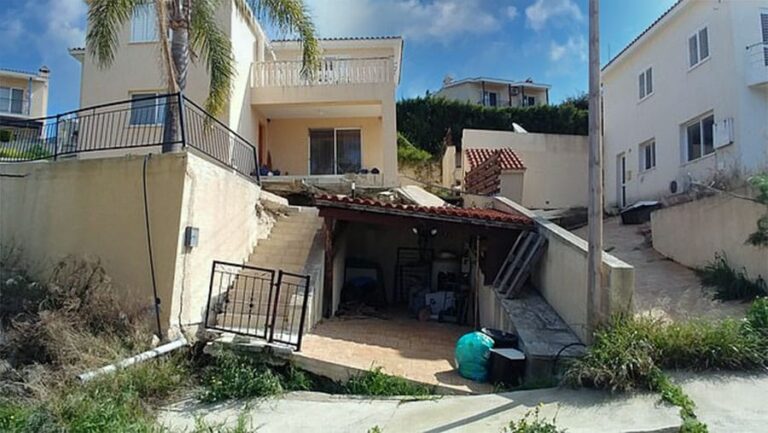
In a ground-breaking decision, the Paphos District Court recently ruled on a case involving a house collapse in the village of Armou, Paphos District, due to subsidence. The court awarded the plaintiffs €256,000, covering the purchase price of the house, along with interest and costs.

The case, handled by Michael Kyprianou & Co LLC, is considered unprecedented in Cyprus. The judge clarified the state’s responsibility, emphasizing the duty of care by its public officials in their supervisory role. The decision underscores the need for system improvement and strengthened control in construction and licensing.

According to a report by PhileNews, the British couple, who purchased the house in 2008, sued the construction company and the Republic of Cyprus. The Attorney General, under Article 172 of the Constitution, is held liable for wrongful acts or omissions by officials. Officials from the Planning and Zoning Department and Paphos District Administration were attributed liability.

The court found negligence on the part of both public authorities. The Planning and Zoning Department failed to propose restrictions on residential development despite geological issues, while the Paphos District Administration neglected due diligence and failed to include necessary conditions in the building permit.

The court concluded that both authorities were negligent, breaching duties under relevant legislation. Based on Article 172 of the Constitution, the Republic of Cyprus is held liable for damagingly unjust acts or omissions by its officials. The judgment highlights the responsibility of public authorities in ensuring safety and upholding their obligations, setting a precedent for future cases in Cyprus.

First published in Knews, the English edition of Kathimerini Cyprus

Construction sector key to Cyprus’ economic growth

Cyprus Land and Building Developers Association (LBDA) president Michalis Hadjipanayiotou on Thursday lauded the local property sector’s robustness, reflected in its ability to navigate numerous challenges, while continuing to contribute to the country’s economic growth.

Hadjipanayiotou’s comments were delivered during his speech at the association’s annual general assembly, held on November 16.

“In these 40 years, our industry has experienced significant growth, evolution, and modernisation,” he said, noting, however, that “it has also faced both small and very large challenges and difficulties”.

“With each new challenge, our association stood present, leveraging the knowledge and expertise, as well as the focus on external matters, of its members, it contributed in collaboration with the relevant authorities to shaping positions and proposals,” he added.

He stated that the association has always been aiming to “strengthen efforts towards modernising the industry, thus remaining a pillar of economic development”.

The assembly, which marked the 40th anniversary of the Cyprus Land and Building Developers Association (LBDA), witnessed the presence of several prominent figures.

These included president Nikos Christodoulides, president of the Scientific and Technical Chamber of Cyprus (ETEK) Constantinos Constanti, and the president of the Employers and Industrialists Federation (OEV) Antonis Antoniou.

Addressing the assembly, Hadjipanayiotou highlighted the real estate and construction industry’s integral role in the country’s economic development and progress.

He praised the sector’s resilience in the face of challenges, citing its significant contribution through attracting investments, employing thousands, and helping Cyprus to evolve.

“We are particularly proud that our association members have contributed collectively to over 80 per cent of the real estate market, building the modern Cyprus. They have shaped the contemporary profile of our country. A profile that has made Cyprus a regional business and investment centre,” Hadjipanayiotou said.

“Marinas, golf courses, office spaces, modern and environmentally friendly residential and commercial properties, and small and large developments are just a few examples of the many developments that compose the new Cyprus,” he added.

Hadjipanayiotou explained that during the last four years, the construction industry has faced a series of serious challenges, including economic crises, health crises, and geopolitical developments with global impact.

“Each time, we had to adapt to new circumstances and create new perspectives to mitigate the consequences both in the industry and in the Cypriot economy,” he said.

“Despite the difficulties and obstacles, the industry demonstrated flexibility, and resilience, and remained upright,” he added.

He explained that the construction sector has significantly contributed to the country’s development, noting that its share of the Gross Domestic Product (GDP) has ranged from 15 to 17 per cent, on average.

“This confirms the significant role it plays in the Cypriot economy,” he said, noting that “even amid the aforementioned changes and challenges, its contribution to the GDP remained at the same high levels, proving its strong foundations”.

He also touched on the construction sector’s contribution to Cyprus’ employment sector.

Citing Department of Social Insurance data for 2023, he said that employees working in the construction industry amount to almost 43,000, the majority of whom are Cypriot citizens.

“Therefore, the construction industry has rightfully been characterised as the ‘engine’ of the Cypriot economy. However, the importance of the industry extends beyond economic development and into maintaining Cyprus’ social cohesion, especially today when the country faces significant economic challenges again,” he stated.

“Industry growth simultaneously means employment enhancement through the creation of new quality job positions and the improvement of the living conditions of our fellow citizens,” he added.

He continued by stressing the fact that “our industry plays a catalytic role in attracting foreign investments.

“By offering attractive prospects for investments in properties that serve the needs and desires of each buyer, we achieved the growth and evolution of the market,” he added.

He said that an indicative aspect of this dynamic of foreign investments is that 46 per cent of property transactions in the first eight months of 2023 come from foreign buyers.

He acknowledged that the incentives provided by the state to attract foreign companies to Cyprus, known as headquartering, played a decisive role in this positive development.

“Cyprus is evolving today into one of the most important destinations for headquartering and a significant hub for service and technology companies,” Hadjipanayiotou said.

“With these facts before us, we can confidently say that Cyprus can and must become a place that attracts capable individuals from the wider region, combining quality of life, work, and entertainment,” he added.

Moreover, Hadjipanayiotou explained that to achieve this, all relevant stakeholders must work together in order to modernise the entire sector, and, consequently, to create a friendlier environment for investors, companies, and their employees, both local and foreign buyers.

Hadjipanayiotou also identified several challenges hindering the smooth operation of the real estate sector, including licensing system upgrades, finding solutions for labour shortages, and promoting sustainable construction in line with the Fit for 55 objectives.

He emphasised that addressing these difficulties and solving problems require coordination and dialogue among all stakeholders and the Ministry of Interior.

He pledged the association’s commitment to leverage its members’ expertise to support the executive and legislative authorities in the coming years.

In closing, the outgoing President thanked the association’s members for their support, expressing confidence in handing over a resilient industry as a result of collective efforts. He promised to remain active in efforts aimed at further improving the sector.

The assembly concluded with a pledge for collaborative efforts to steer Cyprus’s real estate and construction industry towards continued growth and modernisation.

Cyprus real estate market not cooling down

Cyprus’ real estate market is not showing any signs of slowing down, fuelled by foreign buyers, as 2023 is close to becoming the best year since 2008 when a global property crisis kicked in.

Real estate has proven resilient, but stakeholders continue to bank on rising foreign investment despite uncertainty prevailing in the economic environment due to the energy crisis, the increase in interest rates and the Middle East war.

As evidenced by Land Registry figures for sales documents, the first 10 months of 2023 were the best on record for the sector since 2008.

According to the data, sales documents filed until October were 12,825, up from 10,781 last year, marking a whopping 36.2% increase.

This is the best ten-month period since 2008 when sales reached 13,261 units.

In comments to the Financial Mirror, Eleni Averkiou of Danos/BNPRE Group said the real estate market continues its upward trajectory, with developments in neighbouring countries not taking a significant toll.

Averkiou pointed out that Limassol dominates in absolute numbers (4,225), maintaining a noticeable difference of more than 45% from Paphos (2,878), and remains the most popular choice for investment.

Sales documents submitted for Larnaca properties were 2,612, up from 1,976 last year.

Paphos sales increased by 25.3%, reaching 2,878 from 2,297.

A 21.8% rise was also seen in property sales in Famagusta, 14.17% in Limassol and 8.3% in Nicosia.

“It is interesting that all the districts, except Nicosia, recorded double-digit growth.

“Notably, it is Larnaca that stands out when it comes to growth,” said the property analyst.

She noted that sales data show a 32% increase in Larnaca compared to last year.

“Looking solely at growth, Larnaca is the champion in attracting new investment interest after seeing leaps and bounds after the end of the pandemic.

“This is a result of various development and infrastructure projects that have been announced in recent years, giving additional impetus to the market and strengthening investment interest,” said Averkiou.

“Although Nicosia was a fundamentally strong market from the end of 2022 until 2-3 months ago, it relapsed.

“This, however, was something that reversed after the summer”.

Averkiou said that so much of Larnaca’s growth and Nicosia’s return to the market is due to the saturation process in Limassol and prices reaching record heights.

“We have seen interest from companies looking to relocate or set up shop in Cyprus, overspilling from Limassol to Larnaca and, to some extent, to the capital”.

Limited supply of higher end real estate

She said Larnaca is particularly popular with Israelis moving to the island, creating a demand for higher-end properties, for which supply is limited in the district.

“This could well fuel the construction of housing projects in the coming months.

“Receiving requests for Larnaca has more or less become a daily affair, while we have seen employees of Limassol-based high-tech companies seeking homes to rent in the capital.

“Especially from people who can work remotely”.

The real estate agent noted that Nicosia also benefits from Ukrainian refugees who had initially settled in Limassol but have now been outpriced.

Averkiou expects the market and prices to stabilise in the coming year.

“It will also depend on developments regarding the foreclosure law.

“If banks are given the green light to go ahead with foreclosing primary residents, then we could see the pool of available properties grow, boosting sales even further”.

Director of Delfi Properties, George Foukarides, confirmed the real estate market’s flexibility.

“Despite the persistent challenges that are beginning to affect it, the Cypriot real estate market demonstrates remarkable resilience.

“Both domestic and international demand for real estate remains largely unaffected.

“The ever-increasing interest of foreign buyers has proven pivotal at a time when local buyers seem to be more cautious,” said Foukarides.

Special Projects Manager of Delfi Partners and Company, Natasa Apostolou, said, “Cyprus, driven by political stability and an attractive legal framework, is now one of Europe’s fastest-growing investment centres”.

She argued that the revival of the real estate sector is largely due to foreign capital.

“Rapid growth and the inflow of foreign capital have led to an increase in prices while there has been a marked increase in demand for luxury homes and Grade A offices with many foreign companies having moved their offices and staff to the island.

“However, balancing foreign investment with local needs is of utmost importance to achieve and ensure the sustainable and long-term growth of the sector at a time when rising inflation is weighing on the economy.”

Delfi Properties has recently released data on average selling prices of homes per district for the first eight months of the year.

Nicosia has the lowest average sale price for a house at €180,000 recorded from January to August, well behind the Limassol district, where the average sale value is €326,000.

The average price in the district of Nicosia has decreased by -1.2% compared to last year, in contrast to Limassol, where the average price has increased by 11.5%.

The district of Famagusta recorded the biggest increase in the average sales price year-on-year as it jumped by 52.4% to €272,000.

Paphos follows with €230,000 and an increase of 14.4%.

In Larnaca, the average sale price in the first eight months reached €194,000, recording an increase of 8.3%.

Cyprus property values rising, but outlook mixed

Ask Wire, the tech-informed real estate company, has published its Q2 2023 edition of the Ask Wire Index for property sale and rental values. (The Ask Wire Index covers all districts and main property types, with values from Q4 2009.)

Ask Wire reports that while the property market is currently broadly stable, demand for residential properties is expected to decrease in the fourth quarter of 2023.

Property values

On an annual basis, values increased by 12.2% for apartments, 4.6% for houses, 4.4% for offices, 1.2% for retail, 8.8% for holiday apartments, 3.7% for holiday houses. However, values for warehouses decreased by 1.5%.

On a quarterly basis values increased by 2.2% for apartments and 1.3% for offices. Sale values remained stable for houses, retail, warehouses. Values of holiday apartments increased 0.8%, while the value of holiday houses remained stable.

Rental values

On an annual basis, rental values increased by 13.3% for apartments, 9.2% for houses, 6.6% for retail, 9.9% for offices, 13.4% for holiday apartments and 11.0% for holiday houses. However, rental values for warehouses decreased by 0.6%.

On a quarterly basis, rental values increased by 1.8% for apartments, 0.1% for houses, 0.8% for retail and 3.2% for offices. Warehouses saw a decrease of 1.1%, while rental values of holiday apartments and holiday houses increased by 3.5% and 0.3%, respectively.

Pavlos Loizou, CEO of Ask Wire, commented that “The rising trend in property values and rental rates since Q3 2022 isn’t slowing down, particularly due to the increase in prices especially for in Limassol and Larnaca.

“Nevertheless, the blend of political instability in the area, increased inflation, and upward trajectory of prices/rents has established a stable, although high, market threshold.

“Looking forward to Q4 2023, we expect residential property prices remaining fairly steady, despite potentially slower demand and reduced transaction volume.

“We also expect commercial property pricing to come under increased pressure, as alternative investments provide attractive risk-adjusted returns.”

For a breakdown of movements in sale and rental values by district, visit https://ask-wire.com/insights/

Property Type Sale Value Rental Value
Apartments 2.2% 5.6%
Houses 0.0% 6.2%
Commercial 0.0% 3.3%
Warehouses 0.0% 0.5%
Office spaces 1.3% 4.8%
Holiday apartments 0.8% 3.3%
Holiday houses 0.0% 3.2%
Source: Ask WiRE – Across Cyprus: Quarterly percentage change in property values (Q2 2023 with Q3 2023)
Property Type Sale Value Rental Value
Apartments 12.2% 13.3%
Houses 4.6% 9.2%
Commercial 1.2% 6.6%
Warehouses -1.5% -0.6%
Office spaces 4.4% 9.9%
Holiday apartments 8.8% 13.4%
Holiday houses 3.7% 11.0%
Source: Ask WiRE – Across Cyprus: Annual percentage change in property values (Q3 2022 with Q3 2023)

Property values in Larnaca surge due to Israeli interest

Property prices in Larnaca have recently surged to levels akin to Nicosia, largely due to heightened interest from Israeli investors, according to local real estate sector stakeholders.

The Israeli enthusiasm for the region continues despite a slowdown in property sales following the eruption of the conflict with Palestine, pivoting towards rental properties, causing residential rental prices in select areas to skyrocket, rendering them unaffordable for local residents.

According to Vassos Zakos, director of FOX Real Estate in Larnaca, “The interest prior to the war was akin to a strong rain for Larnaca. Although post-war, the number of Israeli inquiries declined, their aspiration remains high. They express intentions to abandon Israel and seek properties in Cyprus, especially in Larnaca.”

Larnaca’s appeal to Israelis stems from its proximity to the airport, growth prospects, and a sizeable Jewish community presence, making it the prime real estate market. “The once lower-priced Larnaca now mirrors Nicosia’s rates, presenting challenges for local Cypriot couples,” added Zakos.

“Prices for new two-bedroom apartments of 80-85 square meters start from €200,000 and rise depending on the area, reaching over €300,000 in areas like Mackenzie. Larnaca, previously much lower than other cities, has reached Nicosia’s levels, posing challenges for new Cypriot couples. We hope the measures announced by the government for affordable housing and rent will assist the local market,” Zakos noted.

The surge in demand has significantly driven up rental prices, worrying experts about the possibility of further price escalation, Themis Anastasiou from Africanos Properties remarked. “Demand from Israelis for short-term rentals has amplified post-war, compelling continuous price hikes,” he added.

Marinos Kineyirou, president of the Cyprus Real Estate Agents Association, cautioned that Larnaca might surpass Nicosia in prices. “The current stagnation in sales, coupled with significant property price hikes, poses a threat of Larnaca surpassing even Nicosia’s rates.

“After the war, demand for rentals from Israelis increased. They seek accommodation for three to six months, leading to continuous price hikes,” Anastasiou added.

Companies express interest to relocate headquarters to Cyprus

The war has led some Israeli companies exploring the option of relocating their headquarters to Cyprus, particularly in Larnaca. However, significant infrastructure for large offices is currently lacking in Larnaca, Vassos Zakos noted. “At this stage, they are conducting exploratory moves because they want to continue their operations. They prefer Larnaca due to the airport and the relationships they have with the city. However, there is currently a lack of infrastructure for large companies in Larnaca, nor are there sufficient apartments for their employees to reside in,” he said.

“The issue of the lack of large offices in Larnaca has long been raised by the Larnaca Chamber of Commerce and Industry (LCCI). Companies wanting to settle in Larnaca currently lack offices. To offer a complete package, there must be accommodation and private schools for the families relocating to Larnaca,” highlighted Charalambos Andreou, LCCI’s Director.

Furthermore, the Israeli interest extends beyond real estate to substantial investments in hospitality and business ventures. “Major investments, such as the redevelopment of the port and marina, stem from Israeli funds,” stressed Andreou.

© 2023 In-Cyprus.com