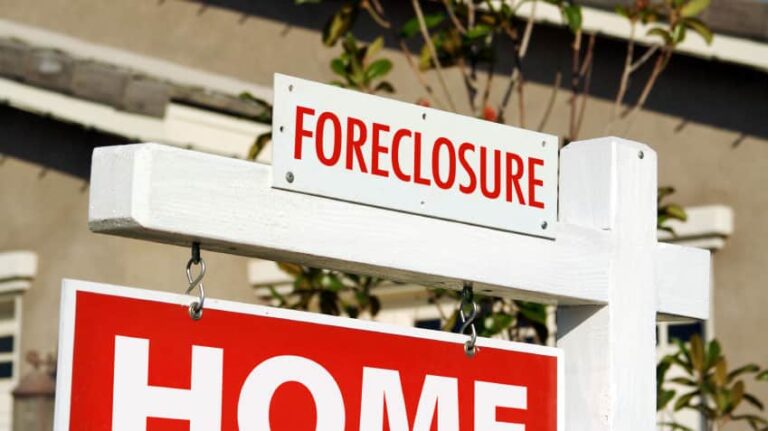
Bills meant to help troubled borrowers withdrawn

Ruling Disy MP Averof Neophytou on Monday withdrew bills intended to provide tax relief to borrowers with non-performing loans, after it emerged that the proposals would achieve the opposite of the stated objective.

Neophytou as well as MPs from the Solidarity and the Citizens Alliance parties had co-sponsored five bills aiming to relieve borrowers with delinquent loans, tied up with a mortgage, of the requirement to pay capital gains tax (CGT) and transfer fees upon completion of a foreclosure procedure.

The obligation to pay CGT falls on the owner of the property.

But under the legislative proposals, payment of these taxes by the property owner – the borrower with non-performing loans – would be deferred to the end of 2021.

This, Neophytou argued, would act as an incentive, encouraging borrowers to keep engaging with banks in restructuring their loans rather than lose their home.

However, a finance ministry told lawmakers that in practice the inverse would occur.

The official pointed out that a property cannot be definitively transferred to the new owner – be it a bank or an individual through an auction – until and unless CGT is paid to the government.

Precisely because of this obligation, in a roundabout way borrowers with a mortgaged property are afforded an extra safeguard against losing their home – as long as CGT remains unpaid the property stays in the owner’s name.

In effect, said the finance ministry official, scrapping the need to pay CGT would speed up foreclosures, to the detriment of the very same borrowers whom Neophytou’s bills purported to help.

On hearing this, Neophytou said he was withdrawing the bills, leaving it to the two MPs of Solidarity and the Citizens Alliance to decide whether to continue sponsoring them.

Edek MP Costis Efstathiou said of Neophytou’s proposals that they amounted to indirect assistance to the banks.

Speaking to the Cyprus Mail later, independent MP Anna Theologou – who sits on the House finance committee – said that several properties put up for foreclosure are currently in limbo status – whereas on the books of the land registry, they cannot be transferred until all taxes are paid.

Since 2015 delinquent borrowers with mortgages may also engage in debt-to-assets swaps with their bank.

Plans to create ‘bad bank’ for non-performing loans

The government has set in motion plans to create a ‘bad bank’ to relieve the Cyprus banking system of an excess of Non-Performing loans, confirmed Finance Minister Constantinos Petrides.

In an interview with Phileleftheros newspaper, he said the bad bank will essentially be established to buy the bad loans and other risky assets of Cyprus financial institutions.

The idea is that Cypriot banks holding significant nonperforming assets will sell these holdings to the bad bank.

By transferring such assets to the bad bank, Cyprus banks can clear their balance sheets of a combined €10 billion in toxic loans.

In the interview, Petrides said the government’s ‘bad bank’ proposal is an ambitious project which will support borrowers who defaulted on their mortgages, to keep their homes.

The plan is to transform the Cyprus Asset Management Company (KEDIPES), a former Co-op subsidiary set up to handle its risky assets following the bank’s takeover by Hellenic Bank in 2018.

“We are currently at an advanced stage of preparing this key policy, to be submitted in the coming weeks.

“The plan is to transform KEDIPES into a national asset management company which will purchase part of the portfolio of Non-Performing Loans of banks.

“Especially those loans to individuals to secure a primary residence or small business,” said the Minister of Finance.

The government plans are subject to approval by the European Commission, as it could constitute state aid.

Petrides’ comments were welcomed by former Finance Minister Harris Georgiades.

“KEDIPES is already established as state ‘bad bank’, which emerged from the agreement regarding the Co-op, and has so far returned to the state cash and real estate worth almost half a billion.

“Today, it can really take the next step, offloading banks of their non-performing loans, with its own resources and options to support those who really need it,” said Georgiades.

The Democratic Party (DIKO), on the other hand, criticised the government, accusing the Anastasiades administration of adopting their 2013 proposal for a bad bank, after ‘scorning’ it for seven years.

“The DISY-led government is solely responsible because valuable time was lost and unfortunately half of the assets of the Cypriot economy were lost to investment funds,” DIKO said in a statement.

The party said that the government’s 180-degree U-turn is proof of its “incompetence”.

Domestic sales hit by pandemic

Property sales to the Cypriot market fell in January compared to January 2020 according to official figures published earlier today by the Department of Lands and Surveys.

Although sales to the domestic market have not been hit by the demise of Cyprus’ infamous ‘Golden Passport‘ Scheme, the impact of the COVID-19 pandemic is taking its toll.

The number of property sales contracts deposited by the domestic market fell 17% in January with 345 contracts being deposited compared with 417 in the same month last year.

Although sales in Limassol rose 5%, they fell by 35% in Paphos, 26% in Nicosia, 13% in Larnaca and 10% in Famagusta.

The actual number of property sales contracts deposited in each of the island’s districts as presented below with the equivalent figures for January 2020 shown in brackets:

Nicosia: 131 (176)
Limassol: 103 (98)
Larnaca: 66 (76)
Paphos: 36 (55)
Famagusta: 9 (10)

However, it’s worth noting that as the freeze on foreclosures of main residences valued up to €350,000 and small business premises that was introduced last year is due to end on 31st March, we may see domestic sales rising as a consequence in the second quarter.

Analysis of property sales since 2000

Cyprus Property Sale Contracts 2000 – 2021

Year Overseas Sales Domestic Sales Percentage
Overseas Sales
Total Sales
2000 450 12,214 3.6% 12,664
2001 1,207 12,849 8.6% 14,056
2002 2,548 14,111 15.3% 16,659
2003 3,981 15,294 20.7% 19,275
2004 5,384 11,947 31.1% 17,331
2005 6,485 10,106 39.1% 16,591
2006 8,355 8,598 49.3% 16,953
2007 11,281 9,964 53.1% 21,245
2008 6,636 8,031 45.2% 14,667
2009 1,761 6,409 21.6% 8,170
2010 2,030 6,568 23.6% 8,598
2011 1,652 5,366 23.5% 7,018
2012 1,476 4,793 23.5% 6,269
2013 1,017 2,750 27.0% 3,767
2014 1,193 3,334 26.4% 4,527
2015 1,349 3,603 27.2% 4,952
2016
1,813 5,250 25.7% 7,063
2017
2,406 6,328 27.5% 8,734
20181 4,367 4,875 47.3% 9,242
2019
4,482 5,884 43.2% 10,366
2020
2,985 4,983 37.5% 7,968
2021
168 345 32.7% 513
Totals
73,828 163,602 30.9% 236,628

1 The Department of Lands & Surveys has advised that overseas sales in 2018 and subsequent year should not be compared to sales in previous years due to changes in the methodology used to classify ‘Aliens’ (foreigners).

Do not tamper with the foreclosure law

Cyprus Central Bank governor Constantinos Herodotou on Friday warned MPs against tampering with the foreclosure law which could lead to further delays in banks tackling toxic mortgages.

Herodotou urged MPs to focus on how the courts can more efficiently deal with financial disputes between borrowers and the banks.

He made the remarks in parliament on Friday, where the Legal Affairs Committee examined article-by-article a revised bill submitted by the Justice Ministry to create special judicial procedures to resolve financial disputes with the banks.

With the creation of a new district court level process to speed up court decisions on financial disputes to examine borrower applications which dispute the balance of a loan due to excessive bank charges.

Many of the loans involved are mortgage-backed, and for which foreclosure procedures have already been launched.

The new system, part of a compromise hammered out by the government and smaller parties to secure their backing for the 2021 state budget, will also cover abusive clauses and overcharging.

MPs from Edek, Solidarity and the Greens also supported amendments to the mortgage law to freeze foreclosures until the court rules on a financial dispute between a borrower and their bank.

Also discussed was the issuing of a temporary order suspending a foreclosure, whereas reservations were heard on whether the definition of vulnerable groups covered enough people.

Responding to MPs, Herodotou argued, “the issue at hand is to ascertain the lengthy Court procedures and address the delays in Court decisions”.

He argued that speeding up court procedures will achieve the protection of vulnerable borrowers.

“Let me be clear, if we touch the issue of foreclosures, we will create new problems…If a patient has a closed artery you perform bypass surgery, you don’t cut off the leg.”

The governor warned that any change in the foreclosure framework would protract the process, endanger bank deposits, or lead to banks increasing financial buffers possibly trough capital requirements.

The Finance Ministry’s permanent secretary Louis Panayi said the revised bill aims to cover vulnerable groups who are either borrowers or guarantors as well as bondholders.

Panayi said the government believed that approval of the bill will expedite financial disputes to the benefit of those affected.

Currently, Cyprus banks have imposed a freeze on foreclosures of primary homes introduced during the first COVID-19 lockdown.

The freeze, valid until the end of March, involves properties which are registered as the owner’s primary home, valued up to €350,000.

Difficult start to 2021 as overseas sales fall

It looks as though 2021 could be a difficult year with a steep fall in property sales to the overseas market in January according to official statistics from the Department of Lands & Surveys.

January saw a fall in sales to the overseas market of 48% compared to the same month last year, with sales falling all districts with the exception of Nicosia (the capital) where sales rose by 16%.

Paphos, the most popular place for British buyers, was hardest hit with sales down 65% compared to January 2020, while sales in Larnaca fell by 62%. Meanwhile sales in Famagusta and Limassol were down 43% and 30% respectively.

The cancellation of the Cyprus ‘Golden Passport‘ scheme in the wake of the Al Jazeera exposé and the COVID pandemic are taking their toll.

We’ve also received reports that some Britons are having difficulties getting loans from Cypriot banks to fund their purchase, possibly as a result of BREXIT as the banks can no longer pursue Brits who default on their loan repayments using ‘EU Enforcement Orders‘.

Total Overseas Property Sale Contracts – 2020/2021 Comparison

District Year Jan Feb Mar Apr May Jun Jul Aug Sep Oct Nov Dec
Nicosia 2020 19 23 15 9 17 11 21 14 21 37 21 20
2021 22
Famagusta 2020 40 29 25 4 20 13 31 30 29 22 21 38
2021 23
Larnaca 2020 71 54 50 11 31 38 59 36 42 52 31 47
2021 27
Limassol 2020 82 89 67 49 39 52 71 51 80 137 88 59
2021 56
Paphos 2020 113 142 55 51 89 83 87 68 88 118 91 84
2021 40
Totals 2020 325 337 212 124 196 197 269 199 260 366 252 248
2021 168

Overseas sales to EU citizens

Property sales to the EU segment of the overseas property market fell 36% in January compared to January 2020 with only Nicosia improving on the number of sale (up 67%.)

Sales in Larnaca were down 67%, sales in Paphos were down 45% and sales in Limassol and Famagusta were down 36% and 17% respectively.

Foreign (EU) Property Sale Contracts – 2020/2021 Comparison

District Year Jan Feb Mar Apr May Jun Jul Aug Sep Oct Nov Dec
Nicosia 2020 9 12 9 3 10 7 16 11 14 16 15 17
2021 15
Famagusta 2020 6 14 10 3 4 9 28 9 6 11 12 12
2021 5
Larnaca 2020 21 13 11 0 3 6 19 17 14 14 10 19
2021 7
Limassol 2020 28 30 11 12 14 15 28 12 39 33 28 25
2021 18
Paphos 2020 40 60 25 24 21 18 44 32 49 42 59 54
2021 22
Totals 2020 104 129 66 42 52 55 135 81 122 116 124 127
2021 67

Sales to non-EU citizens

Property sales to the non-EU segment of the overseas property market fell 54% in January compared to the same month last year with sales falling in all districts.

Paphos took the hardest hit once again with sales down 75%. Sales in Larnaca were down 60%, while sales in Famagusta were down 47% and sales in both Nicosia and Limassol were down 30%.

Foreign (Non-EU) Property Sale Contracts – 2020/2021 Comparison

District Year Jan Feb Mar Apr May Jun Jul Aug Sep Oct Nov Dec
Nicosia 2020 10 11 6 6 7 4 5 3 7 21 6 3
2021 7
Famagusta 2020 34 15 15 1 16 4 3 21 23 11 9 26
2021 18
Larnaca 2020 50 41 39 11 28 32 40 19 28 38 21 28
2021
20
Limassol 2020 54 59 56 37 25 37 43 39 41 104 60 34
2021
38
Paphos 2020 73 82 30 27 68 65 43 36 39 76 32 30
2021
18
Totals 2020 221 208 146 82 144 142 134 118 138 250 128 121
2021
101

Mistakes parents make transferring property

The wealth of most Cypriots (those who still have some) is mainly made up of immovable properties and cash.

So, when it’s time for them to transfer this wealth to the next generation, they usually make three important mistakes that have both financial and psychological consequences.

The first mistake when transferring properties to children has to do with the lack of preparation by the parents.

That means collection and collating basic information related to a property such as documents, contracts, information about professionals who worked on the property (architect, plumber, electrician.)

They instantly make things worse for their children, bringing down the value of the property until these issues are resolved.

A second issue we often observe deals with the inheritance of properties that have high maintenance costs, where beneficiaries sometimes catch themselves wondering if their parents were trying to help or make life difficult for them.

This is the reason why so many buildings are in decline since insurance and maintenance costs are significantly higher than the income they generate (if any.)

Another reason is that, on many occasions, children have neither the time nor the expertise to deal with the management of the property.

In the past, parents took over management, probably because it generated part of the family income, or their environment supported them in running all the errands (e.g., dad doing the repairs, mom collecting rents, the housemaid doing the cleaning, the cousin handling the books (?!).)

How can their children, though, cope with all these new responsibilities when they are already engaged with their own jobs and projects?

This is something we see happening quite often and, at the end of the day, rather than helping them, the inheritance becomes another source of stress, confusion and worries.

Splitting property

A third and equally important, issue we have observed has to do with parents reverting to the standard practice of splitting the property into shares, one for each child.

While this might seem fair to some parents (actually, this is how they get away from having that difficult conversation with their children), in practice, it causes problems to their children, since they usually have different needs and plans.

One child might want to sell because they need cash while another might want to keep the property and rent it out to generate extra income.

We can all appreciate how this practice can stir up disagreements that are not solely related to money.

As a result, parents cause friction between their children rather than helping them.

On top of that, there are those situations where parents, or other relatives, decide to transfer their property to their children under…certain conditions.

A typical example, “I’ll give you the property, but I never want you to sell because it has always been in our family and it means the world to me.”

The unfortunate beneficiary is charged with an illiquid asset and all the expenses that entail, including a major headache.

The progenitor rests blissfully in their grave, trusting that they have helped them financially!

Every parent wants to help their children to improve their economic status.

However, on many occasions, they act hastily and without any preparation or rational thought and, as a result, instead of helping the next generation, they wear them out financially and psychologically.

A properly structured approach needs to be taken when transferring property as part of inheritance if it is to be a true gift and not expensive trouble.

P.S. A similar trait is buying plots and houses for their children next to the family house, so they can “keep the family close,” even though the kids are still in kindergarten.

About the Author

Pavlos Loizou is Managing Director, WiRE FS