Cyprus rental market: Lessons from Europe

0

Housing affordability is rapidly becoming one of Europe’s most pressing economic and social challenges. From major metropolitan hubs to smaller markets like Cyprus, rising prices in the rental market are affecting families, young professionals and businesses competing for talent.

The issue is no longer confined to access to homeownership – it now directly impacts labour mobility, investment flows and long-term economic growth.

Cyprus: is building more homes enough?

In Cyprus, public discussion often centres on a straightforward solution: build more homes. Yet international experience shows that increasing construction alone does not necessarily resolve rental market pressures.

A significant portion of new developments is absorbed by investors, short-term rental platforms or projects designed primarily for sale, limiting their long-term contribution to rental supply.

The rise of build-to-rent (BTR)

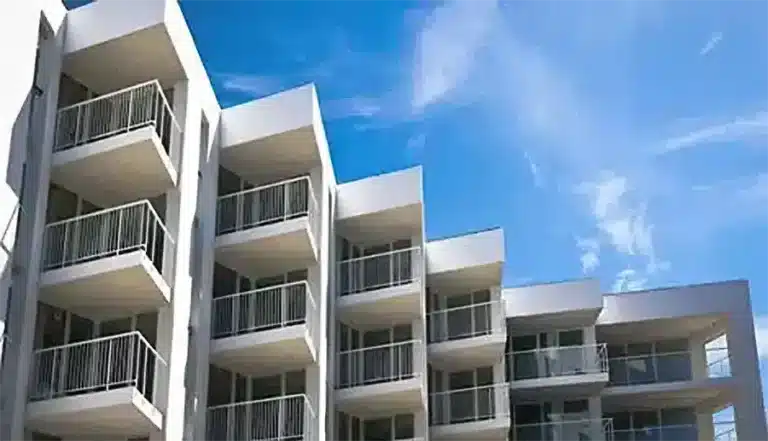
Across Europe, policymakers and institutional investors are increasingly turning to Build-to-Rent (BTR) as part of the solution. The model differs from traditional residential development in a fundamental way: projects are designed from the outset for long-term rental and remain under unified ownership and professional management.

Rather than being sold unit by unit, they are retained as income-generating assets with an emphasis on tenant stability, service quality and consistent maintenance.

The concept is well established in the United States and deeply embedded in markets such as Germany, the Netherlands and Denmark, where long-term renting is socially accepted.

The UK has also seen rapid BTR expansion in recent years, particularly in cities like Manchester and London, where professionally managed developments now form a growing segment of the housing supply.

Shifting housing patterns in Europe

International data from Eurostat highlight shifting housing patterns across Europe, including declining homeownership rates in several countries. While Cyprus maintains relatively low overcrowding levels, high under-occupancy suggests that the current housing stock does not always align with evolving demographic and employment realities.

The lesson for Cyprus is not simply to replicate foreign models, but to adapt their core principle: strengthen the long-term rental sector as a stable pillar of the housing market.

A supply-focused strategy would prioritise housing that remains permanently available for rent, supported by professional management standards and pricing stability.

Addressing the structural rental gap

Build-to-Rent will not replace the broader property market. However, it offers a structured way to address a structural gap – the limited availability of large-scale, professionally managed rental housing that remains consistently accessible to residents over time.

(Summarised from an article in Economy Today)

Germasogeia apartment block still “hanging in the air”

An anonymous complaint recently submitted to the Independent Authority Against Corruption has once again brought to light a serious case of alleged negligence involving a residential apartment development in Germasogeia.

The property in question is a block of apartments on Agiou Ilarion Street in Germasogeia. One side of the building remains effectively “unsupported”, as the required retaining wall has never been built. This has left tenants and residents of nearby homes exposed to potential danger.

Apartment issues ongoing for five years

The matter was first reported five years ago, yet no substantial action has been taken since. Residents continue to live with uncertainty, while buyers of the apartments have still not received their title deeds.

A formal complaint was lodged against the local municipality, claiming that the failure to construct the retaining wall poses a serious safety risk not only to the building’s occupants but also to neighbouring properties.

No evidence of corruption, but safety concerns remain

After reviewing the complaint, the Independent Authority Against Corruption said the case involves two aspects:

  • Allegations of corruption
  • A matter of public safety

Regarding corruption claims, the Authority stated that, without further evidence, the case does not fall within its legal powers under the 2022 law governing its operation.

However, it stressed that it could not ignore the potential safety risk. According to the complaint, the absence of a retaining wall may endanger residents, particularly those living at a lower elevation. The Authority noted the possibility of injuries or even loss of life and has contacted the relevant municipality by letter, urging immediate action.

Mayor: Efforts ongoing despite delays

The Mayor of Amathounta, Kyriakos Xydias, confirmed that while no corruption was found, the municipality has been urged to take steps to protect residents.

“It is something we are trying to resolve in any case. We have made several attempts,” he said, acknowledging that obstacles and complications have delayed progress.

According to the mayor, a solution proposed in 2021 involved constructing a large retaining wall in cooperation with the owners of plots located below the apartment block, as technically there is no other way to carry out the works.

Although the proposal was accepted, the project stalled after the main affected landowner, who is reportedly facing health issues, refused access to his property.

Apartment buyers without title deeds

The ongoing delay has left apartment buyers trapped in limbo for decades. The development has never been fully completed, the retaining wall remains unbuilt, and title deeds have not been issued.

As the case resurfaces, pressure is mounting on local authorities to finally resolve a situation that continues to raise serious safety and property concerns in the Limassol district.

Update: Dual British–Cypriot nationals must use UK passport to enter UK

A significant change affecting dual British–Cypriot nationals has now come into effect. As of 25 February 2026, individuals who hold both British and Cypriot citizenship must enter the United Kingdom exclusively using their UK Passport. This update follows new guidance issued by the UK authorities and communicated publicly by the Cyprus High Commission in London.

What has changed?

Under the UK’s updated border entry rules, dual nationals are no longer permitted to enter the country using their non-UK passport. Even if a traveller holds a valid Cypriot passport, they could face denial of entry unless they present a valid UK Passport at the border.

This change is closely linked to the rollout of the Electronic Travel Authorisation (ETA) system, which now applies to all non-visa nationals entering the UK. While Cypriot citizens normally fall under the ETA scheme, British citizens are exempt. The UK government has therefore clarified that dual nationals must enter as British citizens, not as EU nationals.

Practical implications for travellers

Dual British–Cypriot nationals should take note of the following:

  • A UK Passport is now mandatory for entry, regardless of whether the traveller also holds a Cypriot passport.
  • Travelling with only a Cypriot passport may result in denied boarding by airlines or refusal of entry upon arrival in the UK.
  • The requirement applies to all forms of travel – air, sea, and land.
  • The rule does not affect the right of abode or immigration status of British citizens; it only concerns the document used for entry.

Alternative proof of right of abode: Certificate of entitlement

The UK recognises only one alternative to a UK Passport for proving the right of abode: the Certificate of Entitlement. This certificate is affixed to a foreign passport and confirms that the holder has an unrestricted right to live and work in the United Kingdom. Importantly, individuals travelling with a Certificate of Entitlement do not require an ETA.

However, the certificate:

  • must be reissued each time a new passport is obtained, and
  • currently carries a fee of £589 (€679.65).

While legally valid, this option is significantly more costly and administratively burdensome than maintaining a valid UK Passport.

Why the UK implemented this requirement

The UK’s ETA system is designed to enhance border security and streamline entry procedures. Since British citizens are exempt from ETA requirements, the UK government now requires dual nationals to enter using their British identity to ensure consistency with the system’s legal framework.

This approach aligns with practices in other jurisdictions, where dual nationals are often required to use the passport of the country they are entering.

Recommended actions for affected individuals

It is important for everyone who hold both nationalities to:

  • Check the validity of their UK Passport well in advance of travel.
  • Apply for renewal early, as processing times may vary.
  • Avoid relying on their Cypriot passport for UK entry, even if it is more convenient or recently issued.

For families with children who hold dual nationality, it is essential to ensure that minors also possess valid UK Passports before travelling.

Conclusion

Travellers who hold both British and Cypriot citizenship should review their documentation well in advance of any planned trip to the UK. Our firm can advise on passport renewals, nationality matters, and the practical implications of the new entry rules. For personalised assistance, please feel free to contact our office.

Nikolas Avgousti
Associate at Philippou Law Firm

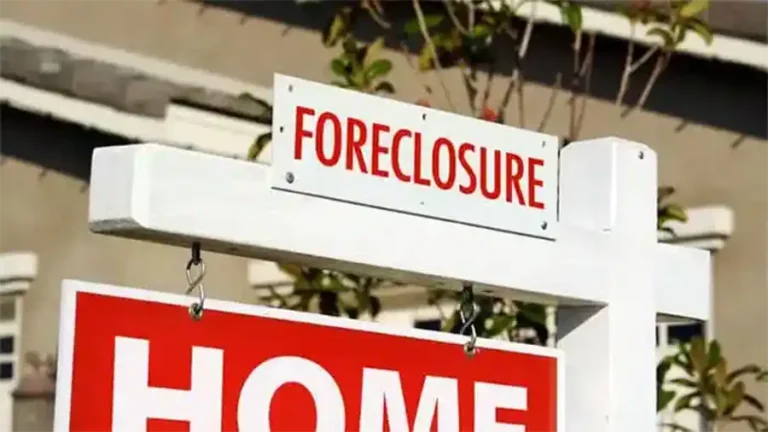
Bill set to reform property foreclosures in Cyprus

The Democratic Party (DIKO) has submitted a new bill to Parliament aimed at resolving the long-running issue of property foreclosures in Cyprus.

Speaking at a press conference on Friday at the party’s headquarters in Nicosia, party leader Nikolas Papadopoulos said the proposal would allow the Supreme Court of Cyprus to appoint specialist judges to handle financial and mortgage-related disputes more quickly.

Specialist judges for financial disputes

According to DIKO, the proposed law would enable the Supreme Court to appoint judges with expertise in financial matters. These judges would deal with cases involving disputes between borrowers, guarantors and lenders.

The cases could include disagreements over:

  • The total size of the loan
  • The outstanding balance
  • Allegedly unfair contract terms
  • Any other issue arising from the loan agreement

Mr Papadopoulos said Cyprus is currently experiencing some of the strongest economic conditions in its history, making it possible to fully address the foreclosures problem.

Nine-month suspension of foreclosures notice

Under the proposal, a mortgage debtor would have the right to apply to the court to set aside a foreclosures notice. The court could then issue an order suspending the notice for up to nine months.

After this period, the mortgage lender would be allowed to issue a new foreclosure notice, unless the court decides otherwise.

DIKO argues that this nine-month window would give borrowers time to negotiate and seek a settlement, while ensuring that cases are handled swiftly by specialist judges.

Faster decisions and fairer outcomes

The party says the reform would encourage quicker court decisions and out-of-court settlements. With a clear nine-month timeframe, both sides would have an incentive either to resolve the dispute or proceed promptly to judgment.

Mr Papadopoulos stated that the proposed amendment, together with cooperation between the executive and judicial branches, would provide a comprehensive solution to the foreclosures issue.

He added that the framework would reward responsible borrowers while preventing abuse of the system by strategic defaulters.

The bill is expected to spark further debate within Parliament as Cyprus continues efforts to stabilise its property and lending sectors.

Shrinkflation: smaller apartments, same bedrooms, same price

In recent months, Cyprus developers have intensified pressure on the government to relax planning regulations by reducing minimum apartment sizes and abolishing mandatory parking requirements per unit.

The argument is simple and appealing: smaller homes and fewer parking spaces will reduce construction costs and make housing more affordable.

Prices will not be reduced

The million – Dollar (or Euro) question remains: will prices really fall? As someone who works daily with real transaction data, supply pipelines, and buyer behaviour, I believe this narrative needs to be challenged.

International experience suggests that shrinking apartments does not lead to lower prices. Canada provides a clear warning. Over the past 15 years, cities such as Toronto and Vancouver reduced minimum unit sizes and relaxed parking requirements to accelerate housing delivery. The result was a textbook case of housing shrinkflation. Average new apartments became 15–25% smaller. One-bedroom units that were once 50–55 sqm are now commonly delivered at 38–45 sqm. Two-bedroom units followed the same trajectory.

Prices did not fall. In many cases, the absolute selling price remained broadly unchanged, while the price per square metre increased sharply. Savings from reduced parking — often €25,000–€60,000 per space — were real, but they were not passed on to buyers. Instead, they were capitalised into land prices and developer margins.

This outcome was sustained by a specific market cycle. During the pandemic, ultra-low interest rates pushed investors into residential property, reinforcing the belief that prices could only rise. Developers responded rationally by maximising unit counts and yield rather than liveability. Small units sold easily, regardless of quality.

When interest rates later rose to combat inflation and supply caught up with investor demand, the market changed. Oversupply became visible — particularly in small, investment-driven units. The buyer base began to shift away from short-term investors toward longer-term occupiers and households intending to live in the properties they bought. The problem was that much of the stock being delivered was not designed for them.

A cautious approach is required

Cyprus risks following the same path.

Today, the buyers of new apartments in Cyprus are predominantly investors, foreign purchasers, and second-home buyers, especially in coastal cities. These buyers are relatively insensitive to size; they care about location, yield, and exit liquidity. As long as demand is driven by this group, reducing apartment sizes will not reduce prices. It will simply reduce space.

Cyprus also carries an additional risk that many other markets do not: geopolitics. External shocks, regional instability, and sudden changes in migration or capital flows can quickly alter demand. If investor demand weakens, Cyprus could be left with an oversupply of small, compromised units ill-suited to local households.

Removing parking requirements in a car-dependent country does not eliminate cars; it shifts congestion and cost to streets and municipalities. Shrinking homes does not create affordability; it creates density without liveability.

Affordability will not be solved through technical deregulation alone. It requires structural supply, infrastructure-led planning, diversified housing tenures, and mechanisms that ensure any cost savings reach end buyers rather than being absorbed upstream.

Shrinkflation is not housing reform. It is a quiet transfer of space away from residents — while prices remain exactly where they are.

About the author

Pavlos Loizou is the Founder and CEO of Ask Wire, a real estate data analytics company redefining how real estate professionals, investors, and institutions access and interpret property intelligence.

Cyprus moving to restrict non-EU property purchases

A single bill that would limit property purchases by non-EU nationals is expected to be brought to the full House of Representatives for a vote before Parliament ends in mid-April.

The bill combines four different proposals into one. Today, the House Internal Affairs Committee looked at it again. Members agreed to join the four proposals together because they were very similar. They also added suggestions from the Ministry of the Interior to create one clear and complete draft.

The Chair of the Committee, Aristos Damianou, said the new draft should be ready within two weeks. After that, it will be discussed and voted on quickly, so it can be approved before the current Parliament finishes its term.

Dutch disease warning for the Cyprus economy

During the meeting, Michalis Persianis, President of the Fiscal Council, warned that Cyprus does not have a clear plan for managing foreign investment, especially in property.

He said this could lead to what is called “Dutch disease.” This happens when too much foreign money flows into one sector, like real estate, and harms the rest of the economy.

He warned that large amounts of foreign money coming in, without strong controls, could create social problems and economic risks. He said Cyprus is already starting to show signs of this problem and that the government should act quickly. He added that limiting property purchases by non-EU buyers would be a good first step.

Ministry reservations and technical hurdles

A representative from the Ministry of the Interior shared some concerns about how the new law would work.

The Ministry is worried about:

  • How to clearly define who can and cannot buy property
  • Possible delays at the Land Registry, which would check these purchases
  • The fact that some important rules are currently set through regulations instead of law, which takes longer to change

The Ministry suggested that these rules should be written directly into the law to make the process faster and clearer.

There were also concerns about how to control property owned by companies, which can be more complicated.

Fragmented public records system

Officials from the Registrar of Companies said there is currently no official certificate that clearly shows who the real owner (beneficial owner) of a company is, as some proposals suggest.

They also explained that different government departments do not have fully connected digital systems. This makes it harder to quickly check information about company owners and shareholders. This could make it more difficult to enforce the new rules.

Concerns from lawyers

The Cyprus Bar Association also expressed concerns about how wide the restrictions would be.

Issues being discussed include:

  • What types of property would be restricted
  • The maximum size of land allowed
  • Whether there would be limits in certain areas
  • Properties sold by investment funds with non-EU shareholders
  • Sale contracts already filed at the Land Registry involving companies owned by non-EU nationals

Rising prices and land in non-EU hands

After the meeting, Mr Damianou said that a large amount of land in Cyprus is now owned by non-EU nationals. He said this is sensitive because of Cyprus’ political and geographic situation.

He also connected foreign property purchases with rising prices, especially in cities. Housing has become much more expensive, making it harder for Cypriots to afford homes.

However, he said it is positive that many groups, including the Ministry of the Interior, generally agree with the proposals. He has taken responsibility for combining the four proposals into one final draft and has been holding meetings to make sure the government supports it.

The updated proposal is expected within about 15 days, so Parliament can vote before it dissolves.

Reinstating stricter controls

Mr Damianou also said that in the past, Cyprus had clearer and stricter rules about property purchases by non-EU nationals. Over time, government decisions made those rules more relaxed. This allowed non-EU buyers to purchase many types of property, including beachfront land and hotels.

He said this must stop. The new law would set firm limits on the type, size, and location of property that non-EU nationals can buy. This would be a major change in the Cyprus property market.