Cyprus at number twelve in Top of the Props

CYPRUS climbed one place to number twelve in the August edition of the ‘Top of the Props’ published by the property portal TheMoveChannel.com.

The USA reclaimed the number one spot from Spain accounting for more than a quarter of those looking for overseas property. Portugal and France came in third and fourth, followed by Italy, Turkey, Brazil and Greece, with Germany and Cape Verde at numbers nine and ten respectively.

TheMoveChannel.com Director Dan Johnson comments: “With the market recovery in full swing, US real estate is the most attractive in the world right now. Rising values have boosted investor confidence, while also driving buyers to secure strong rental yields before prices get too high.

“In Europe, though, it is the opposite story: falling values are driving demand, with bargain hunters returning to old favourites where places in the sun are no longer out of their reach. Spain and Portugal have both seen demand surge, helped by recent announcements of residency laws designed to attract non-EU buyers. Greece now looks set to follow suit.”

Greece jumped eight places in the chart, boosted by price reductions and the introduction of residency laws for non-EU investors, which offers five years of residence to investors who spend at least €250,000 on Greek real estate.

The full breakdown of the August 2013 edition of the Top of the Props chart is as follows:

Rank
Country
Share
Change
1 USA 27.26 Up 1
2 Spain 7.55 Down 1
3 Portugal 6.78 No change
4 France 5.33 No change
5 Italy 4.89 Up 2
6 Turkey 3.76 No change
7 Brazil 3.31 Down 2
8 Greece 3.26 Up 10
9 Germany 2.51 Up 8
10 Cape Verde 1.79 Up 4
11 Canada 1.77 Down 2
12 Cyprus 1.76 Up 1
13 Thailand 1.67 Down 5
14 India 1.58 Up 17
15 Bulgaria 1.41 Up 4
16 Malta 1.31 Down 5
17 Croatia 0.94 Down 7
18 Dominican Republic 0.83 Down 2
19 Hungary 0.80 Down 7
20 St Kitts and Nevis 0.67 Down 5
21 UAE 0.59 No change
22 Senegal 0.50 No change
23 Barbados 0.46 Up 5
24 Ecuador 0.42 No change
25 Egypt 0.39 Down 3
26 Grenada 0.37 Down 2
27 Austria 0.31 Up 16
28 Montenegro 0.31 Up 7
29 Cayman Islands 0.30 Down 9
30 St Lucia 0.27 Down 4
31 Poland 0.24 Down 6
32 Morocco 0.22 Down 9
33 Switzerland 0.20 Up 3
34 Australia 0.18 Down 1
35 Belize 0.17 Down 6
36 Jamaica 0.16 Down 6
37 Romania 0.15 Down 10
38 South Africa 0.14 Up 7
39 Philippines 0.11 Up 9
40 St Vincent and Grenadines 0.09 Down 8

TheMoveChannel.com is an overseas property search portal and its ‘Top of the Props’ chart is based on the number of on-line enquiries for property in different countries around the world.
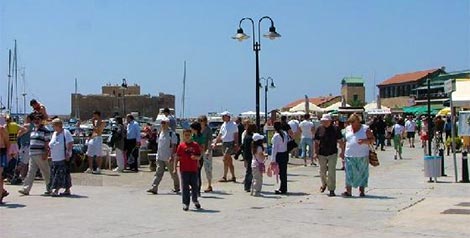
Brits continue to set up home here

Brits at home in CyprusAFTER the turmoil of the banking crisis in March and fears about foreigners flocking from the island, those in the industry in Paphos say more have arrived in the last few months than have left.

Owner of Peter Morton Removals – PMR – which has been operating in Cyprus for more than eight years – says the last eight months in particular, have seen a massive increase in the number of expats moving to the island.

“Previously our ratio of people of all nationalities leaving Cyprus to those coming here to live was about 80/20. This year, this figure has now changed to about 50/50 and most of them are British,” he said.

Natalie Alexiou of Alexiou Real Estate agreed. She said an increasing number of British clients have approached her in recent weeks, with the intention of renting property in Paphos.

“Most of them are looking for short term rentals though. I presume this is to see if they like living here. Most are requesting three or six month contracts.”

However, Alexiou said she believes it will be some considerable amount of time before the British purchase real estate in Cyprus and show trust the banking system again. “People are being very cautious”.

And their sentiments were reflected by a third company – rental specialists 123-asap, which said a steady flow of Brits are still moving to Paphos.

“We have all sorts of people looking for homes. They have moved here from the UK and are interested various types of properties, from the villages to the Tomb of the Kings road,” a spokesman said.

“They haven’t been put off by the banking crisis at all,” she said.

Morton says that recent weeks have become so busy for their team two new members of staff are being employed to help with the work load.

Although many Brits are aware of friends or acquaintances leaving the island, he says they are probably unaware of the vast numbers moving here.

“The problem is, people only know about their friends who are leaving, obviously they don’t know about the hundreds arriving from the UK.”

According to Morton, most of the people arriving from Britain are either retirees or those with money.

“It’s very hard for young families to earn enough money here to support themselves and their kids. We are seeing more middle aged and older people coming to live here. We thought people would be put off by the banking crisis but that hasn’t been the case. Maybe they were already committed to leaving and some are leaving their cash in the UK to draw out whenever they want.”

As the property market is moving in Britain again, Morton believes more Brits have the ready cash to move to Cyprus.

He said UK families and individuals relocating to Cyprus are choosing areas all over the island, but the favourite destination remains Paphos, with many choosing to live in Peyia.

One such couple is Carole Rainford, 70, and her husband David, 60. They moved to Paphos from near Bath in the UK on April 1, undeterred by the banking crisis which shook the island just a couple of weeks before.

“The problems being encountered in Cyprus didn’t put us off moving here, we love it and haven’t regretted our decision at all,” Carole said.

“We decided to move here for a number of reasons; our daughter lives here, we love the island, the weather and the taxation is much better here than in the UK.”

However, the couple decided not to transfer a substantial amount of money to Cyprus, instead leaving deposits in the UK. They also elected to rent a property and not buy one.

“We would seriously consider moving more funds to Cyprus when the financial situation here becomes more stable,” she said.

“A number of our friends in the UK are also seriously considering moving to Cyprus,” she added.

Brits continue to set up home in Cyprus

Town Planning Amnesty extended to 2014

INTRODUCED in March 2011, Cyprus’ Town Planning Amnesty is designed to resolve some of the problems affecting an estimated 130,000 properties that have yet to be issued with their Title Deeds.

The amnesty enables owners of houses and apartments to ‘legitimise’ planning infringements (on payment of a fine) and secure a Final Certificate of Approval and subsequently, the Title Deed.

Only ‘minor’ infringements – such as closing up a balcony or building a garage – may be legalized in this way. The amnesty excludes cases where irregularities affect third parties or encroach on state property, or for flagrant violations such as the building ratio having been exceeded by 30 per cent or more.

In cases of flagrant violations, the owner will be barred from selling the property although they will be able to bequeath it in their Will.

The amnesty only applies to “existing buildings” which, according to article 10D of the Streets and Building (Revised) Law 2011, are those that have a Planning and/or a Building Permit (although they may have expired). The building must have been completed before the above law came into force on April 7, 2011.

According to the latest law reform the period for the submission of a statement of intent by owners of buildings with irregularities expires on the 30th April 2014. Statements may be submitted by purchasers of individual properties (second homes or apartments) where the owner himself is not willing to do so.

Further reading

Town Planning Amnesty Bulletin

Town Planning Amnesty Explained – presentation by Yiannis Koutsolambros of the Scientific and Technical Chamber of Cyprus

Declaration of Intent form under the Streets and Buildings Regulations Law

Declaration of Intent form under the Town and Country Planning Law

Note that it is the Greek language declarations that needs to be completed and submitted (the English translation in the declarations above are for guidance only).

Affidavit of Applicant (Greek)

The Streets and Buildings (Amendment) Act 2013 (Greek)

The Town and Country Planning (Amendment) (2) Law of 2013 (Greek)

The world’s weakest housing market

THE influential Global Property Guide recently published the findings of its global house price survey covering forty two locations around the world ranging from Iceland to New Zealand.

According to its survey, Cyprus was the worst performing housing market globally during the year to Q2 2013, with house prices in the capital, Nicosia, plummeting 12.74%; the country ‘s biggest house price fall in recent years.

Greece came second in the list of the world ‘s worst performers, with house prices dropping 11.12% during the year to Q2 2013 – a slight improvement from the 12.73% year-on-year drop seen in Q2 2012.

Although house prices in some countries have improved sharply, the twelve weakest housing markets in the Global Property Guide global survey were all in Europe.

global house price survey

Deposit interest rates fall while loan interest rates rise

ACCORDING to new data provided by the ECB (August 2013), despite the fact that interest rates for deposits in Cyprus have decreased dramatically (something that should have been done a long time ago), loan deposit rates for households and businesses are on the increase. 

Data published by the ECB indicate that the great reduction of deposit interest rates at the rate of 2% has not brought about any reduction to lending costs due to the fact that lending costs have increased to a significant extent. Unfortunately, it has been proven that announcements made by banks regarding reductions of interest rates for loans were not true.

The ECB reports that interest rates for business loans have increased at the rate of 6.50% (in July 2013) in relation to 6.35% in June 2013. It is worth mentioning that such interest rates are the highest in the Eurozone, much higher than those in Greece (5.80%) (in Greece, interest rates for loans for large and small and medium enterprises were slightly reduced from 5.84% to 5.80%). It is remarkable to note that interest rates for business loans are almost 3.50% higher than the average interest rates for business loans in the Eurozone (3.30%) (ECB 2013).

Furthermore, interest rates for housing loans in Cyprus increased from 5.37% (in June 2013) to 5.60% (in July 2013). According to data provided by the ECB (2013), the average interest rate for housing loans in the Eurozone is 3.28% – much lower than the interest rate for our own housing loans.

Such increase in the interest rates for loans is noted at such a time when interest rates for deposits are on their downfall (they are at their lowest level since 2008). Interest rates for new deposits in Cyprus have been reduced from 2.34% to 2.24% since June 2013 and from 4.50% in the same month in 2012.

There are certain possible reasons for such increase in interest rates. Since new loans are only a few, it seems that this increase emanates from existing loans. When banks ‘restructure’ a customer’s loan, such ‘restructuring’ is usually accompanied by something in consideration: the increase of the interest rate (‘re-pricing’). Such increase (even nowadays) is often set at the rate of 1-3% (this depends of course on the level and basis of the existing interest rate). As a result of these restructurings, households and businesses are unable to repay their loan instalments which already bear high interest rates (the highest in EU) as stated above.

Institutional stakeholders should wonder how large and small-to-medium businesses will be in a position to repay loans which bear interest rates at the level of 7.0-9.5%. This policy has affected and still affects Cypriot households and businesses. As a result, non-performing loans in the banks’ portfolios are on the increase and loan restructurings which are still made to this day have the effect of increasing interest rates (bankers will ‘correctly’ attribute the particular interest rate increase to the “increased” risk assumed by the bank for restructuring the particular loan).

We believe that this is the time for making radical changes – the announcements made by Banks to the effect that interest rates will be reduced by 0.25%-0.5%, are not sufficient in order to assist over-indebted households and businesses to breathe.

We are in need of the immediate intervention by the government as well as quick reforms…

Dr. George Mountis
Managing Partner
Banking | Wealth & Trust | Asset Management

The Parthenon Partners & Co

Tel: + 357 – 99 49 41 42
Email: [email protected]

Rules to limit risks for home buyers

HOME buyers would be better informed about the costs and risks of taking on a mortgage, partly shielded against market swings that inflate their repayments and better protected if they default on the loan, under new rules provisionally approved by the European Parliament on Tuesday.

But before finalising these rules, MEPs wish to fine-tune them to ensure that they are properly enforced across the EU.

The legislation will cover mortgages on residential property, residential property including an office space and building land. Some of its requirements would be adapted to reflect differences among EU member states’ national mortgage and property markets, but the information for buyers would have to be presented in a consistent format across the EU.

Before the contract is signed

Anyone signing up for a mortgage in the EU should receive comparable information about the products available, and understand the total cost and long-run financial consequences of taking out the loan. Credit terms offered to borrowers would have to match their current financial situation and take account of their prospects and possible downturns.

Moreover, buyers would have to be given a mandatory 7-day reflection before signing the loan, or a 7-day right of withdrawal thereafter.

While it lasts

MEPs inserted more flexible rules, including a borrower’s right to repay the loan early, subject to possible conditions to be decided by EU member states, and a lender’s right to fair compensation for such early repayment. However, obliging borrowers to pay penalties for early repayment would be prohibited.

Under the new rules for loans denominated in a foreign currency, the borrower should be warned before signing the contract that the instalments payable could increase. Alternatively, the borrower could be allowed to change the currency, on certain conditions and at the exchange rate stated in the loan contract.

Protection against default

MEPs added a new rule stipulating that the return of collateral such as the property itself will suffice to repay the loan, provided that the lender and borrower expressly agree to this in the contract.

Where a borrower defaults on a loan, the legislation should include requirements to sell the property for the “best effort” price and to facilitate the remaining debt repayments, so as to protect consumers and prevent their becoming over-indebted for long periods, say MEPs.

Next steps

MEPs adopted the final wording of the text, but before approving the rules overall, Parliament wants EU member states to undertake to ensure that they are properly enforced on their territory, i.e. throughout the EU.

Procedure: Co-decision (Ordinary Legislative Procedure), 1st reading

REF. : 20130906IPR18832

Further reading

Parliament outlines rules to limit risks for home buyers