Home Blog Page 659

Cyprus national economic accounts 2007 – provisional estimates

The Cyprus Statistical Service has released its report “National Economic Accounts 2007 (Provisional Estimates)”. A summary of the report follows; the full version is available from the Statistical Service’s website.

Main Economic Developments in 2007

The Cyprus economy continued its expansion through the year 2007 at a higher pace, in comparison with the previous year. The Gross Domestic Product growth rate is provisionally anticipated to be of the order of 4.4% for 2007 compared to 4.0% in 2006.

The main stimulus to growth in 2007 was provided by the tertiary sector (mainly Financial Intermediation, Real Estate, Renting and Business Activities and Wholesale and Retail Trade) expanding by 4.7% in real terms in 2007, compared to 4.6% in 2006. The secondary sector is exhibiting a real growth of 3.8% (mainly Construction) compared to 3.0% in 2006. On the contrary, the primary sector is recording a negative growth rate of -2.2% in 2007 compared to -3.6% in 2006.

Sectoral developments in 2007

The sector of Agriculture, Hunting and Forestry is exhibiting for fifth consecutive year negative growth rate of -2.3% in its value added, compared to -4.5% in 2006.

The Manufacturing sector is recording a higher growth rate of 2.1% in comparison to the 0.7 growth rate of 2006. Moreover, the Electricity, Gas and Water supply sector continues its expansion in 2007, registering a 3.1% growth rate compared to 2.4% in 2006.

Construction continues its expansion with high growth rates since 2001, recording a growth rate of 5.7% in 2007, compared to the 6.0% in 2006.

Hotels and Restaurants sector is exhibiting, for a third consecutive year, positive expansion after three years of negative growth rates, reflecting the gradual improvement of Tourism activity the last three years. Particularly, Hotels and Restaurants shows 2.8% growth in comparison to 2.7% in 2006.

The Wholesale and Retail trade sector registers a high growth rate of 5.5% in 2007 as against 5.2% in 2006. Transport, Storage and Communication, which recorded exceptionally high growth rates in 2004 and 2005 of 13.3% and 8.5% respectively, records a slowdown in 2006 and 2007 with real growth rates of 1.7% and 2.5% respectively. Furthermore, Financial Intermediation continues its expansion with high growth rates, recording a growth of 11.0% growth rate compared to 8.1% in 2006.

The Real Estate, Renting and Business activities continues its expansion with high growth rates, recording a marginally reduced 6.8% growth rate compared to 6.9% in 2006, while the growth rate of other Community, Social and Personal Services has increased to 4.8% in 2007 from 3.0% in 2006.

Furthermore, Public administration and Defence, Education and Health and Social work are exhibiting real growth rates of 1.0%, 2.2% and 2.2% in 2007, which are lower than those in 2006 of 3.0%, 3.0% and 3.9% respectively.

Expenditure on G.D.P.

Private final Consumption Expenditure is expected to register a 6.2% real growth rate compared to 4.2% in 2006. Moreover, Gross Fixed Capital Formation records an increase by 6.3% in 2007 compared to the 7.3% recorded in 2006.

Government final Consumption Expenditure is exhibiting a negative growth rate of -1.7% in 2007, compared to a high increase of 7.4% in 2006.

Exports of Goods and Services register an increase of 4.3% in 2007, lower than the real growth of 4.5% in 2006. Imports of Goods and Services record a growth of 6.9% in 2007, compared to a real growth of 6.6% in 2006.

Productivity

Productivity, as measured by G.D.P. per gainfully employed population is provisionally expected to remain 1.3% as it was in 2006.

Inflation

Inflation, as measured by the Consumer Price Index, is expected to end at 2.3% in 2007 compared to 2.5% in 2006.

Employment

Gainfully employed population is expected to rise by 3.0%, to about 369.8 thousands.

Cyprus prepares for the Euro

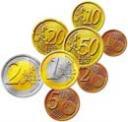
Euro coinsEuro coinsEuro coinsThe 1st January 2008 is a historic date for the Republic of Cyprus. On that date, the Cypriot currency will change from the Cyprus Pound (CYP) to the Euro (EUR, €).

The Cyprus Pound was introduced in 1879, when Cyprus was a British Colony and until 1960, it was equal in value to the British Pound Sterling. Although at the time of writing this article, one Pound Sterling will buy just 0.786 Cyprus Cents.

The exchange rate has been set at €1 = CY£0.585274

According to the pundits, the introduction of the Euro will have a positive effect on the property market. This is because of an immediate increase in transparency in pricing. Property prices in Cyprus can be compared with all the other major Mediterranean markets such as Spain, France, Italy and Malta.

The accession of the Republic of Cyprus to the European Union is a three-year-old reality and the country is preparing to make the next most important step in its recent history and adopt the euro on January 1, 2008. The Cyprus pound will be replaced and the country will become a member of the Economic and Monetary Union (EMU).

The countdown to the conversion from the pound to the euro has already begun and the authorities are busy with the necessary preparations. The Central Bank of Cyprus (CB) has already begun supplying the commercial banks with coins and bank notes, while in cooperation with the Ministry of Finance intensifies the information campaign.

The aim of the campaign is twofold, to increase to the maximum level public awareness of the ways transactions will be made and to allay the public’s concerns about any possible negative impact on everyday life, mainly fears about a hike of prices following the transition.

The Central Bank stresses in an information bulletin that the euro will not affect the way transactions are made, nor will it influence the way of life. The euro, the Bank points out, will not alter the values of assets or receivables or increase liabilities (real assets, cash, bank deposits, loans, pensions, etc) and that applies to values and liabilities of residents and non residents. What will change is the expression of these values, which as of January 1st will be translated in euro instead of the existing legal tender, the Cyprus pound.

According to the CB, instead of a negative effect the introduction of the euro will bring about significant benefits to the economy as a whole, such as low inflation, low interest rates, sound public finances and the protection against the negative effects of international economic fluctuations, something that is particularly important for a small open economy like Cyprus.

The Bank says that another important aspect of the introduction of the euro relates to the transparency of prices in the single EU market, which will make the comparison of prices easier, promote competition and lead to lower prices for the local consumer, either Cypriots or visitors.

The transition to the euro will also lead to the abolition of the currency conversion cost between Cyprus and the rest of the euro area, as well as the elimination of the exchange rate risk, which as a result will generally encourage trade transactions and lead to lower prices.

Both savers and investors will benefit from the larger number of saving and investment opportunities that exist in the single financial market of the EU.

Commercial banks in Cyprus are already preparing for concrete practical measures that will enable them to continue smoothly their operations and at the same time serve the public.

According to information obtained by CNA, on December 31, 2007 commercial banks will accept only cash deposits between 10:00 and 13:00 local time. During this period small enterprises will be able to obtain from the banks coins and bank notes.

The public will also have the opportunity to receive euro bank notes on New Year’s Eve since most of the Automatic Teller Machines (ATM) will be accordingly adjusted. Almost all ATMs will be adjusted to dispense euro banknotes immediately after midnight on 31 December 2007.

On January 1, 2008, which is the official day of the conversion from the pound to the euro, commercial banks will operate one branch each on each city to serve the public that would wish to exchange Cyprus pound with euro. The branches will open between 11:00 – 14:00.

The conversion rate between the pound and the euro was set on 10 July 2007 by the Council of the EU at €1=CY£0.585274. From September 2007 until September 2008, the dual display of prices (in pounds and euro) for goods supplied and services rendered to the consumer (with some exceptions) is compulsory by law.

As of 1 January 2008, all amounts should be expressed in euro (instead of Cyprus pounds). All non-cash payments, such as electronic payments with the use of cards, bank transfers, standing orders, cheques, will be carried out in euro. As regards cheques, as of 1 January 2008, these should be expressed in euro otherwise they will not be valid.

On 1 January 2008, banks and co-operative credit institutions (CCIs) or other organisations where accounts are held (loans, deposits, etc.) will convert the balance of each account from pounds into euro, without any charge. The conversion rate (EUR1=CYP0.585274) will be applied and a two digit rounding will be made, according to the relevant EU regulations.

As regards cash transactions, the public will be able to use Cyprus pound banknotes and coins as a means of payment for a period of one month from the day of the adoption of the euro, that is up to 31 January 2008. This period is referred to as the period of parallel circulation because the Cyprus pound will circulate in parallel with the euro.

The exchange of Cyprus pounds will be carried out by banks and CCIs for a period of 6 months following the date of euro adoption, i.e. until 30 June 2008, without any charge up to a limit, applying the conversion rate.

This limit has been set at CYP1,000 per person per transaction for banknotes and CYP50 per person per transaction for coins.

The Central Bank of Cyprus will continue exchanging, free of any charge and without quantity limit, coins for a period of two years after the introduction of the euro i.e. until 31 December 2009 and banknotes for a period of 10 years i.e. until 31 December 2017.

In relation to contracts signed before 1 January 2008, but which will continue to be in effect after this date, e.g. rental agreements, sales documents, contracts for the purchase of services or products etc., it should be noted that these will continue to be in force even after the introduction of the euro, with the same terms and conditions. The only aspect, which is affected is that, wherever there is a reference to a payment or to an amount in Cyprus pounds, then this will automatically be considered as referring to the corresponding amount in euro, converted using the conversion rate mentioned above, rounded to 2 decimal points, in accordance with the corresponding European regulations.

Cheques denominated in Cyprus pounds, dated 1 January 2008 and afterwards, will not be valid. Cheques in Cyprus pounds issued prior to 1 January 2008 will continue to be valid, according to the existing banking practice, for a period of six months from the date of their issue and shall on presentation be paid in euro.

Another important aspect of the conversion from the pound to the Euro is that the interest rates of the Cyprus pound will no longer exist and the interest rates of the European Central Bank will apply to loans, deposits and advances.

State of the Cyprus economy in 2008

Economic OutlookA recent poll by the CFA/Financial Mirror predicts lower growth and higher inflation in 2008.

The Cyprus GDP growth rate is expected to decline below the government’s forecast of 4.0% in 2008 with inflation also seen well above the official target, as financial turbulence now faced in the US and some EU countries spreads to Cyprus, according to the first forecasting poll conducted by the CFA Society of Cyprus and the Financial Mirror.

Members of the CFA Society polled by the Financial Mirror see GDP growth in 2008 at an average of 3.84%, short of the government’s prediction that GDP growth will reach 4.0%.

Cyprus construction sector slow down

THE RAPID GROWTH of the construction sector has reached the utmost limit and is expected to slow down. According to Eurostat’s data, the growth of the construction output in the third quarter of 2007 fell to 5.5%, while in the second quarter of the year, it had reached 8.6%. The Finance Ministry believes that constructions will slow down in 2008 and in the next few years the sector will grow slower than economy.

Market sources relate this slowdown to the deterioration of the conditions in the Cyprus property sector. The sector, which is 8.5% of the Cyprus GDP, grew rapidly in the past few years due to the increased external demand and other domestic factors.

There is an increased demand for houses and flats, partly due to the involvement of several persons in the profession (persons who are not professionals). At the same time, demand by non-Cypriots has been reduced by 30 – 35%”, Chairman of Real Estate Agents’ Association, Solomon Kourouklides said.

The Finance Ministry expects that the growth rate of the construction sector will reach 6.7% in 2007, recording the highest growth since 2003, when it stood at 6.9%. The growth rate is expected, however, to reach 4.6% in 2008, 4.2% in 2009 and 3.3% in 2010. Until 2011, the construction sector will grow by 2.8%, much lower than the anticipated 4% for economy.

The construction industry will slow down in the next few years. The Central Bank’s measures on the cut of the lending ceiling for the purchase of a home have affected negatively the sector”, Chairman of the Pancyprian Land Developers Association, Lakis Tofarides told StockWatch.

The slow down – in Paphos and Larnaca mostly – is reflected in the latest figures of the Statistics’ Service on the building permits. The area of the licensed projects in Paphos and Larnaca in the first nine months of the year declined by 10.3% and 0.4% respectively.

Despite the slowdown, construction output in Cyprus grows faster than that of EU27 and the euro area. The average EU and euro area growth in the third quarter of the year stood at 2.6% and 2.2% respectively.

Cyprus property price index up 2.51 percent in November

BuySell Cyprus Real Estate, a real estate advertiser, publishes a monthly ‘Home Price Index’ – the only one of its kind in Cyprus.

The company started to produce the index in 2004. It shows the movement of prices at which residential properties in Cyprus are sold and is based on an average of around 400 to 500 property sales/month.

When the index started in January 2004, the average residential property price was €133,117. By the end of November 2007, it had reached €188,612 – an increase of 41.69% over the 47 months since its introduction. This equates to an approximate annual growth of 10.64%.

For the whole of 2006, the Index rose by 5.87%, after a rise of 2.48% in 2005.

In the first 11 months of 2007, the Index has risen by 18.33%

Cyprus title deed scams

MANY of you will have seen Channel 4?s damning documentary about the Title Deed problems affecting thousands of Brits who have bought property in Cyprus. If you missed it, there’s a chance to see an 8 minute video below.

[youtube=http://www.youtube.com/watch?v=eLUDlI6CSCM&w=470]

The first case concerns Roger Snelling who bought a 3 bedroom house in Pissouri. He only found out he had a problem when he went to the Land Registry and did a Title search. To his horror, he discovered that the developer had taken out a CYP 180,000 mortgage on the property before he bought it. (We can only speculate as to the reasons why Roger’s lawyer didn’t uncover the mortgage or tell him of the problem when he was buying the property).

In Roger’s situation, the bank’s claim to the money takes precedence over his claim to ownership, and Roger is now at risk of losing his home. He is pursuing his case through the court.

Roger’s case is not unique; as Andrew Winter reported in the Channel 4 program “There are massive problems in Cyprus with Developers abusing property law to make huge profits for themselves…

Here are two other ‘scams’. (Although I call them scams, they’re perfectly legal under Cyprus’ archaic property laws).

Scam 1 – Take out a mortgage after the Title search

In this scam, the vendor takes out a mortgage on the property between the time that a Title Search is carried out and your Contract of Sale is deposited at the Land Registry.

Here’s how it works:

Let’s assume that you are using a competent lawyer. On 1st March, he/she carries out a Title search at the Land Registry and finds there are no mortgages or other ‘encumbrances’ lodged against the property you’re planning to buy.

The next day, the lawyer draws up your Contract of Sale and discusses it with the vendor’s lawyer. You then visit the lawyer and discuss the contents of the Contract. If you’re happy, you sign the contract and your lawyer deposits it at the Land Registry.

Because these things take time, it could be a week (more likely 2 or 3) before your Contract of Sale is deposited at the Land Registry; let’s say it’s deposited on 15th March.

Between the 1st March and 15th March, the ‘crook’ you’re buying from mortgages the property – no-one is any the wiser – you end up buying a mortgaged property and risk losing everything (like Roger).

Scam 2 – Mortgage the land on which your property’s built after you’ve bought it

Under certain circumstances, a developer can take out a mortgage using the land your property’s on as collateral. Here’s an example of how the scam works (and once again, it’s all perfectly legal!!!)

A developer has 10,000 sq.m of land, which has yet to be divided into individual plots, so there’s just one Title Deed for the whole plot.

Lets say he sells five properties off-plan on 500 sq metre plots. The properties are built, the developer gets his money and the people move in.

The developer goes to the bank and takes out a loan using the remaining 7,500 sq.m of the land as collateral. Land prices have rocketed over the past few years. (There’s a large plot of land on the way to Troodos that was worth 20,000 in 1980 – today, the Land Registry values it at 935,000). So you can see that banks would be willing to loan money based on the increasing land value.

The bank then registers the mortgage against the Title Deed of the land at the Land Registry.

BUT the Land Registry has no way of knowing what part of the land has been sold and developed – all it’s got is one Title Deed for 10,000 sq.m of land – and that’s what the claim is lodged against (along with the claims of the 5 buyers).

So if you go out and buy a property that’s on a plot that has not had a separate Title Deed issued, you could have the problem of the developer taking out a loan on the land even though he’s sold part of it to you!

So what you may say – my claim to ownership takes precedence over the mortgage, so why should I care? The answer should be obvious:

If you decide to sell before you get your Title Deeds, who is going to buy a mortgaged property from you? And if the developer doesn’t pay-off the mortgage, what are you going to do?