Home Blog Page 6

Cyprus Hotel Association calls for Airbnb limits and overnight levy

The Cyprus Hotel Association (STEK) has renewed calls for tighter regulation of Airbnb-style short-term rentals, urging the government to introduce annual letting limits, an overnight levy and tougher enforcement measures as part of a comprehensive overhaul of the current legislative framework.

The industry body said the findings of the recent report by Cyprus’ Audit Office reinforce longstanding concerns about both the content of the existing legislation and, more importantly, its inadequate implementation and oversight.

Illegal short-term rentals remain a concern

In a statement, STEK said it has repeatedly warned that the current framework contains significant weaknesses, allowing unlicensed holiday accommodation to continue operating and advertising without meaningful inspections or effective coordination between the relevant authorities.

According to the association, the continued presence of unlicensed properties demonstrates that the existing system is failing to fulfil its regulatory purpose.

STEK argued that maintaining a simple registration system is no longer sufficient. Instead, it is calling for a comprehensive regime of monitoring, inspections and enforcement to ensure that every operator in the hospitality sector complies with the same legal obligations and safety standards.

Housing market under pressure

The association warned that weak regulation extends beyond creating unfair competition for licensed hotels.

It argued that the rapid expansion of short-term rentals is placing additional pressure on Cyprus’ housing market, making affordable homes harder to find for permanent residents while creating disruption within local communities. The organisation also highlighted concerns over neighbourhood quality of life and visitor safety where accommodation operates outside the regulatory framework.

Proposed changes to Cyprus Airbnb regulations

STEK welcomed the Deputy Ministry of Tourism’s intention to review the legislation governing short-term rentals, describing the reform as an opportunity to address longstanding weaknesses while introducing measures already adopted across many European countries.

Among its recommendations, the association proposes:

  • More effective and systematic inspections to identify illegal accommodation providers.
  • Stronger enforcement powers supported by meaningful administrative and financial penalties.
  • Mandatory display of a property registration number on all online booking platforms.
  • Greater cooperation between digital platforms and the authorities to remove illegal listings quickly.
  • A maximum annual limit on the number of days a property can be let as short-term accommodation.
  • Powers for local authorities to restrict or prohibit short-term rentals in areas experiencing severe housing shortages, excessive nuisance or declining residential amenity.
  • A compulsory overnight levy for guests staying in short-term rental accommodation.
  • Uniform standards covering safety, health requirements and insurance across all accommodation providers.

Learning from European markets

STEK said experience elsewhere in Europe demonstrates that successful regulation of the short-term rental sector depends on clear rules, effective supervision and striking the right balance between tourism growth, housing affordability and the interests of local communities.

The association confirmed it will participate actively in the public consultation on the proposed legislation, submitting detailed recommendations aimed at creating a modern, enforceable regulatory framework.

It said the objective should be to establish a level playing field across the hospitality industry while protecting visitors, safeguarding local communities, supporting the residential housing market and strengthening the long-term sustainability of Cyprus’ tourism sector.

Audit Office uncovers widespread licensing concerns

The Audit Office previously reported that, as of 6 May 2026, there were 8,464 licensed self-catering accommodation properties registered in Cyprus’s official Register of Self-Catering Accommodation.

However, a sample review of online booking platforms found evidence that a significant number of self-catering properties are being advertised and operated without being registered or are displaying inaccurate licensing information. According to the Audit Office, this makes effective monitoring and regulatory oversight considerably more difficult. In many cases, properties could not be identified at all.

Of the 20 properties in the sample that investigators were able to identify, only six (30%) were properly registered and held a valid operating licence. Ten properties (50%) did not display a registration number and appeared not to be listed on the official register. In a further four cases (20%), although a registration number was provided, it did not match the official records. The number either related to an expired registration or belonged to a different property altogether.

In its response, the Deputy Ministry of Tourism acknowledged that a number of properties advertised on online booking platforms are either not registered with the Ministry or fail to display a registration number. It said the issue is expected to be addressed through the implementation of EU Regulation (EU) 2024/1028, adopted on 11 April 2024. While the regulation entered into force in May 2024, its key obligations became applicable from 20 May 2026.

Hotels also face licensing shortcomings

The Audit Office’s report also highlighted significant compliance issues across Cyprus’s hotel sector.

As of 27 April 2026, only 168 of the island’s 728 hotels and tourist accommodation establishments had secured a full operating licence under the relevant legislation, representing a compliance rate of just 23%.

A further 158 establishments, or around 22% of the total, were operating under temporary licences because they met certain qualifying conditions.

That leaves the majority of hotels and tourist accommodation providers (402 businesses, or 55% of the total) operating without a full licence or any form of temporary authorisation. According to the Audit Office, the figures demonstrate that the temporary measures and regulatory concessions introduced in recent years have failed to deliver the intended improvements in compliance.

The real cost of planning delays in the housing market

0

Planning delays are often blamed for increasing the cost of new homes. Yet the debate rarely moves beyond broad references to bureaucracy, with little discussion of the financial impact in real terms.

A simple, hypothetical, but entirely realistic, example illustrates the scale of the issue. Based on widely accepted assumptions used in property development appraisals, the figures below demonstrate how delays directly translate into higher housing costs.

Consider a medium-to-large residential development in Cyprus comprising 125 apartments.

  • Land acquisition: €7 million
  • Development and construction costs: €25 million
  • Total project cost: €32 million

Now compare two different scenarios.

In the first scenario, the developer acquires the site, secures all necessary planning approvals within six months and begins construction. The project is completed in two years.

In the second scenario, the same developer purchases the land but must wait four years before construction can begin because of delays in the planning approval process. The construction period remains unchanged at two years.

At first glance, the only difference appears to be time. In reality, the entire financial structure of the project changes.

The hidden cost of waiting

The first impact is the cost of holding the land.

A developer who commits €7 million to a site that cannot be developed for four years incurs a genuine financial cost. Assuming a relatively conservative cost of capital of 6%, the additional financing burden amounts to approximately €1.7 million.

There are also ongoing operating costs

Projects do not simply sit idle while approvals are pending. Developers continue to retain architects, engineers, planning consultants, legal advisers and administrative staff to manage, revise and progress applications. Even using a conservative estimate of €200,000 per year, four years of additional overheads add around €800,000 to the project.

Construction inflation creates a further layer of cost

Assuming annual construction cost inflation of 4% – without factoring in exceptional events such as geopolitical conflicts = the original €25 million construction budget rises by approximately €3.5–4 million over four years.

Before any return on investment is considered, the project has therefore incurred around €6.3 million in additional costs solely because of planning delays:

  • Land holding costs: €1.7 million
  • Construction inflation: €3.8 million
  • Administrative costs: €0.8 million

Total additional cost: approximately €6.3 million

Importantly, this example excludes potential increases in interest rates, energy prices, legal disputes, banking costs or changes to building regulations. If anything, it represents a conservative estimate.

The impact of planning delays on house prices

This is where the economic consequences become clear.

In the first scenario, the €32 million development requires total sales of around €38.4 million to achieve a 20% development margin. Across 125 apartments, the average selling price would be approximately €307,000 per home.

In the second scenario, total development costs increase to roughly €38.3 million solely because of the four-year planning delay. Maintaining exactly the same 20% profit margin, total sales must rise to around €46 million.

That equates to an average selling price of approximately €368,000 per apartment.

In other words, without the developer earning a single euro more, the average price of each home rises by around €60,000—almost 20%—purely as a result of planning delays.

Planning delays reduce housing supply

The consequences extend far beyond an individual project.

The longer it takes to complete one development, the fewer projects a developer can deliver over the course of a decade. Planning delays therefore increase not only the cost of each home but also reduce the overall supply of new housing.

That reduction in supply places even greater upward pressure on prices.

Ultimately, planning delays do not simply create additional costs for developers—they are passed on to homebuyers through higher sale prices. This is one of the most important points often overlooked in discussions about housing policy.

Any meaningful debate about affordable housing must therefore recognise the role of the planning system. When approvals take years rather than months, capital remains tied up, investment costs rise, housing delivery slows and the final bill is borne by those trying to buy a home.

Lengthy planning processes also make housing supply highly inelastic. When the market cannot respond quickly to rising demand, even modest increases in demand can result in disproportionately higher house prices.

Planning efficiency is therefore far more than an administrative issue. It is one of the key drivers of housing affordability.

Faster planning benefits the entire economy

Accelerating planning approvals does not mean weakening oversight or compromising environmental standards.

It means creating faster, more predictable and more efficient processes. Responsible developers are not asking for fewer checks; they are asking for existing checks to be completed within reasonable and predictable timescales.

The debate should therefore move beyond whether planning delays exist and instead focus on the measurable economic cost they impose.

Ultimately, this is not simply a question for property developers. It is about whether young people can afford to buy their first home, whether families can access reasonably priced housing and whether Cyprus can continue attracting high-quality investment that supports long-term economic and social prosperity.

Faster planning approvals are not merely a pro-development reform. They are a reform that benefits society as a whole.

(Translated from an article by Yiannis Misirlis, President of the Cyprus Property Developers Association)

Russian property buyers lead Cyprus market in 2025

Russian property buyers remained the largest group of foreign residential purchasers in Cyprus during 2025, accounting for 51 per cent of overseas home sales, according to a report published by Russian business magazine Business Petersburg.

Despite European sanctions and tighter banking compliance rules, Russian property buyers in Cyprus continue to view the island as one of Europe’s most attractive real estate markets. Cyprus’ European Union membership, favourable tax framework, permanent residence scheme and established Russian-speaking community remain key attractions for investors.

Why Russian property buyers continue to choose Cyprus

The report says Russian buyers are primarily purchasing property to preserve wealth, relocate businesses, particularly technology companies, and secure permanent residence within the European Union.

Demand is strongest for newly built homes priced between €500,000 and €1.5 million, with Limassol, Larnaca and Paphos continuing to rank as the most popular destinations for foreign investment.

Another major draw is Cyprus’ permanent residence programme, which allows eligible non-EU nationals to apply for residency through the purchase of a newly built property worth at least €300,000.

These incentives continue to support the Cyprus property market, even as geopolitical and financial challenges persist.

Stricter banking checks slow Cyprus property transactions

While demand remains strong, Russian buyers continue to face longer transaction times because of enhanced compliance procedures introduced by Cypriot banks following sanctions on Russia.

According to the report, property purchases can now take between three and six months to complete as banks carry out detailed due diligence and source-of-funds checks before approving transactions.

Although these measures have increased processing times, they have not significantly reduced interest in Cyprus real estate among Russian investors.

Republic of Cyprus remains the safer investment choice

The report also examined the property market in the north of Cyprus, where lower prices and flexible payment plans have attracted some Russian buyers.

However, it warns that the territory’s lack of international recognition and continuing property ownership disputes create significant legal and investment risks. Investors are advised to exercise particular caution when considering properties built on land that may be subject to ownership claims by displaced Greek Cypriots.

Despite identifying opportunities in the north, the report concludes that the Republic of Cyprus remains the safest option for overseas investors seeking legal certainty, access to the European market and a stable long-term investment environment.

Limassol waterfront regeneration planned for Aktaia road

For decades, Aktaia Road was one of the least visited parts of Limassol. Hidden behind the port, the area became known for its ageing factories, abandoned industrial buildings, warehouses and the traditional boatyard. Despite its rich history, it remained largely disconnected from everyday life in the city.

That is now about to change.

The Limassol waterfront regeneration project aims to transform Aktaia Road into a vibrant public waterfront that reconnects the port with the city centre. The project is designed to create a place where people can walk, cycle, relax and enjoy better access to the sea, while also encouraging new investment and sustainable development.

Speaking about the plans, Mayor Yiannis Armeftis described the redevelopment as one of the most important urban projects the city has undertaken in recent years.

Limassol waterfront regeneration will reconnect the port and city centre

According to Armeftis, the main objective is to reconnect Limassol Port with the city centre by creating a continuous public waterfront.

“Aktaia Road is the space that can bring the port and the city centre together,” he said.

Rather than simply upgrading a road, the municipality wants to create a linear waterfront park with wide pedestrian paths, cycle lanes and space for public transport. The plans also leave open the possibility of introducing a tram system in the future if it proves viable.

The Limassol waterfront regeneration project also forms part of the city’s wider strategy to encourage sustainable transport. The new waterfront will connect with existing pedestrian routes, cycle paths and green corridors, making it easier for residents to move around the city without relying on cars.

At the same time, the redevelopment will improve access to the coastline for residents living in western Limassol, an area that has historically had limited access to the sea.

Aerial view of Aktaia Road and Limassol Port, where the waterfront regeneration project is planned.
Aktaia Road (in red) is set to become the centrepiece of Limassol’s new waterfront regeneration project

Early work is already transforming Aktaia Road

Although the main redevelopment is still being planned, work has already begun to improve the area.

The municipality has cleaned the beach, demolished derelict buildings and planted more than 500 trees. A one-kilometre pedestrian and cycle path has also been completed, featuring solar-powered lighting, while a new bridge has improved access across the site.

In addition, around 3,000 tonnes of rubble and waste have been removed after years of illegal dumping.

The mayor said the municipality wants residents to begin enjoying the area before the entire redevelopment is completed.

“We want to deliver parts of the project as they are finished so people can start using them immediately. This also allows us to see how the spaces work in practice and what further improvements may be needed.”

The next stage will complete a final 400-metre section linking the Garyllis River with the roundabout at Limassol Port’s passenger terminal. This connection is expected to provide the first continuous link between the port and the new waterfront.

International architectural competition planned

The next major milestone in the Limassol waterfront regeneration project will be an international architectural competition, which is expected to launch in 2027.

Preparatory work is already under way, with the University of Cyprus and Frederick University helping to develop the competition brief and the project’s overall masterplan.

The municipality has also begun discussions with key stakeholders, including port operators DP World and Eurogate, together with government departments responsible for planning, public works and the environment.

Later this year, local residents will also be invited to take part in workshops and public presentations so their views can help shape the final design.

According to the mayor, careful preparation is essential before launching the international competition.

Boatyard relocation remains one of the biggest challenges

One of the most difficult issues facing the Limassol waterfront regeneration project is the future of the traditional boatyard.

Limassol's traditional boatyard (Karnagio), which could be relocated as part of the waterfront regeneration plans.
Aktaia Road Boatyards (Karnagio)

Armeftis made it clear that the municipality does not want businesses to close.

“The solution is not to shut these businesses down,” he said. “The solution is to relocate them to a modern, properly organised site.”

He argued that Cyprus should have a modern shipyard capable of supporting its growing maritime industry. However, finding a suitable coastal location is the responsibility of central government.

The mayor added that the current boatyard is located within a protected coastal zone and no longer fits with the long-term vision for the waterfront.

Investment grows while preserving Limassol’s industrial heritage

The Limassol waterfront regeneration project is already attracting significant private investment.

former industrial buildings are being converted into cultural venues, event spaces and commercial developments, while new mixed-use projects are expected to reshape the western waterfront over the coming years.

However, Armeftis believes development should not come at the expense of the area’s identity.

“The industrial buildings are part of Limassol’s history,” he said. “Where possible, they should be preserved and adapted for new uses, particularly for cultural and community activities.”

the area is also expected to see taller buildings. current planning regulations allow developments of up to 30 storeys and heights of 120 metres. construction of the first tower exceeding 30 storeys is already under way, with further projects expected as investment gathers pace.

A new chapter for Limassol’s waterfront

The Limassol waterfront regeneration project represents one of the city’s most ambitious urban renewal schemes. By combining new public spaces, sustainable transport, private investment and the careful reuse of historic industrial buildings, the municipality hopes to create a waterfront that serves both residents and visitors.

If delivered as planned, Aktaia Road could become one of Limassol’s most important new destinations, reconnecting the city with its industrial past while creating a modern waterfront for future generations.

Cyprus tops EU for growth in home sales in early 2026

Cyprus home sales continued their strong upward trend during the first quarter of 2026, with the island recording the fastest growth in residential property transactions anywhere in the European Union.

According to the latest Eurostat figures, the number of homes sold in Cyprus increased by 13.6% compared with the first quarter of 2025, placing the country at the top of the EU rankings based on the latest available data.

The latest Cyprus home sales figures underline the resilience of the property market, which continues to support economic activity through construction, finance, professional services and property management.

Cyprus home sales lead a mixed EU property market

Cyprus’ performance contrasts with a mixed picture across the European housing market.

During the first quarter of 2026, residential property transactions declined in nine EU countries. The largest falls were recorded in Croatia (-42.2%), Bulgaria (-18.5%) and Finland (-11.8%).

Sales increased in seven countries, with Cyprus home sales rising by 13.6% to lead the EU, followed by Denmark (+8.4%).

The figures follow varied performances during previous quarters. In the fourth quarter of 2025, home sales fell in Luxembourg (-31.3%), Croatia (-13.7%) and Portugal (-3.6%), while Hungary (+23.5%) and Austria (+20.2%) recorded the strongest growth.

In the third quarter of 2025, Croatia was the only country to register a decline in home sales, while Slovenia (+48.6%) and Hungary (+29.2%) posted the highest increases.

Existing homes continue to drive property transactions

Eurostat’s data also shows that existing homes remain the main driver of property transactions across Europe.

In countries that provided separate data for new-build and existing properties, sales of existing homes comfortably exceeded those of newly built properties. This demonstrates the importance of existing housing stock in meeting buyer demand while highlighting the need for continued residential development.

For new-build homes, Luxembourg (+36.2%) and Hungary (+33.6%) recorded the strongest increases in transactions, while Finland (-22.3%) and Slovenia (-11.6%) saw the largest declines.

Among existing homes, Slovenia (+34.0%) and Lithuania (+23.0%) recorded the highest growth. Declines were limited to Croatia (-7.2%), Bulgaria (-5.0%) and Ireland (-0.4%).

Eurozone housing market recovery continues

Eurostat says housing transactions across the eurozone fell sharply during the COVID-19 lockdowns in 2020, reducing the total value of residential property transactions despite rising house prices.

The market rebounded strongly in 2021 and continued to expand during 2022 as house prices climbed further.

In 2023, eurozone house prices slipped by 1.0%, while the total value of residential property transactions fell by 19.2%, largely because of a significant decline in transaction volumes across most member states.

The recovery resumed in 2024, with house prices increasing by 2.2% and the total value of housing transactions rising by 4.2%.

Momentum strengthened again in 2025, when eurozone house prices rose by 5.3% and the total value of residential property transactions increased by 16.5%, reflecting a broad improvement in market activity.

Dangerous buildings in Larnaca reach 1,084 across the district

The number of dangerous buildings in Larnaca has climbed to 1,084, prompting the Larnaca District Local Government Organisation (DLGO) to step up inspections, enforcement and public safety measures across the district.

Officials said 204 buildings have already been formally classified as dangerous, while 116 are considered to be at immediate risk of collapse. The authority is continuing inspections, issuing legal notices and implementing safety measures to reduce risks to residents and the wider public.

Dangerous buildings register almost doubles

The authority said it is accelerating the identification, assessment and management of dangerous buildings in Larnaca through a comprehensive action plan focused on protecting public safety.

When responsibility transferred from the previous authorities, the organisation inherited a register of 563 potentially dangerous buildings. Following updated records, site inspections and new reports from residents, municipalities and community councils, the register has grown to 1,084 properties, highlighting the scale of the challenge.

A total of 310 visual inspections have been assigned to private structural engineers, with 228 technical reports already completed and assessed.

From those reports, 204 buildings have been officially designated as dangerous. Of those, 116 fall into the highest risk category because they present a visible danger of collapse.

Enforcement action under way across Larnaca

The authority has already carried out 31 interventions to reduce immediate risks associated with dangerous buildings in Larnaca.

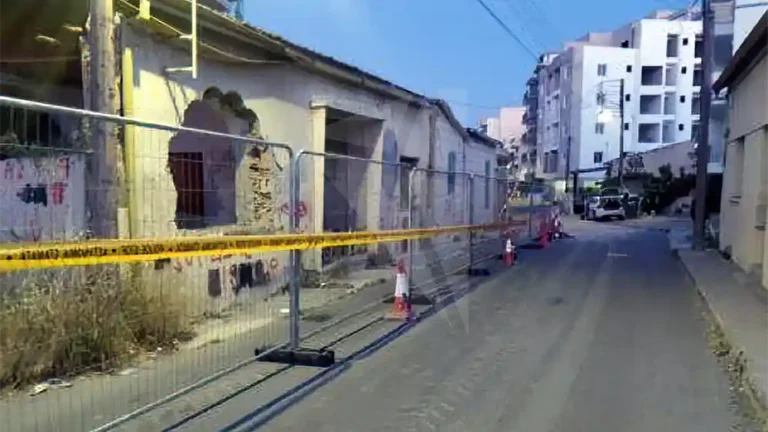
These include fencing hazardous properties, either by the authority or property owners, the demolition of three buildings following official intervention, and the appointment of specialist consultants to prepare and implement remedial works after formal notices were issued.

Eight buildings have now been officially declared dangerous, with statutory notices served on owners. A further 10 properties are progressing through the declaration process.

One building has also been subject to a temporary evacuation order after its owners failed to comply with official instructions.

The DLGO said its strategy includes maintaining a digital register, commissioning specialist engineering inspections, assessing technical reports, categorising buildings according to risk and requiring owners to carry out safety works. Where necessary, legal and administrative action may also be taken.

Repair costs estimated at almost €6 million

Technical assessments covering 209 buildings estimate that the cost of making dangerous buildings in Larnaca safe will reach approximately €5.94 million.

The authority is urging owners to respond promptly to official notices and complete the required safety works without delay.

Residents are also encouraged to report buildings showing signs of structural instability so inspections can be carried out quickly and appropriate action taken.

The Larnaca DLGO said it will continue strengthening inspections, updating its register and working with local authorities and property owners to address the growing issue of dangerous buildings in Larnaca across the district.