

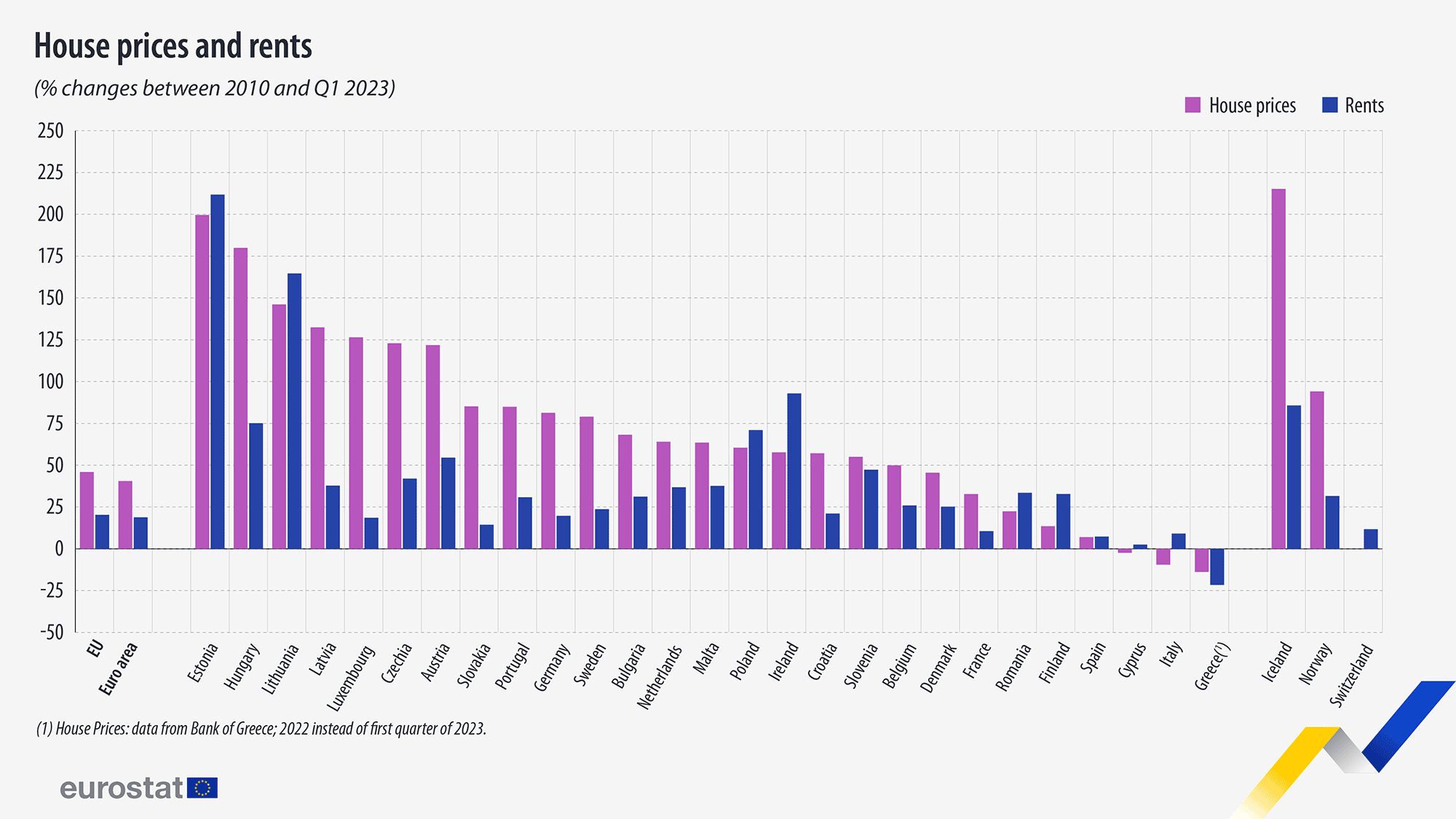
Cyprus is one of only three EU members states where house prices have fallen since 2010 according to Eurostat, the statistical office of the European Union.
Between 2010 and the fourth quarter of 2022, prices have fallen in Greece (-14%), Italy (-9%) and Cyprus (-2%).
Over the same period, prices have more than doubled in seven EU member states; Estonia (+200%), Hungary (+180%), Lithuania (+146%), Latvia (+132%), Luxembourg (+126%), Czechia (+123%) and Austria (+122%).
Rental prices increased in 26 EU countries and decreased in one, with the highest rises in Estonia (+212%) and Lithuania (+165%). The only decrease was recorded in Greece (-22%).
EU house prices and rents commentary
In the first quarter of 2023, prices in the EU decreased by -0.7% compared with the fourth quarter of 2022, while rents increased by 0.9%. This is the second quarterly decrease of prices in a row after a -1.4% decrease in the fourth quarter of 2022.
Compared with the first quarter of 2022, rents and prices in the EU increased with a 2.9% rise in rents and a 0.8% increase in house prices.
Prices and rents in the EU followed a similar increasing path between 2010 and the second quarter of 2011. However, after this quarter, prices and rents have evolved differently. While rents increased steadily throughout this period up to the first quarter of 2023, prices fluctuated considerably.
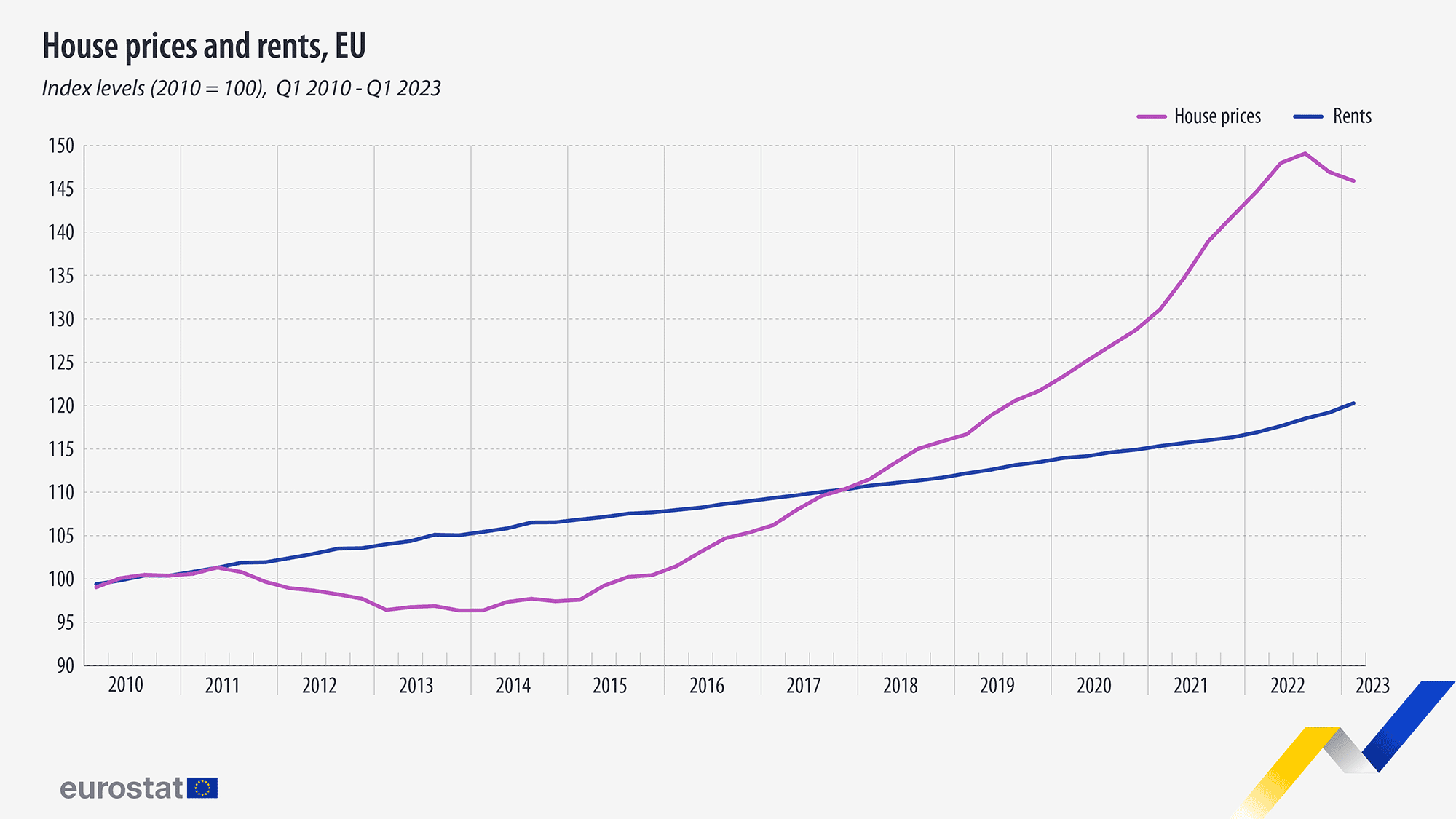
After a sharp decline between the second quarter of 2011 and the first quarter of 2013, prices remained more or less stable between 2013 and 2014. After a rapid rise in early 2015, prices increased faster than rents until the second quarter of 2022. In the third quarter of 2022, prices increased at the same pace as rents (both +0.7% compared with the second quarter of 2022). Since the fourth quarter of 2022, prices have started to fall whereas rents continued to increase.
From 2010 until the first quarter of 2023, rents increased by 20% and prices by 46%.
Further reading
Eurostat press release: Rents rise, house prices fall in the EU in Q1 2023
Eurostat price index for Cyprus
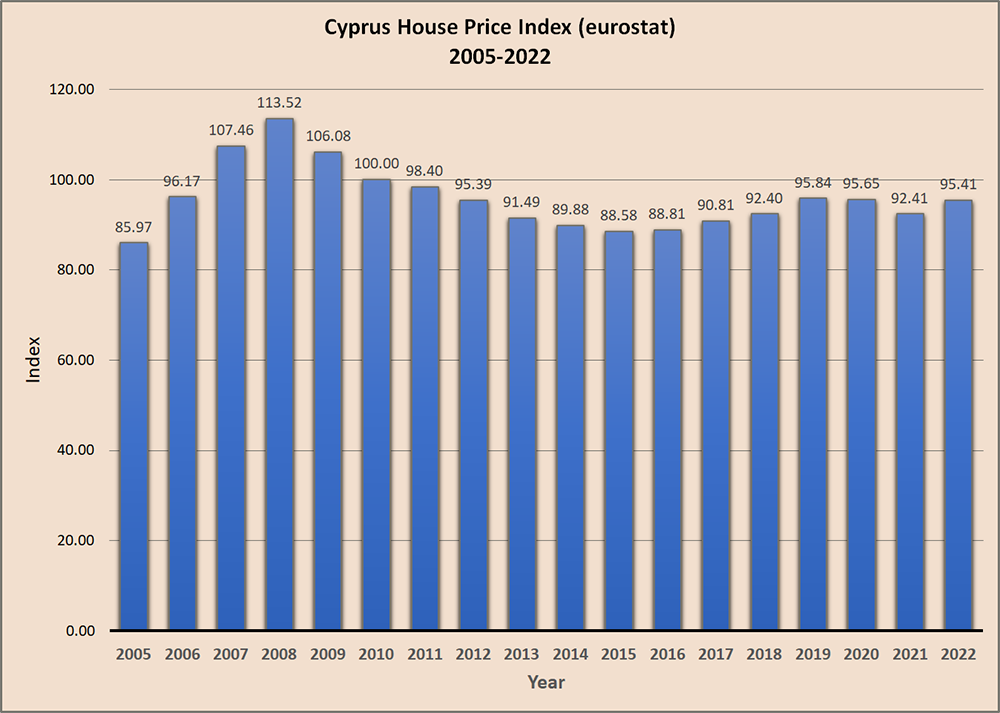
The following chart, which plots the annual average rate of change in the price index for Cyprus from 2005 to 2022, has been extracted from the eurostat home price index database.

Nigel, would it be fair to say that house prices in Cyprus were well overvalued in 2010. Looking at your article below from 2010, I would say so and they are probably now at a realistic level. In 2010, they were more than double the average UK price. Still, interesting statistics.
RICS Cyprus property price index published
Yes, it’s fair to say house prices were overvalued in 2010, yet people were still prepared to buy them.
And if you look at the bar chart at the bottom of the page you’ll see that prices were even higher in 2008, which was when the market peaked.
You can’t compare the RICS index with the Eurostat price index as both use different methodologies (although they both give an indication of movement in prices.)