Property sales reached 15 year high in second quarter

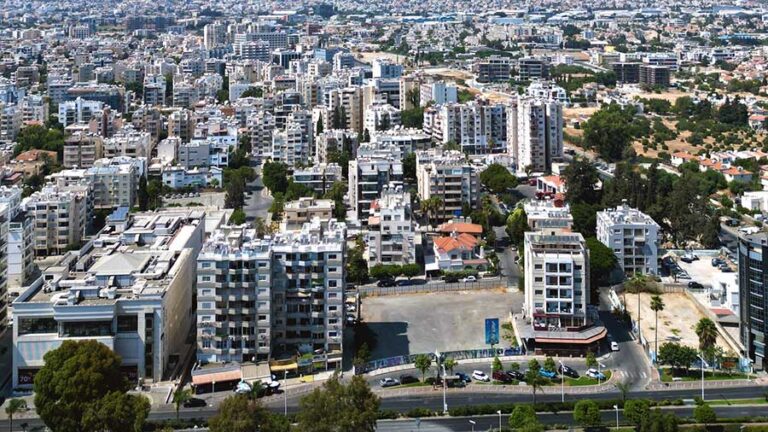
The Cyprus property market witnessed a record number of sales during the second quarter of 2023, reaching a level not seen in 15 years, according to a report released this week by the Central Bank of Cyprus (CBC).

Furthermore, property prices, especially for apartments, have continued to rise, driven primarily by increased demand, itself fuelled by foreign investor interest.

Delving into the data, the CBC report noted that during the second quarter of 2023, the Cyprus House Price Index (HPI) reported a 1.5 per cent increase compared to the 2.1 per cent rise in the previous quarter.

This growth was primarily attributed to a 0.7 per cent increase in house prices and a substantial 3.1 per cent increase in apartment prices.

On an annual basis, housing prices increased by 7.4 per cent in the second quarter of 2023 compared to 7.7 per cent in the first quarter, with apartment prices rising by 10.1 per cent and house prices by 5.6 per cent.

The majority of property transactions involved domestic buyers. However, the largest annual increase in sales came from foreign investors.

The surge in demand, combined with limited new housing supply, appears to be the most significant factor contributing to the increase in property prices during the second quarter of 2023, the Central Bank of Cyprus noted.

What is more, the report explained that the increased foreign demand can be attributed mainly to the headquartering policy, which continues to drive the relocation of international firms to Cyprus, and the growing number of students and other investors in the real estate market.

Meanwhile, increased domestic demand appears to be mainly driven by investment purposes, including buy-to-let properties.

Furthermore, the Central Bank of Cyprus stated that, until the second quarter of 2023, the increase in the European Central Bank’s key interest rates and the subsequent decrease in demand for housing loans do not appear to have significantly affected domestic property demand, which continues to follow an upward trajectory.

“With construction costs stabilising in 2023, property price increases are mainly driven by increased demand in combination with limited supply,” the CBC said.

During the second quarter of 2023, property prices in all regions of Cyprus saw increases on a quarterly basis.

Specifically, in Nicosia, there was a 1.5 per cent increase, 1.4 per cent in Limassol, 2.7 per cent in Larnaca, 2.7 per cent in Paphos, and 2 per cent in Famagusta.

Regarding annual changes in the House Price Index by region, increases were observed across all regions for the seventh consecutive quarter.

In Nicosia, house prices increased by 4.4 per cent, 10.1 per cent in Limassol, 8.7 per cent in Larnaca, 7.9 per cent in Paphos, and 5.9 per cent in Famagusta.

On a quarterly basis, apartment prices increased in all regions except Limassol, which recorded a marginal decrease.

Additionally, in Nicosia, apartment prices increased by 1.8 per cent, 1.7 per cent in Larnaca, 0.9 per cent in Paphos, and 1.9 per cent in Famagusta, while Limassol showed a slight decline of 0.4 per cent.

Year-over-year, apartment prices increased in all regions for the eighth consecutive quarter.

In Nicosia, apartment prices rose by 4.2 per cent, 13.9 per cent in Limassol, 13.1 per cent in Larnaca, 16.3 per cent in Paphos, and 2.5 per cent in Famagusta, compared to the same quarter in 2022.

The Central Bank of Cyprus also reported an acceleration in the growth of property transactions during the second quarter of 2023, marking a 26.5 per cent increase on an annual basis.

A total of 4,115 transactions were recorded during this time, compared to 3,254 in the second quarter of 2022, marking the highest level in over a decade.

Notably, there was a 38.5 per cent increase in the number of properties sold to foreign buyers, with 1,871 transactions compared to 1,351 in the second quarter of 2022.

In contrast, the number of properties sold to domestic buyers increased by 17.9 per cent on an annual basis, with 2,244 transactions compared to 1,903 in the second quarter of 2022.

Meanwhile, following the increase in lending interest rates by the European Central Bank, new housing loans for property purchases in the second quarter of 2023 decreased by 2.9 per cent on an annual basis.

The average interest rate for housing loans during the second quarter of 2023 continued to rise, reaching 4.28 per cent, compared to 3.74 per cent in the first quarter of 2023 and 2.27 per cent in the second quarter of 2022.

The Central Bank of Cyprus also noted that lending criteria became stricter compared to the previous quarter.

However, these developments do not seem to have substantially affected the overall demand for properties in Cyprus until the second quarter of 2023, according to the Central Bank.

Finally, the Central Bank of Cyprus highlighted that, according to the state’s statistical service, the number of residential buildings for which construction permits were approved decreased by 13 per cent, falling from 906 in the April-May 2022 period to 788 in the same period of 2023. This decrease may indicate a decline in construction activity during this time.


Millions earmarked to tackle housing crisis

The government on Tuesday announced its plan to tackle ‘the housing problem’ as it said that €77 million will be spent over the next five years.

Some people will be eligible for tens of thousands of euros in assistance for securing housing.

Interior Minister Constantinos Ioannou said the measures will help the middle class and are focused on the young.

“Beyond just increasing the housing stock available, there will be houses and apartments available at prices to rent or buy which are not prohibitive,” the minister said.

He added that incentives will also be offered to improve the current housing stock under the ‘renovate-rent’ scheme, with the hopes that properties which are not being fully utilised will once again be on the market.

That, he said, follows the advice of the Cyprus Technical Chamber (ETEK), which has long called for the large parts of the current housing stock to be renovated and upgraded.

Other incentives to boost the availability of affordable housing are to be offered under the ‘built to rent’ plan. Ioannou said that this will be valid for private properties, with a review of the permit granting process to speed up development.

The minister acknowledged that many, particularly the young and young couples, are facing serious issues due to the housing situation.

“It has clear impacts in other parts of society such as low birth rates,” Ioannou said.

Therefore, he continued, some measures will focus on those under the age of 41 – with one-off payments to help couples buy their first home, while others will receive rent subsidies.

The government will also boost rural development incentives through the allocation of building plots to low-income families.

It was stated that 1,300 beneficiaries have received such assistance since 2019 at a cost of €46m.

He said that plots which were approved in 2013 but not allocated will be immediately made available, while another 300-500 plots will be given out over a three-year period.

Local media reported those eligible for financial assistance are based on the criteria set out by the social welfare services and other related authorities.

Under those criteria, a single person may be eligible for up to €25,000 in assistance, while a couple may get €45,000.

Families of three may get €50,000 and those of four €55,000. Those of five or more may get €65,000.

As for assisted renovation scheme, the government said that it aims to bring “back into the market a total of 1,000 units over a two-year period”.

A one-bedroom residence will be eligible for up to €15,000, a two-bedroom €25,000 and a three-bedroom unit can get €35,000.

The criteria are that the unit must be at least 15 years old and has been vacant for one year prior to the latest announcement.

The latter will be confirmed by the recorded use of electricity which will be deemed at no more than 200 kilowatt hours over the past year.

Renovation works are to be completed within six months of the applications approval, and the unit will have to be rented out at an affordable price to those eligible – for at least four years based on annual contracts.

It added that all available units will be listed on a site which will be launched in the upcoming period.

Landlords renting out under this scheme will be eligible for tax breaks.

Ioannou also referred to other government efforts to boost housing, such as the KtiZO scheme.

Cyprus residents almost priced out of housing

Cyprus is facing a critical situation when it comes to being able to access housing, with numerous indicators painting a grim picture that demands immediate attention, according to Marinos Kineyirou, president of the Cyprus Real Estate Agents Registration Council.

“The data lies before us, and it is unforgiving,” Kineyirou said, noting that “numbers tell the truth”.

“Something needs to be done soon, as the acquisition of housing, whether through an outright purchase or rental, is becoming increasingly challenging,” he added.

He noted that while this issue is not unique to Cyprus, as many developed countries grapple with similar problems, it remains a pressing concern.

Even in countries like the United States and the United Kingdom, he explained, homeownership for young people, specifically millennials, is becoming progressively harder.

Kineyirou explained that several factors contribute to this issue. These include the ongoing global economic developments, demographic changes, and the increase in life expectancy, which leads to a delay in releasing existing properties back to the market for sale or rent.

Moreover, the European Central Bank’s monetary policy decisions, aimed at curbing inflation, have pushed housing loan interest rates to 4.21 per cent in August 2023, compared to 2.82 per cent in August 2021.

“In simpler terms, monthly instalments have nearly doubled,” he said.

“It is not surprising that demand for housing loans is decreasing while lending criteria are becoming stricter,” he added.

Cyprus property prices escalating
President of the Council for Registration of Real Estate Agents Marinos Kineyirou

At the same time, Kineyirou noted that increased demand from international arrivals due to the relocation of companies and personnel to Cyprus in recent years has maintained a positive market image but has also driven up property prices due to limited existing housing stock.

“Apartment purchase prices increased by approximately 12 per cent in just one year, and rental prices rose by about 20 per cent,” Kineyirou said.

“It is not coincidental that, after observing such a high demand, many property owners demand prices beyond the norm,” he added, noting that “even when real estate agents offer suggestions [in terms of realistic asking prices], they insist on the prices they are already thinking about, due to the high demand they observe in the market”.

What is more, Kineyirou noted that recent turmoil in Israel is also expected to bring more Israeli residents to Cyprus for security reasons, just as Ukrainians and Russians did after the war in Ukraine.

“It is possible that many will also relocate their businesses to Cyprus, as Lebanese entrepreneurs did a few years ago,” he said.

“However, to maintain this interest and keep these individuals in Cyprus, rather than them seeking housing in other countries, our property prices must be at reasonable levels and not become exploitative,” he added.

Moreover, Kineyirou stressed the importance of the government taking immediate action to address this issue by creating a comprehensive strategy. It should aim for both long-term results and immediate solutions.

“We are no longer merely talking about the right to property [in the legal sense], as defined in the Cypriot Constitution, but about being able to access housing and what it entails for a country’s residents,” he concluded.

Will Middle East crisis impact property market?

1

Cyprus’ real estate sector is unsure how recent developments in the wider Middle East will affect the immediate future of the property market.

While immediate attention is naturally fixed on the ongoing military operations and the humanitarian aspect of the Israel-Hamas conflict, property stakeholders anticipate how events might lead to future investments in Cyprus by Israelis.

These investments could encompass land, real estate developments, or even business relocations, potentially resulting in new price increases for property purchases and rentals.

However, drawing concrete conclusions now is challenging, say real estate agents.

In comments to Phileleftheros daily, Panos Danos FRICS, CEO of DANOS International Property Consultants & Valuers, suggested the impact on the domestic real estate market hinges on the duration of the crisis.

“A swift resolution may lead to milder effects, allowing for a bridge period in combination with the typical market time lag.

“If the situation stabilises, the impacts may be less severe,” said Danos.

He noted the Cypriot market was on an upward trajectory, partly driven by foreign direct investment in various property sectors.

Danos said a possible downturn in the international real estate market might affect Cyprus, a hot spot for investors before the Israeli crisis.

“Cyprus is regarded as an attractive investment destination with favourable opportunities, competitive spreads, and returns compared to more mature European markets,” said Danos.

“Whether property prices and rents will be able to stabilise amid inflationary pressures while waiting for the storm in Israel to pass remains uncertain.

“Additionally, it’s worth considering whether an influx of Israeli investors and businesspeople, who might be seeking opportunities outside of Israel, will play a role in bolstering Cyprus’ real estate and construction sector”.

Pavlos Loizou of Ask Wire argued there hasn’t been a notable surge in interest from Israelis in Cyprus following the crisis.

“However, the situation is expected to change within the coming weeks, both in terms of rentals (1-12 months) and property purchases (6+ months) in Cyprus,” said Loizou.

He added that historically, cities like Limassol, Larnaca, and, to a lesser extent, Paphos have seen the most significant interest from Israeli buyers.

“Possible increased demand from Israelis might result in property price increases for both rentals and purchases.

“Short-term accommodation platforms like Airbnb could also experience heightened interest”.

He added that due to the timing of the conflict, at the end of the tourist season, many properties that typically have low occupancy rates are expected to be rented out.

“It’s still too early to draw any definitive conclusions in this dynamic and evolving situation,” said Loizou.

More Pissouri homes issued with eviction orders

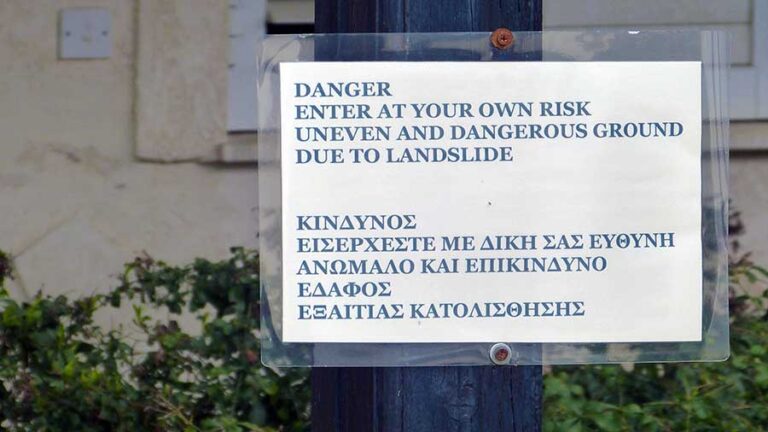
Eviction orders have been issued for 25 more homes in Pissouri, made unsafe for habitation after years of land slippage, the community leader told MPs on Thursday.

Lazaros Lazarou also said that, while government departments decide how to deal with the problem in the area in a holistic way, drainage works will take place as a partial fix.

Currently new studies are underway to ascertain the precise nature of the landslide. The studies should be completed in six months.

In parliament, director of the Geological Survey Department Christodoulos Hadjigeorgiou said the latest surveys in the area show that “the problem is far worse than initially assessed.”

He said that the last drills carried out found gypsum at a depth of 60 metres. They also detected a void at 100 metres – which heightens suspicions that the phenomenon is far more extensive than previously thought.

The department intends to gather all the necessary geological data within the six-month timeframe before authorities undertake any new projects in the community – known as Phase 2.

Elikkos Elia, permanent secretary at the interior ministry, said the six-month period is meant to show whether Phase 2 as previously planned out may continue, or whether different corrective works need to be done.

The geological phenomenon affecting Pissouri is developing in a way different to that previously thought, as a second problematic area has been identified.

He stressed that the Phase 2 works won’t go ahead unless and until the situation has been properly identified – because acting now based on a wrong diagnosis won’t fix the problem.

Speaking to journalists later, Lazarou said it was recently decided to carry out drills to remove groundwater as well as wastewater from the affected area.

He expressed satisfaction with the fact with these moves, but that did not mean it solved the problem as a whole.

“Every day that goes by counts for the local residents,” he added.

The community leader stressed the need for the government to support people who lost their homes and got evicted.

“These people, no matter what the solution, will always be without a home.”

Lazarou also criticised government moves so far, saying that “in a bid to shirk responsibility, for several years government departments said that it was the fault of the architects and engineers – but it turned out that this is a natural disaster.”

For his part, Greens MP Giorgos Papadouris said the state must do more to help people affected by the land slippage.

People who have had to leave their homes in Pissouri get a rent allowance of €2,500 a year – not a lot, especially under current circumstances.

Since 2012, property owners in the Limnes area of Pissouri have seen gaping cracks appear in interior and exterior walls, making their homes uninhabitable, swimming pools destroyed and roads buckle and split apart.

Pavements, footpaths, retaining walls, drains, water pipes and other infrastructure works have all been badly damaged.

Ministry to axe building permits for low-risk developments

The interior ministry on Wednesday announced it will be simplifying the applications process for low-risk developments through changes in the legislation.

(According to a report in Phileleftheros, the plan is to abolish planning permit applications for low-risk developments, such as those including houses and apartment buildings of 8-10 apartments. – editor.)

The legislation will abolish the obligation to secure a planning and building permit for small developments, with the architect and civil engineer taking responsibility for the correctness and completeness of the study.

The regulation being promoted aims to modernise the existing procedures by introducing a more flexible licensing framework, which will reduce the time for examination of applications and improve the service provided to the public within the context of local governance.

The change in the way planning applications are examined was discussed and agreed upon during a meeting on Tuesday between Interior Minister Konstantinos Ioannou, ETEK president Constantinos Constanti, and a delegation.

This change also relates to the decision to introduce a set of measures aimed at the redesign and simplification of procedures, and at the same time the preparation of the existing planning authorities to ensure the operation of local government organisations from 1 July 2024, goes smoothly for the public.

To this end, at the request of the interior minister, the town planning department has drawn up a comprehensive plan with a total of 22 measures and a deadline for implementation by 1 July.

Among other things, this will differentiate the process of carrying out the required consultations with services (such as EAC, the fire service, water board and public works department), by incorporating the requirements at the stage of submitting the application and not during its examination.

It is estimated that this practice will significantly facilitate the licensing process and the time for examining applications by the town planning authority will be reduced.

The implementation of the town planning department’s ‘Ippodamos’ integrated information system will be promoted from 1 July in all local authorities, for the exclusive digital submission of applications for all types of developments.

“In this way, red tape and inconvenience to the public is reduced and application examination schedules are accelerated,” the announcement said.

At the same time, a working group has begun developing a manual for the implementation of common forms and procedures for examining urban planning applications by all local authorities, to ensure uniformity and eliminate time-consuming bureaucratic procedures, which often cause a delay in the issuance of a decision.

The manual will also include other procedures for which a town planning authority is responsible, such as identifying issues in development plans, problem solving sessions in local authorities and so on.

Finally, the interior ministry and ETEK are preparing a training plan for both the members of ETEK and the staff that will be hired in the next period to strengthen local government.

The purpose is to prepare and train them for the correct submission and examination of applications, so that there are no delays in issuing a decision due to the submission of incomplete applications.

The bill will be submitted in the coming weeks to the Legal Service for review and it will be submitted to the House interior committee for discussion and voting.