What to expect for the real estate sector in 2023

The positive trend in the sales of real estate appears set to continue during 2023, facilitated by foreign buyers, originating from both EU and non-EU countries.

At the same time there is a rising trend of sale prices and rents, driven by high demand and the increasing prices of building materials.

We need to stress that the financial environment in 2023 appears, at this time, to be affected by some important fiscal parameters.

The growth rate, (GDP), in 2023 is expected to be around 3%, a healthy increase, after a higher growth in 2022 at 5.7% coming as a reaction to the decline of 2020. Inflation is expected to improve in 2023 compared to 2022 and should be around 4% compared to 8.1% in 2022.

It is within these parameters that the construction sector has been working full steam, as beyond the private field there are a lot of state and private projects under way, with major European Recovery Funds on their way as well.

New constructions

New construction developments, especially residential ones could see some decrease in demand due to sale price increases as well as increased interest rates and an expected reduced VAT sponsorship, factors which should be clearer quite soon.

Something worth pointing out and bound to act positively is the higher sales volume coming from foreign buyers. For example, this January 2023 they accounted for 54% of total sales.

It should be noted that in 2022 there was a 30% increase in real estate sales transactions (contracts deposited at the Land Registry) with Limassol at the top of the table, followed by Paphos. Of the 13,409 real estate sales transactions in 2022 (the highest number since 2008) 5,928, 44%, concern foreign buyers. This significant increase sends the message that perhaps foreign buyers will have a strong and healthy presence in 2023 as well. We should emphasise that while in 2022 50% of foreign buyers were from within the EU, last January three out of four were from outside the EU.

This upward sales trend to foreigners is according to indications expected to continue, with foreign buyers playing a leading role in the current year.

It goes without saying that this upward trend in the property sector shall also depend on whether sales prices and interest rates will increase and to what extend they will do so.

Something else almost certain to affect the course of the real estate market in 2023, are possible further sale price increases, especially those for new flats, mainly due to increases in construction costs.

Cost of materials

An even higher increase in sale prices is to be expected once the full increase in materials is incorporated into selling prices.

The various Real Estate Price Indices place this increase during the last twelve months in the region of 6% to 12% depending on the methodology used.

Even though at a slower rate, it is expected that the prices of used flats will follow the same route as new ones.

Despite sale price increases, real estate prices in Cyprus are favourable when compared to prices for similar properties in neighbouring and European countries.

Comparing prices with past years we need to stress that they are still near what they used to be in 2010, when the Price Indices were launched.

Another area of the real estate sector is that of rents. The increase in rents in 2022 was more noticeable than the increase in sales prices. This is mainly justified by increased demand from Cypriots as well as foreigners.

The facts are quite clear for everyone to consider. Students are flocking back to universities following the pandemic and there is an increasing number of highly paid foreign workers, since due to the incentives given by Cyprus (Headquartering), many foreign companies have set up a corporate base in our country.

Available properties

It should be pointed out that the available volume of properties for rental purposes, especially new ones, is small. Consequently, even a small increase in demand, puts a significant upward pressure on rents.

What is expected for 2023 is that rents will stabilise at the current levels unless the flow of high-wage foreign workers continues.

Something to stress, which certainly affects both sales and rental prices, is that the volume of available old rental apartments, due to the Rent Control Law, continues to create problems such as the creation of ghettoes, their safety risks and of course their poor conditions for tenants living in them.

All the above facts are yet an additional reason to tackle the problems caused by the Rent Control law as well as legislation for commonly owned buildings.

2023 Expectations

This brief analysis leads us to consider that 2023 will present the following trends:

  • Increased interest for sales and rentals from foreigners.
  • An upward trend in new and used residential property prices.
  • A small increase or stabilization in rent prices.
  • Based on the increase of prices, the new VAT status, and interest rates, there will be a stabilisation or even a decreased interest from Cypriots to acquire a dwelling. An increased interest to buy used flats cannot be ruled out.
  • There is bound to be an increased interest from investors since rent returns continue to be at a satisfactory level.

These estimated trends may be reversed at any moment with international economic and political conditions being unstable. Therefore, the estimates must be interpreted taking into account the possibility of a change in today’s international and domestic market conditions.

About the author

Stathis Efstathiou
Property Consultant
FOX Smart Estate Agency
Interest rate hikes threaten property sales

Thousands of borrowers have been stung by interest rate hikes as they see their monthly mortgage instalment increase by hundreds of euros, causing concern about the housing market.

With indications the European Central Bank will continue raising interest rates to tackle inflation, fears of a real estate slump have grown.

Since July, the ECB has raised interest rates by three percentage points and has already hinted at an additional 50 basis point (half a percentage point) increase ahead of its March 16 board meeting, with markets now expecting further hikes of 75 bps before the end of summer.

In real terms, the increase has seen monthly mortgage instalments rise by several hundred euros.

The average mortgage interest rate in July was 2.5%, and the maximum could reach 3%.

So, in the summer, if someone had taken out a loan of €200,000 with a repayment period of 20 years, their instalment would have been €1,060.

However, since the ECB has increased rates, mortgage rates are now 5.5% to 5.75%.

With most housing loans being taken out with a flexible interest rate regulated by the market, the monthly payment for a €200,000 loan has increased by €345.

When the additional increase is expected in mid-March, the overall interest rate will be between 6% and 6.3%, meaning the increase will be over €400, pushing the monthly instalment close to 1,470.

This puts additional pressure on households struggling due to high inflation rates, while young couples starting off will think twice before taking on a mortgage.

Talking to the Financial Mirror, Eleni Averkiou, a Danos/BNPRE Group property consultant, said increased interest rates come when the market is picking up pace, building a positive trend.

She said real estate agents have already recorded a drop in demand in the housing market due to rising inflation and interest rates.

“Following the drop of tight COVID measures, we’ve seen the market take off, mainly driven by local interest and foreign firms and their employees relocating to Cyprus who are looking for housing and office space,” said Averkiou.

Danos believes the market is still on the upside, thanks to locals and foreigners with cash in their pockets.

“This source of the buyer will soon dry out, leaving the industry in search of buyers, while we have seen new local buyers being more hesitant to draw up a loan agreement with a bank.

“We also see a turn to smaller apartments and houses, which is helping the sector remain sustainable through this rough patch,” said Averkiou.

The Danos consultant noted that banks are trying to be helpful, processing the loans as fast as they can, and in the case of credible borrowers, a better interest rate could be on the table.

She argued that authorities should intervene to introduce measures to help unblock the sector.

Negative effects

Averkiou said the one thing authorities should be doing is to find ways to balance out the negative effect of interest rates on households.

“Interest rates and the cost of living have gone up, while salaries have not budged in years.

“The government and the new Finance Minister should be looking into this, finding ways to support new home buyers”.

She proposed the government consider a one-off grant to help families buy their first home.

“This could be combined with projects to breathe new life into city centres, like downtown Nicosia, the suburbs, or even rural areas”.

Although the developments are worrisome for the real estate sector, economists don’t feel this could create another wave of non-performing loans.

Ioannis Tirkides, Chief Economist at the Bank of Cyprus, argued that the financial data differ from what they were in 2013 when the banking crisis broke out.

He said housing affordability is a function of the change in income, housing prices, and interest rates, which determine the cost of servicing debts.

“With interest rates higher and real incomes fading because of inflation, affordability is dropping.

“As a result, demand for borrowing will be affected adversely.

“But this doesn’t mean that non-performing loans will start to rise to any worrisome extent either in the household or the business sectors,” said Tirkides.

He argues several factors make the current credit situation much more manageable than in previous years and certainly more than the bubble years before the crisis erupted.

“The economy is much larger than ten years ago; loans from residents are much less in absolute terms and in relation to GDP, which is true for businesses and households.

“More importantly, particularly for the business sector, the cost of servicing their debts is significantly less than ever before; employment levels will remain high even with a weakening economy”.

He added that the income level in the economy today is 40% higher than it was ten years ago, while loans by residents are less than half in absolute terms and less than one-third as a ratio to GDP.

“Residents’ loans to GDP were 80% at the end of December 2022 compared with 270% at the end of December 2012.”

The economist said that despite the slowing economy, employment levels are expected to remain relatively high, starting from a position of labour shortages in many areas, supporting payment ability.

“Some increases in non-performing loans can be expected, but I wouldn’t expect this to be a serious problem in conditions of an economic slowdown as we expect, even in a modest recession which is not anticipated.”

Sales growing from strength to strength

Cyprus property sales are growing from strength to strength according to official statistics from the Department of Lands and Surveys.

The total number of property sales (as measured by the number of contracts deposited at Land Registry offices) in February 2023 rose 8% compared to February 2022. This is the highest February figure since 2008.

These contracts will have included houses, apartments, commercial buildings and land.

With the exception of Nicosia, where the number fell by 18%, they rose in all other districts.

In percentage terms, Famagusta led the way followed by Paphos, Larnaca and Limassol (with the highest number recorded in Limassol.)

Cyprus Property Sales - February 2023

Year to date sales

Sales during the first two months of 2023 reached 2,222, an increase of 17% compared to the same period last year. Sales have risen in all districts with the exception of Nicosia.

Speaking to StockWatch, economist Tasos Yasemidis said that the number of sales documents filed at the Land Registry demonstrates the dynamics of the sector.

He noted that the value of the sales documents should also be considered, as the sector adapted to demand coming from the domestic market, people choosing Cyprus to relocate with their families, but also from markets such as Israel, the Nordic and Arab countries and the United Kingdom.

He went on to emphasise that “Increased mobility in the market, fuelled by the transfer of corporate headquarters to Cyprus, has strengthened prices and rents.

“Properties in Limassol initially, Paphos and Larnaca in recent months are in particular demand”.

Rental & purchase values continue to rise

The RICS Cyprus Property Price Index with KPMG in Cyprus reveals that property purchase and rental values continued to rise in the fourth quarter of 2022.

According to the Index, the fourth quarter of 2022 saw a further increase in the price of residential properties (apartments and houses), both of which continue to be relatively strong performers over the quarter. Offices also recorded a solid gain while the increase in warehouses was a little more modest. In contrast, retail remains relatively stagnant.

Market values year-on-year

An island-wide increase was observed in the value of all property types:

  • Apartments up 11.94%
  • Houses up 8.99%
  • Retail premises up 1.82%
  • Warehouses up 4.72%
  • Offices up 9.02%

Holiday homes

Holiday apartments and houses continue to experience a firm upward trend in their values over the year.

  • Holiday apartments up 8.31%
  • Holiday houses up 9.65%

Rental values year-on-year

Rental values made significant gains over the year, with the largest increase recorded in holiday apartments, with warehouse and retail bringing up the rear.

  • Apartments up 19.60%
  • Houses up 19.21%
  • Retail premises up 0.94%
  • Warehouses up 1.46%
  • Offices up 10.09%
  • Holiday apartments up 20.88%
  • Holiday houses up 13.00%

Rental yields

In the fourth quarter of 2022, rental yields stood at:

  • Apartments 5.25%
  • Houses 2.83%
  • Retail premises 5.67%
  • Warehouses 4.34%
  • Offices 5.27%
  • Holiday apartments 5.41%
  • Holiday houses 2.71%

On behalf of KPMG in Cyprus, Christophoros Anayiotos, Head of Real Estate Industry Group, commented:

“During the last quarter of 2022 the increasing trend in property values continued in most asset classes, with notable increases in Paphos. The best performing asset classes are again Apartments, followed by Offices and closely by Houses. Retail and Warehouses displayed minor adjustments, apart from a sharp decline in Larnaca Retail. Rental values have also increased, with holiday apartments and residential sector properties (apartments, houses) exhibiting the largest increases – the same trend was also identified in property yields”.

On behalf of RICS, Simon Rubinsohn, RICS Chief Economist, commented:

“The Cypriot economy continued to perform relatively strongly through the back-end of 2022 which helps to explain the continuing increase in real estate prices across the country as demonstrated by the Q4 index. Significantly, feedback to the RICS Global Commercial Property Monitor shows both occupier and investor demand remain firm for now. Some deceleration in the pace of economic growth is likely this year but forward-looking indicators from the Monitor suggest that Cypriot real estate prices will continue to move higher particularly for better quality assets.”

Full details may be found in the RICS Cyprus Property Index with KPMG in Cyprus for Quarter 4 2022

‘Golden passport’ trial postponed yet again

The ongoing trial at the Nicosia court over the ‘golden passports’ took a new turn on Wednesday that led to another postponement until March 8, this time over the composition of the court.

The defendants are former House president Demetris Syllouris, former Akel MP and developer Christakis Giovani, senior lawyer for the Giovani Group Antonis Antoniou, and lawyer Andreas Pittadjis.

The trial proceedings are based on the findings of the Nicolatos investigation into the citizenship-by-investment scheme, prompted by the airing of a report by the Al Jazeera network in 2020.

The defendants face five charges, including conspiracy to defraud the Republic and influencing a public official in violation of the laws criminalising corruption.

Even though the proceedings got underway last October, to date just one defendant – Pittadjis – has entered a plea, having pleaded not guilty. The rest of the defendants have yet to do so, as their lawyers insist the pre-trial objections be heard first.

This time the adjournment request came from the prosecution who said all of the defendants needed to be in court. Only three of the defence lawyers were in court on Wednesday.

During the last hearing on January 30, the judge hinted that the court may not be appropriate to adjudge the case. Its term of office will expire at the end of June.

During Wednesday’s hearing, the prosecution, represented by deputy attorney-general Savvas Angelides said before taking a stand on the merits or demerits of the pre-trial defence arguments, he considered it necessary to raise an issue “for which previously there were only indications but now is a fact” and that legally it needed to be presented to all of the defendants.

He said the current composition of the court would not go beyond June 30 as the president of the current criminal court would be appointed as president of the newly established appeals court, which is due to begin work on July 1. Angelides said all of the defendants needed to appear at the next hearing “for acknowledgment of this”.

The defence lawyers agreed to the adjournment for March 8.

ETEK calls for urgent building safety checks

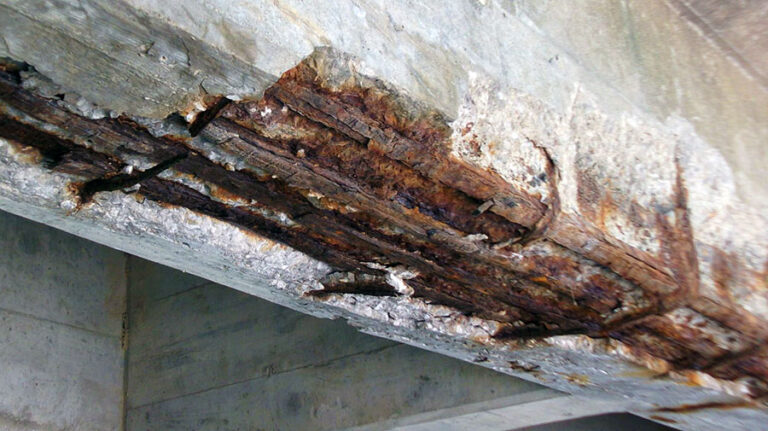
ETEK, the Cyprus Scientific and Technical Chamber, has sent a letter to the Public Works Department calling for urgent safety checks on buildings, starting with those in use by the public.

The recent devastating earthquakes affecting Turkey and Syria serve as a stark reminder of the serious risk faced by Cyprus’ ageing stock of buildings from earthquakes and severe weather events.

It was only in 1994 that the law on mandatory anti-seismic surveys was passed. In 1999 project supervision was mandated and finally, in 2012, the Eurocodes for the Design of structures for earthquake resistance were adopted into law.

Speaking with the Philelftheros, the president of ETEK, Constantinos Constanti, said “I do not claim that an earthquake similar to the one in Turkey will occur, nor should we panic the world, but we must check and strengthen the buildings so that when a large earthquake occurs, the losses, whether they are human or building, are limited to the minimum possible.”

Based on the information released by the Statistical Service in 2019, 204,455 buildings (out of the 431,059 registered) were constructed before the law on mandatory anti-seismic surveys was passed in 1994; of those 13,037 houses were built before 1945 and are more than 78 years old.

Speaking to Rosie Charalambous on the Cyprus News Digest – February 17 podcast, Platonas Stylianou of ETEK said that:

“The problem according to our studies in ETEK is mainly about the old buildings; the existing building stock that is aging and lacks modern construction standards and techniques.

“But it’s mostly because it lacks maintenance and because we don’t have the culture in Cyprus of maintaining and fixing our buildings. That is why in ETEK we have created building visual inspection forms to enable civil engineers to help ensure that the basic requirements to protect the building’s user are met.”

Currently, the owner of the building that has to request the inspection, but ETEK is trying to get regular inspections enforced by law.

The maintenance and repair of the 30,000 jointly-owned buildings are a particular problem as their owners do not always agree to carry out the necessary maintenance work or their anti-seismic strengthening. (Poor design and construction techniques can exacerbate maintenance issues.)

Just in the last year, a fifth-floor balcony collapsed in an old apartment block in Limassol and two balconies in Paphos collapsed leaving seven people injured, four of them seriously.

Cyprus lies in a secondary earthquake zone and experiences frequent minor tremors. The aftershocks of the earthquakes that devastated parts of Turkey and Syria were felt at eastern end of the island. There were no reports of damage or injuries.