Hiking interest rates impact house buyers

The soaring cost of living and higher interest rates threaten to blow open the real estate sector’s recovery, say local stakeholders who want the government to step in.

In comments to the Financial Mirror, Eleni Averkiou, a Danos/BNPRE Group property consultant, said increased interest rates come when the market is picking up pace, building a positive trend.

She said real estate sector stakeholders have already recorded a drop in demand in the housing market due to rising inflation and interest rates.

“Following the drop of tight COVID measures, we’ve seen the market take off, mainly driven by local interest and foreign investors for housing and office space,” said Averkiou.

The latest increase in interest levels will knock on savers and anyone who wants to borrow money, impacting mortgage costs.

As she noted, however, this trend is now being halted as Cypriots in the market for a home are pulling out due to a hike in the cost of living.

Before the summer, the key rate was negative; there have already been three increases to 2%, while the European Central Bank is expected to take rates higher during the meeting of its Governing Council on 15 December.

This will make access to credit more difficult, as the European Central Bank’s analysts have reported that borrowing will be considerably more expensive.

“Mortgage interest rates rose significantly in the first half of this year, which may particularly affect house prices and real estate investment,” European Central Bank researchers were quoted by Phileleftheros daily.

“At a time when the ECB is raising interest rates, the models suggest that a one percentage point increase in mortgage rates could lead to a drop in prices of around 9% after two years,” the researchers note.

Danos believes the market is still on the upside, thanks to locals and foreigners with cash in their pockets.

“This source of buyers will soon dry out, leaving the industry in search of buyers.

“At the moment, the market is sustained by interest in one and two-bedroom flats in upcoming areas in cities, mainly by people with money looking to make an investment,” said Averkiou.

Foreclosures

She argued the authorities should intervene to introduce measures to help unblock the sector.

Averkiou said the one thing authorities should be doing is to find ways to overcome the continuous freeze introduced on the foreclosure law by the parliament.

“MPs need to rethink their policies, as the continuous renewal of the freeze on foreclosures is blocking properties linked to non-performing loans to re-enter the market and making banks more reluctant to give out new housing loans.”

Furthermore, as she suggested, the government should re-visit its building coefficient policy, allowing developers to build more floors and apartments, thus being able to offer lower prices.

According to Danos, the average house price in Cyprus is expected to fall for the first time in two years in 2023.

Asked if now is a good time for someone with cash to buy a house, the Danos representative said the period is favourable for those in the market for a home and do not need a mortgage.

“Now is a good time to buy because prices are dropping.

“It would be a good idea to wait until next year when prices are expected to hit their lowest ebb.”

Meanwhile, the main opposition party AKEL has fired at the government for not taking any action to alleviate the pressure on society from increasing interest rates.

It claims the increase has pushed low-income households into despair, as they cannot make their mortgage instalments as their monthly payments rise.

AKEL official Charis Polycarpou said: “The state should ensure, in cooperation with the Central Bank of Cyprus, that the infamous loan Restructuring Code will be implemented to provide solutions for temporary relief of low-income borrowers.”

He said solutions include extending the loan’s repayment period or even paying off the extra amount at the end of the loan.

The communist party wants the government to persuade banks to channel any windfall profits from the increase in interest rates back into the economy.

“We note that in Spain, the government has even decided to tax banks’ windfall profits from increased interest rates,” said Polycarpou.

Making changes to your apartment

Owners of apartments in Cyprus should soon be able to make alterations to their apartment within a ‘jointly-owned-building’ without the consent of the Management Committee and the other co-owners of the building.

The amendment of the law aims to remove inequality and discrimination against the owners of the jointly-owned-building.

As the law stands at the moment, two owners could apply for consent to make identical changes to their apartment. The Management Committee and the other co-owners of the building could give the green light to one of them and refuse the other.

The current legislation prevents the conversion of any space described in the Title Deed that has an exclusive right of use unless 100% of the co-owners of the jointly-owned-building agree.

Two bills will be revised to accommodate the changes.

News that a new jointly-owned-building law was in the making broke in June this year when the Department of Lands and Surveys published a draft for public consultation.

The draft law aimed to solve a multitude of serious issues with the current law including the lack of management committees, non-payment of communal fees, insurance and partial or total destruction of the building. Its purpose was to provide management committees with the flexibility needed to carry out its obligations, to ensure that unit owners meet their obligations and that properties are properly maintained.

Following the public consultation process, the draft law entered the committee stage earlier this month. This process allows the committee to make changes to the wording of the bill and for new clauses to be added. It should be ready for judicial review within a month.

Hopefully, the new jointly-owned-building law will come into force in early 2023 and will resolve the many problems with the current law.

Bill to protect & prevent trapped buyers

Deputies on Wednesday were discussing a mechanism aimed at protecting – and preventing – trapped buyers, after Finance Minister Constantinos Petrides submitted a bill to the House legal committee.

The aim is to avoid the situation whereby thousands of homeowners were left without their Title Deeds despite paying for their properties in full because the building developers had mortgages on the properties.

The Law on the Sale of Real Estate 2022 he submitted for discussion aims to ensure the transfer of any property will be executed immediately and as soon as the buyer fulfils their contractual obligations.

“The aim is to protect buyers so that the phenomenon of trapped buyers disappears before it even occurs,” Petrides said.

It has a threefold impact by ensuring the project will be completed, the mortgage will be settled and there will be no issues for buyers to obtain a title for their property, he added.

The bill seeks to ensure new buyers have the legal security that when they fulfil their contractual obligations, the transfer of the property will take place, without obstacles, he added.

Specifically, if the project a developer is working on is mortgaged, the developer will be required to inform the buyer. Depending on the development of the project, the full amount of the sale must be deposited to the bank and the bank will confirm that the project has been completed.

The bank will also provide a written confirmation to the property buyer that by depositing the full amount, the mortgage will be cleared.

Should the bank default on its commitment, the head of the land registry will clear the property of the mortgage.

“This is the only way to ensure buyers’ money will go for the property the buyer is paying for and we will never again see half-finished projects like we did before, with buyers falling victim,” Petrides said.

The procedure follows a Central Bank of Cyprus directive and is compliant with legislation other countries follow, he added.

In 2015, parliament passed a law aimed at helping thousands of owners who had paid for their properties in full but had not been issued with their Title Deeds because the developers had their own mortgages on the properties.

The head of the land registry had been granted the authority to exempt, eliminate, transfer and cancel mortgages and or other encumbrances, depending on the case and under certain conditions, as the state sought to sort out the Title Deed mess.

In July 2018 banks and the legislature struck a gentlemen’s agreement aiming to resolve the matter. In exchange for MPs approving legislation, making it easier for banks to collect their dues, the banks association agreed not to raise any objections over the issue of buyers trapped without Title Deeds as long as the transaction was done in good faith.

The protection afforded to ‘trapped’ property buyers was last year extended until the end of 2022.

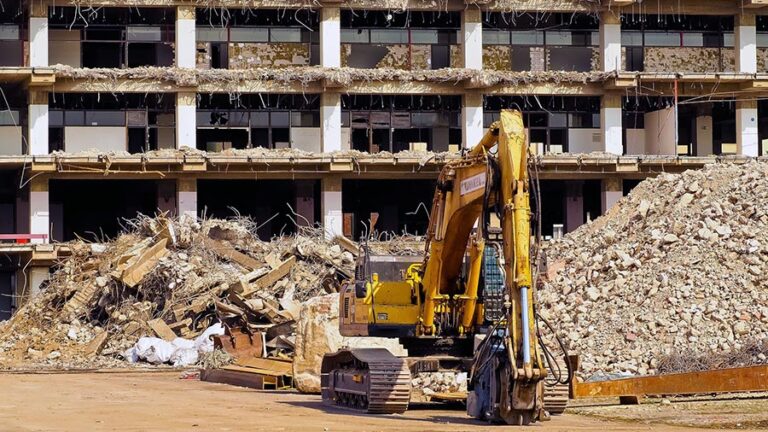
Thousands of buildings should be demolished

The thousands of buildings suffering from planning infringements that cannot be resolved should probably be demolished, as this is the only solution according to Interior Minister Nicos Nouris.

Speaking at the House Finance Committee on Monday reported on the situation regarding the backlog of Title Deeds.

Back in 2015 around 45,000 Title Deed applications were waiting to be approved. Since then, some 30,000 deeds had been issued, but as many as 15,000 applications were still waiting for approval.

Mr Nouris noted that “However, a large number of these buildings cannot be granted a Title Deed (because of planning infringements) and perhaps the only remedy would be their demolition.”

When the minister spoke at the Land Development Conference in September 2021 he announced that the Title Deed backlog had been reduced to 19,190 adding that 8,000 deeds will be issued in 2022 without problems and a further 6,500 will be issued by the end of 2022 with notes.

However, it seems that there are a large number of buildings that cannot even be issued Title Deeds with notes and should therefore be demolished.

The underlying cause of planning infringements is the total lack of independent inspections of properties while they’re under construction. Independent inspections only take place after the developer advises the planning authority after the company’s supervising engineer/architect signs off the building(s) as complete.

What is needed to help avoid planning infringements is independent inspections at key stages of construction. These would highlight potential problems allowing developers to correct them before continuing work. Failure to resolve any problems should be dealt with severely.

There are numerous rogues and charlatans in the building industry who build without having first received the required permits and permissions. Others who have received the required permits are known to ignore them and build whatever they like.

Given the current situation with no independent inspections as construction takes place, it’s no wonder that the only solution available currently is for a ‘large number of buildings’ to be demolished.

But what redress will be available to those who have bought these properties and who may have been living in them for many years?


Who will benefit from Mortgage to Rent scheme?

Potentially 4,000 households will benefit from the Mortgage to Rent scheme, the government’s latest lifeline for distressed borrowers to help them keep their homes, according to a Finance Ministry official.

In comments to state radio CyBC, the Finance Ministry’s permanent secretary George Panteli said that 3,000 to 4,000 distressed borrowers would be included in the new government scheme.

He said that the scheme is currently under the microscope of the Directorate-General for Competition (GDA) of the European Commission and will be tabled before the House before the end of the year.

Panteli said the process in Brussels is almost done with its evaluation, with “GDA technocrats mostly asking technical questions related to the value of homes and asset to debt swap agreements between banking institutions and borrowers.

“The government’s goal is to include as many vulnerable households as possible.”

Beneficiaries will be people from low-income groups and pensioners, regardless of whether they have applied to the ESTIA scheme.

The program will also include borrowers who have defaulted on their mortgage but saw their application for ESTIA or other schemes rejected, as they were classified as unviable due to their low income.

The plan is for KEDIPES, the state-owned Asset Management Company, the former Coop Bank turned bad bank, to acquire the properties tied to the mortgage at 50% to 60% of their current value.

This way, the debtors would maintain occupancy of the property but not its ownership.

In exchange, the outstanding debt would be written off.

Borrowers will then be given the option to stay on the property, paying rent equal to 2% or 3% of its market value.

Rent will be adjusted annually based on a formula to be decided, while borrowers will have the option of state aid in case of any increases they cannot meet.

It will entail a 15-year payment duration, while borrowers could submit a proposal to acquire the property after five years.

The value of the home must not exceed €250,000.

Initially, Nicosia had been preparing a mortgage-to-rent scheme to cover non-performing loans collateralised by primary residences and SME premises, with a value of up to €350,000.

However, Brussels shot it down in June, demanding that the scheme only cover borrowers with homes worth under €250,000.

The GDA has also rejected the government’s plans to expand the scheme to cover loans collateralised by primary businesses.

According to its initial design, the scheme has a contractual value of €3 billion.

Significant real estate repricing is coming

Real estate stocks have signalled that significant repricing is coming and the market has three big challenges ahead:

  1. Political risk due to the war in Ukraine and in particular its impact on the Euro and the EU’s institutions,
  2. Increase in residential rents as the population increases due to in-migration and locals postpone buying a home due to higher borrowing costs, and
  3. Higher interest rates and returns from alternative investments that is causing a repricing of commercial real estate investments.

Let’s focus on the repricing of commercial real estate investments, as this will repeatedly play out during 2023 and beyond.

A real estate investor assesses a commercial, income producing property according to three parameters that collectively make up the capitalisation rate of the income generated by the property. These parameters are the risk-free rate, the risk premium, and the expected annual growth in a property’s capital value. The risk-free rate is typically the interest rate paid on a 10-year government bond. The risk-premium is the excess compensation received by an investor for taking risk in a commercial real estate deal, which is typically 2.0%. The growth in capital values is usually the expected, annualised rate of growth in property prices over the next 3-5 years.

For example, if the 10-year government bond rate is 1.0%, the risk premium is 2.0%, and the expectation is that capital values will remain broadly flat, then the capitalisation rate equals 3.0%. A property that generates a rent of €12,000 per annum would be valued by dividing €12,000 by 3.0%, which equates to €400,000, i.e. someone would buy the property for €400,000 and it would generate 3.0% on their invested amount. This was roughly the case in Cyprus up to February 2022 (the 10-year government bond yield was at 0.6% in January 2022).

Cyprus’ 10-year government bond rate is now 4.0%, the risk premium of investing in real estate is now higher due to increased political risk globally and is probably closer to 2.5%, and the expected growth in capital values is negative, i.e. the expectation is that they will decrease over the medium term (let’s assume that this is only by 1.0% per annum). Thus, 4.0% plus 2.5% minus -1.0%, means that the capitalisation rate is now closer to 7.5%. The same property that generates €12,000 per annum is now valued at €160,000, i.e. a decrease of 60%.

As the population of Cyprus is increasing due to immigration and commercial rents continue to adjust to a growing economy, let’s assume that the property’s rent is expected to increase by 20% to €14,400. At that rent, using the capitalisation rate of 7.5%, we would have a value of €192,000, i.e. a decrease of 52% compared to the original €400,000.

Madness? Crazy? Will never happen!

The STOXX Europe 600, a stock index of 600 European stocks among 17 European countries, is down 14% year-on-year. Its sub-component, the STOOX Europe 600 real estate, is down 41% year-on-year. The stock market is “telling us” that European stocks are worth 14% less now than they did a year ago, with real estate stocks worth 41% less than they did a year ago. As the stock market tends to work more efficiently that the real estate market, its logical to expect that significant repricing will likely take place over the next couple of years as the increase in interest rates, heightened political risks, and higher returns form alternative investments are priced into real estate assets.

The repricing of real estate across the continent will have significant effects on investors’ portfolios, alternative finance providers, and banks. Investors should examine potential transactions not only from a financial perspective, but also taking into consideration the macro-economic drivers that affect a specific area or property. Whilst the hope is that any repricing will be smoothed-out as governments absorb a significant part of the increased cost of energy, the bond market has set the foundations for a wide-spread repricing across multiple asset classes. In this turbulent environment, risk takers will have multiple opportunities to capitalise upon but the situation in capital markets remains fluid.

Interesting times ahead.

About the Author

Pavlos Loizou, CEO, WiRE FS