Nine acquitted in golden passport case

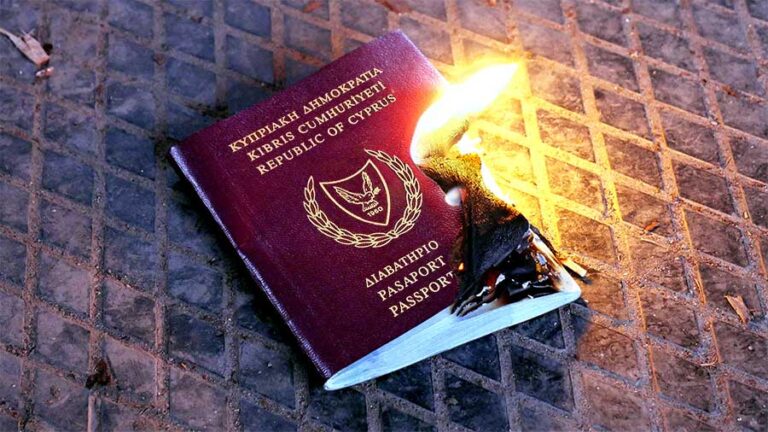
Nine suspects in a case relating to the controversial citizenship-by-investment programme were cleared of all charges by the Larnaca criminal court on Friday.

Five natural persons and four legal entities were acquitted of 36 charges in total in a case concerning the naturalisation of a foreign applicant. The criminal court issued a unanimous decision, which numbered 252 pages.

A total of five people and four companies were accused of being involved in helping to get Cypriot citizenship for an Iranian national and his family after he allegedly presented forged or tampered documents to support the request to a Larnaca law firm.

The accused were facing a total of 36 criminal charges, inter alia forgery, circulation of false documents and conspiracy to commit a crime.

The Iranian national was reportedly sought by Interpol for fraud-related crimes and for embezzling large amounts of money.

The case was first filed with Larnaca district court last May and related to the findings of an investigative committee tasked to investigate Cyprus’ citizenship-by-investment scheme.

“Today’s unanimous ruling of the court puts an end to a prosecution that was indefensible and unjustified from the outset,” a statement released by the acquitted law firm released on Friday said.

“This case was never about corruption, but about a naturalisation case for which, in March 2019, we asked the authorities to intervene, but they did nothing.

“As always, we have acted with complete transparency and have cooperated with the authorities. Our full vindication is the response of the Cypriot justice system to those who tried to question our integrity in order to serve personal interests.

“We are a law firm. The sole focus of our actions is to defend the rights of our clients and partners,” the statement concluded.

The committee’s report accused the law firm of acting as intermediaries with the intent to secure Cypriot citizenship for the Iranian national and his family, who were also issued court orders against but never located by the authorities.

In August 2020, the Al Jazeera news network aired a report – dubbed The Cyprus Papers – on the island’s citizenship-by-investment programme, based on an investigation of “more than 1,400 leaked documents.”

The network said Cyprus had been granting citizenships to dubious individuals, a claim fiercely rejected by the government, which nevertheless launched a full-scale probe into the programme, going back to 2008.

But even before the probe had time to start, Al Jazeera aired an undercover video showing former House president Demetris Syllouris and former Akel MP Christakis Giovanis offering to help a pretend Chinese businessman with a criminal record secure citizenship.

The pair were forced to resign, as the government hastily terminated the programme.

A subsequent committee of inquiry looking into the scheme issued a damning report, finding that close to 52 per cent of the citizenships had been unlawful.


Short-term lets must be properly regulated

The Association of Cyprus Tourist Enterprises (STEK) on Thursday issued a warning against the dangers posed by short-term rentals, saying that the rapid expansion of such practices in Cyprus needs to be dealt with through a number of practical solutions.

“In view of the intensifying pressures to regulate the trend of short-term rentals, in the style of Airbnb type, at a pan-European level, the Association of Cyprus Tourist Enterprises wishes to express its strong concerns about this matter and make specific recommendations in order to better manage it,” the association said in a statement.

What is more, the association stated that insufficient regulation of properties that are used in this manner has created a number of obvious chain problems.

“As a result of this, it is necessary to institute additional provisions beyond those provided for in the current legislation,” the association explained.

The association noted that in many European cities, particularly cities with significant tourist activities and international visitors, local municipalities have proceeded to implement their own strict regulations.

“For example, in Paris short-term rental is allowed for 120 days a year, in London and Reykjavík property rental is allowed for 90 days, while in Amsterdam short-term rentals are only allowed for a maximum of 30 days, while in some parts of the city this practice is completely prohibited,” STEK said.

STEK also mentioned that in Glasgow, Scotland, it is only allowed for someone to rent a room in an apartment located in a building with a common entrance. In addition, in Barcelona, no new permits are being granted for short-term rentals, while short-term rentals are completely prohibited in residential areas in Palma de Mallorca.

“The rapid spread of short-term rentals has led to rents skyrocketing in several areas, making them prohibitive for permanent residents or making it extremely difficult for local citizens to find permanent housing,” the association said.

“Moreover, serious nuisance problems are often created for the permanent, local residents by the temporary tenants of these accommodations,” it added.

The association went on to say that local authorities actually end up incurring significant revenue losses by not taxing short-term rental properties.

It also highlighted the issue of unfair competition with hotels and other regulated accommodation units that have to be compliant with numerous regulatory standards, labour agreements, as well as other rules and regulations.

“STEK considers it unacceptable that there should be a further extension of the grace period for the registration of the specific accommodation units in the relevant register, and no further extension should be granted to illegal practices and tax evasion,” the association said.

To this end, the association has recommended a number of measures in order to facilitate the effective regulation of short-term leases.

Firstly, the association noted, renting a property should only be allowed for a specific period of time, which does not exceed 90 days on an annual basis.

The association further stated that in certain areas or even cities where permanent residents find it difficult to find houses or apartments for long-term rental, the government should consider banning short-term rental properties outright.

“Relevant estimates speak of the uncontrolled operation of approximately between 80,000 and 100,000 beds in short-term rental properties, which is approximately as many as the legal hotel industry has,” STEK said.

“Of these beds, only 15,000 have been registered in the relevant register until recently, so with the implementation of the relevant legislation from February 2023, the authorities will have to carry out permanent checks in order to crack down on illegality,” it added.

Moreover, the association also said that the government should consider making the payment of an overnight stay fee mandatory.

Finally, it called on the government to force such properties to adopt safety and health regulations, in a similar fashion that hotels and other regulated properties have to.

Jointly-owned building law in committee

In June I published details of a draft jointly-owned building law designed to solve a host of serious issues with the current law including the lack of management committees, non-payment of communal fees, insurance, etc., etc.

Prepared by the Department of Lands and Surveys, the objective of the law is to provide management committees with the flexibility to carry out its obligations, to ensure that unit owners meet their obligations and that properties are properly maintained.

The new bill has completed its public consultation phase and is now in the final stages of preparation; it should be ready for judicial review in a month.

Stockwatch reported on some of the discussions taking place on the bill at the Parliament’s interior committee.

Speaking to the committee DISY MP Nikos Georgiou said that the state must regulate the problems related to the maintenance and repair of jointly-owned buildings. He referred to a recent incident in Limassol where part of a balcony of a jointly-owned building in Limassol collapsed.

The MP added that apartment buildings in this condition pose a risk to the public health and safety of the owners, tenants and those who live outside these buildings.

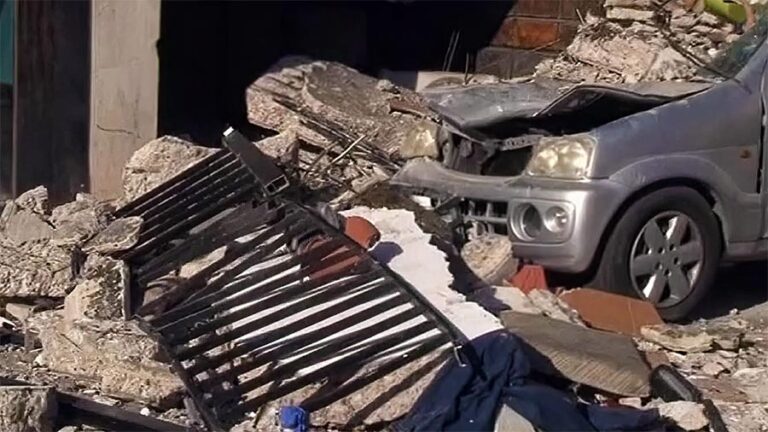
(There were two such incidents reported in October in which one woman was slightly injured. Also in October, a woman died after falling from a balcony in Paphos. In July, four balconies in Paphos collapsed.)

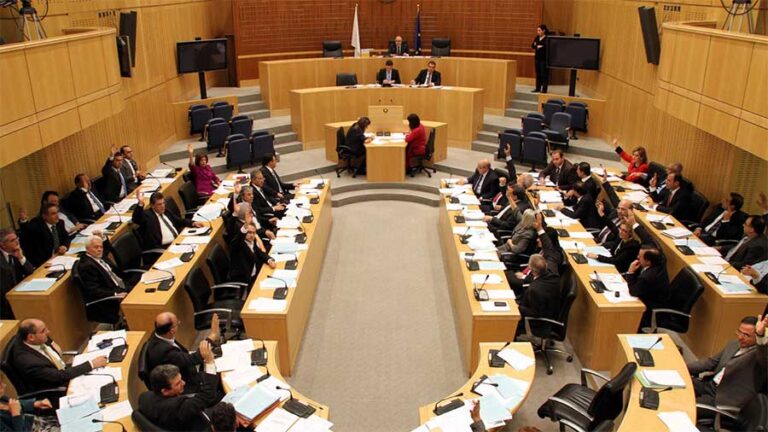
Chairman of the committee, AKEL MP Aristos Damianou, said that the majority of jointly-owned buildings have not been registered and the committee will examine the issue in the coming days.

Mr Damianou added that in the meantime many companies have taken over the management of jointly-owned buildings that they have developed, which may cause questions. In many cases these buildings have no management committees and this causes problems due to their non-existence and non-payment of due amounts.

According to the Ministry, new bill will make the establishment of a management committee mandatory and it will have to be registered.

I expect there will be further discussion on this new bill and it will resolve the multitude of problems with the existing law.

Non-payment of communal fees

In my 20+ years experience, the most urgent problem to address is the non-payment of communal fees. Debts must be collected as soon as possible if jointly-owned buildings are not going to fall into disrepair and collapse like those reported in Limassol and Paphos. For example:

  • Instigating a small court claims procedure where debts will be repaid in 2 or 3 weeks.
  • Seizing movable property owned by the debtor and selling it to repay the debt.
  • Securing the property thereby preventing its owner (or tenant) from entering the property.
  • Restricting withdrawals/transfers from the debtor’s bank account(s) until the debt has been paid.
  • Preventing the sale, renting, mortgaging and otherwise disposing of properties whose owners have not paid their communal fees.
  • Lodging a lien against a contract of sale in cases where no title deed has been issued in the name of the debtor.

Of course, there will be genuine cases of hardship preventing owners from paying communal fees. These must be taken into account and a settlement negotiated.

The final two on the list above, preventing the sale and lodging a lien, will not achieve the  quick results necessary and will only act as a final stop-gap measure.

Under the current law, management committees can take legal action against the debtor. But this does not provide a solution to the problem.

Court cases can take 3 or 4 years to be heard and even if successful payment is not assured and further court action is required. A court may also the debtor to repay the debt in low value instalments, and it could take many years to recover the debt (assuming the debtor abides by the court ruling.)

The kiss of death approach

The new law must not obligate the owners who pay their communal fees to pay the debt of those who do not pay. These owners will refuse to pay the debt and, as a consequence, often refuse to pay their communal fees as well – “Why should I pay when someone else is not paying?”. Such a move will have a domino effect until no-one pays, the management committee resigns and the jointly-owned building falls into disrepair.

Property tax law to help refugees corrected

In February 2021 the House of Representatives passed an unenforceable law levying a 0.4 per cent tax on all sales of immovable property, the proceeds of which were to go towards supporting Greek Cypriot refugees.

The legislative proposal, which was passed by a unanimous vote in the plenum, aimed to compensate refugees for their inability to possess, have access to, or otherwise gainfully use their land in the occupied north of the Republic.

It provided for a tax on any sale/transfer of real estate, as well as on the transfer of shares in a company where that company owns immovable property or where the transfer of the shares results in the buyer taking control of the corporation or exploiting the immovable property in question.

The funds raised were to go into a fund managed by the Central Agency for the Equal Distribution of Burdens, the state agency tasked with assisting refugees of the 1974 war.

However, there was an inexcusable flaw in the law as it failed to specify how the tax would be levied and which government department would be responsible for its collection.

As a consequence, the law was unenforceable!

Last week, more than 18 months after the unenforceable law was passed, a revised law was passed designating the Tax Department responsible for levying and collecting the 0.4 per cent tax.

Although the law was passed by a unanimous vote in the plenum, a clause stipulating that the tax would apply from February 2021 when the original, unenforceable law was passed resulted in some friction. An amendment to cancel this clause, which was submitted by DISY, was rejected.

The 0.4 per cent tax is payable by the seller of the property.

Who are Greek Cypriot refugees?

Cypriot refugees are the Cypriot nationals or Cyprus residents who had their main residence in an area in the north of the Republic that was forcibly evacuated during the 1974 Turkish invasion. The government of Cyprus also recognizes as refugees the descendants of the original refugees in the male line.

Since 1974, the number of Greek Cypriot refugees has ballooned.

Larnaca port-marina project largest in Cyprus

The €1.2 billion integrated port-marina development project in Larnaca is the largest ever undertaken in Cyprus, said Transport Minister Yiannis Karousos.

He expressed satisfaction that the Cyprus-Israeli venture is proceeding with implementing the redevelopment contract.

Addressing a ceremony on Tuesday evening, during which Larnaca Marina opened its gates to the public, Karousos said this “integrated tourism experience” is a benchmark infrastructure.

“I am proud of what we have achieved for Larnaca, including the major development of the port and marina, which is a project that will greatly change the city of Zenon, while the redevelopment of the marina will provide many experiences.”

He added that the project “is the biggest investment we have in Cyprus at the moment.

“We are very pleased to see that the investor is proceeding with implementing the contract.

“We are lucky there are such reliable investors, and the opening of the Larnaca Marina to the public means that this great vision for the city is slowly beginning to materialise.”

Among the projects completed in Larnaca are the Archaeological Museum and the upgrading of the Larnaca-Dhekelia road, a project the local community has been demanding for decades.

He said the ministry had also done its bit to move oil tanks from the coastal front so that Larnaca has an excellent prospect for development.

“A few days ago, we discussed with the mayor various issues such as the creation of breakwaters to deal with the erosion that exists so that beaches and a proper coastal front can be created”.

The build–operate–transfer (BOT) project will see the government receiving fixed rent and a percentage of the revenue through a concession agreement with the port/marina operated on a 40-year lease and real estate acquired on a 125-year lease.

After 40 years, the port and marina can be returned to the government.

Reconstruction of the existing marina will accommodate 650 yachts and offer facilities such as boat repairs.

Property sales €1.65 billion in Q3

0

Despite the adverse economic conditions, the Cyprus real estate market saw a 34% increase in the value of property transactions in the third quarter, rising to €1.65 billion from €1.2 billion in Q2.

Real estate expert Marinos Kinaigirou said interest from Cypriot buyers has remained steady while demand from foreign companies is increasing.

According to the Department of Land and Surveys data, 5,566 transactions worth €1.65 billion were recorded in Q3 (July-September), from €1.2 billion in Q2 to €1.3 billion in Q1.

“Despite maintaining strong inflationary conditions, the sector further increased its momentum during the third quarter of the year,” said the Real Estate Agents Registration Council.

Limassol was the lead district for both total sales (1,781) and their value (€762 million), with heightened interest in fields (879).

In Nicosia, there were 1,442 transactions worth €363 million. The largest volume of transactions concerned fields (485) and land plots (430).

Paphos recorded Q3 sales of 876 valued at €276 million.

During Q3, four large land transactions were recorded in Ayia Marina exceeding €65 million.

In Larnaca, there were 1,147 property sales worth €188 million, and Famagusta had 320 transactions valued at €63 million with a strong interest in apartments (114).

Chair of the Real Estate Agents Registration Council Marinos Kinaigirou said: “We estimate that at some point inflation, the rise in construction costs and the increase in lending rates will affect the market; however, it seems there is increased demand from foreign companies mainly for large prime plots in Limassol, Larnaca and Paphos”.

The Council ensures access to the comparative property sales of the Land Surveying Department to all licensed real estate agents as part of its effort to increase transparency and information for professionals and the public.

The Council presents the data of the sector every quarter.