EC opens infringement for “selling” citizenship

Today, the European Commission is launching infringement procedures against Cyprus and Malta by issuing letters of formal notice regarding their investor citizenship schemes also referred to as “golden passport” schemes.

The Commission considers that the granting by these Member States of their nationality – and thereby EU citizenship – in exchange for a pre-determined payment or investment and without a genuine link with the Member States concerned, is not compatible with the principle of sincere cooperation enshrined in Article 4(3) of the Treaty on European Union. This also undermines the integrity of the status of EU citizenship provided for in Article 20 of the Treaty on the Functioning of the European Union.

Due to the nature of EU citizenship, such schemes have implications for the Union as a whole. When a Member State awards nationality, the person concerned automatically becomes an EU citizen and enjoys all rights linked to this status, such as the right to move, reside and work freely within the EU, or the right to vote in municipal elections as well as elections to the European Parliament. As a consequence, the effects of investor citizenship schemes are neither limited to the Member States operating them, nor are they neutral with regard to other Member States and the EU as a whole.

The Commission considers that the granting of EU citizenship for pre-determined payments or investments without any genuine link with the Member States concerned, undermines the essence of EU citizenship.

Next steps

The Cypriot and Maltese governments have two months to reply to the letters of formal notice. If the replies are not satisfactory, the Commission may issue a Reasoned Opinion in this matter.

Background

Investor citizenship schemes allow a person to acquire a new nationality based on payment or investment alone. These schemes are different to investor residence schemes (or “golden visas”), which allow third-country nationals, subject to certain conditions, to obtain a residence permit to live in an EU country.

The conditions for obtaining and forfeiting national citizenship are regulated by the national law of each Member State, subject to due respect for EU law. As nationality of a Member State is the only precondition for EU citizenship and access to rights conferred by the Treaties, the Commission has been closely monitoring investor schemes granting the nationality of Member States.

The Commission has frequently raised its serious concerns about investor citizenship schemes and certain risks that are inherent in such schemes. As mentioned in the Commission’s report of January 2019, those risks relate in particular to security, money laundering, tax evasion and corruption and the Commission has been monitoring wider issues of compliance with EU law raised by investor citizenship and residence schemes. In April 2020, the Commission wrote to the Member States concerned setting out its concerns and asking for further information about the schemes.

In a resolution adopted on 10 July 2020, the European Parliament reiterated its earlier calls on Member States to phase out all existing citizenship by investment (CBI) or residency by investment (RBI) schemes as soon as possible. As stated by President von der Leyen in the State of the Union Address of 16 September 2020, European values are not for sale.

The Commission is also writing again to Bulgaria to highlight its concerns regarding an investor citizenship scheme operated by that Member State and requesting further details. The Bulgarian government has one month to reply to the letter requesting further information, following which the Commission will decide on the next steps.

European Commission – Press release

Investor citizenship schemes: European Commission opens infringements against Cyprus and Malta for “selling” EU citizenship

New homes construction recovering

The number of new homes for which building permits have been issued so far this year, which suffered during the COVID-19 lockdown, have recovered and are now ahead of the number issued during the same period last year.

The statistical service reports that during July 2020 the number of building permits authorised stood at 740. The value of these permits reached €441.8 million and their total area 340.2 thousand square metres.

Those 740 permits were authorised for:

  • Residential buildings – 538
  • Non-residential buildings – 108
  • Community residences – 1
  • Civil engineering projects – 31
  • Division of plots of land – 47
  • Road construction – 15

Building permits for new homes

The 538 residential building permits provided for the construction of 1,141 new homes (dwellings). These comprised 364 single houses; an increase of 0.8% compared to the 361 authorised in July 2019 – and 174 multiple housing units including apartments, semis, townhouses and other residential complexes; an increase of 20.2% compared to the 129 authorised in July 2019.

Building Permits Issued for the Construction of New Homes
(Number of Dwellings)

Month 2019 (Dwellings) 2020 (Dwellings) Increase/Decrease %age Change
January 548 696 148 27.0%
February 576 680 104 18.1%
March 615 524 -91 -14.8%
April 742 339 -403 -54.3%
May 907 956 49 5.4%
June 812 976 470 20.2%
July 1,028 1,141
113
11.0%
Totals 5,228 5,312 84 1.6%

Of those 1,141 new homes, 510 are destined for Nicosia, 383 for Limassol, 112 for Larnaca, 84 for Paphos and 52 for Famagusta.

Annual construction figures

A total of 3,893 building permits were authorised during the period January to July 2020; a fall of 5.9% compared to 4,136 in the same period last year. Their total area fell by 7.5%, their total value fell by 22.3%. However, the number of permits authorised for the construction of new homes rose by 1.6%.

The 2,854 residential building permits authorised during the period January to July 2020 provided for the construction of 5,312 new homes; 1,984 in Nicosia, 1,755 in Limassol, 638 in Larnaca, 574 in Paphos and 361 in Famagusta.

According to the Cyprus Statistical Service, building permits constitute a leading indicator of future activity in the construction sector.

Giovanis’ Sun City project illegalities (update)

The Sun City project in Ayia Napa, in which the former Akel deputy Christakis Giovanis’ Giovani Group is involved, is facing allegations of illegally building two extra floors and questions over whether environmental impact assessments were thorough enough.

Located in the Ayia Thekla area, next to the marina, the Giovani Group project has also been scrutinised by the European Commission.

Giovanis resigned his post earlier this month after he appeared ready in an undercover Al Jazeera video to help a Chinese businessman with a criminal record – who it later emerged was fictitious – secure a Cypriot passport.

The five-star resort received permission for seven levels, five stories, a basement and ground floor, but construction appears to violate these terms with seven stories currently under construction. Permission was granted for 203 rooms comprising an area of 15,930m2.

But as reported by daily Phileleftheros, the plot of land in question falls within the tourist zone T2a of the Sotira Municipality – where only hotels of up to three floors or five levels are allowed.

It is not immediately clear how permission for seven levels in total was granted.

The Sun City project now appears to be set for nine levels in total, almost double what would usually be permitted.

The application was rejected but the company filed an appeal. The appeal was examined as recently as October 12 and according to Phileleftheros, the ministerial committee once again rejected the move.

It is understood that “the necessary measures are being taken to end the illegalities”.

As for the environmental aspect of the Sun City project, the town planning department requested an environmental impact assessment on September 6, 2016.

Less than three months later, November 29, the environmental assessment was submitted, and the department granted permission for the project on April 4, 2017.

The permission was given to JimChang Cyprus Developing Co. Limited, of which Giovanis is listed as a director.

Sun City is also located near two areas of special ecological value, which have been included in the European network of nature conservation areas Natura 2000.

These include the special protection area (SPA) of Agia Thekla – Liopetri and the site of community importance (SCI) Potamos Liopetriou.

The European Commission has launched infringement procedures against Cyprus for failing to comply with the EU Directives for nature protection on several projects including this one.

A spokesperson for the Giovani Group told Phileleftheros that there are many inaccuracies in the issues raised above.

He claimed that there were some “procedural” issues and that while there may appear to be seven floors, the top floor in fact acts as a support for the hotel.

Update 21 October (reporting Financial Mirror)
It’s been reported today that the Sun City hotel complex in Ayia Napa involving Giovani Group developers of disgraced AKEL MP Christakis Giovanis’ will have two illegal extra floors knocked down.

On Wednesday, website Philenews quoted Interior Minister Nicos Nouris saying: “Local authorities have concluded that the development was carried out in violation of environmental impact assessment provisions and town planning regulations.”

According to Philenews, the developers are obliged, within a time limit set, to demolish the additional floors that were built illegally and restore the project on the basis of provisions set in the environmental approval and urban planning permit.

The European Commission has launched infringement procedures against Cyprus for failing to comply with the EU Directives for nature protection on several projects including this one.

Cyprus in hot water with EU over ‘golden passport’ scheme

The EU said it will begin legal action against Cyprus and Malta over their controversial “golden passport” schemes for foreign investors, which critics say have been exploited by criminals.

Cyprus said last week it would scrap its programme, which has brought the island some seven billion euros, from next month after an undercover TV investigation by Al Jazeera exposed abuses.

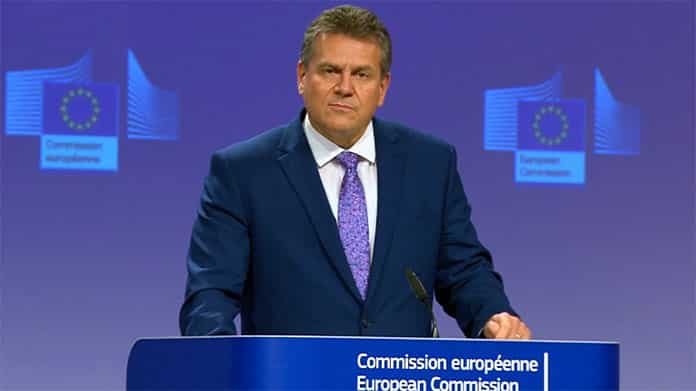
European Commission vice-president Maros Sefcovic said that “infringement procedures” would be launched against the two countries on Tuesday.

“It’s very important to underline the fact that the commission has frequently raised its serious concerns about those schemes with the member states concerned, and the latest developments only reaffirm those concerns,” Sefcovic told reporters.

“We will continue our intensive contacts with both Cyprus and Malta to make sure European law in this area would be properly respected.”

Sefcovic said more details of the legal action would be announced once it is launched on Tuesday.

Under the Cypriot scheme, the government handed out passports in exchange for an investment of €2.5 million, though Nicosia is now re-examining all 4,000 successful cases.

Malta, which started selling passports to wealthy foreigners in 2014, last month arrested former prime minister Joseph Muscat’s chief of staff as part of a probe into alleged kickbacks connected to its own golden passport scheme.

Lack of transparency helps corruption spread

The entrapment video by the sensationalist broadcaster Al Jazeera may have disturbed some people, but it was a wake-up call for Cyprus society that continues to live in Lalaland, unwilling to rock the boat or challenge the establishment.

We have heard countless “I will support you” from politicians – it’s their favourite phrase.

But is it a crime? Is ‘intent to support’ a convictable offence?

For sure, stupidity is not a crime, otherwise, we would have lots of such criminals, more than half of the 56 MPs and many of the current and past cabinets of the last six decades.

So then, isn’t Demetris Syllouris innocent until proven guilty?

Did he commit a crime? Hardly, according to the video.

Could he? Who knows? Had he in the past?

This is what the Auditor General wanted to probe, but the current administration prevented him from doing so, simply because Odysseas Michaelides would open Pandora’s Box.

If the czar of public spending oversight continues with his investigation, he could take everyone down – the President of the Republic, his Cabinet, their predecessors, defenders of the institution (Attorney Generals, Auditor Generals, central bankers), political party leaders, MPs, mayors, municipal councillors.

Apart from the cash under the table, most of these people often get high from the power of corruption, not so much the backhanders, per se.

Even teachers, civil servants and police enjoy the ride of fame, giving them that 60 seconds of exerting influence, for whatever reason.

And let’s not get started on the clergy:

To commit an alleged crime of the magnitude revealed in the Al Jazeera exposé, one cannot do it alone, but the heads of corrupt civil servants will not roll, especially not six months away from the next parliamentary elections.

These people got there with the help of their politician friends, some of whom are lecturing everyone else on ethics.

They will never admit that they are equally accountable for the dirty dealings of their MPs, as they are equally to blame for turning a blind eye.

In Cyprus, everybody knows, but nobody speaks.

The reputation of the political establishment is at stake at the next polls in May 2021.

Political parties that have lost all credibility will fight for their survival, the same way that some do not want to solve the Cyprus Problem, for fear of not having fodder to argue about or a chair to sit on.

And we, the media, share part of the blame, for our inability (though not unwillingness) to uncover the truth, no matter how painful.

There are a handful of hard-hitting journalists in print or radio who do a tremendous job, but it is not true that others “succumb to pressure” from their publisher/broadcaster employers, as ‘media academics’ like to claim from the comfort of their sofa.

It is the same string of actors who paraded on our screens or were mentioned in the Al Jazeera video who influence the media, as well as party leaders and elected officials who exert pressure on the media.

Very often, even threatening to detach themselves from being the leaks or sources of so many local revelations.

And the lack of cooperation from public servants prevents the truth from coming out, which is why the whistleblowers are nowhere to be seen and remain unprotected.

No matter how hard a reporter tries, we do not have the mechanism of submitting ‘public interest question’ in the name of transparency.

Even the law on phone-tapping, so critical in catching drug lords and underworld bosses, has struggled to get parliamentary approval, where half the MPs have a conflict of interest, as they continue to work in the private sector, in firms looking after the interest of clients.

When the Financial Mirror embarked on revealing the illegal goings-on of Beogradska Banka, the Milosevic money launderers, as well as their lawyers and bankers in Cyprus, we were branded as ‘traitors’.

Blackballed by many, with letters threatening legal action.

When we reported the truth about Bank of Cyprus executives’ fishy deals to offload private companies onto the bank’s shareholders or questioning Vgenopoulos’ tactics at Laiki, we were deprived of advertising revenue, often the best tool to bring media into check.

As his mission is to check public spending, will the Auditor General single out those who, by doing ‘hundreds of deals’ have evaded taxes when ordinary people are dragged to the courts or even jail for not paying a three-figure tax debt?

Will the Attorney General’s probe into the Al Jazeera allegations ask the right questions, or have they been designed to prevent further embarrassment for public figures?

Will senior civil servants be quizzed why they approved ‘golden passport’ when seven have so far been rescinded because false or misleading information was provided?

Will Cabinet members be questioned by police investigators why they provided fast-track procedures to executives of the casino resort when they did not personally inject money, thus not eligible for the Citizenship for Investment Scheme?

Why, then, do some people get upset when we refer to the ‘Banana Republic’?

This was not the best way to mark the island’s independence diamond anniversary this month.

Eating charcoal would have tasted better.

transparency

Cypriot minister has one regret over passport scheme

Finance Minister Constantinos Petrides, who oversaw Cyprus’ disgraced golden passport scheme while he was serving as interior minister, says he should have pushed harder to end the programme while he had the chance.

Petrides, who served as interior minister between 2017 and 2019 in the Anastasiades administration, told Kathimerini Cyprus in an interview published Sunday that ending the Citizenship by Investment Programme was “absolutely necessary and totally the right decision.”

The interview came days after the Republic of Cyprus made global headlines this month following an undercover story by Al Jazeera. The foreign investigative series of reports, along with an earth-shattering secret videotaped in October 2019 that exposed alleged corruption in high-ranking political officials, led to the resignation of former House Speaker Demetris Syllouris and MP Christakis Giovanis.

Petrides, who was at the helm of the interior ministry that oversees passport applications, never came up by name during the recently-published secretly-taped encounter between undercover reporters and Syllouris, but the former Speaker was heard suggesting that he would casually call the minister to get an opinion on questionable applications.

The minister denied categorically ever meeting with Syllouris regarding specific investor applicants, while admitting to Kathimerini’s Marina Economides that there were suspicions of a Trojan horse within the interior ministry.

But Petrides said both himself and the general director at the ministry contacted police in the past to investigate suspicions or complaints.

Asked to comment on whether he thought about resigning, the finance minister said he did not believe he did anything wrong or acted in a harmful way for the country during his tenure at the interior ministry.

“On the contrary, I tried to introduce more effective safety measure clauses to protect Cyprus as an investment destination,” Petrides said.

The minister went on to explain that he was viewed by many as someone who wanted to “kill the programme.”

“Despite efforts over the last few years to bring about strict measures in the programme, so that its credibility could be maintained, lasting weaknesses, the nature of the programme itself, and the abuse associated with it, all harmed Cyprus’ image to such a degree that the programme could not go on,” Petrides said.

An ongoing probe into the scandal aims to unearth any corruption or irregularities that may have taken place within the CIP.

The finance minister said whether he and former general director Kypros Kyprianou were at fault on any issue regarding the passports, “this is something to be revealed after the completion of the investigation.”

If there is one thing, I regret is that I didn’t insist on abolishing the programme sooner,” Petrides said.

The finance minister previously served as Under Secretary to the President of Cyprus from 2013 until 2017, when he was known for pushing for reform on several big issues, including healthcare when he clashed with trade unions and professional groups.

He left the interior ministry to take on the position of finance minister on 3 December 2019.

The passport scheme is to be suspended on 1 November 2020, with government officials saying a revamp of the programme is expected to take place after the current investigation is concluded.

(This article was first published in KNEWS, the English edition of Kathimerini Cyprus, on 19 October 2020.)

Passport videos

Al Jazeera reporter explaining to Sigmalive the reason they came to Cyprus.

Lawyer Andreas Pittadjis appearing to explain to Al Jazeera undercover reporters how the rules of the golden passport scheme could be bent.