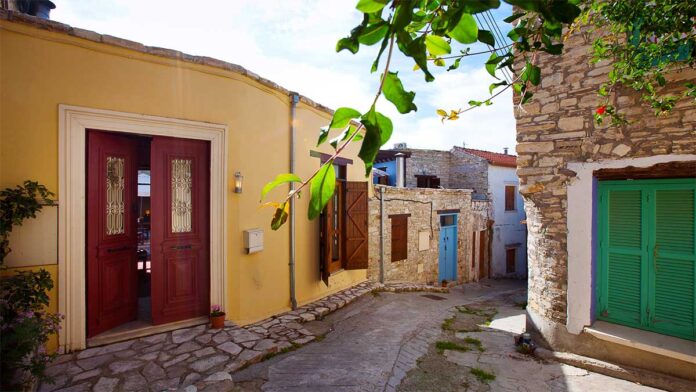
Cyprus’ largest ever housing project will help low-income families

LIMASSOL municipality and the Land Development Corporation (KOAG) reached an official agreement on Thursday regarding the establishment of the largest housing project ever undertaken in Cyprus, worth €100 million.

The agreement will involve the construction of over 600 new housing units in Limassol to meet the needs of low-income families, students and young couples.

Three municipal plots will be used for the project, two in the Ayios Nikolaos area and one in Ayios Ioannis, which will occupy a total area of 31,081 square metres.

“Today is an historic day for Limassol,” said Mayor Nicos Nicolaides during the project’s unveiling.

“After three years of efforts, we have finally succeeded to make our vision a reality. Today our goal of providing a roof for those who need it the most has become a reality.

“The whole project is based on the principles of sustainable development and environmental planning, so that long-term economic, social and environmental benefits are provided, not only for low-income families, but for the whole city, for current and future generations.”

KOAG president Marios Pelekanou also spoke during the project launch and thanked the Limassol municipality for their cooperation and for “a great effort that will change the game regarding affordable rents.

“Our organisation has always placed affordable housing very high on the list and this agreement is a step forward towards helping families who are struggling with their rents.”

Pelekanou added that the houses will all be energy-efficient and their maintenance costs will be much lower than traditional housing units currently on the market.

Interior Minister Nicos Nouris later on Thursday also said the agreement represented an historical day not just for Limassol, but for Cyprus as well, pointing out that the housing project would be the largest ever built in the country.

“This agreement will help normalise housing prices in Cyprus, as well as help low-income families who are struggling with making ends meet,” he said.

“Companies from the private sector, along with the Limassol municipality and KOAG, will also be involved in the project, that will use funds raised by Cyprus Investment Programme as well.”

The project will involve several phases, based on a specific schedule that will be prepared by the Limassol municipality and by KOAG in the upcoming months.

It is expected that the maiden phase of the project, that will see the erection of the first housing units, will begin in about a year and a half and that the first newly-built houses will be rented out to individuals or families whose low-income has been fully documented to the competent state services.

Corrupt lawyers continue to plunder estates

CORRUPT lawyers continue to plunder the estates of their deceased clients by calculating their fees for administering estates on the Cyprus Bar Association’s ‘Minimum Fee Regulations’, which were abolished in 2018.

My suspicions were raised when I received a number of emails from co-executors and beneficiaries of deceased family members whose corrupt lawyers had asked them to obtain valuations of the deceased’s estate.

For readers who may be unaware of this change in the law, lawyers used to face penalties, including being struck of the register, if they failed to charge the minimum fees dictated by the Cyprus Bar Association for out-of-court work.

The typical minimum fee for administering an estate would be 7% or more of the value of the estate. This was a huge amount in cases where the estate comprised one or more properties.

Legal challenge to the European Commission

Following a successful challenge by ‘Fairness in Fees‘ to the European Commission, infringement proceedings were started against Cyprus for failing to comply with their obligations under EU law.

In November 2018, the Commission closed infringement proceedings against Cyprus, announcing that:

“The European Commission decided today to close infringement proceedings against Cyprus concerning a minimum fee scale for out-of-court legal work, such as the drawing up of wills, contracts, the administration of estates and the registration of companies.

“EU law requires Member States to refrain from encouraging undertakings or associations of undertakings to favour or encourage anti-competitive behaviour that would breach Article 101 of the Treaty on the functioning of the European Union.

“In April 2018, the Commission raised concerns with the Cypriot authorities that certain legislative provisions, by empowering the Cyprus Bar Association to adopt a minimum fee scale for out-of-court work, encouraged behaviour that could prevent, restrict or distort competition within the EU’s Single Market.

“In response to the concerns raised, Cyprus has amended its law. The Commission welcomes the new legislation, which removes the specific provision empowering the Cyprus Bar Association to set these fees.

“In parallel, the Commission today also closed an antitrust investigation into the minimum fee scale adopted by the Cyprus Bar Association, based on the empowerment contained in the national legislation.

“The Commission welcomes the decision of the Cyprus Bar Association to abrogate this minimum fee scale after the Commission raised concerns that these rules were not compatible with Article 101 of the Treaty on the Functioning of the EU.

“The Commission’s intervention means that lawyers can now freely determine their fees when providing out-of-court legal services and that citizens will benefit from more competitive prices in this sector.”

However, despite the European Commission’s infringement proceedings, a change in the law and the repeal of the minimum fees, corrupt lawyers continue to plunder the estates of their deceased clients.

Recommendations

It is essential that anyone wishing to engage the services of a lawyer in Cyprus to draw up their Will, act as their Power of Attorney, administer their estate, etc., etc. shop around and get competitive written quotations for the work.

It is also vital that if the work involves the administration of the estate the agreed fee for undertaking this task is written into their Will.

Cyprus house price index up 2.5 per cent

The Cyprus Statistical Service (CYSTAT) has announced that house price index rose by an average by 2.5 per cent in the first quarter of 2020 compared to the previous quarter in its latest House Price Index (HPI).

The HPI also reports that residential property prices in Cyprus rose by 1.1 per cent on an annual basis.

According to the CYSTAT press release, the Cyprus House Price Index (HPI) “is a quarterly index which measures the change in the average prices of residential dwellings. It captures all types of residential properties, both new and existing. The land component of the residential property is included.

“The data source used for both, indices and weights, is the Department of Lands and Surveys, Ministry of Interior. The data cover all areas which are under the control of the government of the Republic of Cyprus.”

Year Quarter House Price Index (2015=100) Quarterly Change (Compared to the previous quarter) (%) Annual Change (Compared to the same quarter of the previous year) (%)
2010 Q1 114.37 -1.6 -6.6
Q2 112.79 -1.4 -6.9
Q3 112.39 -0.4 -5.7
Q4 112.05 -0.3 -3.6
2011 Q1 111.56 -0.4 -2.5
Q2 113.99 2.2 1.1
Q3 111.22 -2.4 -1.0
Q4 107.60 -3.2 -4.0
2012 Q1 106.40 -1.1 -4.6
Q2 106.02 -0.4 -7.0
Q3 110.14 3.9 -1.0
Q4 108.22 -1.7 0.6
2013 Q1 104.54 -3.4 -1.7
Q2 104.77 0.2 -1.2
Q3 103.05 -4.7 -9.3
Q4 100.78 0.9 -6.9
2014 Q1 98.08 -2.7 -6.2
Q2 103.55 5.6 -1.2
Q3 102.70 -0.8 2.8
Q4 101.56 -1.1 0.8
2015 Q1 97.52b
Q2 100.59 3.1
Q3 102.49 1.9
Q4 99.40 -3.0
2016 Q1 97.29 -2.1 -0.2
Q2 99.18 1.9 -1.4
Q3 101.87 2.7 -0.6
Q4 102.72 0.8 3.3
2017 Q1 99.64 -3.0 2.4
Q2 102.74 3.1 3.6
Q3 102.46 -0.3 0.6
Q4 105.24 2.7 2.4
2018 Q1 103.34 -1.8 3.7
Q2 103.98 0.6 1.2
Q3 103.30 -0.7 0.8
Q4 106.95 3.5 1.6
2019 Q1 107.78 0.8 4.4
Q2 112.27 4.2 8.0
Q3 105.69 -5.9 2.3
Q4 101.81 -3.7 -4.8
2020 Q1 109.13 2.5 1.1
Q2
Q3
Q4

b There is a break in the series in the first quarter of 2015 due to redefinition of the model variables.

House price developments in the EU Member States

House prices, as measured by the House Price Index, rose by 5.0% in the euro area in the first quarter of 2020 compared with the same quarter of the previous year. This is the highest annual increase since the second quarter of 2007.

In the EU house prices rose by 5.5% compared with the same quarter of the previous year. The data were not affected by the COVID-19 containment measures that Member States began to introduce during this period.

Compared with the fourth quarter of 2019, house prices rose by 0.9% in the euro area and 1.2% in the EU in the first quarter of 2020.

Among the Member States for which data are available, the highest annual increases in house prices in the first quarter of 2020 were recorded in Luxembourg (+14.0%), Slovakia (+13.1%), Estonia (+11.5%), Poland (+11.3%) and Portugal (+10.3%), while prices only fell in Hungary (-1.2%).

Compared with the previous quarter, the highest increases were recorded in Portugal (+4.9%), Estonia (+4.8%) and Slovakia (+4.0%), while decreases were observed in Malta (-4.3%), Hungary (-1.1%), Ireland (-0.8%) and Belgium (-0.1%).

(These figures come from Eurostat, the statistical office of the European Union.)

MPs commit to expedite citizenship bills

LAWMAKERS on Monday committed to fast-tracking the bills and regulations aimed at improving the transparency of the citizenship-by-investment programme, so that the items can be voted on before the House breaks for the summer recess in late July.

Following feedback from MPs who were unhappy with loopholes, the government has made certain changes to the texts.

During its session next week, the House interior affair committee will review the government’s revised bills and MPs will begin drafting any additional amendments of their own.

The bills and the ordinances aim to tighten up the procedures under which foreign investors are granted Cypriot citizenship, in the wake of criticism from the EU which has flagged the scheme as a potential money-laundering risk for Cyprus.

The government has since removed a clause that would have given automatic citizenship to in-laws designated by the successful applicant.

However, ruling Disy wants to bring back that clause, arguing that for each extra person tagged on, there is an additional investment of €500,000.

On the circumstances under which citizenship may be revoked, the state would be able to invoke “reasons of public interest”.

But MPs also want to expand the scope of revocations to include persons who ‘recognise’ the breakaway regime in the north, hold any office related to the north, or are usurping any property there belonging to a Greek Cypriot displaced person.

It’s understood the new rules as they stand allow the state to withdraw Cypriot citizenship from a person if within 10 years of the date of naturalisation they have: been convicted in the Republic or any other country for a serious criminal offence which entails a prison sentence of five years or more; are wanted by Europol or Interpol for a serious criminal offence; or have been placed on a sanctions list.

Legislators now propose that offences of ‘moral turpitude’ be additional grounds for revocation.

A state’s attorney told parliamentarians that such offences may include fraud, theft, false pretences, and offences of a sexual nature.

The ordinances also hold accountable entities registered as service providers assisting foreign nationals in filing their applications.

Last week Interior Minister Nicos Nouris said that once the new rules apply, the screening of applicants would begin not from the moment they file an application, but earlier – once they select their service provider.

Service providers would retain their status for one year only, after which they would need to renew their licence.

Editor’s comments

Interestingly, the Cyprus Government in its wisdom has removed the English translation of the citizenship-by-investment programme; it’s only available in Greek.

Rather than ‘improving the transparency’, this makes it impossible for any potential overseas investor (most of whom understand English) to comprehend what is expected of them.

Decision soon on Pissouri homes devastated by landslide

THE GOVERNMENT said Monday it will soon have in hand the recommendations of experts concerning the landslide in the area of Pissouri, which has seriously damaged dozens of properties there throughout the years.

Speaking in parliament, Interior Minister Nicos Nouris said they already have a preliminary report on the situation in Pissouri. Experts and officials from the Geological Survey Department have been asked to read the report and give some further feedback; this is expected to occur by July 22.

Once the experts have weighed in, the ministry will be in a position to announce the timeframe and a road map for any corrective actions.

Nouris described the situation as a major stabilisation project, pledging that the government is determined to move ahead with the residents’ safety being the top priority.

Pissouri community leader Lazaros Lazarou expressed satisfaction, noting that “perhaps for the first time ever, the state is taking the matter seriously.”

For his part, Akel MP Giorgos Georgiou said the preliminary study commissioned by the government provides for three scenarios.

The first involves the construction of embankments on the south-eastern side of the area in question. In the second, likewise the construction of embankments coupled with some land expropriations.

Under the third scenario, residents would abandon the area altogether and be compensated.

No insurance company will insure against landslide damage and the properties in Pissouri were built by different developers.

Many of the affected homes have virtually collapsed, the result of a continuous and accelerating landslide, and a number of residences are deemed unfit for habitation. Homes and gardens are ripped apart, walls and pools are collapsing and roads split, buckled and impassable.

Previously, the government had ruled out direct compensation to the affected property owners, because that would be tantamount to an admission of responsibility by the state.

Editor’s comments

There have been many mis-leading statements in the local media pointing the finger of blame at poor design and construction of the affected properties, underground lakes, poor ground conditions, etc. An independent study commissioned by the Pissouri Community Council clearly demonstrate that the people making these comments are ‘strangers to the truth’.

A local Greek language newspaper demanded €2000 to publish a letter correcting a fake news story it published in March.

Frustration at latest Kissonerga marina delay

THE LATEST extension until the end of July to allow time to find a consultant to carry out a study into constructing a combined marina and cruise ship docking facility in Kissonerga is scuppering plans to develop the wider area, community leader George Stylianou told the Cyprus Mail on Monday.

He said it is now widely believed that it will be five years at the earliest before Paphos will see a marina, due to be constructed at Potima Bay in Kissonerga.

“It is a frustrating situation as this is now holding back the Kissonerga development programme and affecting the entire community. We were hoping that we would be able to put in break waters, ten are planned, in the sea running parallel to Potima beach. This beach is around 1.5 kilometres long, and would be the largest organised beach for Paphos,” he said.

This would mean the waters would be more suitable to swimmers, as much of the coast here is currently too dangerous to swim, and possibly see five similar organised beach areas, like the one already there, which brings in a substantial income.

“This would raise millions which would be invested and ploughed back into Kissonerga to provide a better level of life for residents,” he said. “It’s all tied up to the marina and still there is no end in sight.”

Initially, the proposal to cater for cruise ships was earmarked for Kato Paphos harbour, however it was then suggested to combine the facility with a proposed marina in Kissonerga as the antiquities department said the development would have a negative impact on the archaeological environment of the area.

The local community leader said that the chosen consultant would have nine months from the end of July to submit the proposal to create a marina/dock in the area to see if they can operate side by side. After that, and taking into consideration the findings of the study, the terms of a new competition (tender) to undertake the project would be announced.

“It will take at least another two years to announce and award the tender, and that’s before any construction even gets underway. Work won’t get underway for at least three years, at the earliest if there are no objections, as has been the case in the past,” he said.

Following interest by international companies, the tourism ministry extended a tender deadline to find a consultant. The design for a marina in Potima (Kissonerga) will accommodate 1,000 boats, which is a ‘huge’ scale for the area.

In the last 20 years or so, developers have been selling homes in the area of the back of the marina, Stylianou said, it’s misleading people.

“The beach, breakers and marina will probably be completed when we’re all too old to swim or enjoy it anyway,” he said.