Record property sale in Cyprus’ history at €130 million+

In an exclusive editorial, Economy Today reports that a landmark transaction that reshapes the Cypriot real estate landscape, Columbia Group has finalised the acquisition of the iconic Secret Valley, formerly known as Venus Rock Golf Resort, for a record-breaking sum in excess of €130 million. This represents the largest property sale ever recorded on the island.

The seller is REMU, the Real Estate Management Unit of the Bank of Cyprus, for whom Secret Valley represented the crown jewel of its asset portfolio. According to sources from Economy Today, the deal follows nearly four months of negotiations and marks a historic milestone in the Cypriot property market.

The players behind the deal

On one side is Columbia Group, a Cyprus-based international conglomerate with operations spanning shipping, tourism, and real estate. On the other, the Bank of Cyprus via REMU, which has been actively restructuring its portfolio.

Heinrich Schoeller, Chairman of Columbia Group, reportedly handpicked Secret Valley for its strategic potential. Columbia already boasts a significant presence in Cyprus’ hospitality sector, owning and operating the luxurious Columbia Beach Resort in Pissouri, considered one of the top seaside resorts on the island.

With this acquisition, Columbia Group is set to substantially expand its footprint in tourism real estate, taking on a project poised to redefine the country’s luxury property market.

Strategic move by bank of Cyprus

For REMU, the transaction achieves a dual objective: shedding a high-value asset to unlock capital and proving that the market is capable of absorbing premium properties—something that seemed highly unlikely just a few years ago.

Secret Valley came under the Bank’s ownership following the debt restructuring of Aristo Developers and has since been REMU’s most prized holding.

Secret Valley: 5 million square metres of potential
Picture credit: Economy Today

A Mediterranean gem: 5 million square metres of potential

Spanning roughly 5 million square metres of verdant land and boasting 850 metres of pristine coastline, Secret Valley is strategically located between Limassol and Paphos, adjacent to the renowned Aphrodite Hills Resort. Its elevated positioning offers uninterrupted sea views and excellent access—just 10 minutes from Paphos International Airport and around an hour from Larnaca.

The site is already known for its 18-hole Secret Valley Golf Course, but its true potential lies in the fully approved development rights it holds. Plans for the site include:

  • A 5-star luxury resort with beach club, capitalising on the rare coastal frontage.
  • Around 3,000 high-end residences – villas and apartments designed for privacy, ocean views, and ample green space.
  • A second international-standard 18-hole golf course, making the area a premier destination for golf enthusiasts.
  • A small-scale marina to accommodate leisure yachts, further enhancing the site’s resort appeal.
  • Support infrastructure, including a desalination plant already given the green light by the Water Development Department to ensure sustainable water supply.
  • Commercial and entertainment facilities, such as a shopping centre, restaurants, and boutiques, creating a self-contained coastal community.

If realised, the development could become one of Europe’s largest luxury seaside residential complexes.

Awakening a “sleeping giant”

Secret Valley has long been regarded as one of the most privileged pieces of land in the Mediterranean, waiting for the right investor to bring its vision to life. Columbia Group’s proven expertise, particularly with the success of the Columbia Resort, makes them a natural fit to undertake such a transformative project.

Plans for Secret Valley
Picture credit: Economy Today

REMU’s strategy

The deal is fully aligned with the Bank of Cyprus’ ongoing strategy to significantly reduce its real estate holdings. Secret Valley was the largest asset in REMU’s portfolio, and this transaction marks REMU’s most significant sale since its inception. It reflects the Bank’s broader goal of reallocating capital towards its core banking operations.

Multi-million development on the horizon

Sources close to Columbia Group indicate that the full potential of Secret Valley will be maximised, with the total value of the upcoming development expected to exceed €1 billion. Drawing on its deep operational knowledge and existing infrastructure, the Group is well-positioned to deliver a flagship project that could transform Cyprus’ international appeal as a destination for luxury living and leisure.

(Translated from the Greek article in Economy Today)

 

New law offers hope to Trapped Buyers in Cyprus

In a significant move, the House Plenum in Cyprus has unanimously passed a new law aimed at helping thousands of so-called ‘Trapped Buyers’ finally obtain the title deeds to properties they’ve fully paid for after waiting for years.

This long-awaited legislation marks a major turning point in a saga that has impacted nearly 10,000 property buyers.

Key highlights of the new Trapped Buyers law

  • Relief for 9,497 Buyers: The law will offer a clear legal pathway for some of the nearly 9,500 individuals whose applications for title deeds were frozen due to a June 2024 Supreme Court decision that the Trapped Buyers law was unconstitutional.
  • Court-Backed Transfers: If banks or other entities unfairly refuse to release encumbrances (such as mortgages or legal claims), buyers can now apply for a court order to override the refusal. But what happens if the banks etc. object to the court order and appeal?
  • 45-Day Window: Trapped Buyers have 45 days to apply to court once a lender blocks a deed transfer. During this process, all other legal or administrative actions involving the property will be paused.
  • Encumbrance Removal: Once a written consent is obtained – or forced by a court order – the Department of Lands and Surveys can remove the encumbrance, enabling the property to be legally registered in the buyer’s name.
  • Potential Tax Memo Solution: Authorities are also discussing whether tax-related memos on properties can be lifted in coordination with the Tax Commissioner.

Political & legal context

Interior Ministry officials hailed the legislation as a critical correction to the system, describing it as a way to break the legal and financial deadlock that has plagued thousands of people buying property. The law restores protections that were lost following the 2024 Supreme Court ruling, which left many without legal recourse.

Disy MP Fotini Tsiridou celebrated the bill as the culmination of a “long and persistent effort to lift a blatant injustice”, while Akel MP Aristos Damianou acknowledged the law’s imperfections but stressed it could still benefit at least 3,000 people immediately.

However, Damianou cautioned that this is not the end of the road, calling for further legislative refinement and ongoing support for affected property buyers.

How did Trapped Buyers become trapped in the first place?

Many Cypriots and foreigners bought houses and apartments directly from developers who had mortgaged the land on which he was building. Although buyers paid in full, title deeds were never transferred, as developers’ debts gave banks legal claims over the properties.

This created chaos as buyers who had bought, lived in and maintained the property, sometimes for a decade or more, did not legally own the property.

Many of the developers’ mortgages became ‘non-performing’ because developers failed to maintain their mortgage repayments. In efforts to improve their balance sheets, banks sold these none-performing loans to Vulture Funds for typically 10% – 20% of their book value,

These bottom-feeders are sending threatening Trapped Buyers who are completely debt free that their property will be repossessed and sold if they fail to repay a sizeable proportion of the developer’s debt.

It is unclear whether this new law will end this despicable practice.

Challenges still ahead

While widely welcomed, the new law is not a complete fix. During committee discussions, consumer representatives emphasised that planning violations and incomplete property developments and documentation still leave many buyers trapped. As a result, continued coordination between government departments, the courts, lenders, and local authorities is essential.

A step in the right direction

The law offers genuine relief for thousands, restores a sense of justice, and sets a precedent for resolving a deeply entrenched issue in the Cyprus property market. But experts and stakeholders agree: the journey isn’t over.

Lawmakers must work out a cast-iron solution for all Trapped Buyers to get title deeds for the property they purchased – and a solution that is constitutional and cannot be challenged.

Cyprus passes landmark urban land reform law

Cyprus has taken a bold step towards transforming its urban landscape, following the approval of a landmark bill by Parliament on Thursday. The newly passed legislation on urban development zones is set to unlock long-idle land for construction, while tackling the problem of urban sprawl.

The Interior Ministry welcomed the new law as a pivotal moment in the country’s efforts to modernise how cities grow. The legislation introduces a structured process for merging fragmented, underutilised plots within designated development zones and reallocating the land in ways that meet today’s urban needs.

For years, scattered plots and ownership disputes have stalled development across key areas, leaving them untouched and unusable. This new framework promises to break those deadlocks, helping revive neglected urban pockets.

One of the law’s core aims is to discourage haphazard housing development on the fringes of towns, a trend blamed for sprawling infrastructure and inefficient public services. Instead, the law supports more compact and sustainable growth within existing urban boundaries.

The reform is part of Cyprus’ broader recovery and resilience plan and represents the first major milestone in an ongoing effort to overhaul urban planning. A second phase will see ten pilot land consolidation projects launched, testing the approach before it is rolled out more widely.

Crucially, the law is designed to support landowners stuck with plots that are landlocked, co-owned by multiple parties, or burdened with legal or financial obstacles. By reorganising such land into usable and accessible parcels, the government hopes to make it easier for these owners to finally put their property to productive use.

Officials also highlight the potential for large-scale zoning improvements and the regeneration of derelict areas, including those damaged by natural disasters. The law could breathe new life into zones previously seen as too complex or costly to redevelop.

This push for smarter urban planning is closely tied to Cyprus’ national housing policy. With demand for homes soaring, particularly in cities, the goal is to make more land available within town limits for much-needed housing projects. By reshaping plots into practical sizes and layouts, authorities say they can create room for not just homes, but also public roads, parks, pedestrian routes, community facilities, and shared spaces.

The legislation outlines three ways for land consolidation to move forward: with full agreement from all landowners; through agreements between landowners and local councils; or, if needed, by direct order of the Council of Ministers.

With this new law in place, Cyprus is laying the groundwork for more liveable, better-planned cities – and giving long-overlooked land a new lease of life.

Young Cypriots and EU nationals face soaring housing costs

0

In recent times much has been written about the housing crisis in Cyprus and how it affects young people in particular, with growing numbers unable to afford to buy or rent decent living conditions.

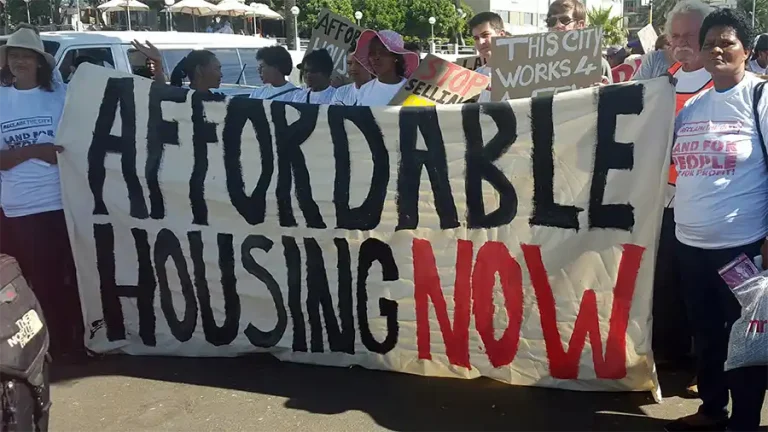
We’ve reported on Limassolians protesting against high rents in 2018 and again in 2024. And while the Cyprus government has introduced schemes designed to increase affordable rentals and has plans to modernise planning & permit processes (some of which area already in place), there seems to be no light at the end of the tunnel.

We’ve seen the price of new homes skyrocket and reports of a foreign buyer frenzy, especially in places like Limassol, where Greeks, Russians, Brits, Israelis and Chinese buyers feature heavily.

But Cyprus is not alone with its crisis. A recent report in euronews explains how the severity of the European Union’s housing crisis has made it harder for citizens to find a home, as a combination of supply shortages and high rents continues to be a major issue.

EU-wide housing crisis

In 2023, 26% of young people in the EU lived in overcrowded housing, according to Eurostat. That’s 9.2% higher than the general population, highlighting how this crisis disproportionately affects the younger generation. Across the continent, skyrocketing prices and limited availability are locking millions out of their local property market.

The high cost of living

Over the past decade, house prices in the EU have risen by 48%, while rents have increased by 22%. Inflation has driven prices up by a further 36%, compounding the problem. In 2023, EU households were spending, on average, nearly 20% of their disposable income on housing. But young people were often forced to allocate much more, with many spending over 40% of their income just to keep a roof over their heads.

This financial burden is delaying independence for a whole generation. “We are jeopardising young people’s ability to become independent, to start their own lives, to form families,” says Sorcha Edwards, Secretary General of Housing Europe, speaking to Euronews.

Why is this happening?

A key issue is the lack of affordable housing and insufficient non-profit or limited-profit housing schemes. In countries where these types of housing are more prevalent, young people are moving out earlier and building stable lives. Where they’re lacking, the opposite is true.

“We’ve relied too heavily on market forces,” Edwards explains. The 2008 financial crisis dealt a severe blow to the construction industry, leading to a shortage in supply. Meanwhile, wages have failed to keep up with property prices. “If rents and house prices had remained in line with incomes, we wouldn’t be talking about a housing crisis.”

The impact of short-term lettings

The rise of short-term rentals is further exacerbating the issue. These often profit-driven schemes reduce the availability of long-term homes, making it harder for cities to house students, low and middle-income families, and even elderly residents. “We’re letting short-term solutions erode long-term housing options,” warns Edwards.

The result? Empty investment properties, displaced families, and workers pushed to the suburbs—fuelling stress, inequality, and urban disconnection.

Glimmers of hope: what’s working

Some European countries are already showing what’s possible when housing is treated as a social good, not just an asset:

  • Germany: Around 2 million people live in housing cooperatives, a non-profit, democratic model that offers stability and affordability.
  • Belgium (Flanders): Social housing has reduced poverty by 40% for those with access to it.
  • Denmark: Targeted support helps young people avoid precarious living situations such as couch-surfing, a common prelude to homelessness.
  • Netherlands: Between 20–30% of the population lives in limited-profit housing—providing vital access for those in need.

Time for a paradigm shift in housing

These examples prove that there are alternatives. “It’s time to shift away from short-term profit and return to housing as a fundamental right,” says Edwards. “We need a critical mass of responsible housing that serves social needs, not just investment portfolios.”

If Europe wants to give its youth a fair shot at adulthood, independence, and stability, the housing crisis cannot be left to the market alone. It’s time for bold public policy, sustainable housing models, and a renewed understanding that homes are for living – not just for profit.

AKEL focuses on Israelis amidst Cyprus for sale fears

AKEL has reiterated its concerns over what it calls the en masse buying up of real estate in Cyprus by non-EU nationals, particularly Israelis with ‘targeted purchases’ of land creating gated communities in Larnaca and Limassol, with the party introducing legislation aiming to curb the granting of so-called ‘golden visas’.

It is the first time a political party has raised the issue in a serious way, with a heavy focus on land transactions involving Israeli nationals.

“Because Cyprus has a small size, and is located in a turbulent region…we will keep pointing to the need to take steps, but also the government needs to move,” AKEL leader Stefanou Stefanou told CyBC radio.

“In the last few years, with the surge in the construction business, there has been observed a massive purchase of real estate by third-country (non-EU) nationals…and we note that far bigger states than Cyprus – Spain, Italy, even Germany – place restrictions on the sale of real estate to third-country nationals because they want to protect, on the one hand, their land, and on the other hand, because massive sales lead to a rise in real estate prices.”

The AKEL boss said his party has tabled two bills in parliament aimed at restricting and checking the processes for the issuance of the so-called ‘golden visa’ – issued to non-EU nationals for an investment of at least €300,000 in real estate or company shareholding.

The tabled legislation also aims to scrutinise “other existing processes being used as an alternative, enabling third-country nationals to acquire real estate en masse…often this real estate is located in very sensitive geographic areas near high-importance infrastructures of the Republic of Cyprus”.

Contacted later by the Cyprus Mail, Stefanou cited installations of the National Guard as an example of such sensitive infrastructures. He did not give examples by name.

Speaking to CyBC, the AKEL leader explained why his party is focusing on Israeli nationals:

“Especially in the last time period,” he said, “there has been observed an increased purchase of real estate, targeted purchases, and specifically in Limassol and in Larnaca…specific areas are being bought en masse, where there are created closed areas (gated communities) almost inaccessible to anyone other than Israeli nationals.

“Zionist schools are being built – that’s what they call them – synagogues are being built, and you understand that this, in connection with various media reports appearing in serious newspapers in Israeli itself, suggesting that Israel is preparing a ‘backyard’ in Cyprus…so this cannot but sound the alarm for us.”

According to Stefanou, locals are well aware of the issue.

“If you go to Larnaca and Limassol, people there will tell you about specific areas where this is happening, but authorities are ignoring it.”

Stefanou had made similar remarks at the AKEL party congress taking place last Friday.

There, he urged the government “to protect our land, and ensure that Cyprus continues to belong to the Cypriots in perpetuity”.

He went on to warn: “Unless we take effective measures now, at some point we will discover that our own land doesn’t belong to us.”

According to the AKEL boss, other European countries – like Spain, Italy and Germany – have already taken steps to restrict the purchase of properties by non-EU nationals.

“By contrast, we in Cyprus look the other way, but worse, we facilitate such land purchases via ‘golden visa’ programmes as well as other processes.”

He went on to stress: “We do not say this because of xenophobia or anti-semitism. But it is the government’s responsibility to ensure that Cyprus remains under the control of Cypriots in perpetuity.”

Recently, and in response to an MP’s question, the government disclosed data on immovable property purchases by foreign nationals. The table provided covers the period from 2021 through to January 2025.

In Larnaca, Israeli nationals are the fourth most common buyers, with 1,406 property purchases listed, 481 of which with title deeds.

A real estate expert told the Cyprus Mail that Israelis tend to buy large land parcels, featuring spas and resorts – gated communities, so to speak.

The same expert said Israelis like to concentrate in the Pyla area, but they also snap up property in Ormideia and to a lesser extent in Pervolia.

Also in Larnaca, Lebanese nationals purchased 1,744 properties; and UK nationals 2,743.

In the Limassol district, the government data shows, Israelis again held the fourth spot, with 1,154 property purchases, of which 511 held title deeds. Meanwhile UK nationals purchased 1,840, and Russians 2,561.

And in Paphos, Israeli nationals are the fourth most common buyers – 1,291 purchases, of which 867 with title deeds. Above them were Russians with 1,563 purchases, and UK nationals with 4,483.

Cypriot nationals topped the list of buyers in all districts.

CM

AQUA Residences set to transform the Larnaca skyline

A new residential development is on the horizon for Larnaca, with the launch of AQUA Residences by Solvin Ltd.

The €40 million project will consist of two 20-storey towers offering shared spaces, landscaped areas, a gym, and a spa.

The Environmental Authority has given its official approval, paving the way for construction to begin once permits are issued.

Works are expected to last approximately two years from the start of building activities.

The towers will reach a height of 67.7 metres, with roof gardens and mechanical installations planned for the top floors.

The scheme will deliver a total of 114 apartments, comprising one, two and three-bedroom units.

AQUA Residences Larnaca
Photo credit: Kathimerini

Residents in this Larnaca development will also benefit from on-site dining options, parking, an outdoor swimming pool, and additional lifestyle facilities.

In total, 155 parking spaces will be provided, including eight designated for disabled use.

Of the total, 114 spaces are allocated for residents and 33 for visitors, and eight as additional reserve.

Respecting the landscape

The site plan includes a 1,294-square-metre public green space, enhancing both the project and the surrounding urban landscape.

A three-metre buffer will be maintained between the development and two adjacent state-owned plots, where stormwater channels are planned.

According to architectural documents, building placement and landscaping have been carefully designed to align with environmental regulations.

Preliminary estimates indicate an annual energy consumption of 22.52 kWh/m² for cooling and 14.56 kWh/m² for water heating and lighting.

Additional energy will be required for water pumps, lifts, fire safety systems, and the swimming pool’s operation.

The highest energy consumption is expected in July, during Cyprus’ peak summer heat.

AQUA Residences is set to become a landmark development for Larnaca, combining contemporary design with practical urban living.

(Translated and summarised from the Greek article in Kathimerini)