Cyprus ranks first in EU for bathing water quality

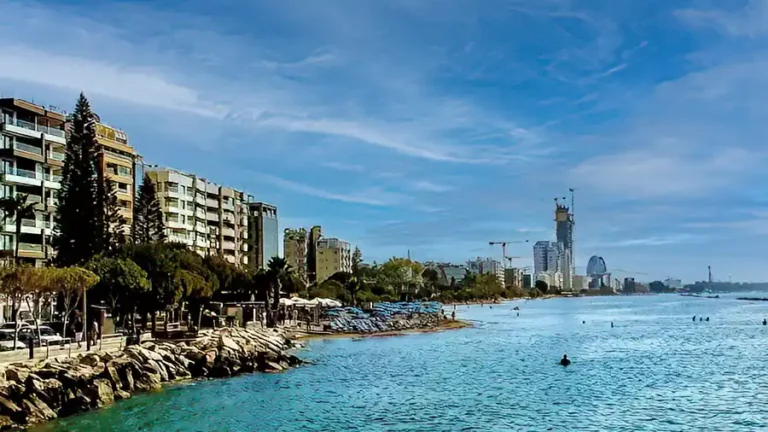
Cyprus has once again secured the top spot in the European Union when it comes to the quality of its bathing water.

According to an announcement from the Ministry of Environment, the European Commission officially released its final results today regarding bathing water quality across the EU.

In the 2024 European Commission Report, Cyprus achieved full compliance with the strictest standards of the EU Bathing Water Quality Directive, successfully meeting all obligations under the regulation.

During the 2024 bathing season, Cyprus recorded a 99.2% compliance rate, with 122 out of 123 sampling sites classified as having “excellent quality”. Only one site remains unclassified due to a limited number of samples collected so far. This impressive performance places Cyprus first among all EU member states for the third consecutive year, followed by Bulgaria (97.9%) and Greece (97%).

Throughout the bathing season (1st May – 31st October 2024), a total of 123 coastal sites in the free areas of Cyprus were monitored systematically. Sampling was carried out at least monthly, with an additional sample collected before the start of the season.

The Ministry emphasised that bathing water quality is inextricably linked to public health and marine environmental protection and also plays a crucial role in supporting tourism and the national economy.

“These excellent results further enhance Cyprus’ reputation as a destination with clean, safe, and high-quality beaches,” the Ministry stated. “This important achievement reflects the excellent collaboration between the Department of Environment, which holds overall responsibility for implementing the Directive, and the Health Services, Public Health authorities, the State General Laboratory, and Local Government bodies.”

Price of new homes skyrocketed in Q1 2025

Cyprus has seen a dramatic shift in the prices of newly built homes during the first quarter of 2025, according to an in-depth analysis by Landbank Analytics.

Drawing on data from sale contracts submitted to the Department of Lands and Surveys, the platform reveals key trends and regional disparities shaping the island’s residential property market in each if the island’s districts:

Nicosia: Surge in house prices, stability in apartments

The capital recorded the highest percentage increase in the average sale price of newly built houses, soaring by 35.5% from €304,000 in Q1 2024 to €412,000 in Q1 2025. However, this jump was largely skewed by a single luxury sale worth €2.7 million. When this outlier is excluded, the average stands at €313,000, marking a more modest 3% rise.

This growth reflects strong residential development, rising demand for new homes, and a wave of modern construction projects. Meanwhile, the average price of new apartments remained largely stable, inching up slightly from €189,000 to €191,000 — signalling a balanced market with steady demand in the capital.

Limassol: Diverging trends between houses and apartments

Limassol saw opposite movements in its housing market. The average price of new houses fell by 12.4%, dropping from €444,000 in Q1 2024 to €389,000 in Q1 2025. However, this decline is linked to three low-priced house sales. Without them, the average rises to €428,000 — a yearly decrease of only 3.6%, attributed to an influx of mid-range homes and market adjustments after previous high prices.

In contrast, new apartments rose sharply in value, with the average climbing 12.4% to €372,000, up from €331,000 in 2024. This reflects continued strong demand for high-value apartments in one of Cyprus’ most expensive property regions.

Larnaca: Growing demand pushes house prices up

Larnaca recorded a significant increase (21.5%) in the average price of new houses, rising from €320,000 to €389,000. This upward trend is driven by heightened interest and the development of higher-end residential projects, signalling the city’s growing appeal.

Conversely, the average price of newly built apartments dipped slightly by 2.1%, falling from €191,000 to €187,000 — a sign of a steady and balanced apartment market with stable supply and demand for mid-range properties.

Paphos: Luxury homes drive market growth

Paphos continues to shine as a magnet for international buyers and investors, particularly in the luxury housing segment. The average sale price of new houses rose 16.9%, reaching €693,000 — underscoring the district’s strength as a high-end residential hotspot.

However, the average price of new apartments fell by 10.3%, from €320,000 to €287,000. This drop likely reflects a shift in the types of apartments available and a market recalibration after a phase of intense growth.

Famagusta homes: Price falls across the board

In the free area of Famagusta, both housing categories saw year-on-year declines. The average price of new houses fell from €343,000 to €300,000, while the average for new apartments dropped from €201,000 to €178,000.

It’s important to note that these figures represent all sales within district boundaries, not just those in city centres — and the lower transaction volume may also be influencing these downward trends.

Key market takeaways

Andreas Christoforides, CEO of the Landbank Group, highlighted the importance of these emerging patterns:

“The trends in Cyprus’ new-build market are significant, especially as we move through a changing economic and financial environment, which is affecting both local and foreign demand,” he said.

He noted that the European Central Bank’s interest rate cuts are already stimulating the domestic market, giving local buyers renewed momentum.

Christoforides also outlined the regional dynamics:

  • Paphos remains the leader for luxury homes.
  • Limassol continues to dominate in premium apartment
  • Nicosia is experiencing strong growth in houses and stability in apartments.
  • Larnaca is emerging as a rising force in the housing market.
  • Famagusta, despite lower average prices, reflects a quieter market due to a lower volume of transactions.

As Cyprus’ property market evolves, these trends underscore how economic shifts, buyer demographics, and regional development are reshaping the real estate landscape offering both opportunities and challenges for buyers, developers, and investors alike.

Foreign buying frenzy hits Cyprus

Data furnished recently by the government lends weight to the notion that the purchase of real estate in Cyprus by foreigners continues an upward trajectory, with some speculating that it’s driving up property prices – especially in places like Limassol. Greeks, Russians, Brits, Israelis and Chinese buyers feature heavily on the property market.

The information was given to Volt MP Alexandra Attalides, following a question she submitted to the interior minister in November last year. She asked a straightforward question: a breakdown of property sales by nationality.

On January 9, 2025 the minister replied with a table showing the aggregate numbers per district of properties by nationality, the bills of sale by nationality, and actual ownership by nationality.

The data, held by the Department of Lands and Surveys, covers the period from 2021 to the present time – meaning January 2025. It lists the top ten nationalities, including Cypriots.

Cypriots top the list as property holders in every district – no surprise there.

In Nicosia, making it into the top ten are Greeks, Brits, Australians, Romanians, Americans, Bulgarians, Lebanese, Russians and Chinese.

In Limassol, the most common buyers after the Cypriots are Russians, Brits, Israelis, Greeks, Romanians, Chinese, Ukrainians, Germans and Americans.

Next in Paphos: Russians, Brits, Israelis, Greeks, Romanians, Chinese, Ukrainians, Germans and Americans.

In Larnaca: Russians, Brits, Israelis, Greeks, Romanians, Chinese, Ukrainians, Germans and Americans.

And lastly in Famagusta: Russians, Brits, Israelis, Greeks, Romanians, Chinese, Ukrainians, Germans and Americans.

The table makes for some interesting reading; it’s also notable that this may be the first time – according to an expert we spoke to – that such data by nationality has been made public.

In Nicosia, making it into the top ten are Greeks, Brits, Australians, Romanians, Americans, Bulgarians, Lebanese, Russians and Chinese

But it does have its limitations, said Pavlos Loizou, the CEO of Ask Wire, a real estate data analytics company.

Having looked at the table – posted on the parliament website – the first thing that jumped out at Loizou is that it doesn’t indicate the value of the properties.

That’s a key data point missing. Still, such as it is, this was the information provided by the minister, given how the MP had framed her question.

We asked the analyst to combine this generic data with his own savvy of the market.

Cypriots are naturally over-represented because they’re the primary buyers of land parcels and plots on agricultural land. Also, many Cypriots buy second-hand homes or they buy plots of land. So for instance, the purchase of a one-eighth land parcel will show up on the table given – which records transactions recorded with the land registry.

Whereas Russians, especially active in Limassol, tend to buy finished apartments and houses.

“So the gap between Cypriots – in all the districts – and other nationalities was a given,” noted Loizou.

His trained eye picked up something else: in Limassol there’s a big discrepancy between the aggregate number of properties and the actual ownership – the latter where title deeds have been issued.

For example, in the coastal city there are a total of 2,561 properties sold to Russians, but the actual ownership (with a title deed) is about half – 1,292.

The first number shows an agreement to buy a property, a sales contract, where the money has been paid. In other words, these are properties under construction.

So half of the properties attributed to Russians in Limassol have no title deed yet.

Another ‘grey’ area: according to Loizou, many foreigners buy up properties via a company, a realtor. So where the realtor is a Cypriot company, this gets recorded as a ‘Cypriot’ purchase in the table provided – even though the ultimate beneficiary is a foreign national.

Also: if immovable property belongs to a company, and that company sells off its shares, this type of transaction didn’t get recorded by the land registry and therefore didn’t make it on the list given.

But overall, says the expert, the numbers shown in the table are pretty much expected.

“Foreigners in general snap up new properties, not necessarily luxury but good-quality homes and apartments. They prefer to buy within complexes, not standalone properties, as complexes of several units have more amenities.”

This is especially true of Israelis who’ve been steadily making their mark in Larnaca. Relative newcomers, in Larnaca Israeli nationals are the fourth most common buyers, with 1,406 property purchases listed, 481 of which with title deeds.

They tend to buy large land parcels, where they have spas and resorts – gated communities, so to speak.

“Up until five to six years ago you wouldn’t see these numbers with Israelis,” said Loizou. “There’s definitely an upward trend in purchases, most likely due to instability in the region.”

Israelis like the Pyla area – their ‘hub’ – but also buy property in Ormideia and to a lesser extent in Pervolia.

“And Larnaca makes sense as the synagogue is located there, plus it’s close to the airport. Also, properties in Larnaca are among the cheapest in Cyprus.“

Then you also get Israeli-owned companies registered here buying real estate as an investment. Again, this doesn’t show up in the data given by the minister.

“It’s a loophole in the system. Normally if you’re a foreign national (non-EU) you’re allowed to buy one house for self-occupancy plus one land plot, provided you get permission from the cabinet.

“But a company can get around this.”

And there’s one more ‘blind spot’ which Loizou picked up on – the table doesn’t account for the majority of properties of over €2 million in value sold since 2016 by Bank of Cyprus and by GoGordian Real Estate and Altamira Real Estate. These aren’t recorded by the land registry either.

Bottom line, he says, non-EU nationals are attracted by the ‘golden visa’ offered by the government.

The ‘golden visa’ programme has replaced the ‘golden passports’ scheme – otherwise known as the Cyprus Investment Programme (CIP). The latter crashed and burned after a damning expose aired by the Al Jazeera news network in late 2020.

The ‘golden visa’ is a fast-track programme for third-country nationals. It requires an investment – in real estate or in the shareholding of a company – of at least €300,000. Up until 2023 the government had issued 5,800 such visas for investors.

Apparently the same law firms that had previously advertised Cyprus ‘golden passports’ are now promoting the ‘golden visas’.

The auditor-general has cautioned that the system has issues; having examined the files on 28 investors, it discovered that 24 did not have live permanently in Cyprus.

Audit Office spokesman Marios Petrides has said in an interview that some investors are using the same tactics as previously with the CIP; that is, they submit a document of sale between two parties to the government, they acquire the golden visa, and then they cancel the document.

Subsequently the Audit Office provided the interior ministry with a report on the scheme, advising for corrections and even suggesting it be scrapped. The ministry said it agreed with the recommendations for stricter checks, but did not comment on a possible axing of the programme.

In official jargon, the ‘golden visa’ is known as a Category F Immigration Permit. This involves granting persons who do not work in Cyprus permission to live here permanently as visitors. They must have an annual guaranteed income from overseas of at least €9,568 (plus an extra €4,613 per dependent), and the income must derive from pensions, dividends, interest or rent.

And applicants and their spouses must affirm they have no criminal record in their home country.

CM

Limassol real estate market 2025: The 10 largest transactions

As part of its data analysis and market research, the firm Demos Georgiou & Associates has identified the 10 highest-value property sales in Limassol for 2025.

These sales represent a total value of €93,004,856. The aim of this analysis is to highlight key trends shaped by investment funds, property developers, and buyers/investors of high-end real estate.

By focusing exclusively on high-value transactions, the study provides targeted insights into the types of properties and geographical areas attracting the most significant investments. The data has been processed and is summarised below.

Municipality / Community Property Type Sale Price
Amathounta, Agios Athanasios 5-storey office space in a multi-storey commercial centre on the seafront road €28,500,000
Limassol, Neapolis 4 apartments in a high-rise building €14,807,200
Limassol, Tserkezoi Land – My Mall area €9,400,000
Limassol, Tsiflikoudia 1 restaurant and 3 apartments in a seafront development under construction €8,111,900
Limassol, Ayia Napa Office buildings in central Limassol €7,200,000
Amathounta, Potamos Germasogeias Luxury apartment €6,350,000
Limassol, Zakaki Residential land €5,598,756
Amathounta, Agios Tychonas Luxury apartment €5,000,000
Amathounta, Germasogeia Residential land €4,500,000
Amathounta, Agios Tychonas Luxury apartment €3,537,000

Data Source: Department of Lands and Surveys

The largest commercial transaction was recorded in the Amathounta area, specifically the seafront zone of Agios Athanasios, with the sale of a future 5-storey office space for €28,500,000.

The property is part of a forthcoming high-rise commercial building of modern standards, set to be developed over the coming years. It is located in a strategic position with sea views and direct access to major road networks and the coastal strip.

The Municipality of Amathounta emerges as a market leader, with total sales reaching €47,887,000, primarily due to large-scale investments in commercial properties and land.

Land remains an attractive investment category, with notable transactions recorded in areas such as Tserkezoi and Zakaki, near the casino and My Mall.

Multi-storey buildings in Limassol continue to strengthen the luxury apartment market, as demonstrated by the €14,807,200 sale in Neapolis.

Limassol remains the primary hub for major investments in Cyprus. The scale of these transactions is a clear indicator of investor confidence in the Cypriot real estate market.

The country’s strong credibility and positive development outlook create an environment that supports continued significant investment, reinforcing Cyprus’s position as a key investment destination in the region.

Demos Georgiou MSc, MRICS
BSc (Hons) Property Management and Investment

No tender, no permits, no problem!

In a damning indictment of public sector mismanagement, Cyprus’ Auditor General has exposed a €1.5 million renovation project without public tenders, without proper permits, and astonishingly, without a signed contract — and it’s the taxpayer picking up the tab.

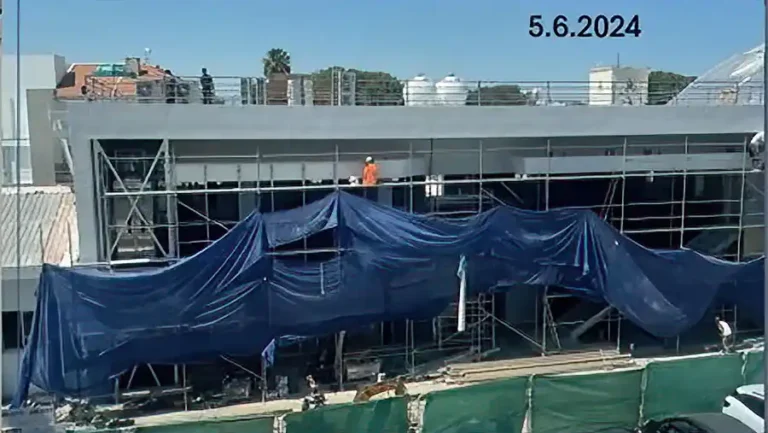
The project, which was supposedly part of a broader modernisation of local government, saw construction kick off at the former Nicosia Water Supply Council (SYL) building.

A deal done in the shadows

According to investigative reporting by Kathimerini’s Apostolos Tomaras, the €1.5 million contract was handed directly to a contractor without any competitive process. The renovation was aimed at housing the new Development Licensing Directorate under the restructured local authorities.

But instead of following proper procurement procedures, officials fast-tracked the deal under a legal loophole intended for genuine emergencies.

Except — there was no emergency!

Construction before permits, contracts after completion

In a revelation that should shock every law-abiding taxpayer, the Auditor General’s report shows that construction work had already begun when the required planning and building permits were finally submitted — in April 2024. By then, builders were already hammering away, and shockingly, the building was in use before any formal approval was even sought.

Even more brazen? The contract itself wasn’t signed until 4 June — when the project was already nearing completion. One day prior, the no-bid contract was officially approved, effectively rubber-stamping a process that had already spiralled well outside the bounds of legality.

“At their own risk”?

The contracting authority’s excuse? That the contractor had “taken the initiative” and started early at their own risk. The Auditor General rightly wasn’t buying it. No written instructions. No go-ahead. No legal basis. Just a shrug and a €1.5 million invoice.

And surprise — the contractor came out on top. With the building nearly done, they had all the leverage when it came time to negotiate costs. The final bill swelled to €1.54 million (excluding VAT), roughly €200,000 more than initially budgeted.

Fast-track fees and phantom justifications

To make matters worse, the authority agreed to pay a €100,000 “fast-track” fee — nearly 6% of the total project cost — despite the fact that speed had already been achieved by ignoring the rules. Another €7,700 went to engineers for last-minute design and supervision work, again under the banner of urgency.

Yet no economic impact study was ever conducted to justify the mounting costs. The estimated cost of housing the Development Licensing Directorate has now ballooned to four times the original estimate.

Not a one-off — a rotten pattern

This isn’t a rare misstep. The Auditor General warns that this sort of rule-bending is becoming standard practice in Cyprus. Public projects are increasingly bypassing open competition, often under the same dubious justification of “urgent need”.

What we’re witnessing is not just bad governance — it’s a systemic erosion of accountability.

This case should be a wake-up call. Cyprus cannot afford a public sector that treats laws as optional and taxpayer funds as a blank cheque. If modernising local government means bulldozing public trust along the way, then we’re heading in the wrong direction.

RICS/KPMG property price & rental index Q1 2025

The 60th quarterly publication of the RICS Cyprus Property Index with KPMG in Cyprus records the property price and rental index, tracking property and rental prices across all Cyprus districts and main property types.

On behalf of KPMG in Cyprus, Christophoros Anayiotos, Board Member and Head of the Real Estate Industry Group, stated:

“The first quarter of 2025 presents an overall increase in real estate values in Larnaca, whilst other districts recorded modest increases. The largest rise is recorded in Offices, followed closely by residential sector assets (Apartments and Houses). Modest increases were observed in Warehouses, while Retail experienced a decline, continuing the trend from previous quarters.

“Rental values increased, with the strongest growth in Offices, followed by the residential sector assets. The smallest increase was noted in Retail, once again continuing a trend observed in recent quarters. Overall, the Index shows rises recorded in both sale prices and rental values, although property yields saw very marginal movements”.

On behalf of RICS, Simon Rubinsohn, RICS Chief Economist, commented:

“The Cyprus economy has so far remained relatively resilient in the face of rising geopolitical tensions. However, the heightened level of global macro uncertainty inevitably points to a more challenging environment for policymakers. That said, the real estate market remains solid for the time being with prices generally continuing to edge upwards”.

Extracts from the Q3 2024 RICS/KPMG price and rental index

Market values year-on-year

Looking at the data on a year-on-year comparison, the latest numbers show a strong increase in apartments, followed by offices and houses. warehouses recorded minor increases, while retail once again stands out showing a minor decline.

  • Apartments +3.88%
  • Houses +2.0%
  • Retail premises -0.05%
  • Warehouses +1.04%
  • Offices +2.84%

Holiday home prices

Looking at these assets over the past year, both holiday apartments and holiday houses are also recording modest gains with apartments leading the way.

  • Holiday apartments +1.40%
  • Holiday houses +0.35%

Rental values year-on-year

Year-on-year, rental values on balance continue to increase compared with a year earlier with the largest percentage rise found in offices, followed at a distance by apartments, and houses. Modest increases were recorded for holiday apartments and houses, but retail saw a decline.

  • Apartments +2.87%
  • Houses +2.51%
  • Retail premises -0.92%
  • Warehouses +1.27%
  • Offices +4.39%
  • Holiday apartments +1.56%
  • Holiday houses +2.26%

Rental yields

Yields have recorded very marginal movements since last year with the only notable movement recorded in Offices.

  • Apartments -0.05%
  • Houses +0.02%
  • Retail -0.05%
  • Warehouse +0.01%
  • Office +0.08%
  • Holiday Apartments +0.01%
  • Holiday Houses +0.05%

RICS notional buildings

The RICS Cyprus Property Price Index with KPMG in Cyprus monitors hypothetical or notional buildings, each having specific characteristics. The methodology underpinning Index was developed by the University of Reading.

The price per sqm is based on the Gross External Area of the property (as defined in the RICS Code of Measurement Practice 8th Edition), which includes the living area and covered verandas but excludes common areas.

The estimation of price levels is carried out by accredited RICS property professionals who are active in the relevant markets.

About KPMG in Cyprus

KPMG has been operating in Cyprus since 1948 and currently employs more than 750 professionals working from 6 offices across the island. It is a member of KPMG International Limited, a global organisation of independent professional services firms providing Audit, Tax and Advisory services. KPMG operates in 142 countries and territories and has approximately 275,000 people working in member firms around the world. Clients look to KPMG for a consistent standard of service based on high-order professional capabilities, industry insight, local knowledge and expertise

About RICS

We are RICS. Everything we do is designed to effect positive change in the built and natural environments. Through our respected global standards, leading professional progression and our trusted data and insight, we promote and enforce the highest professional standards in the development and management of land, real estate, construction and infrastructure.

Our work with others provides a foundation for confident markets, pioneers, better places to live and work and is a force for positive social impact.

Further reading

The full publication can be found on the RICS website at RICS Cyprus Property Index with KPMG in Cyprus.