Pissouri landslide: Hidden catastrophe destroying a Cypriot village

The late Gordon Honeycombe once extolled the virtues of Pissouri village in his 1980s book The Edge of Heaven. Little could he have imagined that, just thirty years on, this tranquil haven would become a living nightmare for many of its residents when a landslide struck.

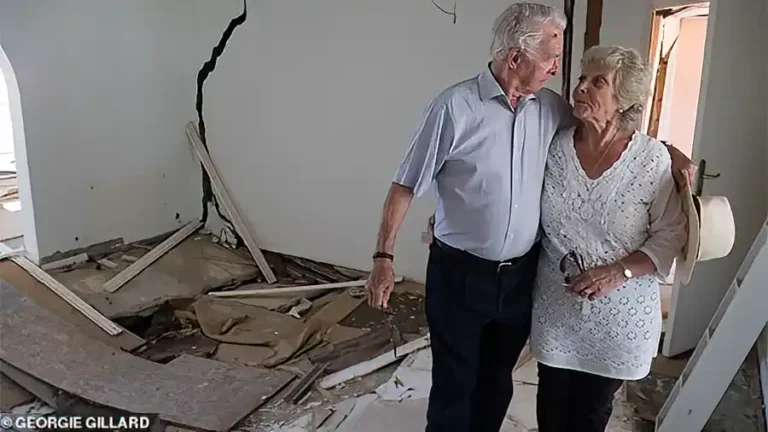
The first signs of trouble emerged in 2012, when the area of Limnes, which translates to “lakes” in English, began to show clear indications of land instability when Peter Field (pictured above with his wife Kayt)  opened his front door to find sinkholes in his garden.

As the landslide progressed and started to damage homes, a wave of misleading and malicious stories appeared in the press, suggesting that properties had been built on former lakebeds filled in by unscrupulous developers. Although such claims were later debunked, the damage was done.

One Greek-language newspaper even demanded €2,000 from the Pissouri Community Council to publish a correction to its false reporting!

But Limnes was just the beginning. The creeping landslide has since extended its reach to other areas south of the village, including Sheromyli, Yiousouphis, Safires, Merika, Kalogeri, and Roes as shown in the image below.

Areas affected by Pissouri landslide

Professional survey of Pissouri landslide ignored

Pissouri residents commissioned an independent report on ‘the problem’, which was published by The Geological Society of London. This report concluded that:

“the Limnes area had been affected by ancient (possibly late Pleistocene–early Holocene) deep-seated failure and that slope instability had subsequently been reactivated at a shallower depth within the failed material as a result of loss of material strength and high water tables.”

But the authorities apparently ignored the validity and finding of this report, possibly because they preferred to believe the misleading and malicious stories in the press.

After 13 years, the truth has finally emerged

Beneath the idyllic surface of this once-picturesque Cypriot village, the land is shifting. Homes are breaking apart. Lives are being upended. This is no freak occurrence – it is an unfolding geological catastrophe that experts now concede is beyond repair.

The message from the authorities is blunt and chilling: the situation is irreversible. Two key areas in Pissouri have been so severely affected that the government has officially abandoned any hope of salvaging them. These zones are now designated as “White Zones” – a euphemism for land where building or habitation is permanently prohibited.

The ‘White Zone’ for Pissouri is shown in yellow on the image below.

Pissouri landslide white zone
A complete map of the area can be found on the Cyprus Interior Ministry website

50 families in Pissouri forced to leave their homes

In Limnes alone, some 250 homes stand on dangerously unstable ground. Already, 50 families have been ordered to evacuate. Others remain in limbo, watching the cracks in their walls spread, wondering if they’ll be next.

This isn’t just about structural damage – it’s about shattered lives. This slow-motion disaster has been known about for more than a decade, yet responses have ranged from ineffectual to downright negligent.

Last evening (Saturday), my wife and I sat down to a traditional Cypriot meze at a little taverna in a village north of Pissouri with members of our walking group.

As we chatted with the owner, a warm and welcoming Greek Cypriot; he shared his story. He told me how he’d been forced to shut down his business in Pissouri because of the landslide; the village where he’d lived and worked for years. With quiet sadness, he explained that he and his family had no choice but to leave.

This Greek Cypriot family are just one of many families who’ve had to abandon the place they once called home.

A €40 million misstep (almost)

Authorities did attempt to intervene. One major project involved the construction of a €7 million retaining wall – which ultimately failed. If not for last-minute intervention by the Cyprus Scientific and Technical Chamber (ETEK), the government would have squandered an additional €40 million on another wall doomed to the same fate.

Millions have been spent. Nothing has been resolved. Families remain displaced, and the €40 million that’s been saved should be used to rehome displaced families.

Gypsum, voids and a hidden crisis beneath

To make matters worse, deep drilling carried out in 2023 uncovered gypsum formations and underground voids beneath Limnes – geological alarm bells. These formations significantly increase the area’s vulnerability, especially under the strain of heavy rainfall or seismic activity.

Evacuation plans are now being drawn up. The uncomfortable reality? It’s no longer a question of if the ground will give way again – but when.

A disaster foreseen – yet ignored

This didn’t come out of nowhere. Much of Pissouri is built on ancient landslide terrain – an estimated 75,000 square metres of it. Limnes rests on a larger landslide footprint still, spanning 453,000 square metres. Despite this, development was given the green light in the 1990s, after the area was rezoned for residential use. Now, decades later, those decisions are coming home to roost.

Officials have tried to write it off as a natural disaster. But landslides may be natural – authorising construction on land known to be unstable is human failure and those affected should be fully compensated for their loss.

What happens now?

The Geological Survey Department has outlined several emergency measures aimed at slowing further damage:

  • Stormwater drainage projects.
  • Sewer system upgrades in safer zones.
  • Investigations into possible leaks in water infrastructure.
  • Hydrological modelling to assess water flow dynamics.

It’s something – but it’s not enough. These steps won’t restore lost homes. Nor will they rebuild the trust that has been eroded by years of inaction. The government has a moral responsibility to compensate the families and businesses affected.

Pissouri landslide stands as a stark warning

A warning of what happens when development is allowed to outpace responsibility. When scientific assessments are ignored. When homes are built where they never should have been.

The cracks that now scar Pissouri village are more than structural – they symbolise the collapse of planning, oversight, and accountability.

And for the families who’ve had to walk away from everything they once called home, that collapse is more than symbolic – it’s a heartbreaking reality. They must be rehomed or compensated.
Urgent call for legislation on jointly owned buildings in Cyprus

The Cyprus Association of Condominium Managers (SYDIKOIK) has issued an urgent plea to the Parliamentary Committee on Interior Affairs to bring forward and pass legislation governing the management of jointly owned buildings.

Despite being informed that a follow-up meeting would take place in Parliament in January to advance the matter, no such meeting has occurred – and no explanation has been given for the delay.

Speaking at a press conference on Friday, SYDIKOIK spokesperson Vassilis Artemiou stressed that the association’s primary goal is to improve the quality of life for residents living in jointly owned buildings. A key issue, he explained, is the need to modernise outdated legislation, which currently causes numerous problems.

He noted that the association has already made extensive efforts, including meetings at Parliament, and recently sent a letter to all members and the chairperson of the Parliamentary Committee on Interior Affairs. “It is deeply disappointing,” he said, “that we have yet to receive a single response from anyone.”

Mounting pressure for jointly owned buildings reform

Artemiou explained that this press conference was necessary to increase public pressure for legislative reform. “This is a pressing issue,” he stated, “that affects thousands of people living in shared buildings. We need modern, effective legislation to solve the serious problems they face.”

SYDIKOIK President Christos Kyzis highlighted that the lack of a comprehensive and modern legal framework has become a long-standing issue. “Procrastination and indifference have left property managers and owners without the tools they need to operate with transparency, safety, and fairness,” he said.

“The absence of clear regulations creates chaos—and it’s the citizens who pay the price every day. As an association, we’ve done everything within our means.”

A public appeal to parliament

Kyzis went on to issue a public call to the President and members of the Parliamentary Committee on Interior Affairs to immediately set a date for discussing the proposed legislation. He urged Parliament to explain the reasons behind this “unacceptable delay” and called on political parties to take a clear stance on whether or not they support regulating such a serious social matter.

He also suggested that, if the state or local authorities are unwilling or unable to take responsibility, it may be time to revisit the 2019 legislative proposal to establish an independent council for jointly owned buildings. This autonomous body, he said, would be capable of overseeing, enforcing, and offering fair resolutions – free from political influence and delays.

“Silence and inaction are no longer acceptable,” Kyzis declared. “We are ready to engage in dialogue, ready to present evidence, but we are not prepared to continue living in a country where buildings grow taller while responsibility shrinks. Society cannot wait any longer – we are here to represent it.”

A jointly owned buildings bill left in limbo

Asked when the bill was last discussed in Parliament, SYDIKOIK Secretary Anna Papa confirmed that the final discussion took place in November 2024. “We were told there would be a follow-up meeting in January 2025 to move the bill closer to a vote. Unfortunately, that meeting never happened—despite our repeated efforts via letters and enquiries to find out why,” she said.

Papa explained that the proposed bill addresses many gaps and clarifies numerous legal ambiguities. One key issue it seeks to resolve is the widespread problem of unpaid communal fees. “This is the legislation we are asking to see passed – finally – so we can move forward,” she added.

Impact of local government reform

Asked whether the recent local government reform and the transfer of responsibilities to the new District Self-Governance Organisations (EOAs) affects this issue, Papa confirmed it does.

She recounted that during the November meeting in Parliament, officials indicated that further discussion would follow in January after final comments, primarily from the Land Registry, were made. “This never happened,” she reiterated. “We still don’t know the reasons for the delay or who is responsible.”

Overwhelmed authorities and an alternative proposal

Artemiou added that under current legislation, the Land Registry is responsible for managing jointly owned building committees, a responsibility it has consistently refused for years. The new bill would transfer that duty to the EOAs.

However, he expressed concern that EOAs are already burdened with numerous responsibilities and may be unwilling, or unable, to take on the management of some 30,000 – 40,000 jointly owned buildings. “There is already a 2019 bill that proposes the creation of an independent council solely responsible for oversight, record-keeping, and conflict resolution,” he explained.

He argued that if the EOAs are reluctant to take on this challenge, then reviving the 2019 proposal might be the most viable solution. “This independent body,” he added, “should potentially include state participation and have the authority to issue decisions and enforce measures – though that’s something that must be debated in Parliament.”

(Translated from the Greek article in Stockwatch)

Cyprus property sales analysis – May 2025

Following our monthly update on property sales yesterday, we now dive deeper into the Cyprus property market’s performance in May 2025, as revealed by the latest figures from the Department of Lands and Surveys.

The market recorded a total of 1,664 property sale contracts deposited across the island’s Land Registry offices – a notable 30% increase compared to May 2024’s 1,268 transactions. Here’s a comprehensive look at how both domestic and international segments contributed to this momentum.

Domestic property market on the rise

The local property market continued its upward trajectory in May, with 1,055 contracts filed by Cypriot buyers – up 35% from 780 in May 2024, with all districts reporting gains.

May 2025 domestic sales by district

  • Limassol: 341 (+17%)
  • Nicosia: 322 (+31%)
  • Larnaca: 236 (+66%)
  • Paphos: 110 (+38%)
  • Famagusta: 40 (+109%)
Domestic contracts of sale deposited – 2024/2025 Comparison (May)

Domestic sales year-to-date (Jan–May 2025)

Overall, 4,373 sales have been registered in the domestic market so far in 2025 – a 16% increase from the 3,781 recorded during the same period last year, with all districts reporting gains.

  • Limassol: 1,432 (+8%)
  • Nicosia: 1,413 (+20%)
  • Larnaca: 890 (+27%)
  • Paphos: 470 (+7%)
  • Famagusta: 168 (+25%)
Domestic contracts of sale deposited – 2024/2025 Year-to-Date Comparison

Overseas market: solid demand from EU & non-EU buyers

Foreign buyers also continued to show strong interest in Cyprus real estate, buying 589 properties in May – up 21% compared to 488 in May 2024, with all districts reporting gains apart from Nicosia.

May 2025 overseas sales by district

  • Paphos: 194 (+48%)
  • Limassol: 184 (+20%)
  • Larnaca: 133 (+4%)
  • Nicosia: 47 (-2%)
  • Famagusta: 31 (+11%)
Overseas contracts of sale deposited – 2024/2025 Comparison (May)


Overseas sales year-to-date (Jan–May 2025)

A total of 2,812 sales by foreign buyers have been recorded so far in 2025 – a 15% increase from 2,450 over the same period last year, with all districts reporting gains.

  • Limassol: 849 (+24%)
  • Nicosia: 242 (+3%)
  • Paphos: 901 (+13%)
  • Larnaca: 664 (+11%)
  • Famagusta: 156 (+14%)
Overseas contracts of sale deposited – 2024/2025 Year-to-Date Comparison

Spotlight on EU buyers

The EU segment saw a robust 17% increase in May, with 184 sales compared to 157 a year earlier. Falls in sales in Larnaca, Nicosia and Famagusta were more than outweighed by increased sales in Limassol and Paphos.

May 2025 EU buyer sales by district

  • Limassol: 68 (+94%)
  • Paphos: 48 (+4%)
  • Larnaca: 36 (-10%)
  • Nicosia: 21 (-5%)
  • Famagusta: 11 (-21%)
Contracts deposited by EU Nationals – 2024/2025 Comparison (May)


EU Buyer sales year-to-date (Jan–May 2025)

Sales to EU nationals reached 724 so far this year – up 29% from 561 in the same period of 2024, with all districts reporting gains except for Nicosia.

  • Limassol: 183 (+38%)
  • Nicosia: 92 (-6%)
  • Paphos: 251 (+41%)
  • Larnaca: 131 (+18%)
  • Famagusta: 67 (+56%)
Contracts deposited by EU Nationals – 2024/2025 Year-to-Date Comparison

Spotlight on non-EU buyers

Sales to non-EU citizens also performed well, rising 22% in May to 405 compared to 331 in May 2024, with all districts reporting gains with the exception of Limassol.

May 2025 non-EU buyer sales by district

  • Limassol: 166 (-2%)
  • Nicosia: 226 (no change)
  • Paphos: 146 (+72%)
  • Larnaca: 97 (+10%)
  • Famagusta: 20 (+43%)
Contracts deposited by non-EU Nationals – 2024/2025 Comparison (April)


Non-EU buyer sales year-to-date (Jan–May 2025)

Year-to-date sales reached 1,904, reflecting a 10% increase from 1,730 in the same period last year, with all districts reporting gains apart from Famagusta.

  • Limassol: 598 (+16%)
  • Nicosia: 129 (+12%)
  • Paphos: 602 (+5%)
  • Larnaca: 497 (+11%)
  • Famagusta: 78 (-3%)
Contracts deposited by non-EU Nationals – 2024/2025 Year-to-Date Comparison

Market insights: key trends to watch

One standout insight from this month’s data is that non-EU buyers continue to outnumber domestic buyers in Paphos, highlighting the district’s ongoing appeal to international investors and those seeking holiday homes.

With strong gains across almost every district and buyer category, Cyprus continues to cement its position as a property investment destination in the Mediterranean for overseas investors.

But, as we reported earlier, young Cypriots are finding it much harder to rent, let alone buy, particularly in the coastal areas of Limassol, Paphos and Larnaca. And for many, the sense that their country is being sold off – piece by piece – is no longer just rhetoric – it’s a reality.

Market Segment Summary Analysis Year-to-Date

Contracts Deposited 2008 to 2025 Year-to-Date Comparison

Conclusion

The Cyprus property market in May 2025 reflects continued strength and broad-based growth. Both domestic and international demand are climbing, with especially strong performances in Larnaca, Paphos, and Limassol. Whether it’s local confidence or foreign interest driving purchases, the numbers tell a clear story – Cyprus real estate remains vibrant and resilient.

However, the Cyprus Mail recently published a video exploring whether Greek Cypriots in Nicosia believed too much of the island’s land was being sold to foreigners, and how they felt about the situation.

Stay tuned for regular updates and insights as we track how the rest of 2025 unfolds.

Cyprus property market increased significantly in May

The Cypriot property market continued to show robust performance in May 2025, marking a significant upsurge in sales activity compared to the same month last year. The overall outlook for the property sector this year remains cautiously optimistic.

May 2025 property sales overview

A total of 1,664 property sales were recorded in May, according to the number of sales contracts deposited at the island’s Land Registry offices. This represents the highest monthly total since the record year of 2007, when 2,097 contracts were filed in May.

Compared to May 2024, when 1,268 transactions were recorded, this year’s figure reflects an impressive 30% increase. These sales encompass not only residential properties but also commercial, industrial, agricultural real estate – and land.

Contributing market factors

Several factors appear to be driving this resurgence in the market:

  • A slowdown in property price increases, as noted in the Bank of Cyprus’s Q4 2024 report.
  • Faster processing times for planning and building permits.
  • A drop in housing loan interest rates, now averaging around 3.78%, making borrowing more affordable.

District-level highlights – May 2025

All districts reported year-on-year growth in sales during May:

  • Limassol: 525 – up 18%
  • Larnaca: 369 – up 37%
  • Nicosia: 369 – up 26%
  • Paphos: 304 – up 44%
  • Famagusta: 77 – up 54%
Total contracts of sale deposited – 2024/2025 Comparison (May)

Year-to-date sales continue upward trend

The market’s strength is further evidenced in the year-to-date figures. From January to May 2025, 7,185 properties have been sold across Cyprus – a 15% rise compared to the 6,231 sales reported during the same period in 2024.

Sales by district so far in 2025:

  • Limassol: 2,281 – up 14%
  • Nicosia: 1,655 – up 17%
  • Larnaca: 1,554 – up 19%
  • Paphos: 1,371 – up 11%
  • Famagusta: 324 – up 19%
Total contracts of sale deposited – 2024/2025 Year-to-Date Comparison

Market outlook

While external economic conditions and interest rate trends will continue to shape the market’s trajectory, the current momentum suggests that Cyprus’ property sector is on a strong footing moving into the second half of the year.

With growing investor interest, improved administrative efficiency, and favourable lending conditions, 2025 may yet prove to be one of the sector’s best years in recent memory.

However, while the local fundamentals of Cyprus’ property market are solid, it remains sensitive to external dynamics. Interest rates, geopolitical events, economic trends, and foreign buyer behaviour will all play a role in shaping the market’s performance in 2025.

Cyprus property prices set to fall as housing supply grows

Cyprus is poised for a decline in both rental and property purchase prices over the coming years, President Nikos Christodoulides has announced, largely due to a significant increase in new housing developments, which are expected to bring balance to the property market.

Speaking at a dinner hosted by the Cyprus Property Developers Association in Limassol, attended by Interior Minister Constantinos Ioannou, the President emphasised the importance of real estate and construction as a “key pillar” of the Cypriot economy, accounting for 15% of GDP and employing more than 40,000 people.

Public-private cooperation key to housing reform

Christodoulides thanked the association for its constructive collaboration in shaping business development policies and bolstering economic resilience.

Highlighting a series of housing reforms, the President stated that government policy is focused on increasing housing supply, particularly affordable housing for young people, through targeted measures.

“The results so far demonstrate both the soundness of our policies and the value of public-private cooperation for the benefit of the entire population,” he said.

Strategic housing programmes in action

The national housing strategy, Stegazo to Mellon mou, is central to these efforts. It includes revised urban planning policies and the Build to Rent scheme, both of which incentivise developers by granting a 25% – 45% bonus in building coefficient, provided a portion of additional units are offered at affordable prices.

According to the Interior Ministry, interest in these programmes has been strong among both developers and the public. More than 1,900 new homes are expected to be delivered under the schemes, with a considerable share dedicated to affordable housing.

An additional €8 million raised through the sale of extra building rights will be allocated to the Cyprus Land Development Organisation (KOAG) to support further affordable housing initiatives.

Market already showing signs of cooling

President Christodoulides noted that signs of a market shift are already visible. A slowdown in housing price increases was observed in the third quarter of 2024, continuing into the fourth quarter, according to the latest House Price Index from the Central Bank of Cyprus.

“With the new housing stock entering the market, we anticipate a further balancing of supply and demand, which will ultimately lead to a reduction in rental and purchase prices,” he said.

Cyprus is also ranked 24th out of 27 EU member states in terms of rent and house price growth, indicating a relatively moderate trajectory in comparison to its European counterparts.

Faster permits and legal reforms on the way

To further streamline development, the government plans to cut the time for issuing urban planning and building permits to 40 working days for low-risk and 80 days for medium-risk projects.

In addition, a new bill focused on regulating jointly owned buildings is currently under legal review and will soon be submitted to Parliament. The aim is to enhance property management and resolve long-standing disputes among co-owners.

Broader economic reforms underway

Beyond housing, Christodoulides reiterated Cyprus’ goal of meeting all technical criteria for Schengen accession by the end of 2025.

He also announced the launch of the Business Support Centre; a cornerstone of wider reforms intended to improve public sector productivity and create a more attractive environment for investors.

“Our core objective is to boost the efficiency of public services, thereby supporting the business community and the wider Cypriot economy,” the President concluded.

New law offers hope to trapped property buyers in Cyprus

Thousands of Cypriots and foreigners who found themselves trapped and stuck in legal limbo over property purchases may finally see light at the end of the tunnel.

A significant development has emerged from a collaboration between the Ministry of the Interior and Parliament, aiming to offer real solutions for around 8,000 so-called “trapped” property buyers.

What’s the issue?

These individuals paid for properties but never received their title deeds, often because developers had mortgaged the land or due to complications with planning permission. The result? Families living in homes they legally paid for, but which they cannot officially claim as their own.

This longstanding issue has been both a legal and moral thorn for many years in Cyprus, with countless buyers caught in a tangle of red tape, developer debt, and bank claims.

The proposed trapped buyers solution

Interior Minister Constantinos Ioannou and the Parliamentary Legal Affairs Committee have now agreed on the framework for a new bill designed to break the deadlock. This draft legislation includes safeguards that will allow trapped buyers under certain conditions, which have yet to be revealed, to finally secure title deeds for their properties.

After a series of meetings with all relevant stakeholders, including the Association of Banks and vulture funds, the Ministry believes it has found common ground. Importantly, the final draft will be shared with the Association of Banks in a bid to secure their support and avoid legal appeals.

According to the Minister, “We are on the right track,” and it’s now only a matter of time before the bill goes before the House of Representatives for a vote.

What does the trapped buyers bill cover?

While the technical details are still being finalised, Minister Ioannou confirmed that the bill applies to both those with older and newer claims on the properties. It also includes concrete provisions for how and when local district offices must issue title deeds, along with safeguards to protect the rights of buyers.

The aim is clear: to ensure that people who bought property in good faith are no longer left in limbo due to financial or legal issues beyond their control.

Urban planning amnesty also underway

In parallel, the government is working on a separate bill aimed at resolving issues for buyers trapped due to urban planning violations. This is still in the early stages, but there’s already a lifeline available: a planning amnesty, valid until 15 June, which allows owners to legalise unauthorised constructions – be it extra building area, or other minor irregularities.

This amnesty doesn’t just cover homes; it extends to commercial, industrial, agricultural properties and restaurants. Those affected are urged to act quickly.

Political support for the bill

Michalis Yiakoumi, an MP from the Democratic Alignment party, echoed the urgency of the matter: “This issue affects a lot of people, and they’re not to blame. This bill is a step in the right direction.”

He highlighted that many of these buyers have fulfilled all their financial obligations yet are still without title deeds due to failures by banks and developers. “They are paying for the sins of others,” he said, adding that the bill has been refined to include as many affected individuals as possible.

What’s next?

With cross-party support and momentum building, the bill is expected to reach the House plenary soon. If passed, it could finally offer relief to thousands of families, many of whom have waited years, even decades, for justice.

For now, all eyes are on Parliament. But for those trapped in this bureaucratic nightmare, hope is finally within reach. But the devil will be in the detail and whether the banks will support the bill.