Cyprus property sales surged 19% in March

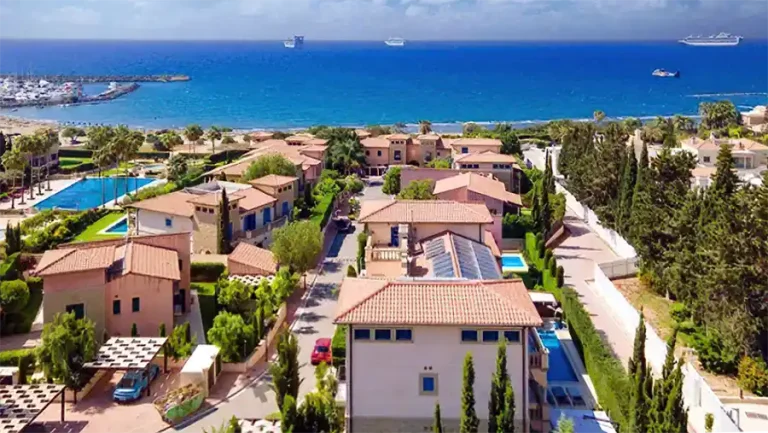
Cyprus’ real estate market saw a notable 19% surge in property sales in March compared to the same month last year, with all districts reporting double-digit increases over March 2024.

Sales in Paphos rose by 32%, sales in Larnaca rose 21%, sales in Nicosia were up 18%, sales in Famagusta rose 15% and finally sales in Limassol rose by 11%.

Although Limassol recorded the smallest percentage rise in sales, it achieved the highest number of sales of all the districts (477). Furthermore, 477 is the highest monthly number of sales for any district since monthly sales figures were first published in 2008.

Total contracts of sale deposited – 2024/2025 Comparison (March)

During the first quarter of 2025 sales are up compared to the same period last year with all districts reporting increases. Sales rose 26% in Larnaca, 15% in both Limassol and Nicosia, 7% in Paphos and 4% in Famagusta.

Total contracts of sale deposited – 2024/2025 Year-to-Date Comparison

Although Cyprus could be on on-track for a record year in sales, President Donald Trump’s trade tariffs could influence the Cyprus property market indirectly as a result of:

  • An economic slowdown in the eurozone resulting from reduced exports from the EU to the U.S. This could result in loss of investor confidence and foreign investment, both of which are vital for the health of Cyprus’ property market.
  • Inflationary pressures resulting in increased prices for imported goods and materials, which could lead to higher construction costs and increased inflation. These economic conditions could dissuade potential property buyers and investors, reducing demand.
  • Inflationary pressures may influence the European Central Bank’s monetary policies, potentially leading to adjustments in interest rates. Higher interest rates can increase borrowing costs for mortgages, home loans and property development loans, which could slow down the property market.

Although Cyprus has yet to feel the effects of these U.S. trade tariffs, there’s still a chance of knock-on effects, depending on how long the tariffs last, how big they are, and how the wider Eurozone economy reacts.

It’s impossible to predict what’s going to happen. Just yesterday Elon Musk expressed his support for eliminating tariffs between the United States and Europe. He supported a “zero-tariff situation,” creating a free-trade zone between the two regions.

Tens of thousands of demonstrators descended on Washington yesterday as part of nationwide “Hands Off!” rallies against spending cuts from Elon Musk’s Department of Government Efficiency and President Trump’s new “Liberation Day” tariffs. Protests were also held in New York City, Los Angeles and Philadelphia.

Cyprus property sales – market segment analysis

Property sales to the domestic (Cypriot) market

In March, sales to the domestic market rose 14% compared with March last year with all districts reporting gains.

Sales in Famagusta rose by 27%, while sales in Nicosia rose 26%, sales in Paphos rose 20%, sales in Larnaca were up 7%, and finally sales in Limassol rose by 6%.

Once again, although Limassol recorded the smallest rise in sales, it achieved the highest number of sales (305) to the domestic market of all the districts.

Domestic contracts of sale deposited – 2024/2025 Comparison (March)

Overall, domestic sales for the first quarter of 2024 are up 15% compared to the same period last year.

Although sales in Paphos fell by 8% and remained steady in Famagusta, increases of 29%, 17% and 16% were reported in Larnaca, Limassol and Nicosia respectively.

Domestic contracts of sale deposited – 2024/2025 Year-to-Date Comparison

Property sales to the overseas market

Sales to the overseas market (including both EU and non-EU citizens) in March rose 25% compared to March 2024.

Although sales in Nicosia fell 13% and remained steady in Famagusta, Larnaca, Paphos and Limassol reported increases of 41%, 39% and 21% respectively. Paphos achieved the highest number of sales in the month reaching 204.

Overseas contracts of sale deposited – 2024/2025 Comparison (March)

In the first quarter of 2024, overseas sales have risen by 15% compared to the same period last year, with all districts reporting gains.

Sales in Larnaca up 22%, Paphos up 16%, Limassol up 14%, Famagusta up 9% and finally Nicosia up 2%.

Overseas contracts of sale deposited – 2024/2025 Year-to-Date Comparison

Property sales to EU citizens

Sales to EU citizens increased by 16% in March compared to the same month last year.

Although sales in Nicosia fell by 36% and sales and Famagusta fell 27%, sales in Larnaca, Paphos and Limassol rose by 65%, 60% and 10% respectively.

Contracts deposited by EU Nationals – 2024/2025 Comparison (March)

In the first quarter of 2024, sales to EU citizens have risen 29% compared to the same period last year with sales rising in all districts except for Nicosia where they fell by 6%.

Sales in Paphos are up 55%, Famagusta up 49%, Paphos up 52%, Nicosia up 32%, Larnaca and Limassol up 27% and 16% respectively.

Contracts deposited by EU Nationals – 2024/2025 Year-to-Date Comparison

Property sales to non-EU citizens

In March, property sales to non-EU citizens rose 30% compared to March last year, with all districts recording gains.

Sales in Famagusta rose 40%, followed by Larnaca 34%, Paphos 31%, with Limassol and Nicosia both reporting a 26% increase.

Contracts deposited by non-EU Nationals – 2024/2025 Comparison (March)

In the first quarter of 2024, property sales to non-EU citizens rose 10% compared to March 2024.

Although sales in Famagusta fell 21%, the numbers rose in the other four districts. Sales rose 20% in Larnaca, 14% in Limassol, 10% in Nicosia and 3% in Paphos.

Contracts deposited by non-EU Nationals – 2024/2025 Year-to-Date Comparison

Market segment summary

The chart below illustrates the popularity of each district among different market segments. In Paphos, which is particularly attractive to those seeking holiday homes, property sales to non-EU nationals alone exceed those to the domestic market.

The popularity of Larnaca is increasing with the overseas market recording the strongest growth in the first quarter of 22%.
Market Segment Summary Analysis Year-to-Date

Contracts Deposited 2008 to 2025 Year-to-Date Comparison

Troika still sees spectres of the 2013 financial crisis

The Troika of international lenders expressed concern over Cyprus’ slow progress in reducing legacy Non-Performing Loans (NPLs) and persistent high debt levels.

The recent visit of the Troika’s technical delegation to Cyprus once again highlighted the country’s ongoing economic challenges, primarily stemming from a significant stock of legacy Non-Performing Loans (NPLs) and elevated public debt levels.

Despite a gradual reduction in NPLs in recent years, a substantial backlog remains, posing a continued burden on the economy. Private debt also remains comparatively high, hampering financial flexibility for households and businesses.

According to recent reports, the Troika has voiced serious concerns over Cyprus maintaining one of the highest NPL ratios in the Eurozone. These concerns pertain not only to NPLs still held within the banking system, but more critically, to those outside it—mainly in Vulture Funds. As of the latest figures, around €19.1 billion in NPLs are held by these entities, with an additional €1.7 billion still on banks’ balance sheets. The failure to resolve or write off these loans continues to constrain credit availability and reduce liquidity in the economy.

The Troika also underlined that private debt in Cyprus remains high by European standards. This prevents some individuals and businesses from fully participating in the country’s economic growth. By the end of 2024, approximately 72,000 borrowers had NPLs managed by Debt Servicing Companies, with fewer held by banks.

Impact on the Cypriot economy

The large volume of unresolved NPLs, coupled with high public debt, acts as a brake on economic growth. Ongoing uncertainty surrounding the foreclosure process and the sluggish pace of debt resolution undermines investor confidence and delays new investment. Furthermore, the absence of a coherent strategy to further reduce public debt risks increasing borrowing costs for the state, further limiting future growth potential.

A pivotal year ahead

The year 2025 is being seen as a critical juncture. The Troika has urged Cypriot authorities to adopt decisive measures to address NPLs and reduce private debt. Key priorities include:

  • Accelerating foreclosures and restructurings: Swift resolution of legacy NPLs is essential to unlock growth.
  • Judicial reform: Foreclosure procedures must become quicker and less prone to exploitation by strategic defaulters.
  • Targeted policies for private debt reduction: In a country growing at over 3% annually, debt relief and restructuring strategies are vital to allow broader economic participation.
  • Stimulating economic activity: An economy unburdened by legacy debt empowers banks to increase new lending, fuelling investment and consumption.

In short, Cyprus stands at a turning point where bold reforms are essential to leave behind the lingering shadows of its past financial crisis.

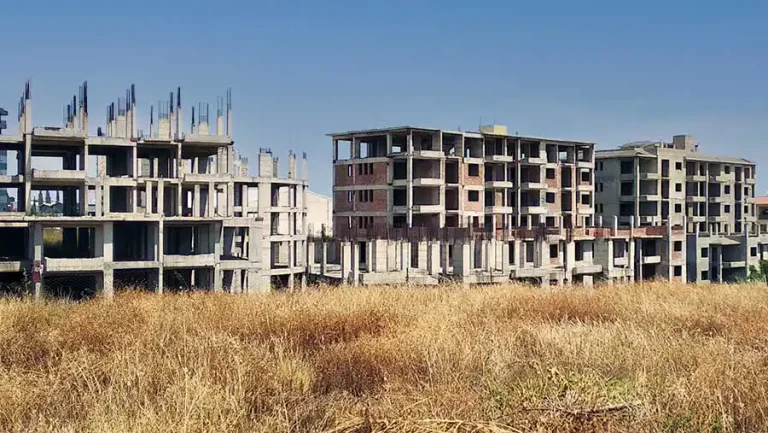
Draft bill to address dangerous buildings at risk of collapse

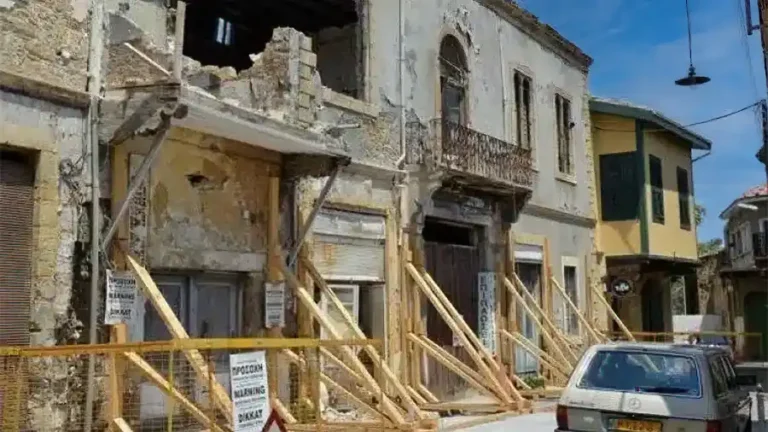
Authorities are taking action to address 1,292 buildings considered to be dangerous and at risk of collapse, posing a threat to public safety.

New legislation and increased state funding have been announced to tackle the issue. The affected buildings are spread across Nicosia (618), Limassol (308), Larnaca (170), Famagusta (26), and Paphos (170).

MP Marinos Mousiouttas is introducing a draft law, with Interior Minister Constantinos Ioannou’s support, to improve safety and address weaknesses in existing legislation. Current laws inadequately protect the public, affected properties, and neighbouring structures.

To assist District Local Government Organisations (DLGOs), which now oversee these hazardous buildings, state funding will increase. Nicosia will receive €500,000, with similar but insufficient funds allocated to other districts.

Following discussions with Mousiouttas, Ioannou announced that a revised legal proposal had been formulated by the House Interior Committee. The primary goal is to strengthen public safety and enhance the management of dangerous buildings.

Ioannou highlighted that flaws in the current legal framework, identified in collaboration with the Unions of Municipalities, Communities, and the DLGOs, have hindered enforcement. Some local authorities have acted, but others have struggled due to legal ambiguities.

With the transfer of responsibility for dangerous buildings to the DLGOs now in effect, legislative amendments are being introduced to enhance monitoring and enforcement. Property owners will be held accountable for ensuring their buildings are safe, with enforcement measures compelling them to take action.

Key changes include streamlined procedures for notifying owners, enabling courts to issue immediate intervention orders, and prohibiting the use or rental of unsafe buildings until repairs are made. The law also allows for partial or full demolition and utility disconnections.

Additional provisions include registering a memo on affected properties to cover intervention costs, introducing out-of-court settlements, and imposing stricter penalties for non-compliance.

Previously, financial constraints limited authorities’ ability to manage dangerous buildings. To address this, the Interior Ministry has secured extra financial support.

Funds will be distributed to the DLGOs based on registered dangerous buildings within each municipality, following a structured restoration plan developed in collaboration with local authorities.

Dangerous buildings: draft law

Roads and Buildings Regulation (Amendment) (No. 2) Law of 2025 (Greek)

Roads and Buildings Regulation (Amendment) (No. 2) Law of 2025 (English)

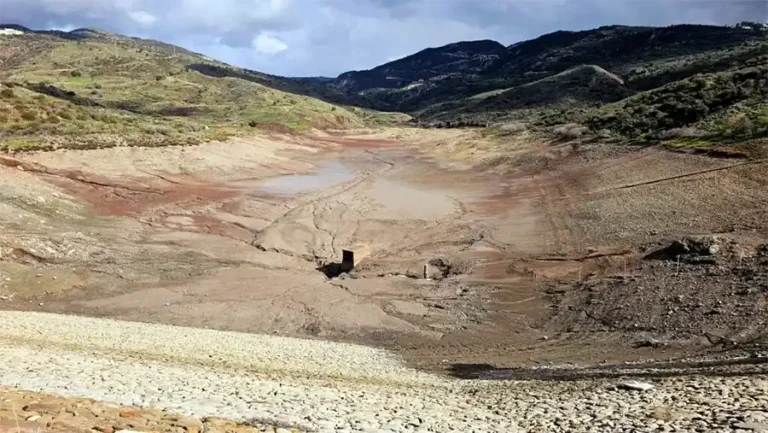
Water cuts expected in 2026 as Cyprus dries up

Cyprus is preparing for water supply cuts in 2026, as a prolonged drought strains the island’s resources, according to plans revealed by the Water Development Department (WDD).

Limassol and Famagusta will be the first districts affected, with water restrictions beginning in February 2026, followed by Paphos in April and Nicosia and Larnaca in May.

The forecasts assume continued drought conditions into 2026, no allocation of water for irrigation, and exclude any potential contribution from planned mobile desalination units.

WDD officials warn that Limassol and Paphos are already at high risk of failing to meet daily drinking water needs during peak periods in 2025, particularly during summer and autumn months.

The biggest problem expected during the year relates to meeting daily drinking water demand in the Limassol district, according to the WDD.

The Kouris dam, which can serve four districts (Limassol, Nicosia, Larnaca and Famagusta), will have its water extraction limited to preserve supplies for Limassol, which has no alternative dam sources.

Limassol is projected to face a water deficit of 1 million cubic metres per month from February 2026, increasing to 1.6 million cubic metres during summer months. Famagusta will experience shortages of 0.2 million cubic metres monthly from February, while Nicosia and Larnaca will see deficits beginning in May 2026, reaching 1-1.4 million cubic metres during summer and autumn.

To address the crisis, authorities are installing mobile desalination units at Garyllis (10,000 cubic metres/day), Limassol port (10,000 cubic metres/day) and Moni (10,000 cubic metres/day) to bolster Limassol’s water supply by approximately 756,000 cubic metres monthly. Installation is expected to be completed during 2026.

Additional measures include expanding the capacity of the Episkopi desalination plant with a temporary unit producing 10,000 cubic metres daily.

In Paphos, where water demand peaks during the tourist-heavy summer months, a mobile desalination unit with 10,000 cubic metres daily capacity will be installed in Kissonerga by early 2026, adding 3.24 million cubic metres annually.

Authorities are also developing a rapid filtration unit at Evretou dam to supply the Polis Chrysochous area by summer 2026, initially producing 1,500 cubic metres daily with expansion capacity to 3,000 cubic metres.

The WDD is implementing projects to improve water supply in 60 communities that rely on local boreholes or springs, including utilising 18 boreholes in Nicosia, seven in Limassol, five in Paphos and two in Larnaca.

The WDD announced last Friday that hotels in Cyprus can secure permits for small-scale desalination units within a week and have them installed before the peak tourist season. The government is providing financial support to hotels according to daily drinking water production capacity.

We learned today that the Minister of Agriculture, Rural Development and Environment, Maria Panayiotou, is traveling to Abu Dhabi to discuss the possibilities of cooperation with the National Energy Company of the United Arab Emirates (TAQA). Her visit aims to explore the prospect of installing mobile desalination plants in Cyprus, with the aim of enhancing the availability of drinking water.

New home sales exceeded €2 billion in 2024

The Cyprus property market recorded a strong growth in 2024, with the sales of new homes exceeding €2 billion, according to an analysis by Landbank Analytics.

The study, based on contracts of sale submitted to the Department of Lands and Surveys, reveals a strong growth in apartment sales, with a downturn in sales of new houses.

Strong growth in new apartment sales, house sales decline

A total of 6,462 contracts of sale for new residential properties were recorded in 2024, marking a 16.7% increase from 2023.

New home sales represented 41% of the total number of property sales (15,797) achieved in 2024.

Apartment sales dominated the market, with 5,354 units sold; an increase of 22.7% in volume and 9% in value, totalling €1.5 billion.

In contrast, new house sales fell by 5.6% to 1,108 units, with their total value falling 5.7% to €510.6 million.

New home sales – regional market trends

  • Nicosia experienced a significant rise in new apartment sales, up 23.6% to 1,587 units, with a total value exceeding €301 million. However, new house sales declined by 6.9% to 202 units, with their value falling 12.7% to €63.5 million.
  • Limassol saw mixed results; apartment sales increased by 4.2% to 1,781 units, but their value declined by 5.6% to €759 million. The city’s house market faced a sharp decline, with sales plummeting 33.2% to 241 units, and their total value falling 30.3% to €134.2 million.
  • Larnaca emerged as a strong performer, with apartment sales surging 40% to 1,394 units, reaching a total value of €273 million. House sales showed modest growth of 2.5% to 204 units, though their total value declined by 6.5% to €69.3 million.
  • Paphos recorded a remarkable 67.7% increase in apartment sales, totalling 446 units, with a value rise of 33.6% to €139.2 million. House sales also climbed 9% to 333 units, with their value increasing 13.9% to €195.5 million.
  • Famagusta, though smaller in market size, performed well, with apartment sales rising 36.4% to 146 units and house sales increasing 36.2% to 128 units. The total value of apartment transactions grew by 43.8%, while house sales surged by 56.7%.

Market dynamics

Landbank Group CEO Andreas Christophorides emphasized that affordability remains a key driver, with local buyers favouring apartments over houses.

Foreign buyers are increasingly shifting focus from Limassol to more affordable regions like Larnaca and Paphos, influencing market trends.

As 2024 demonstrated, the apartment sector remains the engine of Cyprus’ residential property market, reflecting both local and international buyer preferences.


Cyprus property prices return to pre-crisis levels

Property prices in Cyprus have risen to levels last seen in 2012, just before the banking crisis. The apartment price index has reached a historic high, according to data from the Central Bank of Cyprus.

The apartment price index, based on a reference value of 100 in the third quarter of 2024, increased to 113 points from 112.3 in the second quarter. This exceeds the previous peak of 105.8 recorded in the fourth quarter of 2008. The index had fallen sharply from the second quarter of 2010, reaching a low of 70.7 points in the first quarter of 2016.

By the end of 2021, the index had risen to 85.9 points, still significantly below the peak. However, it climbed to 97.3 points by the end of 2022 and reached 103.9 points by the third quarter of 2023. The latest report from the Central Bank highlights a slowdown in price increases, with the annual growth rate of apartment prices slowing more than that of house prices.

District trends in apartment prices

Apartment prices show varying trends across different districts:

  • Limassol: The index reached 138.2 points in the third quarter of 2024, up from 136.4 in the second quarter. Prices have been rising consistently since 2019.
  • Nicosia: The index stood at 95.5 points in the third quarter, slightly up from 95 in the second quarter but still below the 100-point level recorded in 2010.
  • Larnaca: The third-quarter index was 106.5 points, significantly lower than the 136.4 points recorded in the second quarter.
  • Paphos: The index rose to 108.6 points in the third quarter from 106.4 in the second quarter, reaching its highest recorded level.
  • Famagusta: The index increased to 85.5 points in the third quarter from 85 in the second quarter.

House price index by district

The house price index for Cyprus stood at 90.8 points in the third quarter of 2024, up from 89.7 in the second quarter, mirroring 2012 levels. The peak was 108.9 points in the third quarter of 2008.

  • Limassol: The index reached 112.7 points in the third quarter, the highest among all regions.
  • Nicosia: The index was at 86.1 points in the third quarter, slightly below the 87.8 points of 2013.
  • Larnaca: The index reached 90.6 points in the third quarter, slightly below the 2011 level of 94.4.
  • Paphos: The index rose to 101.6 points, approaching 2011 levels.
  • Famagusta: The index increased to 91.8 points, nearing its 2011 peak of 94.4.

Overall, property prices in Cyprus have largely recovered to pre-crisis levels, with a notable slowdown in recent growth trends.