Port dispute persists in Larnaca despite marina agreement

Stakeholders have welcomed the proposal to transfer the management of the Larnaca marina to the Cyprus Marine and Maritime Institute (CMMI), but sharp disagreements persist over the port’s development plans.

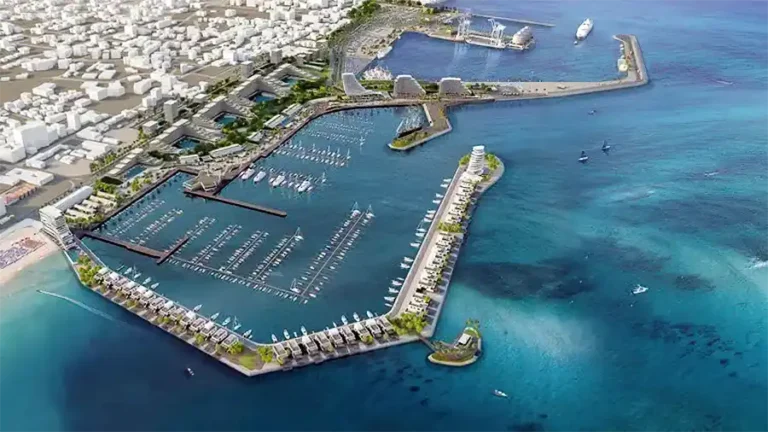
Many local stakeholders are calling for the Cyprus Ports Authority’s €86 million, three-phase development proposal to be reconsidered. They argue that the plan addresses key infrastructure needs and aligns with the region’s long-term growth strategy. This contentious issue is set to be discussed in an upcoming meeting between the Larnaca Development Committee and the President of Cyprus, where stakeholders hope to secure government support.

The mayor of Larnaca, in comments to Philenews, emphasized the importance of addressing the community’s concerns. He warned that if their demands are not met, stakeholders will proceed with a planned protest on January 11. This action underscores the growing frustration among local representatives who feel their priorities have been sidelined.

However, Transport Minister Alexis Vafeades remains firm in his opposition to altering current plans. He insists that the Cyprus Ports Authority should instead focus on other pressing projects in Vasilikos and Polis Chrysochous. “The only thing worse than a project’s failure is implementing the wrong project, as it will define the future of our infrastructure for the next 50-100 years,” Vafeades stated, reflecting his concerns over long-term sustainability and resource allocation.

The government plans to launch a tender process in early 2025 to appoint an expert who will conduct a comprehensive study on both the port and marina. This study is expected to evaluate the various proposals and determine the most effective course of action to balance local priorities with national infrastructure needs.

In contrast to the port’s challenges, progress on the marina’s management transition appears to be moving forward with fewer obstacles. CMMI CEO Zacharias Siokouros has confirmed that the institute is fully prepared to take over the marina’s operations, highlighting its capability to manage the facility effectively. Meanwhile, the Transport Ministry has sought legal advice on the matter, and the Public Works Department plans to seek approval from the General Accounting Office to proceed with essential marina dredging works.

With the situation at a critical juncture, the upcoming discussions and planned studies will be pivotal in shaping the future of Larnaca’s port and marina development.

Building permits issued within 48 hours

The Ministry of the Interior has announced that building permits for low-risk developments (Category A), involving up to two residential units, will now be issued within 48 working hours.

This fast-track process applies to applications submitted before July 1, 2024, according to an official statement.

Applicants with pending applications submitted before this date can resubmit them under the new procedure, which involves completing a special checklist and submitting it to the District Self-Government Organisations (???).

The initiative aims to reduce waiting times for building permits, enabling faster construction of private homes, the Ministry states.

In the first week of the decree’s implementation, the Nicosia ??? received 48 requests for rapid permit issuance.

The Ministry encourages consultants across all districts to take advantage of this new licensing method to accelerate the construction process for their clients, the announcement concluded.

Growth continues in Cyprus property sales (update)

According to the latest statistics from the Department of Lands and Surveys, property sales in Cyprus saw a 9% increase in November compared to the same month last year.

The total number of sales, measured by the number of contracts deposited in Land Registry offices in the island’s free areas, reached 1,506, up from 1,386 in November of the previous year.

With the exception of Paphos, where sales fell by 3%, all other districts experienced growth. Sales surged by 19% in Limassol, 5% in the capital Nicosia, 8% in Famagusta, and 1% in Larnaca.

Total property sales
Total Property Sale Transactions – 2023/2024 Comparison

Over the first eleven months of 2024, property sales have risen by 2% compared to the same period last year, with only Nicosia and Larnaca showing significant gains. The property market on the island is on track to achieve the highest number of sales since 2008.

Total contracts of sale deposited – 2023/2024 Comparison (Jan-Nov)

Cyprus property sales – market segment analysis

Sales to the domestic (Cypriot) market

In November, sales to the domestic market reached 914, an 8% increase from the 848 recorded in the same period last year. Despite declines in Famagusta, Larnaca, and Paphos, these were counterbalanced by increased sales in Limassol and Nicosia.

Domestic property sales
Domestic Property Sale Transactions – 2023/2024 Comparison

Overall, domestic sales for the first eleven months of 2024 totalled 8,728, up 11% from the 7,834 recorded in the same period last year. All districts except Famagusta, where sales dropped by 15%, have seen gains.

Domestic contracts of sale deposited – 2023/2024 Comparison (Jan-Nov)

Property sales to the overseas market

Sales to the overseas market (including both EU and non-EU citizens) reached 592 in November, a 10% increase from the 538 recorded in the same month last year. While sales rose in all districts except Limassol, which saw a 1% decline.

Overseas property sales
Total Foreign Property Sale Transactions – 2023/2024 Comparison

Over the first eleven months of 2024, overseas sales have dropped by 10%. Sales in Famagusta, Larnaca, and Nicosia rose by 15%, 5%, and 21% respectively, but fell by 21% in Limassol and 18% in Paphos as foreign buyers gravitated towards lower-priced coastal areas and the capital Nicosia.

Overseas contracts of sale deposited – 2023/2024 Comparison (Jan-Nov)

Property sales to EU citizens

Sales to EU citizens increased by 22% in November compared to the same month last year. Despite a 30% decrease in Nicosia and an 11% drop in Larnaca, these were offset by increases of 75% in Famagusta, 66% in Paphos, and 25% in Limassol.

EU property sales
Foreign (EU) Property Sale Transactions – 2023/2024 Comparison

For the first eleven months of 2024, sales to EU citizens reached 1,743, a 3% decline compared to the 1,789 sold in the same period last year, mainly due to decreases in Paphos and Limassol, which fell by 12% and 11% respectively.

Contracts deposited by EU Nationals – 2023/2024 Comparison (Jan-Nov)

Property sales to non-EU citizens

In November, sales to non-EU citizens rose by 5% compared to the same month last year. Sales in Nicosia, Famagusta, and Larnaca increased by 85%, 56%, and 49% respectively, but fell by 22% in Paphos and 7% in Limassol.

Non- EU property sales
Foreign (Non-EU) Property Sale Transactions – 2023/2024 Comparison

Over the first eleven months of 2024, sales to non-EU citizens reached 3,987, a 13% decrease from the 4,588 recorded in the same period last year.

Contracts deposited by non-EU Nationals – 2023/2024 Comparison (Jan-Nov)

Market Segment Summary

The chart below illustrates the popularity of each district among different market segments. In Paphos, which is particularly attractive to those seeking holiday homes, sales to non-EU nationals alone exceed those to the domestic market.

Market Segment Summary Analysis 2024 (Jan-Nov)

Contracts Deposited 2008 to 2024 in the First Eleven Months of Each Year


Fraudulent property dealings under investigation

Authorities are investigating a web of fraudulent property dealings in Limassol, leaving dozens of buyers in legal turmoil more than three years after the initial complaint against a liquidator’s management of company assets.

The inquiry, initiated following lawyer Sofronis Sofroniou’s April 2021 complaint, focuses on alleged frauds spanning three decades. These practices have jeopardized the property rights of numerous families, raising concerns of financial misconduct and document forgery.

According to Sofroniou’s submissions to the police and the Official Receiver, the liquidator is accused of mishandling sales, collecting nearly €1 million from two companies, and engaging in dubious transactions, including instances where he acted as both buyer and seller, with a relative serving as a witness.

Key findings to date

Evidence uncovered so far highlights several irregularities:

  • Property Mortgages: Payments reportedly collected on 11 property mortgages.
  • Undervalued Sales: Properties sold at suspiciously low prices without settling associated debts.
  • Unpaid Loans: Payments collected for 17 properties, yet 11 loan agreements remain unsettled.
  • Double Sales: Properties resold to third parties, with payments allegedly recollected.
  • Forgery: Documents, including sales contracts, showing signs of tampering or falsification.

One striking case involves a cancer patient who discovered her apartment had been sold to a third party using allegedly fraudulent documents from 1998. The contract contained glaring inaccuracies, such as references to euros, which was not introduced in Cyprus until 2008.

Legal battles and ongoing investigation

Affected buyers are embroiled in legal disputes with the Cyprus Asset Management Company (KEDIPES), which oversees former Co-op bank loans. Many buyers assert they have fully paid for their properties and are fighting to secure their ownership rights.

Police sources indicate the investigation is nearing its conclusion, with a case file expected to be forwarded to the Law Office within 10 days. Sofroniou was informed of the appointment of an investigator on December 5, signalling progress in this protracted case.

Limassol dominates Cyprus high end property market

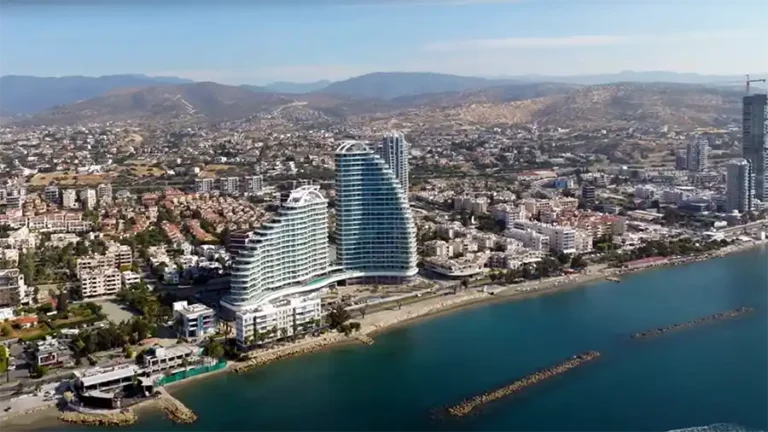
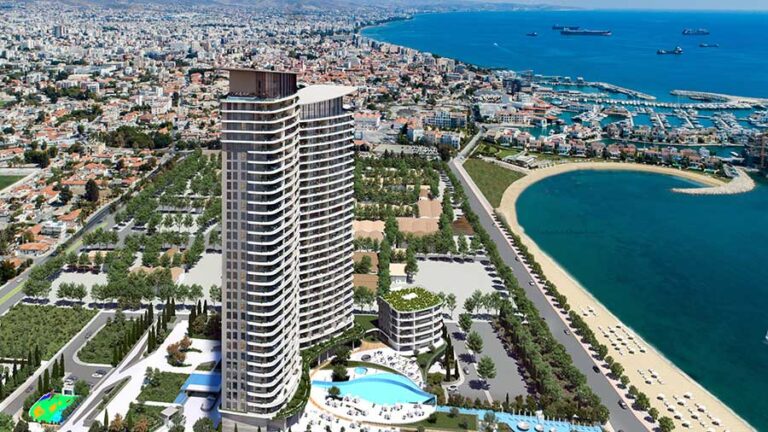
Limassol continued to dominate the Cyprus high-end property market in October,  according to real estate analytics firm Ask Wire.

The district recorded four of the ten most expensive property sales, including the most expensive sale in the month – a €9.9 million mixed-use building in the Panagia Evangelistria area of Kato Polemidia.

District breakdown of top transactions

Ask Wire’s analysis revealed that Limassol district secured the largest share of October’s top property sales, contributing €16.7 million from the ten highest-value transactions.

Other districts’ contributions included:

  • Paphos: €8.7 million from two major deals.
  • Larnaca: €4.65 million.
  • Famagusta: €2.5 million.
  • Nicosia: €2.1 million.

The 50 most expensive property sales across Cyprus in October totalled €68.4 million, with Limassol accounting for 37.4% (€25.6 million). Paphos followed at 24.6% (€16.8 million), while Nicosia, Larnaca, and Famagusta contributed 15.6% (€10.7 million), 14% (€9.6 million), and 8.4% (€5.7 million), respectively.

Notable high-value sales

The distribution of top transactions showcased regional trends in property demand:

  • Limassol: The €9.9 million sale of a mixed-use building represented 59.3% of the district’s total top 10 sales.
  • Paphos: A €4.15 million residence in Kouklia accounted for 47.7% of the district’s total.
  • Nicosia: An apartment building in Dali sold for €2.96 million, comprising 72.8% of its district total.
  • Larnaca: A €1.8 million field in Voroklini represented 38.7% of sales.
  • Famagusta: Its highest transaction, a €530,000 field, made up 9.3% of the district’s total.

Market insights

Pavlos Loizou, CEO of Ask Wire, highlighted the strength of Cyprus’ private real estate sector, noting that over 90% of the top 50 transactions (totalling €62.4 million) occurred in the open market, driven by private demand.

“Bank restructuring sales accounted for just 8.8%, showcasing a vibrant, buyer-driven market,” Loizou said.

He added that properties priced between €500,000 and €5 million reflect Cyprus’ dual appeal as a residential and holiday destination.

Emerging trends

Loizou pointed to growing interest in development land in Larnaca and Paphos, alongside sustained demand for commercial and mixed-use properties in urban hubs like Limassol and Nicosia.

The data underscores Limassol’s role as the epicentre of Cyprus’ luxury property market, while other districts show increasing momentum in specific property types.


Planning & building permits approved in 40 days

Cyprus is speeding-up the approval process for planning and building permits, reducing the timeline to just 40 working days for small-scale developments, Interior Minister Constantinos Ioannou announced this week.

The initiative is part of a broader effort to modernize construction and address delays in housing projects.

Key reforms for approving permits

The revamped system targets low-risk “Category A” developments, which include projects of up to two residential units. The approval process breaks down as follows:

  • 20 working days for planning certificates.
  • An additional 20 working days for building permits.

Applications must adhere to a new checklist system, shifting responsibility to private designers to ensure submissions meet all legal requirements.

“In this context, we’ve introduced a fast-track procedure for planning and building applications, empowering private designers through a self-checking mechanism,” Ioannou said.

If authorities fail to process an application within the allotted timeframe, permits will be issued automatically, ensuring efficiency and avoiding unnecessary delays.

On-site inspections and real-time compliance

The reforms introduce real-time compliance checks conducted by auditors and building control officers in three stages during construction. This represents a shift from traditional paper-based reviews to on-site inspections, helping to identify and resolve irregularities promptly.

The digital platform Ippodamos, launched in October 2023, has already streamlined planning applications. For Category A projects:

  • 147 applications have been submitted.
  • 63 applications were approved, 13 rejected, and 71 remain under review.
  • Building permits will follow the same process starting in January 2025, once system upgrades are completed.

Expanding to larger developments

By March 2025, the fast-track system will expand to medium-risk “Category B” developments, which include:

  • Projects with up to 12 residential units or apartment buildings with a maximum of 20 apartments, four storeys, and one basement.
  • These applications will require a total of 80 working days for both planning and building permits, with stricter compliance checks throughout.

Addressing the permits backlog

Cyprus currently faces a backlog of 5,000 pending building permits, which Ioannou said could be resolved quickly if designers finalize the required documentation.

The minister emphasized the importance of accountability, with designers now bearing full responsibility for accurate submissions. Irregularities will be flagged during inspections, ensuring compliance and reducing past violations.

Long-term impact

By combining automated approvals with precise on-site inspections, the new system aims to boost efficiency across the construction sector, ensuring timely project launches while safeguarding quality and compliance.

“With these actions, we’re reducing the time needed to obtain construction permits to just 40 working days,” Ioannou said, highlighting the system’s potential to address housing shortages and modernize Cyprus’ construction landscape.