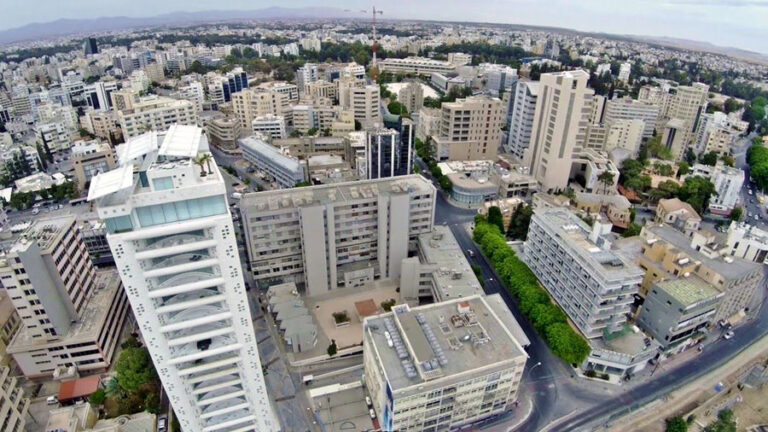
Limassol municipality warns 400 buildings need repairs

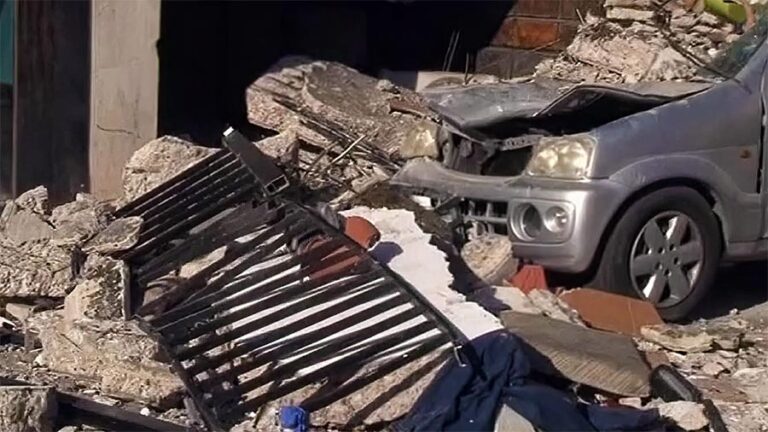
The collapse of parts of a balcony in the Neapolis area of Limassol late Thursday night has intensified calls for action on deteriorating buildings in the city. Falling debris from a fourth-floor balcony damaged several parked vehicles but caused no injuries.

The incident highlights the broader issue of neglected building maintenance, with the Limassol municipality revealing that 400 buildings have been issued repair warnings, including 130 classified as dangerous. Similar incidents occurred in December 2022 and January 2023.

Limited compliance with building repair notices

Of the 400 buildings flagged for repair:

  • 15% have taken immediate corrective action.
  • 25% have indicated plans to proceed with repairs.
  • 60% have not responded to the notices.

In a statement, the municipality warned that “The problems are escalating.”

Mayor demands legal reform

Limassol Mayor Yiannis Armeftis visited the site of the latest incident and reiterated the urgency of addressing the issue. He stressed the need for enhanced legal powers for local authorities to manage and prevent such hazards.

In this case, the affected building had previously been inspected, and repair warnings were issued in 2019 and 2021. However, owners failed to act due to cost concerns, with repair estimates reaching approximately €10,000/apartment. It later emerged that the building was owned by an overseas landlord.

Armeftis urged the government to implement regular building inspections, akin to vehicle MOTs, to ensure ongoing safety. “Problems with buildings constructed in the 1970s and 1980s with sub-standard materials will only become more acute without drastic measures,” he said.

Enforcement challenges

Under current legislation, municipalities can impose fines of up to €20,000 and daily penalties of €200 for non-compliance. However, the process of securing court orders, evictions, and repairs is often lengthy and costly.

The mayor cited one case where the municipality spent €1.5 million to repair a dangerous building but has yet to recover the expenses from the owners.

Adding to the complexity, illegal modifications by owners – such as enclosing basements and obstructing emergency exits – pose additional safety risks.

Calls for systemic change

The municipality is currently limited to issuing warnings, posting notices, and levying fines. Plans to transfer responsibility for managing dangerous buildings to the District Administration (EOA) have been delayed twice and are now set for April 2025. State funding of €500,000 to €1 million has been discussed to address repairs once the transition occurs.

Interior Minister Constantinos Ioannou recently highlighted the scale of the problem, stating that 30,000 jointly-owned buildings across Cyprus – housing nearly half the population – are poorly maintained and pose public safety risks. Proposed legislative amendments aim to strengthen inspection regimes and empower authorities to act more effectively.

Armeftis stressed that property owners, especially those renting properties at favourable rates, must take responsibility for maintaining safe buildings. Without substantial legislative reforms, the risks to public safety will continue to grow.

Is a housing crisis looming in Limassol?

According to Kathimerini’s Paris Demetriades, Limassol has experienced a dramatic surge in property prices, with rents and home values doubling – and in some cases, tripling over the past five years. While this boom has benefited property owners, it has created significant challenges for many residents.

The rapid rise in housing costs has far outpaced wage growth, leaving many locals struggling to keep up. This growing disparity has sparked concerns that Limassol may become a city only accessible to wealthier individuals or those employed in high-paying industries, potentially displacing long-term residents.

This trend has raised questions about the future of the city’s social fabric. Will Limassol evolve into an exclusive haven for the affluent? Could measures such as the development of condominiums, a solution implemented in other urban centres, help alleviate the crisis?

Paris Demetriades reports that the situation is particularly dire for young people, who are among the most financially vulnerable. Many face limited housing options combined with mounting economic pressure. Without meaningful interventions, there is a growing fear of increased homelessness and deepening social inequality.

Limassol’s transformation underscores an urgent need for balanced urban development to ensure the city remains inclusive and affordable for all its residents.

You can find Paris Demetriades, which includes video documentary in Greek on Limassol’s skyrocketing prices at Housing crisis looms as Limassol property prices skyrocket.

What’s in the new jointly-owned buildings bill in parliament?

It’s been more that two years since a bill was drafted, designed to resolve longstanding challenges in the management of jointly-owned buildings, was published for public consultation.

The draft bill aims to solve a host of serious issues with the current law including the lack of management committees, non-payment of communal fees, insurance and partial or total destruction of the building. Its purpose is to provide management committees with the flexibility to carry out its obligations, to ensure that unit owners meet their obligations and that properties are properly maintained.

The proposed bill “The Management of Shared Buildings and Related Matters Law of 2023” and accompanying documents. which are currently being discussed in the Cyprus parliament may be downloaded by clicking here (Greek) and a machine translation of the draft law may be downloaded by clicking here (English.)

The main changes over the current law, which was introduced in 1993, are as follows.

Jointly-owned buildings supervisory service

A separate service will be established responsible for overseeing compliance with the law. The role of the Department of Lands and Surveys will be limited to issues relating to the occupancy and registration of jointly-owned buildings.

This new service will be responsible for registering jointly-owned buildings, the registration of management committees with the Service and maintaining a register of the buildings and their management committees.

In addition to jointly-owned buildings that have been registered, the law will apply to all jointly-owned buildings that have been issued with a building and sub-division permit, regardless of whether they’ve been issued with an approval certificate (or a certificate of unauthorised works) or registered with the Department of Lands and Surveys or issued with separate Title Deeds.

The Service may impose fines on management committees or owners who violate the law or related regulations. For illegal construction or alterations, the Service may seek court orders to rectify such actions.

Internal regulations will also be established to manage shared properties and determine owners’ rights and obligations. The Management Committee will be authorized to incur necessary expenses for maintaining common areas when owners who fail to pay communal fees.

The Service will create and maintains a register of jointly-owned buildings with information from the Department of Lands and Surveys, Town Planning, Municipal Authorities and District offices.

Units cannot be sold or leased if communal fees unpaid

The owners of units in jointly-owned buildings who fail to pay their share of communal fees will no longer be able to sell, lease or assign a contract of sale for their units until they’ve paid the communal fees.

In order to sell/lease/assign their unit, its owner must obtain a “Certificate of Common Expenses Clearance” from the Management Committee of their building, which certifies that all their communal fees have been paid.

This “Certificate of Common Expenses Clearance” may also be issued by a legally authorized representative of the Management Committee.

Structural Safety

The draft legislation also addresses the structural integrity of jointly-owned buildings and the safety of owners and residents. It enables Management Committees to carry out necessary maintenance work. Unauthorized/unapproved building or alterations undertaken without approval can result in court actions.

(As we reported last Friday, fire service spokesman Andreas Kettis said that it’s inconceivable that the bill says nothing about fire safety.)

The draft legislation applies to all jointly-owned buildings as described above.

Management committee powers

Each jointly-owned building must have a Management Committee responsible for managing its affairs. The committee will have powers to:

  • Prevent owners who have not paid their communal fees and their tenants from using communal areas and facilities, providing this does not prevent them accessing their unit.
  • Maintain and manage the jointly-owned property and ensure compliance with the law and regulations.
  • Provide services for communal areas, limited to owners who are up-to-date with their communal fee payments.
  • Create a fund for management expenses, repairs, and upgrades of the property.

General meetings of owners must be convened at least once a year or within 26 months, to review decisions and expenses.

Other significant changes

  • The calculation of communal fees, which is based on the area of a unit is revised and is based on the covered area of the unit + 40% of the covered area of terraces and balconies + 20% of the uncovered area of terraces and balconies. (There are also variations for units depending on their use in mixed use buildings.)
  • Members of the Management Committee must be owners.
  • Unit owners may participate in general meetings using sound, video and audio systems and may vote using those systems.
  • A jointly-owned building is known as a “shared building” and comprise the entire construction of the building.
  • A jointly-owned property is known as a “shared property” and comprise every part of a “shared building” that is not registered as a unit.

Future changes

As MPs discuss the draft legislation, further changes may be introduced.

Hopefully, MPs will change the draft to allow Management Committees to collect a “Sinking Fund“ to put aside monies for unscheduled maintenance and repair of equipment that is not part of the planned annual maintenance activity. (This follows rulings in district courts that if the communal fund was in surplus there was no need for further contributions to the communal fees.)

Jointly-owned buildings FAQs

These frequently asked questions also apply to the current 1993 law:

Q. As I rent my apartment isn’t it my tenant who should be paying the maintenance charges?

A. No. As the buyer/owner of the apartment payment of the maintenance charges is your responsibility.

Q. I have an apartment on the ground floor, should I pay for maintaining the lift when I do not use it?

A. Yes. You are required to pay for maintaining all of the common facilities, including the lift, whether you make use of them or not.

Q. I only live in the apartment for three months of the year; shouldn’t my communal fees be reduced accordingly?

A. No. Regardless of how long you live in the apartment, you are required to pay the full annual amount.

Q. The developer promised that our communal swimming pool would be ready when we moved in; it isn’t. Can I withhold maintenance payments?

A. No. If the communal swimming pool was not ready as promised, why did you accept delivery?

Q. We have now got our Title Deeds and a Management Committee has been set up by people living in the flats permanently and they want everyone to pay the same amount. Can they do this?

A. No. The amount you pay is based on the size of your flat in relation to the others on the development.

Q. I have a 2-bedroom flat with a separate dining room but am being asked to pay more than my friend in the same block who has a 3-bedroom flat. Is this correct?

A. See the answer to the previous question. The amount you pay is based on the relative size of your flat compared to the others in the development.

Q. I look after a small garden outside our block of flats. I’ve planted shrubs, made a stone path and bought a garden bench. I also do all the weeding and keep it looking nice. Am I entitled to a discount on my management fees?

A. I’m afraid not. But perhaps the Management Committee would agree to paying you for the plants, etc. you bought and your labour.

Q. We have just taken delivery of our apartment and have received a bill for maintenance. This has come as quite a shock to us as we didn’t know about maintenance payments. Do we have to pay?

A. Yes. It sounds as if your lawyer did not advise you correctly when you bought the apartment. Your lawyer should have determined whether a Management Committee had been established and drawn up a contract for the payment of maintenance charges and insurance of the common areas.

No law to govern fire safety of jointly-owned buildings

The fire service is warning about the risk to lives from cluttered common areas in apartment blocks and haphazard parking outside these jointly-owned buildings.

The warning was issued at the House interior committee on Thursday as MP began discussing a bill to regulate jointly-owned buildings to “end the absolute anarchy that prevails,” chairman Akel’s Aristos Damianou said.

Damianou said this anarchy causes constant friction between owners and tenants and leaves thousands of buildings unmaintained.

Testifying at the committee, fire service spokesman Andreas Kettis spoke about the dangers, saying stairwells are often blocked with old furniture and even emergency doors of jointly-owned buildings are sometimes locked, plus there are buildings that are hard to access because there are so many cars parked in the way.

“At some point we may mourn victims and then we will look to place blame as to who is responsible,” Kettis said.

He said the new bill mentions safety issues, but at the same time there was no mention of fire safety “which the fire department considers inconceivable”.

Addressing Damianou, he said: “Do you know, that after the final approval for any building, from that time it is not checked at all for fire safety issues?

“The issue is that there is no legislation that provides for a fire safety check or who will carry it out.”

Asked to cite some examples, Kettis said there were stairwells full of dirt, furniture, and bags of charcoal, and locked emergency doors.

“In the event a stairwell is filled with smoke it simply means that everyone is trapped and it also means that we will lose people,” he said.

Kettis said the issue of the security of the tenants is reason enough for regular checks to be carried out and for the appropriate certificates to be present and updated by the building owners.

The new jointly-owned building bill

Damianou pledged that the new bill would be pushed through quickly.

One of the main innovations of the bill, he said, lies in the fact that it gives the management committees the power to set reasonable expenses for the maintenance and proper operation of the common areas, which residents often don’t pay.

“This particular bill upgrades the role of jointly-owned building management committees and those who have ignored them until now, if they continue the same tactics, it is very likely that they will be called to account before the Court,” Damianou said.

The problem is in most cases there is no management committee, the MP added.

“It won’t be easy given that the financial aspect will be a thorn in the side, which has created and creates friction,” he said.

While some tenants take care of their spaces, others don’t want to spend a cent, he said, “either because they don’t have the financial ability or because they don’t care and they expect others to cover their share”.

Damianou said the existing legislation has many loopholes and the new bill aims to plug these gaps.

He said the land registry had identified some of these as the need to define the rights and obligations of the owners as well as the need to ensure more effective implementation of management “considering that unit owners evade their obligations and many properties are not adequately maintained, resulting in risks to their safety and the safety of third parties”.

With the proposed bill, a service for registration of jointly-owned buildings and supervision of the operation of administrative committees will be defined, as will its powers.

It will also define the rights and obligations of owners and provide for compulsory insurance of jointly-owned buildings and supervision of the compulsory insurance.

CM

Politis names revoked “Golden Passports” investors

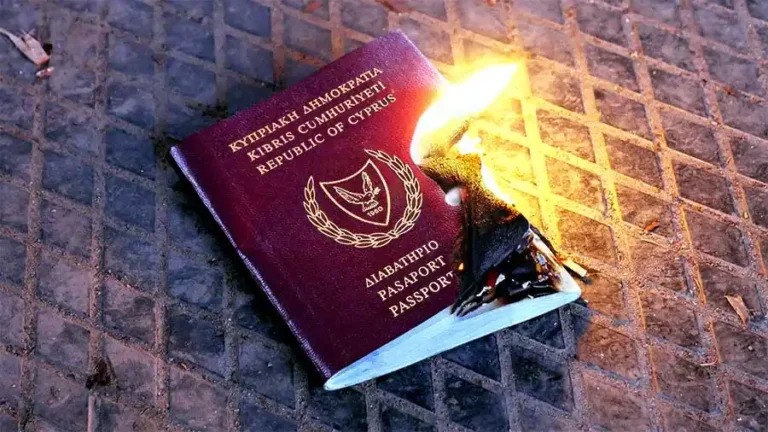
Procedures are underway to revoke problematic “golden passports” granted under the island’s disgraced Citizenship by Investment scheme, which was brought to an abrupt end in Novembers 2020.

These revocations continue as new problematic cases are identified in the wake of a damning 515-page report into the scheme by former Supreme Court judge Myron Nikolatos, which identified that 51.81 per cent of around 3,500 cases examined had been unlawfully granted or involved violations.

Reasons for golden passports revocation

Passports are being revoked primarily for the following reasons:

  • False Declarations and Misleading Information: Examples include cases where applicants provided fraudulent marital or investment information.
  • Criminal Records: Some investors were found to have been involved in serious crimes, including fraud and corruption.
  • Failure to Meet Terms of Naturalization: Instances where properties linked to investments were incomplete or sold post-naturalization.

Calls for transparency rejected

Despite calls for transparency, Interior Minister Constantinos Ioannou refused to disclose the names of the investors whose golden passports had been revoked, citing privacy concerns, ongoing investigations, and the risk of influencing legal proceedings.

Names published by Politis

However, four days ago, the Greek language newspaper Politis published a list of 77 foreign investors whose golden passports were revoked.

According to the newspaper, the list was compiled about a month ago. It includes the Malaysian-born businessman Jho Low, accused of looting $4.5 billion from Malaysia’s sovereign wealth fund who was granted Cypriot citizenship back in 2015. It also includes the names of the providers, the law firms and the audit firms, through which the golden passports in question were facilitated.

The Insider reports that the list also includes several Russians on the Forbes Billionaires List, including:

  • Aluminum magnate and Rusal founder Oleg Deripaska;
  • Igor Kesaev, owner of the Mercury Group and Megapolis Group (Russia’s leading tobacco distributor), shareholder of the Degtyarev weapons plant;
  • Mikhail Gutseriev, main shareholder of the Safmar Group;
  • Alexey Kuzmichev, one of the founders of Alfa Group;
  • Alexander Ponomarenko, construction tycoon, former chairman of the board of Moscow’s Sheremetyevo International Airport;
  • Vadim Moshkovich, long-time chairman of agro-industrial firm Rusagro and former Russian MP;
  • Sergey Lomakin, co-founder of Russian discount retail chain Fix Price, owner of Cypriot football club Pafos FC.

Several billionaires, including Deripaska, Kesaev, and Gutseriev, are under international sanctions.

The Insider also names Ukrainian oligarchs Ihor Kolomoyskyy and Oleg Bakhmatiuk, owner of the agricultural company UkrLandFarming.

Nine more golden passports revoked

According to the official information obtained by Politis, the list does not include nine further cases of investors whose golden passports were recently revoked, while a further unknown number of suspicious cases are under investigation.

As of four days ago, golden passports have been revoked from 86 investors as well as members of their families, including spouses, children, and parents.

Moody’s credit rating for Cyprus upgraded to A3

Moody’s has upgraded Cyprus’ credit rating by two notches, from Baa2 to A3, a move hailed as a gateway to increased foreign investment and job creation, President Nikos Christodoulides announced on Saturday.

The president emphasized that the upgrade reflects his administration’s commitment to disciplined fiscal policies, banking sector stability, and financial reforms, solidifying Cyprus’ reputation as a reliable investment destination.

Finance Minister Makis Keravnos highlighted the significance of this milestone, noting it marks the first time since 2011 that Moody’s has returned Cyprus to the upper medium-grade investment category. This comeback follows a financial crisis that nearly bankrupted the country and required a bailout from the EU and IMF in 2013.

Moody’s credited the upgrade and stable outlook to Cyprus’ “prudent fiscal policy,” which combined spending restraint with robust revenue growth. This strategy has resulted in fiscal surpluses over the past two years.

The agency projected smaller fiscal surpluses through 2028, citing a significant reduction in public debt – from 113.6% of GDP in 2020 to 73% in 2023. It forecasted further declines, expecting debt to drop to 50% by 2027. Additionally, the economy is predicted to grow at an average rate of 3.2% annually from 2024 to 2028, driven by key sectors like information and communication technology, finance, and insurance.

Cyprus has become a hub for companies relocating their headquarters, particularly from Ukraine, Israel, and the Middle East. Foreign investment in energy, education, construction, healthcare, and tourism is also set to support medium-term economic growth.

However, Moody’s warned of potential risks, including the cancellation of major investment projects, rising public sector wage costs, and spending pressures in healthcare.